Chun Kwang Jin, Yim Hye Ran, Park Jungwae, Park Seung Jung, Park Kyoung Min, On Young Keun, Kim June Soo
Division of Cardiology, Department of Medicine, Heart Vascular Stroke Institute, Samsung Medical Center, Sungkyunkwan University School of Medicine, Seoul, Korea.
Yonsei Med J. 2016 Mar;57(2):313-20. doi: 10.3349/ymj.2016.57.2.313.
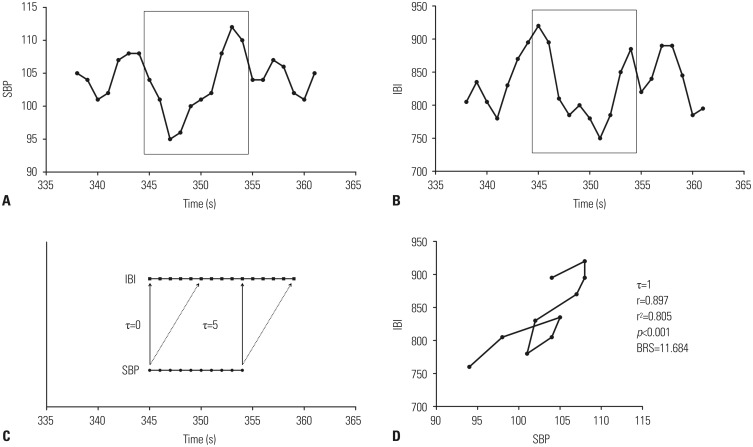
An association between baroreflex sensitivity (BRS) and the response to tilt training has not been reported in patients with neurally mediated syncope (NMS). This study sought to investigate the role of BRS in predicting the response to tilt training in patients with NMS.
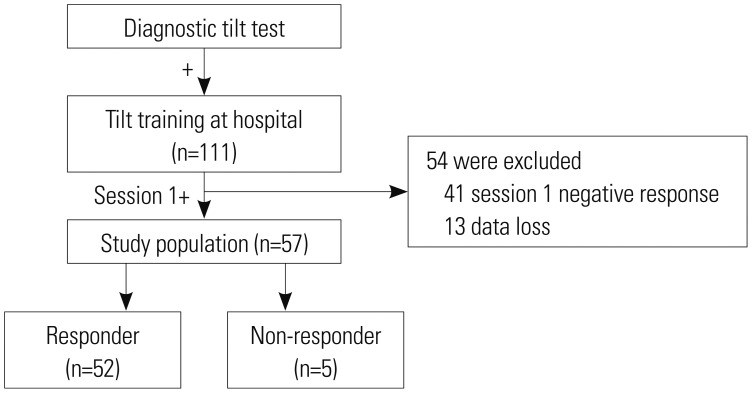
We analyzed 57 patients who underwent tilt training at our hospital. A responder to tilt training was defined as a patient with three consecutive negative responses to the head-up tilt test (HUT) during tilt training.
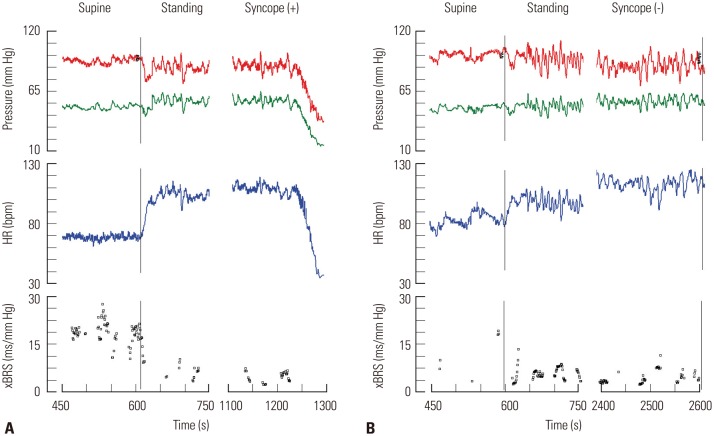
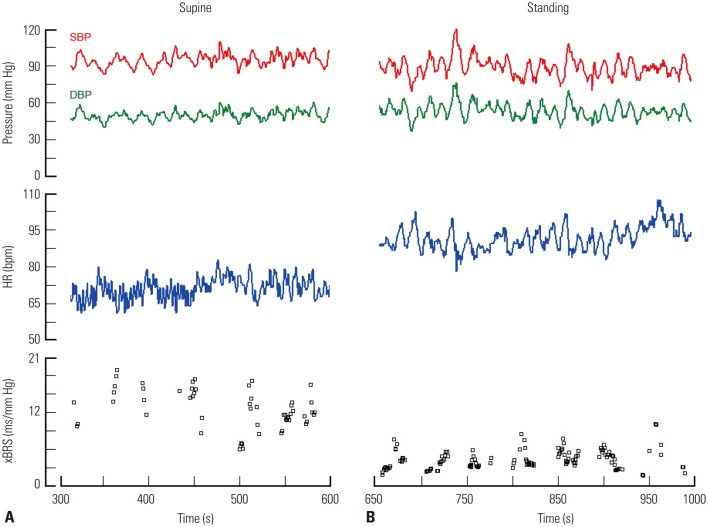
After tilt training, 52 patients (91.2%) achieved three consecutive negative responses to the HUT. In the supine position before upright posture during the first session of tilt training for responders and non-responders, the mean BRS was 18.17 ± 10.09 ms/mm Hg and 7.99 ± 5.84 ms/mm Hg (p=0.008), respectively, and the frequency of BRS ≥ 8.945 ms/mm Hg was 45 (86.5%) and 1 (20.0%; p=0.004), respectively. Age, male gender, frequency of syncopal events before HUT, type of NMS, phase of positive HUT, total number of tilt training sessions, and mean time of tilt training did not differ between the study groups. In the multivariate analysis, BRS <8.945 ms/mm Hg in the supine position (odds ratio 23.10; 95% CI 1.20-443.59; p=0.037) was significantly and independently associated with non-response to tilt training.
The BRS value in the supine position could be a predictor for determining the response to tilt training in patients with NMS who are being considered for inpatient tilt training.
压力反射敏感性(BRS)与神经介导性晕厥(NMS)患者对倾斜训练的反应之间的关联尚未见报道。本研究旨在探讨BRS在预测NMS患者对倾斜训练反应中的作用。
我们分析了在我院接受倾斜训练的57例患者。倾斜训练的反应者定义为在倾斜训练期间对直立倾斜试验(HUT)连续三次阴性反应的患者。
倾斜训练后,52例患者(91.2%)对HUT连续三次阴性反应。在反应者和无反应者倾斜训练第一阶段直立姿势前的仰卧位,平均BRS分别为18.17±10.09毫秒/毫米汞柱和7.99±5.84毫秒/毫米汞柱(p=0.008),BRS≥8.945毫秒/毫米汞柱的频率分别为45例(86.5%)和1例(20.0%;p=0.004)。研究组之间的年龄、男性性别、HUT前晕厥事件的频率、NMS的类型、HUT阳性阶段、倾斜训练的总次数以及倾斜训练的平均时间无差异。多因素分析中,仰卧位BRS<8.945毫秒/毫米汞柱(比值比23.10;95%可信区间1.20-443.59;p=0.037)与对倾斜训练无反应显著且独立相关。
仰卧位BRS值可作为预测考虑住院倾斜训练的NMS患者对倾斜训练反应的指标。