He Zhiyong, Huang Chuanzhong, Lin Gen, Ye Yunbin
Department of Medical Oncology, Fujian Provincial Cancer Hospital, Fujian Medical University Teaching Hospital, Fuzhou, Fujian 350014, P.R. China.
Oncol Rep. 2016 Apr;35(4):1933-40. doi: 10.3892/or.2016.4602. Epub 2016 Feb 1.
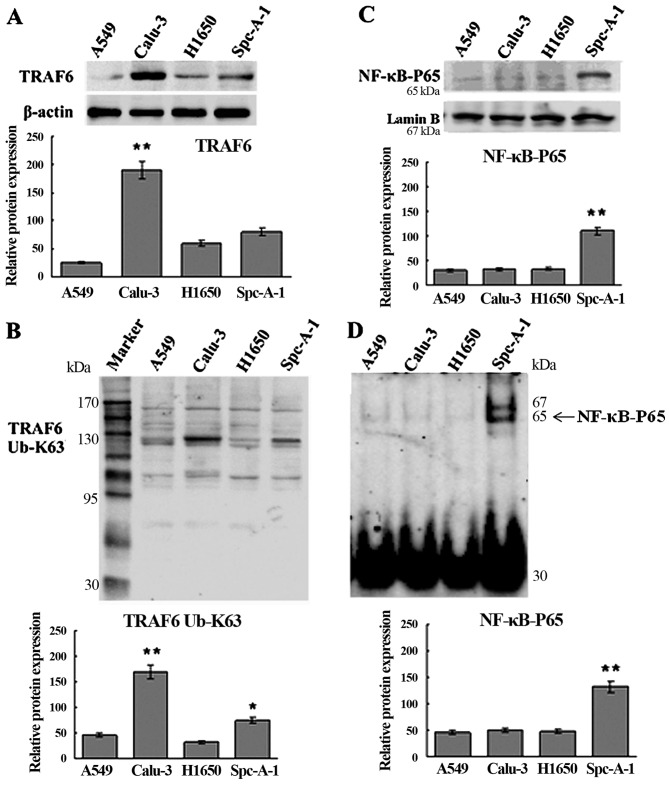
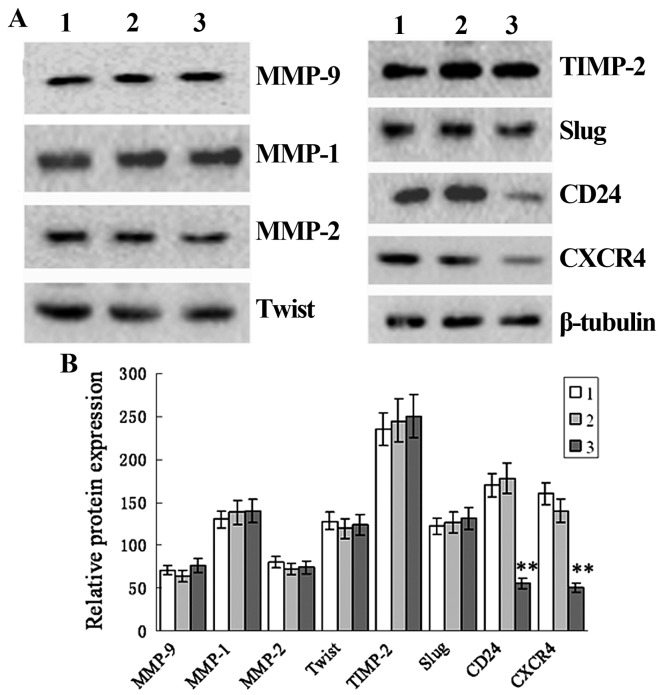
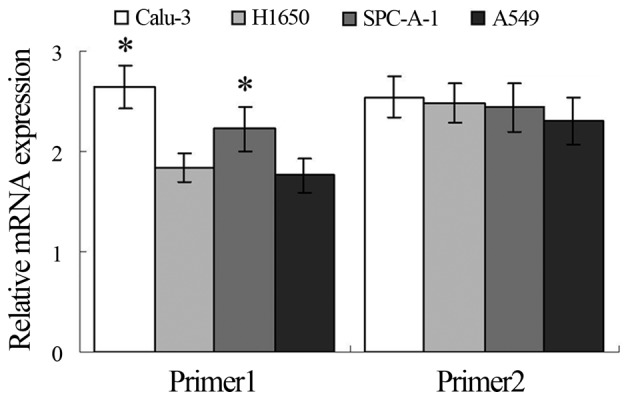
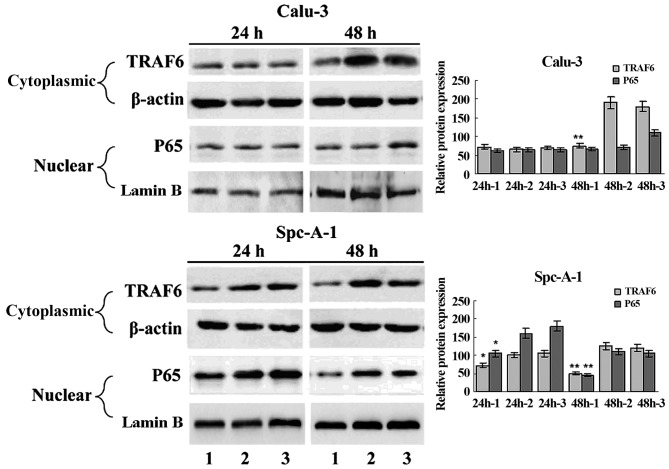
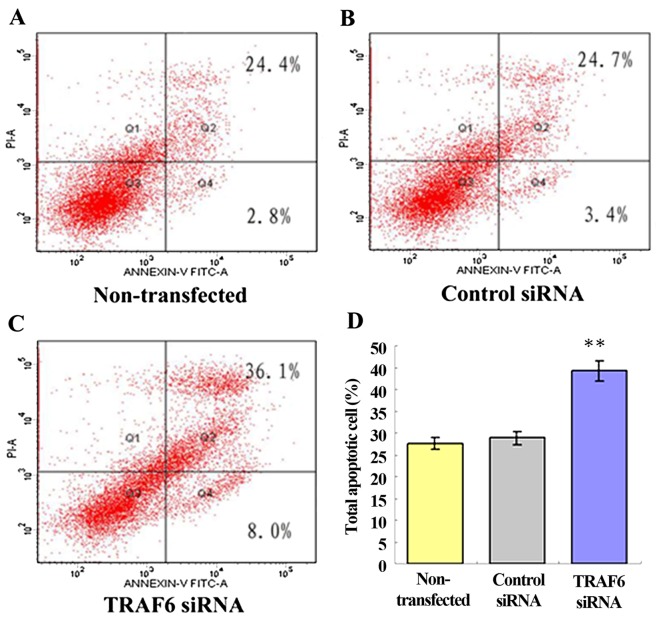
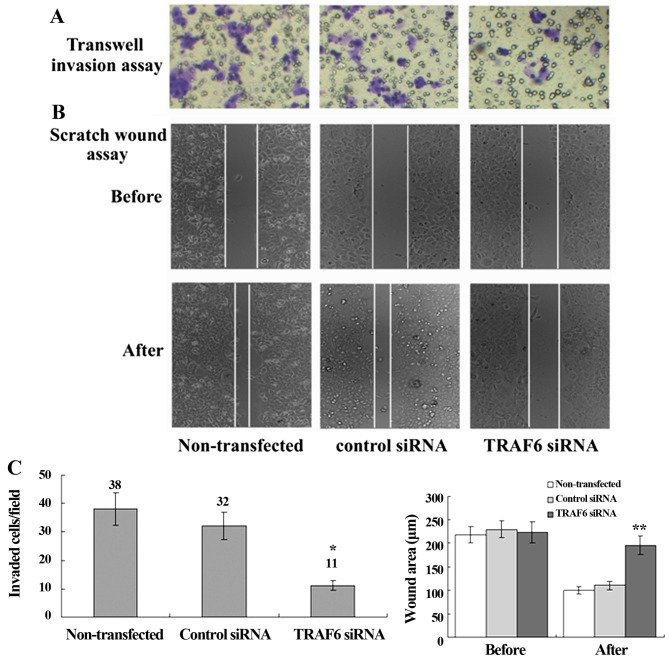
Tumor necrosis factor receptor-associated factor 6 (TRAF6) has been found to be involved in multiple cancers. However, the effect of small interfering RNA (siRNA)‑induced knockdown of TRAF6 on the biological behaviors of cancer cells remains unknown. Thus, the present study aimed to investigate the effect of siRNA-induced knockdown of TRAF6 on the biological behaviors of human lung cancer SPC-A1 cells. The expression of TRAF6 was determined in human lung adenocarcinoma A549, non-small cell lung cancer H1650, human airway epithelial Calu-3 and human lung cancer SPC-A1 cell lines using quantitative RT-PCR (qRT‑PCR) and western blotting at the transcriptional and translational levels. TRAF6 expression was knocked down in the SPC-A1 cells using an siRNA technique, and the effects of TRAF6 knockdown on NF-κB activity, cell proliferation, apoptosis, cell cycle, invasion and migration of the SPC-A1 cells were determined using electrophoretic mobility shift assay (EMSA), cell proliferation assay, flow cytometry, Transwell invasion assay and scratch wound assay. In addition, the protein expression of CD24, CXCR4, MMP1, MMP2, MMP9, TWIST, TIMP-2 and Slug was quantified using western blotting assay. Western blotting and qRT-PCR assays showed upregulation of TRAF6 at both the translational and transcriptional levels in the Calu-3 and SPC-A1 cells, and K63-linked ubiquitination of TRAF6 and constitutive NF-κB activation were detected in the SPC-A1 cells. Knockdown of TRAF6 inhibited the migration and invasion and promoted the apoptosis of the SPC-A1 cells, but had little effect on cell proliferation and the cell cycle. In addition, siRNA-induced TRAF6 knockdown caused a marked reduction in the protein expression of CD24 and CXCR4, but had little effect on MMP-1, MMP-2, MMP-9, Twist, TIMP-2 or Slug expression. The present study demonstrated that TRAF6 is upregulated in human lung cancer cells, and siRNA-induced TRAF6 knockdown inhibits the invasion of lung cancer cells and promotes apoptosis. It is suggested that TRAF6 may be a promising target for the therapy of lung cancer.
肿瘤坏死因子受体相关因子6(TRAF6)已被发现与多种癌症有关。然而,小干扰RNA(siRNA)介导的TRAF6基因敲低对癌细胞生物学行为的影响尚不清楚。因此,本研究旨在探讨siRNA介导的TRAF6基因敲低对人肺癌SPC-A1细胞生物学行为的影响。采用定量逆转录-聚合酶链反应(qRT-PCR)和蛋白质免疫印迹法,在转录和翻译水平上检测人肺腺癌A549、非小细胞肺癌H1650、人气道上皮Calu-3和人肺癌SPC-A1细胞系中TRAF6的表达。利用siRNA技术敲低SPC-A1细胞中TRAF6的表达,并通过电泳迁移率变动分析(EMSA)、细胞增殖分析、流式细胞术、Transwell侵袭分析和划痕试验,检测TRAF6基因敲低对SPC-A1细胞中核因子κB(NF-κB)活性、细胞增殖、凋亡、细胞周期、侵袭和迁移的影响。此外,采用蛋白质免疫印迹法检测CD24、CXCR4、基质金属蛋白酶1(MMP1)、基质金属蛋白酶2(MMP2)、基质金属蛋白酶9(MMP9)、TWIST、金属蛋白酶组织抑制因子2(TIMP-2)和锌指蛋白Slug的蛋白表达。蛋白质免疫印迹法和qRT-PCR分析显示,Calu-3和SPC-A1细胞中TRAF6在翻译和转录水平均上调,且在SPC-A1细胞中检测到TRAF6的K63连接泛素化和组成型NF-κB激活。敲低TRAF6可抑制SPC-A1细胞的迁移和侵袭,促进其凋亡,但对细胞增殖和细胞周期影响较小。此外,siRNA介导的TRAF6基因敲低导致CD24和CXCR4的蛋白表达显著降低,但对MMP-1、MMP-2、MMP-9、TWIST、TIMP-2或Slug的表达影响较小。本研究表明,TRAF6在人肺癌细胞中上调,siRNA介导的TRAF6基因敲低可抑制肺癌细胞的侵袭并促进其凋亡。提示TRAF6可能是肺癌治疗的一个有前景的靶点。