Fontenete Sílvia, Leite Marina, Cappoen Davie, Santos Rita, Ginneken Chris Van, Figueiredo Céu, Wengel Jesper, Cos Paul, Azevedo Nuno Filipe
LEPABE, Laboratory for Process Engineering, Environment, Biotechnology and Energy, Faculty of Engineering, University of Porto, Porto, Portugal.
i3S, Instituto de Investigação e Inovação em Saúde, Universidade do Porto, Porto, Portugal.
PLoS One. 2016 Feb 5;11(2):e0148353. doi: 10.1371/journal.pone.0148353. eCollection 2016.
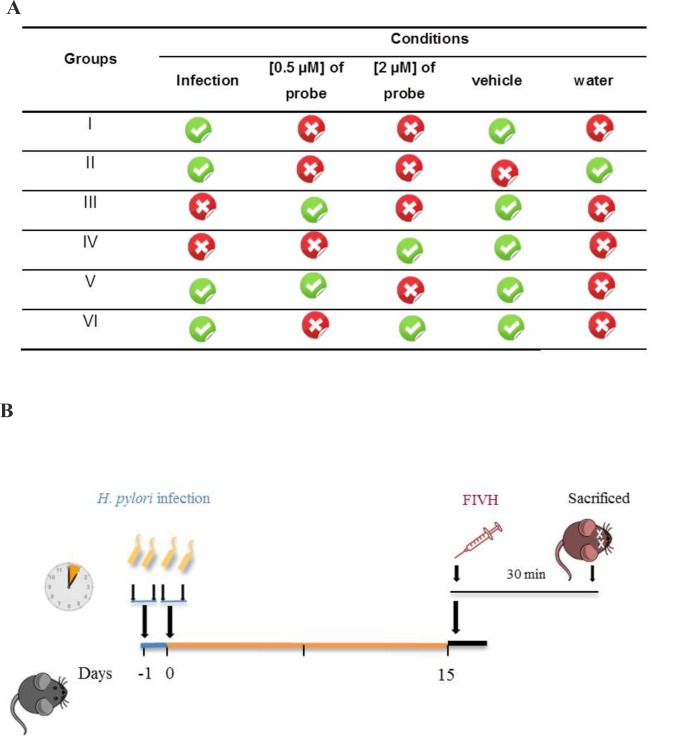
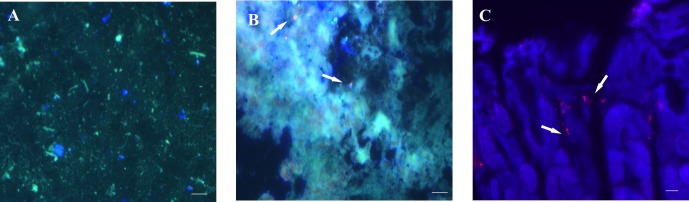
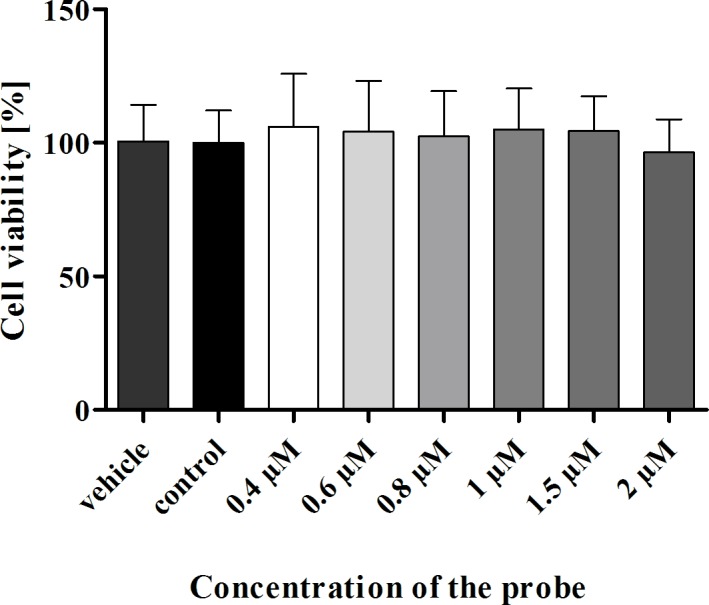
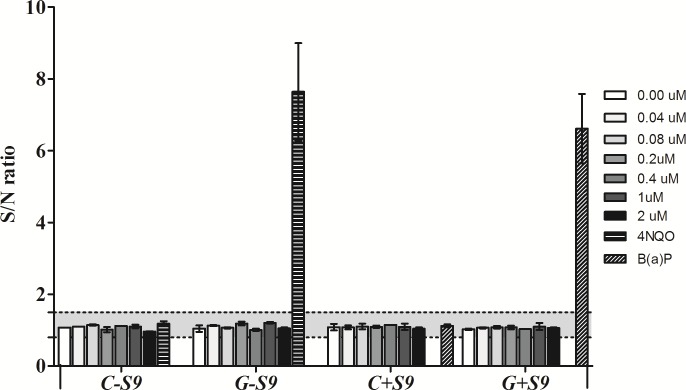
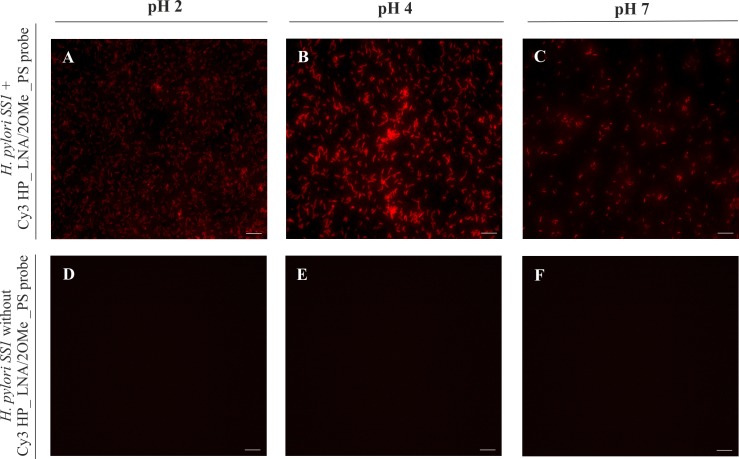
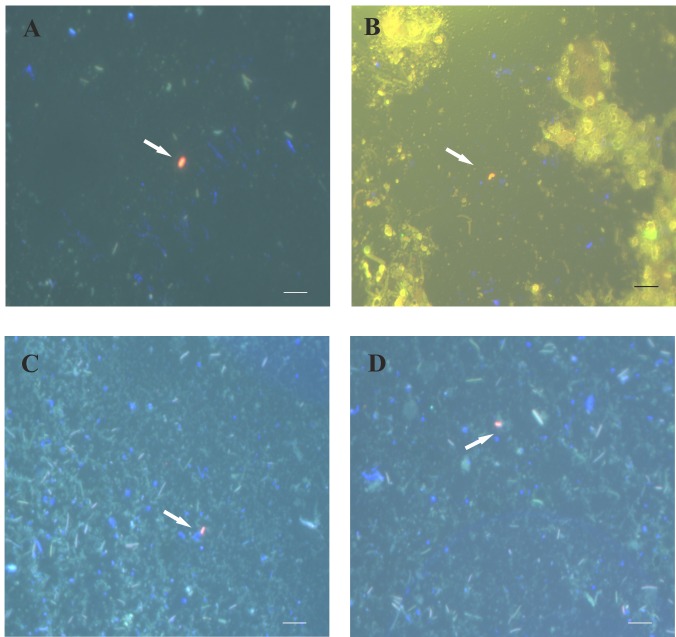
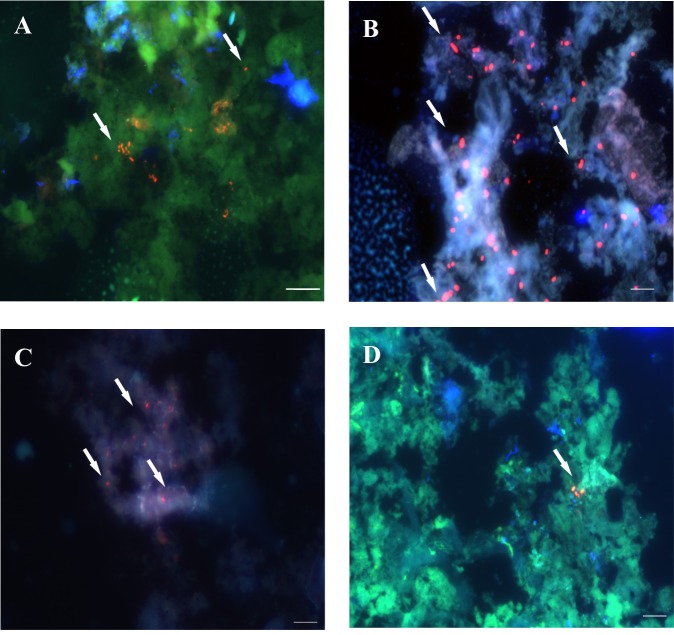
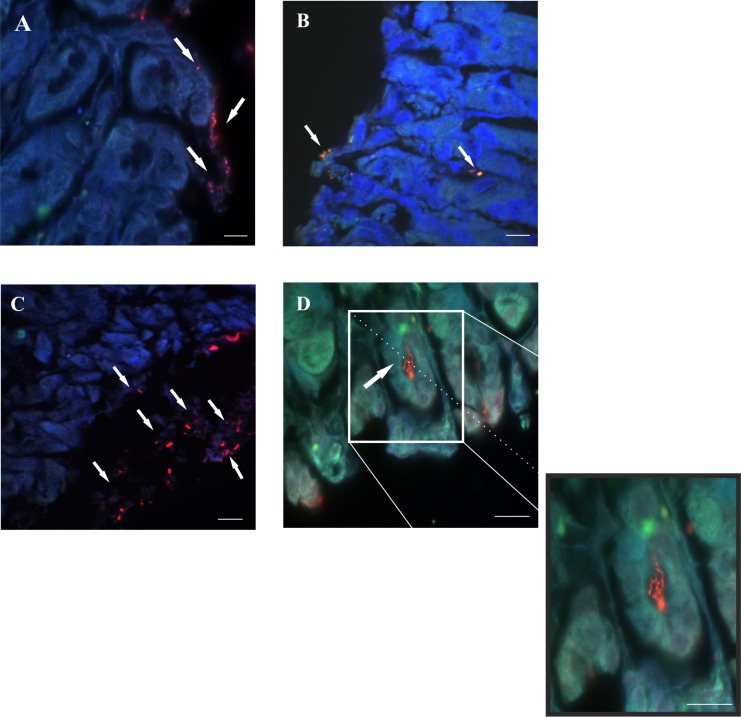
In this study, we applied fluorescence in vivo hybridization (FIVH) using locked nucleic acid (LNA) probes targeting the bacterial rRNA gene for in vivo detection of H. pylori infecting the C57BL/6 mouse model. A previously designed Cy3_HP_LNA/2OMe_PS probe, complementary to a sequence of the H. pylori 16S rRNA gene, was used. First, the potential cytotoxicity and genotoxicity of the probe was assessed by commercial assays. Further, the performance of the probe for detecting H. pylori at different pH conditions was tested in vitro, using fluorescence in situ hybridization (FISH). Finally, the efficiency of FIVH to detect H. pylori SS1 strain in C57BL/6 infected mice was evaluated ex vivo in mucus samples, in cryosections and paraffin-embedded sections by epifluorescence and confocal microscopy.
H. pylori SS1 strain infecting C57BL/6 mice was successfully detected by the Cy3_HP_LNA/2OMe_PS probe in the mucus, attached to gastric epithelial cells and colonizing the gastric pits. The specificity of the probe for H. pylori was confirmed by microscopy.
In the future this methodology can be used in combination with a confocal laser endomicroscope for in vivo diagnosis of H. pylori infection using fluorescent LNA probes, which would be helpful to obtain an immediate diagnosis. Our results proved for the first time that FIVH method is applicable inside the body of a higher-order animal.
在本研究中,我们应用了荧光原位杂交技术(FIVH),使用靶向细菌rRNA基因的锁核酸(LNA)探针,对感染C57BL/6小鼠模型的幽门螺杆菌进行体内检测。我们使用了先前设计的与幽门螺杆菌16S rRNA基因序列互补的Cy3_HP_LNA/2OMe_PS探针。首先,通过商业检测方法评估了该探针的潜在细胞毒性和遗传毒性。此外,使用荧光原位杂交(FISH)技术在体外测试了该探针在不同pH条件下检测幽门螺杆菌的性能。最后,通过落射荧光显微镜和共聚焦显微镜对感染C57BL/6小鼠的黏液样本、冰冻切片和石蜡包埋切片进行离体评估,以检测FIVH检测幽门螺杆菌SS1菌株的效率。
Cy3_HP_LNA/2OMe_PS探针成功检测到感染C57BL/6小鼠的幽门螺杆菌SS1菌株,该菌株附着于胃上皮细胞并定植于胃小凹的黏液中。通过显微镜检查证实了该探针对幽门螺杆菌的特异性。
未来,该方法可与共聚焦激光内镜显微镜结合使用,利用荧光LNA探针进行幽门螺杆菌感染的体内诊断,这将有助于获得即时诊断。我们的结果首次证明FIVH方法适用于高等动物体内。