Troelstra Sigrid A, Bosdriesz Jizzo R, de Boer Michiel R, Kunst Anton E
Department of Public Health, Academic Medical Center, University of Amsterdam, Amsterdam, the Netherlands.
Department of Health Sciences, Faculty of Earth and Life Sciences, VU University, Amsterdam, the Netherlands.
PLoS One. 2016 Feb 5;11(2):e0148489. doi: 10.1371/journal.pone.0148489. eCollection 2016.
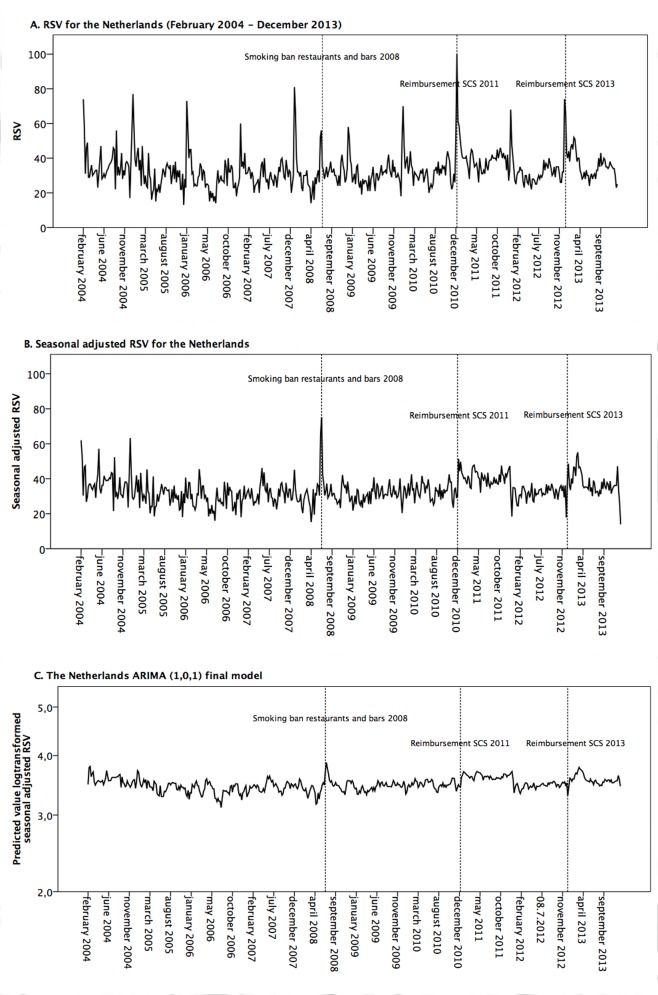
The impact of tobacco control policies on measures of smoking cessation behaviour has often been studied, yet there is little information on their precise magnitude and duration. This study aims to measure the magnitude and timing of the impact of Dutch tobacco control policies on the rate of searching for information on smoking cessation, using Google Trends search query data.
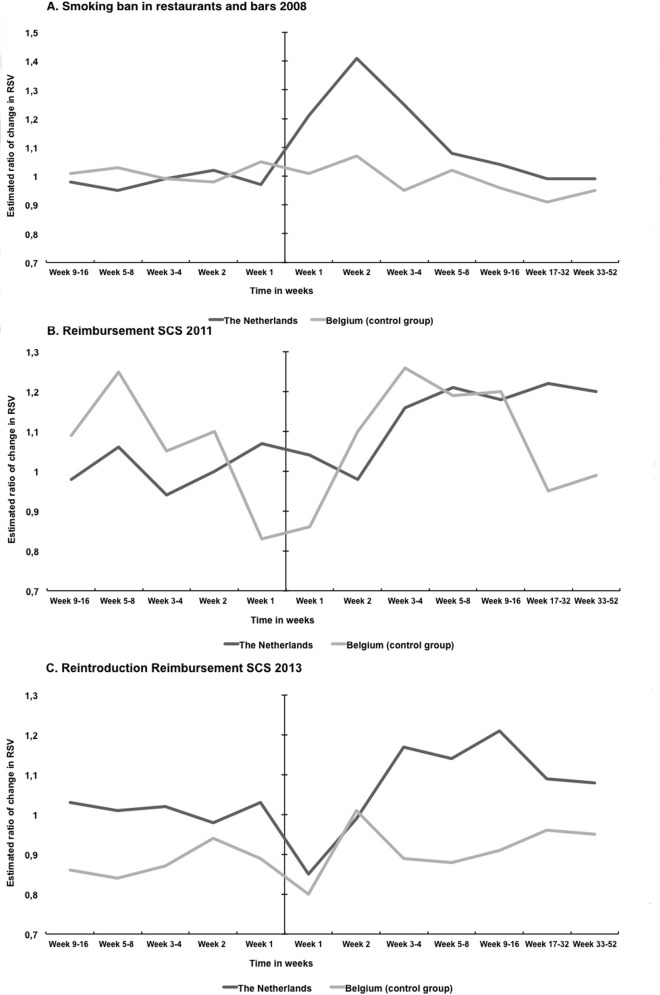
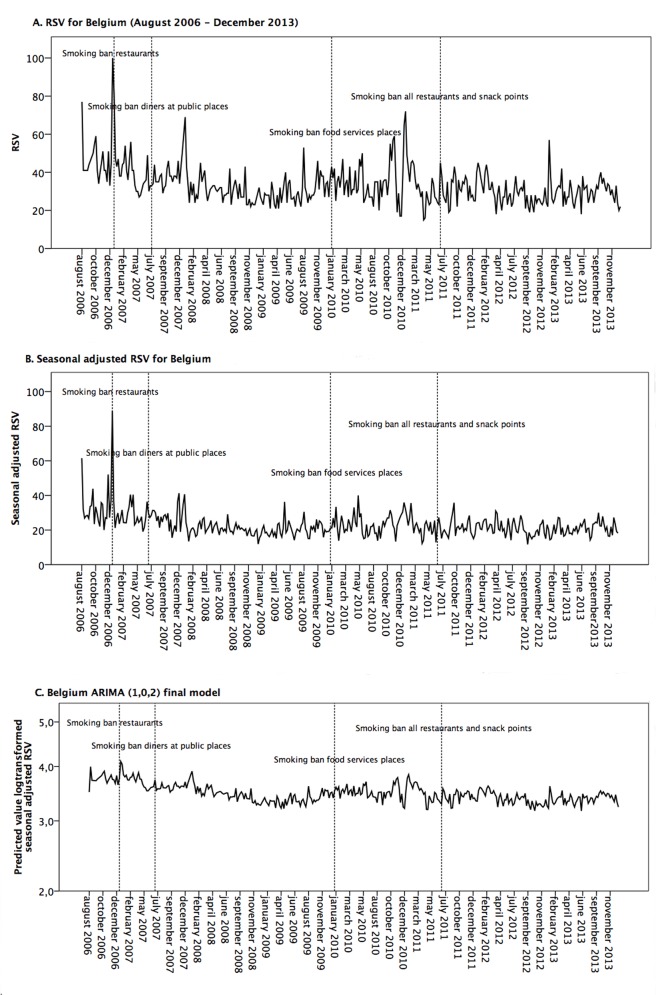
An interrupted time series analysis was used to examine the effect of two types of policies (smoke-free legislation and reimbursement of smoking cessation support (SCS)) on Google searches for 'quit smoking'. Google Trends data were seasonally adjusted and analysed using autoregressive integrated moving average (ARIMA) modelling. Multiple effect periods were modelled as dummy variables and analysed simultaneously to examine the magnitude and duration of the effect of each intervention. The same analysis was repeated with Belgian search query data as a control group, since Belgium is the country most comparable to the Netherlands in terms of geography, language, history and culture.
A significant increase in relative search volume (RSV) was found from one to four weeks (21-41%) after the introduction of the smoking ban in restaurants and bars in the Netherlands in 2008. The introduction of SCS reimbursement in 2011 was associated with a significant increase of RSV (16-22%) in the Netherlands after 3 to 52 weeks. The reintroduction of SCS in 2013 was associated with a significant increase of RSV (9-21%) in the Netherlands from 3 to 32 weeks after the intervention. No effects were found in the Belgian control group for the smoking ban and the reintroduction of SCS in 2013, but there was a significant increase in RSV shortly before and after the introduction of SCS in 2011.
These findings suggest that these tobacco control policies have short-term or medium-term effects on the rate of searching for information on smoking cessation, and therefore potentially on smoking cessation rates.
烟草控制政策对戒烟行为措施的影响经常被研究,但关于其确切程度和持续时间的信息却很少。本研究旨在利用谷歌趋势搜索查询数据,衡量荷兰烟草控制政策对戒烟信息搜索率的影响程度和时间。
采用中断时间序列分析,研究两种政策(无烟立法和戒烟支持(SCS)报销)对谷歌上“戒烟”搜索的影响。谷歌趋势数据进行了季节性调整,并使用自回归积分移动平均(ARIMA)模型进行分析。将多个效应期建模为虚拟变量并同时进行分析,以检验每种干预措施的影响程度和持续时间。以比利时搜索查询数据作为对照组重复相同分析,因为比利时在地理、语言、历史和文化方面与荷兰最具可比性。
2008年荷兰餐厅和酒吧实施禁烟令后1至4周(21%-41%),相对搜索量(RSV)显著增加。2011年实施SCS报销后,荷兰在3至52周后RSV显著增加(16%-22%)。2013年重新引入SCS与干预后3至32周荷兰RSV显著增加(9%-21%)相关。比利时对照组在2013年的禁烟令和重新引入SCS方面未发现影响,但在2011年引入SCS前后不久RSV有显著增加。
这些发现表明,这些烟草控制政策对戒烟信息搜索率有短期或中期影响,因此可能对戒烟率也有影响。