Cosand W L, Merrifield R B
Proc Natl Acad Sci U S A. 1977 Jul;74(7):2771-5. doi: 10.1073/pnas.74.7.2771.
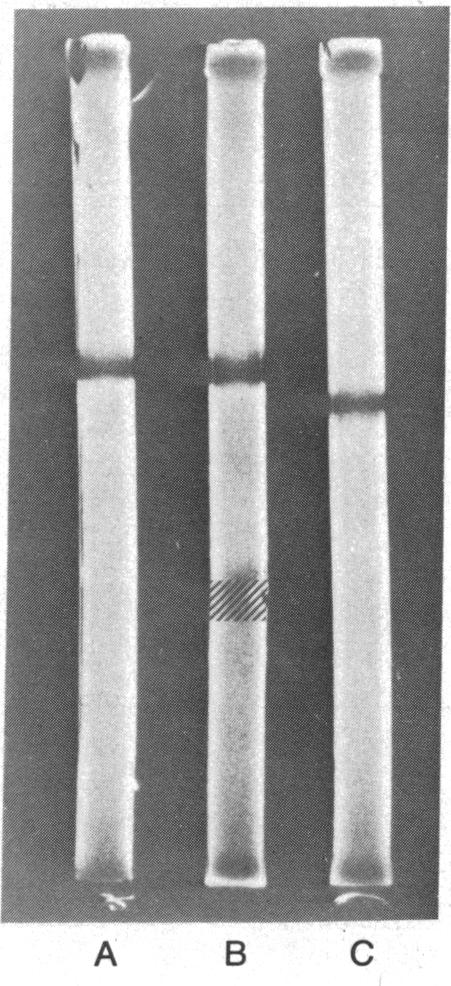
The importance of arginine residues 13 and 14 in the bee venom neurotoxin, apamin, was teste by the synthesis of replacement analogs. [13,14-di-Ndelta-trifluoroacetylornithine]Apamin was synthesized by the solid phase method on a benzhydrylamine resin. It was deprotected to [13,14-diornithine]apamin, which was then guanidinated to produce the 4-homoarginine-13,14-diarginine analog, [Har4]apamin. Neither the trifluoroacetylornithine analog nor the ornithine analog produced any detectable symptoms when injected intravenously into mice. However, the synthetic [Har4]apamin exhibited the full neurotoxic activity of native apamin and of [Har4]apamin derived from the natural toxin. This provided an internal structural control for the correctness of the primary structure of the inactive synthetic analogs and strengthened the conclusion that one, or both, of the arginine residues plays an important role in the action of apamin.
通过合成替代类似物,对蜂毒神经毒素蜂毒明肽中精氨酸残基13和14的重要性进行了测试。[13,14 - 二 - Nδ - 三氟乙酰鸟氨酸]蜂毒明肽通过在二苯甲基胺树脂上的固相法合成。将其脱保护得到[13,14 - 二鸟氨酸]蜂毒明肽,然后胍基化以产生4 - 高精氨酸 - 13,14 - 二精氨酸类似物[Har4]蜂毒明肽。当将三氟乙酰鸟氨酸类似物和鸟氨酸类似物静脉注射到小鼠体内时,均未产生任何可检测到的症状。然而,合成的[Har4]蜂毒明肽表现出天然蜂毒明肽以及源自天然毒素的[Har4]蜂毒明肽的全部神经毒性活性。这为无活性合成类似物一级结构的正确性提供了内部结构对照,并强化了以下结论:精氨酸残基中的一个或两个在蜂毒明肽的作用中起重要作用。