Ren Zhiguang, Gu Xiaoke, Lu Bin, Chen Yaqiong, Chen Guojiang, Feng Jiannan, Lin Jizhen, Zhang Yihua, Peng Hui
Department of Environment and Pharmacy, Tianjin Institute of Health and Environmental Medicine, Beijing, China.
Department of Immunology, Institute of Basic Medical Sciences, Beijing, China.
J Cell Mol Med. 2016 Jun;20(6):1095-105. doi: 10.1111/jcmm.12796. Epub 2016 Feb 10.
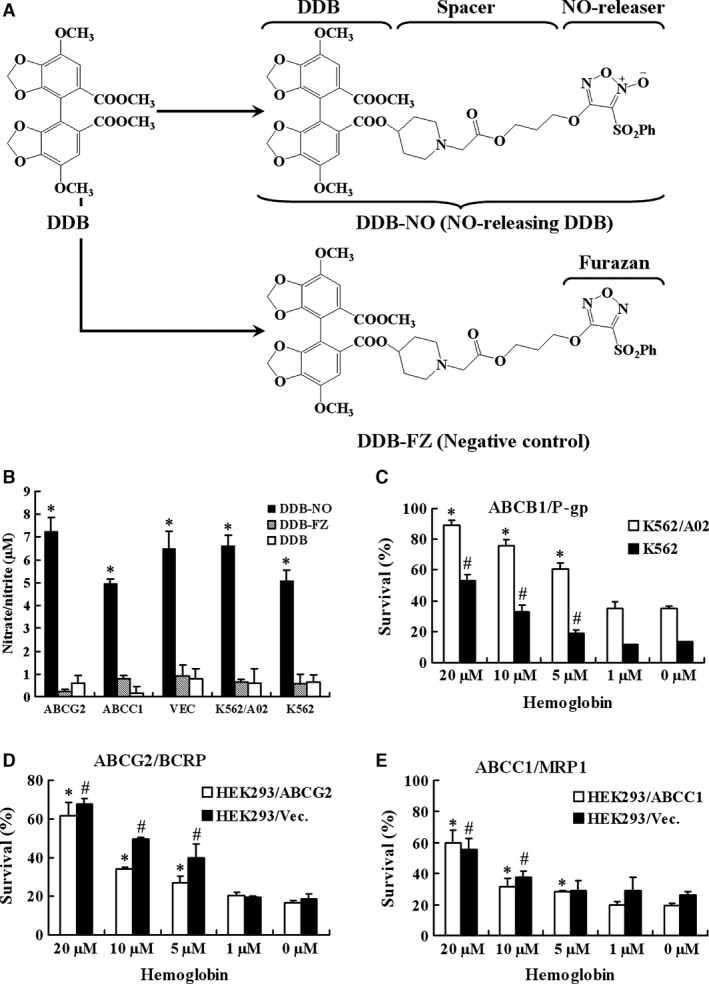
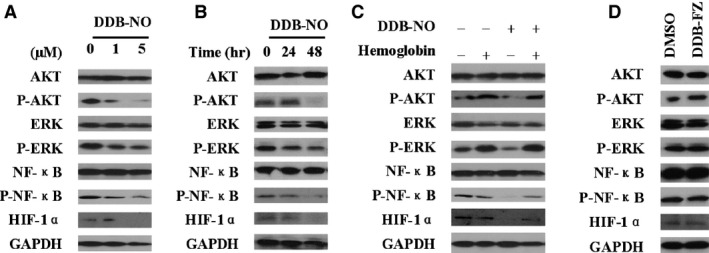
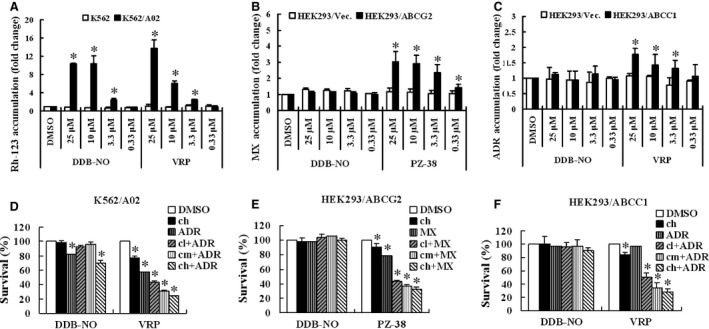
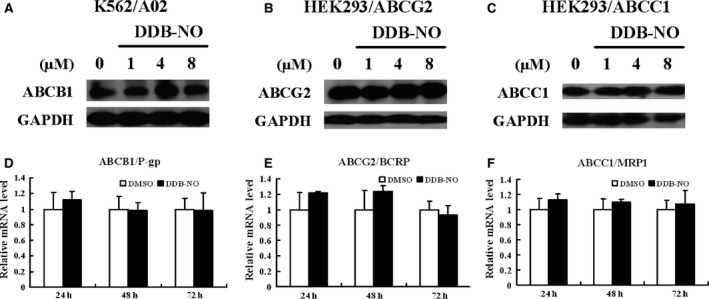
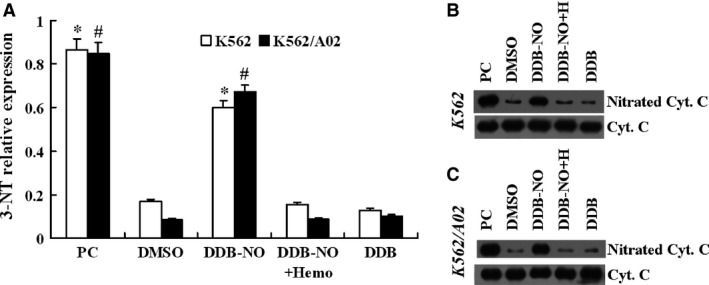
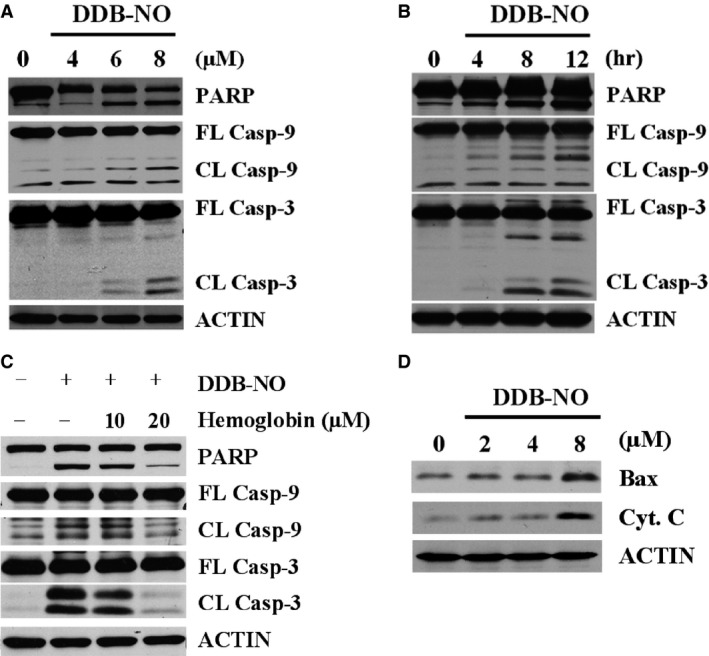
The development of multidrug resistance (MDR) not only actively transports a wide range of cytotoxic drugs across drug transporters but is also a complex interaction between a number of important cellular signalling pathways. Nitric oxide donors appear to be a new class of anticancer therapeutics for satisfying all the above conditions. Previously, we reported furoxan-based nitric oxide-releasing compounds that exhibited selective antitumour activity in vitro and in vivo. Herein, we demonstrate that bifendate (DDB)-nitric oxide, a synthetic furoxan-based nitric oxide-releasing derivative of bifendate, effectively inhibits the both sensitive and MDR tumour cell viability at a comparatively low concentration. Interestingly, the potency of DDB-nitric oxide is the independent of inhibition of the functions and expressions of three major ABC transporters. The mechanism of DDB-nitric oxide appears to be in two modes of actions by inducing mitochondrial tyrosine nitration and apoptosis, as well as by down-regulating HIF-1α expression and protein kinase B (AKT), extracellular signal-regulated kinases (ERK), nuclear factor κB (NF-κB) activation in MDR cells. Moreover, the addition of a typical nitric oxide scavenger significantly attenuated all the effects of DDB-nitric oxide, indicating that the cytotoxicity of DDB-nitric oxide is as a result of higher levels of nitric oxide release in MDR cancer cells. Given that acquired MDR to nitric oxide donors is reportedly difficult to achieve and genetically unstable, compound like DDB-nitric oxide may be a new type of therapeutic agent for the treatment of MDR tumours.
多药耐药性(MDR)的产生不仅会通过药物转运蛋白主动转运多种细胞毒性药物,而且还涉及许多重要细胞信号通路之间的复杂相互作用。一氧化氮供体似乎是一类满足上述所有条件的新型抗癌治疗药物。此前,我们报道了基于呋咱的一氧化氮释放化合物,其在体外和体内均表现出选择性抗肿瘤活性。在此,我们证明联苯双酯(DDB)-一氧化氮,一种基于呋咱的联苯双酯一氧化氮释放合成衍生物,在相对较低浓度下能有效抑制敏感和多药耐药肿瘤细胞的活力。有趣的是,DDB-一氧化氮的效力与三种主要ABC转运蛋白的功能和表达抑制无关。DDB-一氧化氮的作用机制似乎有两种作用方式,即通过诱导线粒体酪氨酸硝化和凋亡,以及通过下调多药耐药细胞中缺氧诱导因子-1α(HIF-1α)的表达、蛋白激酶B(AKT)、细胞外信号调节激酶(ERK)和核因子κB(NF-κB)的激活。此外,添加典型的一氧化氮清除剂可显著减弱DDB-一氧化氮的所有作用,表明DDB-一氧化氮的细胞毒性是多药耐药癌细胞中一氧化氮释放水平较高的结果。鉴于据报道对一氧化氮供体获得性多药耐药难以实现且基因不稳定,像DDB-一氧化氮这样的化合物可能是一种治疗多药耐药肿瘤的新型治疗药物。