Rajamani Deepa, Singh Pawan Kumar, Rottmann Bruce G, Singh Natasha, Bhasin Manoj K, Kumar Ashok
BIDMC Genomics, Proteomics, Bioinformatics and Systems Biology Center, Beth Israel Deaconess Medical Center, Boston, MA.
Kresge Eye Institute, Wayne State University, Detroit, MI.
Sci Rep. 2016 Feb 11;6:21502. doi: 10.1038/srep21502.
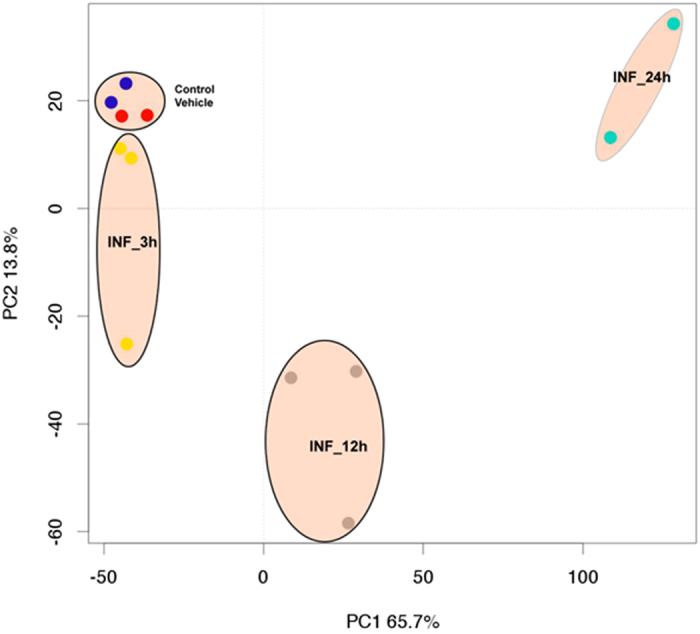
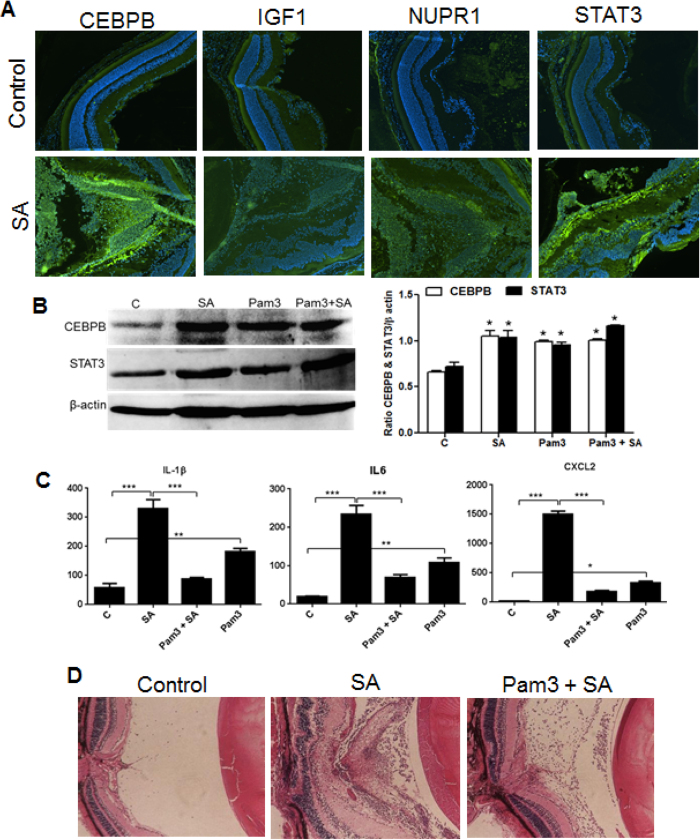
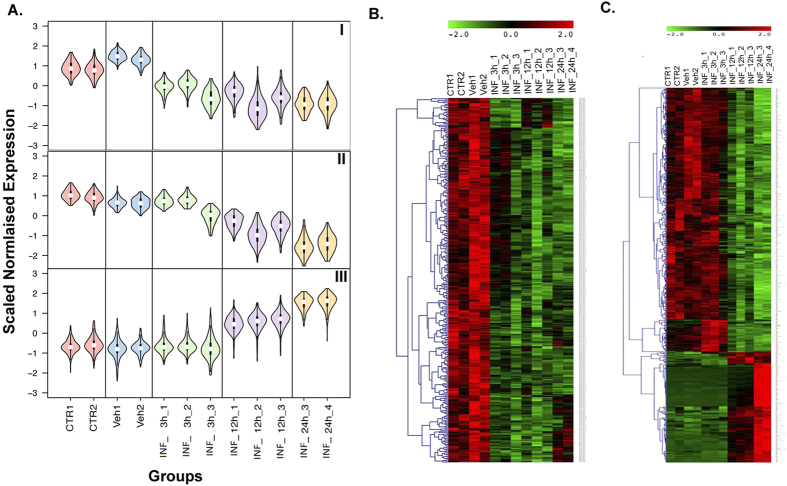
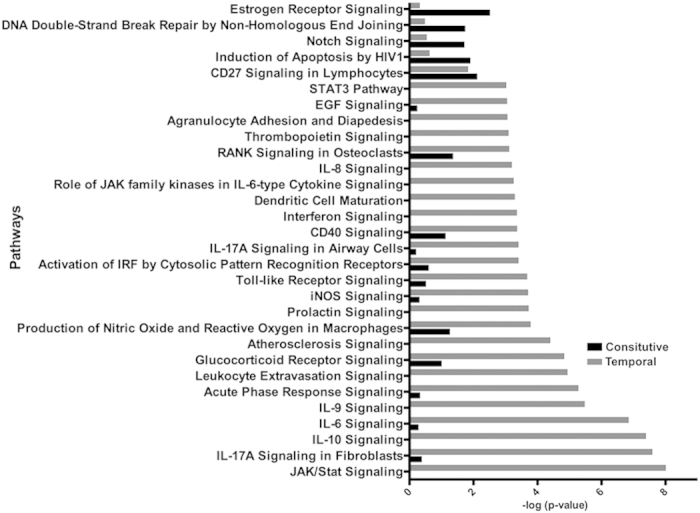
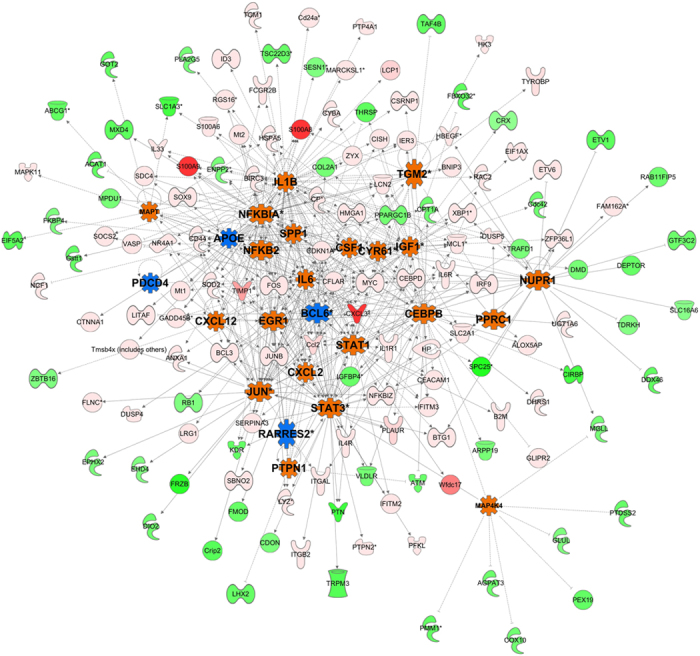
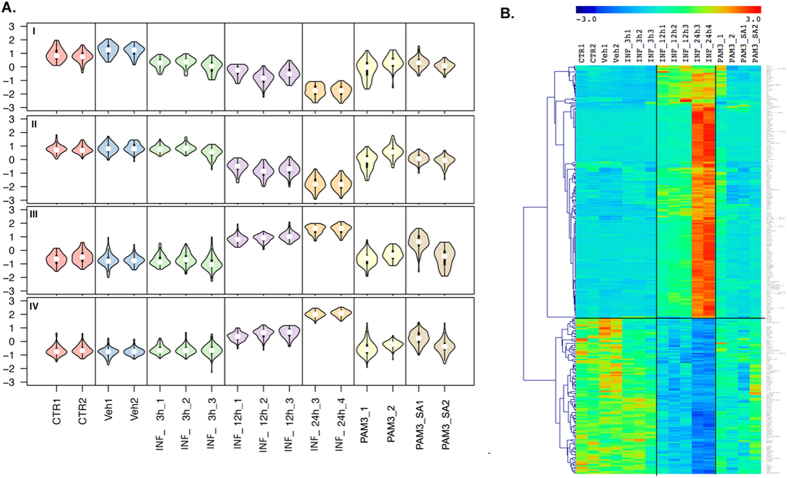
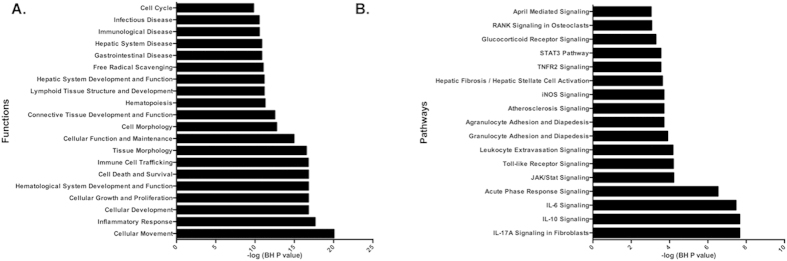
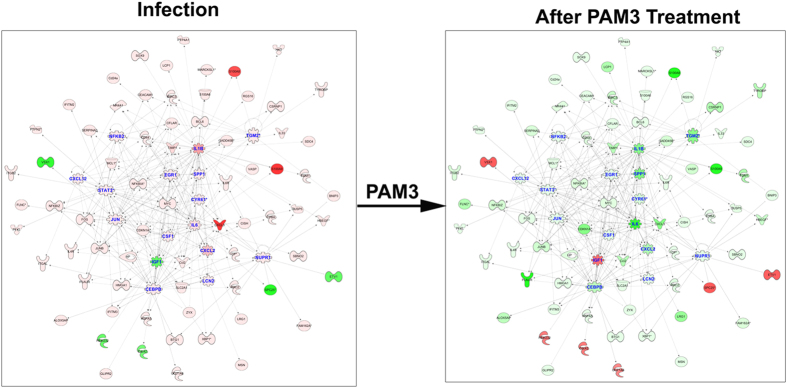
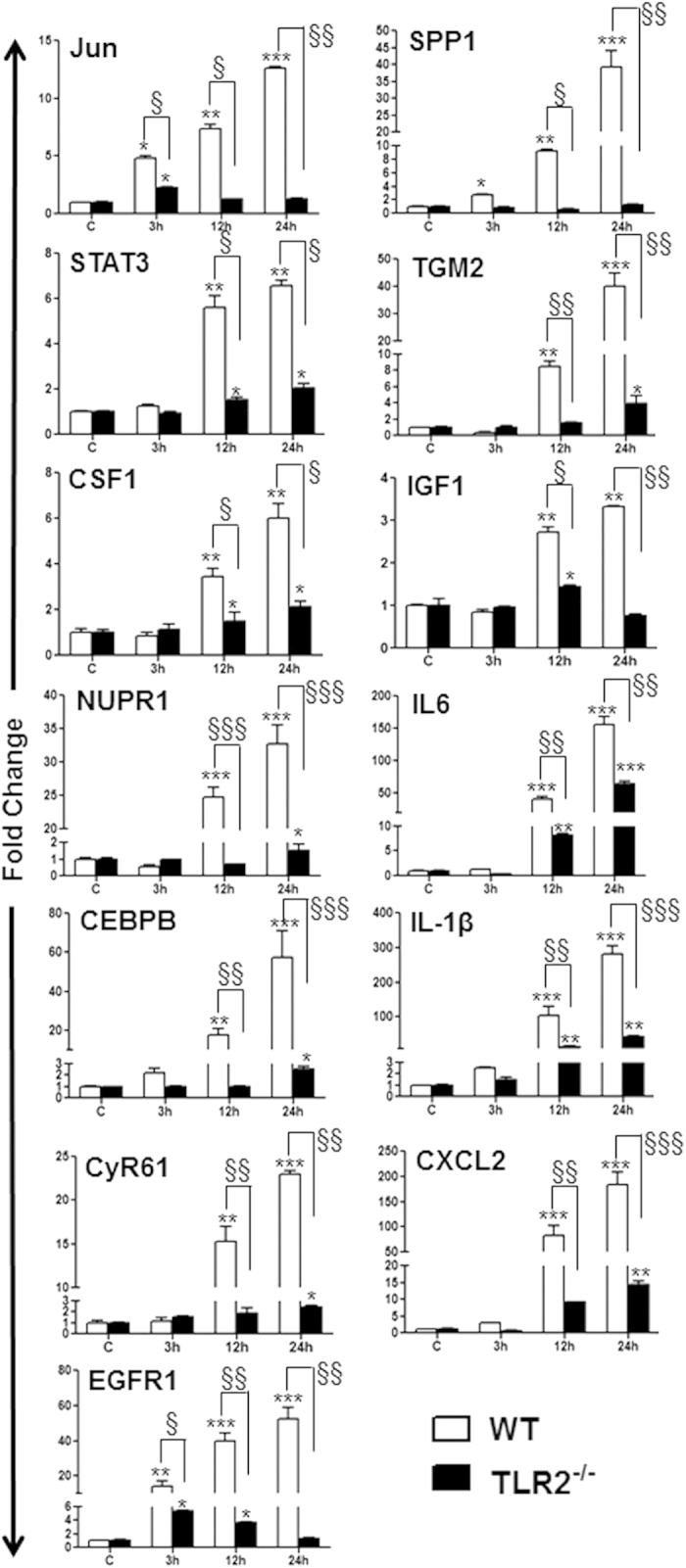
Bacterial endophthalmitis remains a devastating inflammatory condition associated with permanent vision loss. Hence, assessing the host response in this disease may provide new targets for intervention. Using a mouse model of Staphylococcus aureus (SA) endophthalmitis and performing retinal transcriptome analysis, we discovered progressive changes in the expression of 1,234 genes. Gene ontology (GO) and pathway analyses revealed the major pathways impacted in endophthalmitis includes: metabolism, inflammatory/immune, antimicrobial, cell trafficking, and lipid biosynthesis. Among the immune/inflammation pathways, JAK/Stat and IL-17A signaling were the most significantly affected. Interactive network-based analyses identified 13 focus hub genes (IL-6, IL-1β, CXCL2, STAT3, NUPR1, Jun, CSF1, CYR61, CEBPB, IGF-1, EGFR1, SPP1, and TGM2) within these important pathways. The expression of hub genes confirmed by qRT-PCR, ELISA (IL-6, IL-1β, and CXCL2), and Western blot or immunostaining (CEBP, STAT3, NUPR1, and IGF1) showed strong correlation with transcriptome data. Since TLR2 plays an important role in SA endophthalmitis, counter regulation analysis of TLR2 ligand pretreated retina or the use of retinas from TLR2 knockout mice showed the down-regulation of inflammatory regulatory genes. Collectively, our study provides, for the first time, a comprehensive analysis of the transcriptomic response and identifies key pathways regulating retinal innate responses in staphylococcal endophthalmitis.
细菌性眼内炎仍然是一种与永久性视力丧失相关的毁灭性炎症性疾病。因此,评估该疾病中的宿主反应可能会为干预提供新的靶点。利用金黄色葡萄球菌(SA)性眼内炎小鼠模型并进行视网膜转录组分析,我们发现了1234个基因表达的渐进性变化。基因本体(GO)和通路分析显示,眼内炎中受影响的主要通路包括:代谢、炎症/免疫、抗菌、细胞运输和脂质生物合成。在免疫/炎症通路中,JAK/Stat和IL-17A信号通路受影响最为显著。基于交互式网络的分析在这些重要通路中确定了13个关键枢纽基因(IL-6、IL-1β、CXCL2、STAT3、NUPR1、Jun、CSF1、CYR61、CEBPB、IGF-1、EGFR1、SPP1和TGM2)。通过qRT-PCR、ELISA(IL-6、IL-1β和CXCL2)以及蛋白质印迹或免疫染色(CEBP、STAT3、NUPR1和IGF1)对枢纽基因表达的确认显示与转录组数据有很强的相关性。由于TLR2在SA性眼内炎中起重要作用,对TLR2配体预处理的视网膜进行反向调节分析或使用来自TLR2基因敲除小鼠的视网膜显示炎症调节基因下调。总体而言,我们的研究首次对转录组反应进行了全面分析,并确定了调节葡萄球菌性眼内炎视网膜先天反应的关键通路。