Lassalle Louise, Engilberge Sylvain, Madern Dominique, Vauclare Pierre, Franzetti Bruno, Girard Eric
Univ. Grenoble Alpes, IBS, F-38044 Grenoble, France.
CNRS, IBS, F-38044 Grenoble, France.
Sci Rep. 2016 Feb 11;6:20629. doi: 10.1038/srep20629.
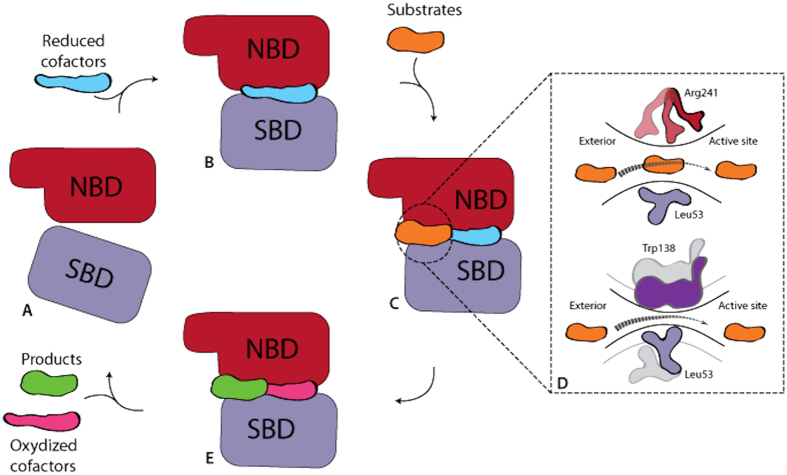
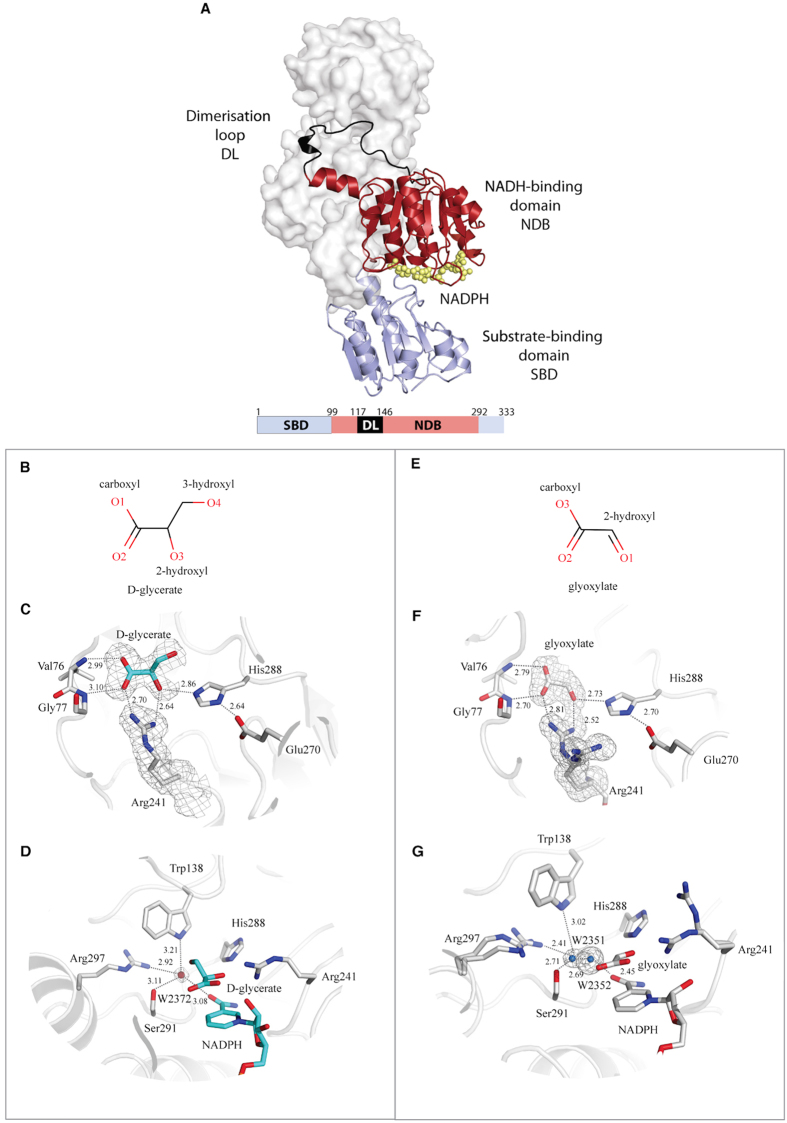
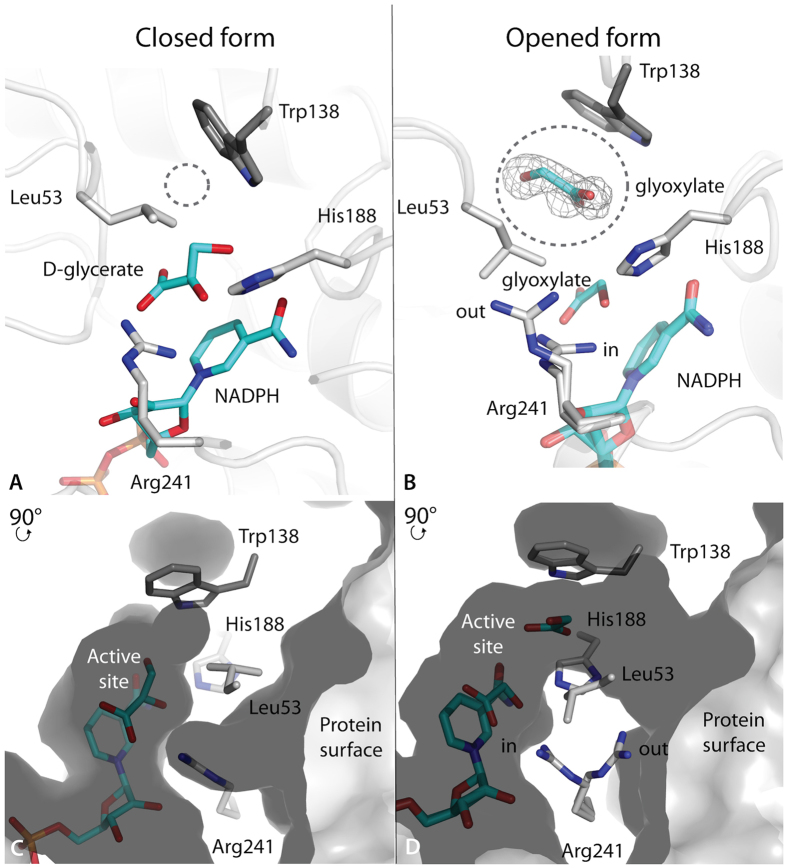
Glyoxylate accumulation within cells is highly toxic. In humans, it is associated with hyperoxaluria type 2 (PH2) leading to renal failure. The glyoxylate content within cells is regulated by the NADPH/NADH dependent glyoxylate/hydroxypyruvate reductases (GRHPR). These are highly conserved enzymes with a dual activity as they are able to reduce glyoxylate to glycolate and to convert hydroxypyruvate into D-glycerate. Despite the determination of high-resolution X-ray structures, the substrate recognition mode of this class of enzymes remains unclear. We determined the structure at 2.0 Å resolution of a thermostable GRHPR from Archaea as a ternary complex in the presence of D-glycerate and NADPH. This shows a binding mode conserved between human and archeal enzymes. We also determined the first structure of GRHPR in presence of glyoxylate at 1.40 Å resolution. This revealed the pivotal role of Leu53 and Trp138 in substrate trafficking. These residues act as gatekeepers at the entrance of a tunnel connecting the active site to protein surface. Taken together, these results allowed us to propose a general model for GRHPR mode of action.
细胞内乙醛酸的积累具有高度毒性。在人类中,它与2型高草酸尿症(PH2)相关,可导致肾衰竭。细胞内的乙醛酸含量由依赖于NADPH/NADH的乙醛酸/羟基丙酮酸还原酶(GRHPR)调节。这些是具有双重活性的高度保守的酶,因为它们能够将乙醛酸还原为乙醇酸,并将羟基丙酮酸转化为D-甘油酸。尽管已经确定了高分辨率的X射线结构,但这类酶的底物识别模式仍不清楚。我们测定了来自古细菌的一种热稳定GRHPR在D-甘油酸和NADPH存在下作为三元复合物时2.0Å分辨率的结构。这显示了人类和古细菌酶之间保守的结合模式。我们还测定了GRHPR在乙醛酸存在下1.40Å分辨率的首个结构。这揭示了Leu53和Trp138在底物转运中的关键作用。这些残基在连接活性位点与蛋白质表面的通道入口处充当守门人。综上所述,这些结果使我们能够提出GRHPR作用模式的一般模型。