Sakr Hany I, Coleman David T, Cardelli James A, Mathis J Michael
Department of Cellular Biology and Anatomy, LSU Health Shreveport, Shreveport, LA, USA; Gene Therapy Program, LSU Health Shreveport, Shreveport, LA, USA; Feist-Weiller Cancer Center, LSU Health Shreveport, Shreveport, LA, USA.
Feist-Weiller Cancer Center, LSU Health Shreveport, Shreveport, LA, USA; Department of Microbiology and Immunology, LSU Health Shreveport, Shreveport, LA, USA.
Oncolytic Virother. 2015;4:119-132. doi: 10.2147/OV.S87369.
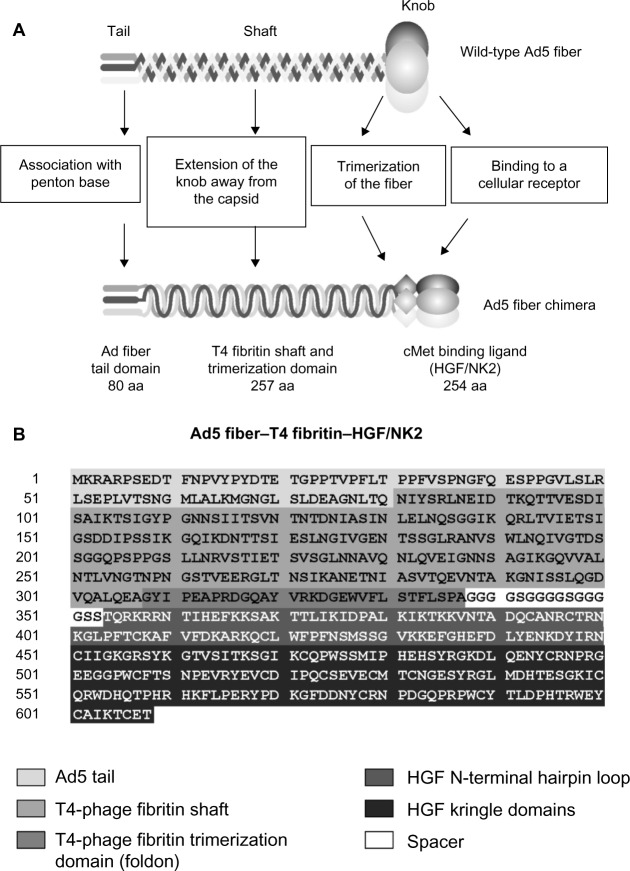
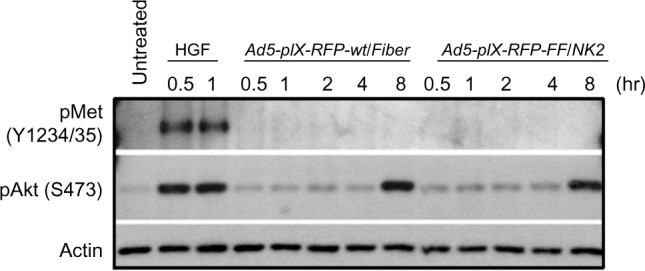
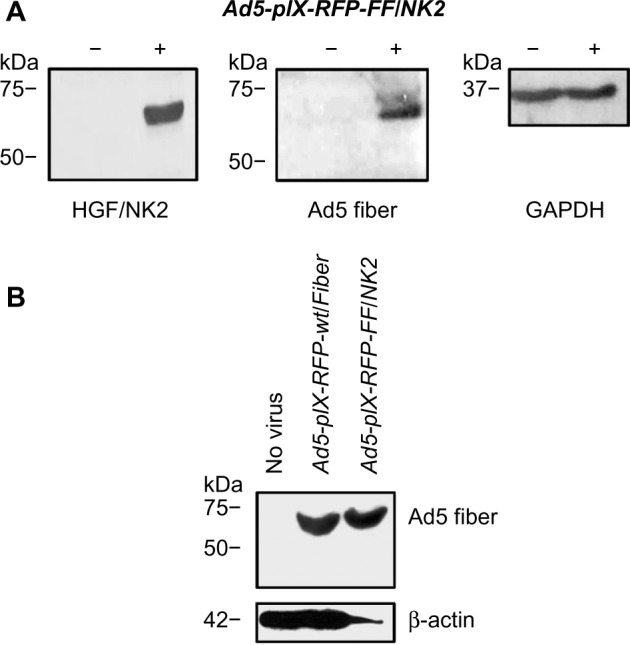
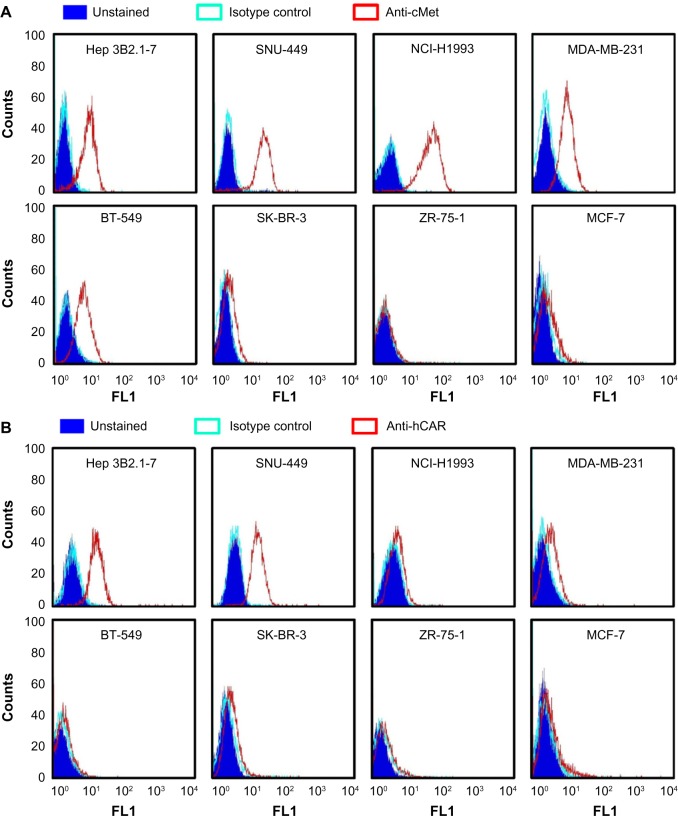
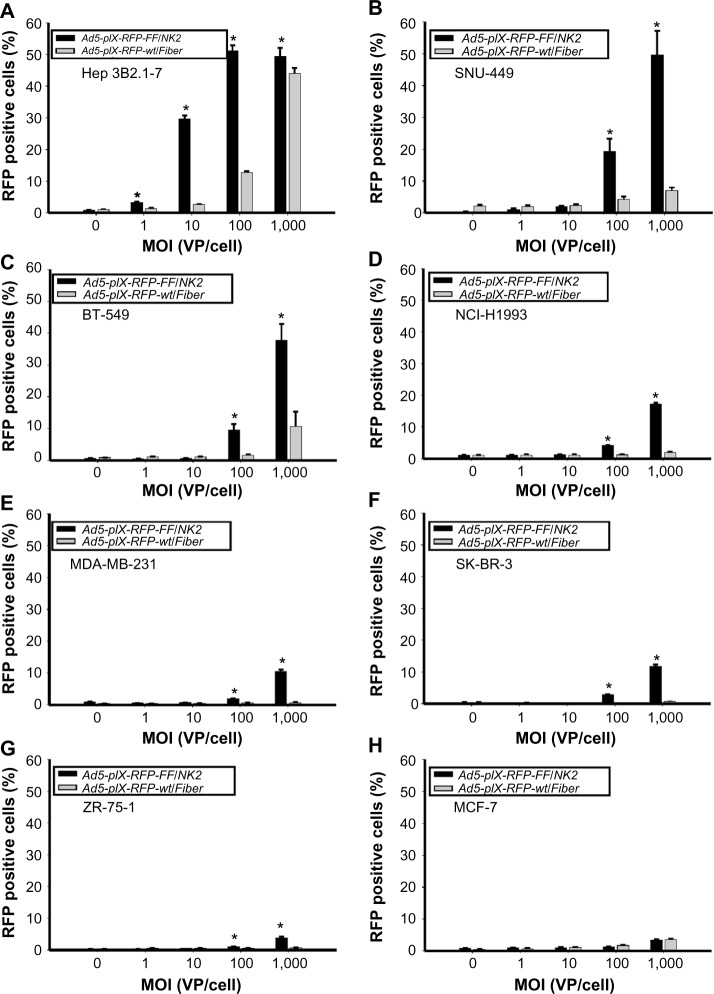
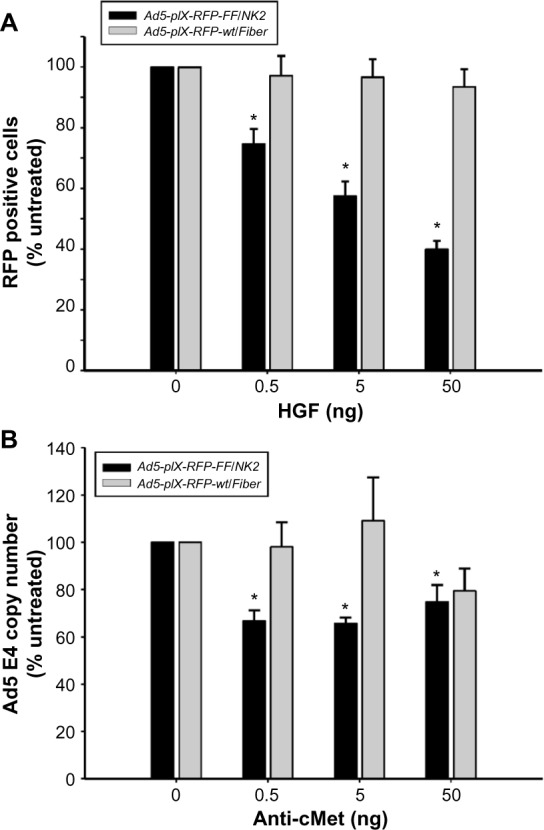
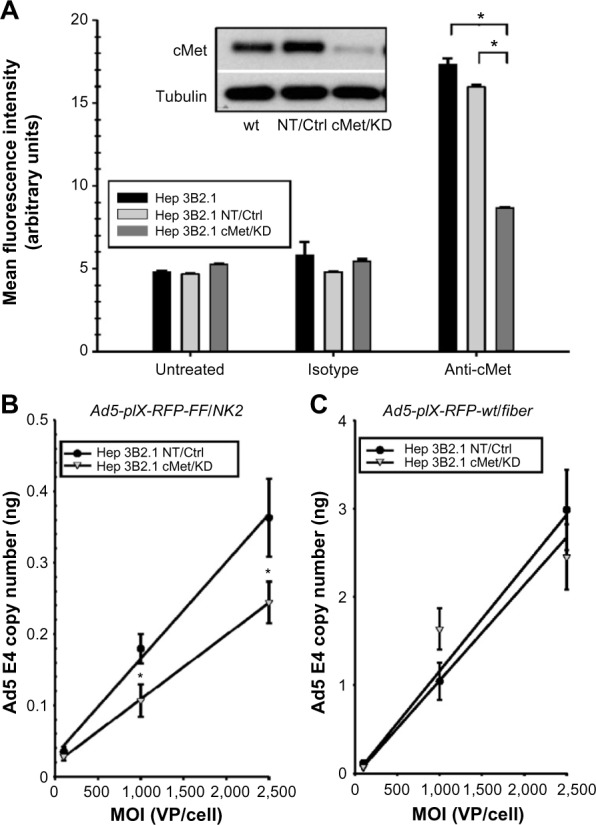
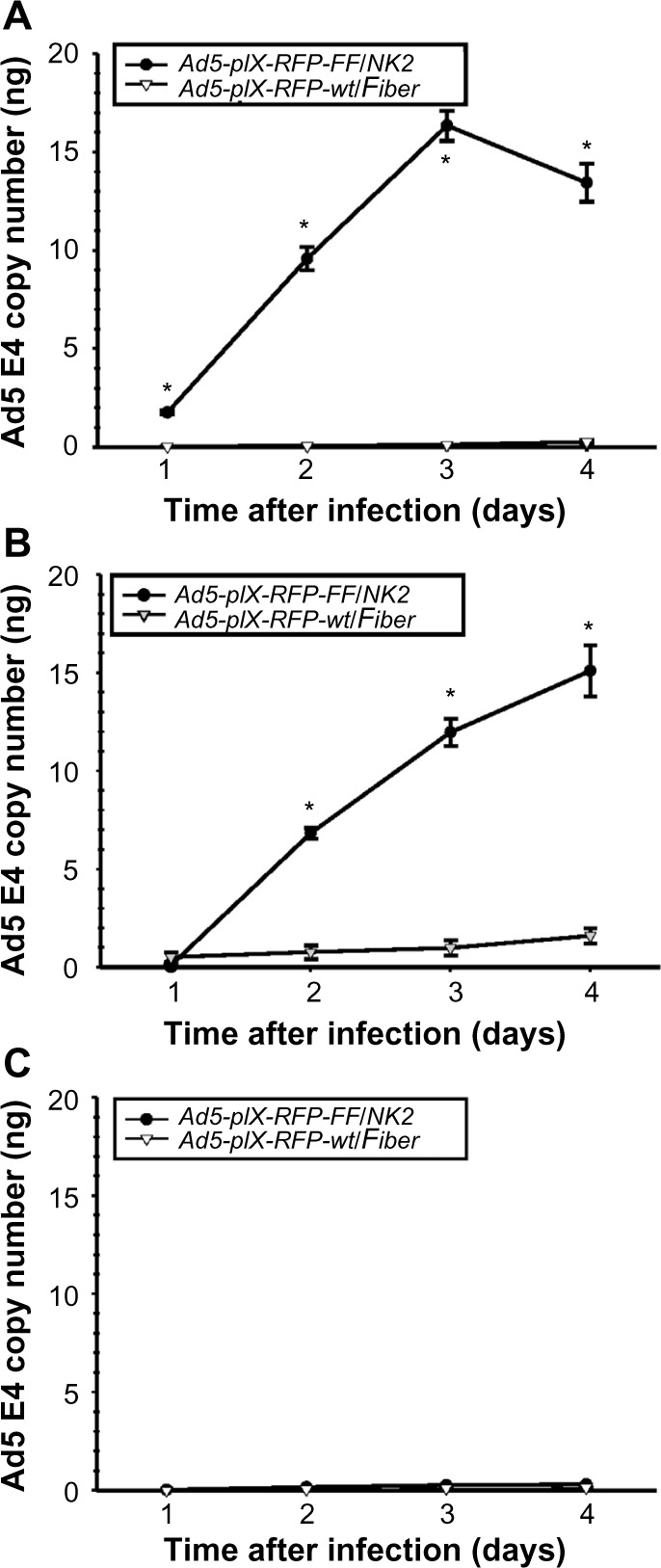
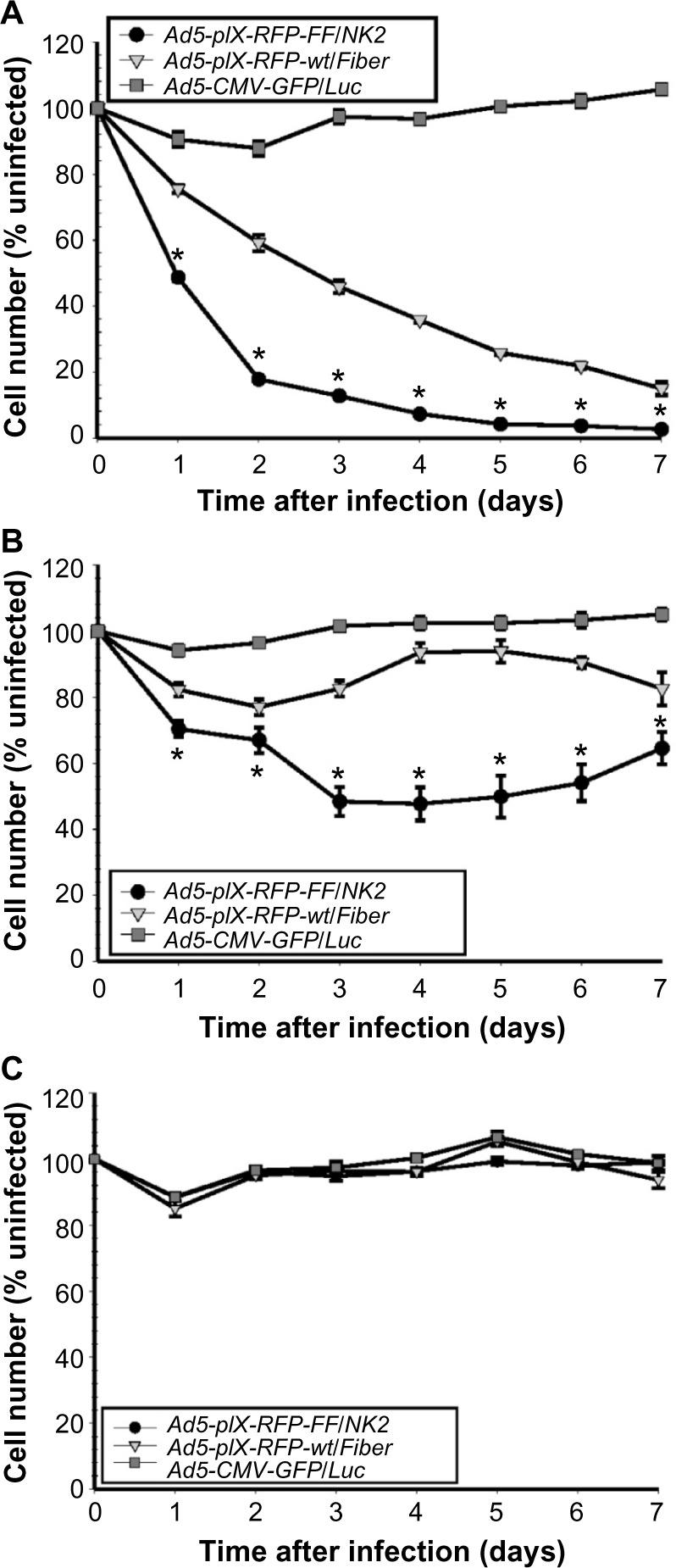
The cMet receptor is a homodimer with tyrosine kinase activity. Upon stimulation with its ligand, hepatocyte growth factor (HGF), the receptor mediates wide physiologic actions. The HGF-cMet signaling pathway is dysregulated in many cancers, which makes cMet an important target for novel therapeutic interventions. Oncolytic adenoviruses (Ads) have been used for the past three decades as a promising therapeutic approach for a wide array of neoplastic diseases. To date, achieving cancer-specific replication of oncolytic Ads has been accomplished by either viral genome deletions or by incorporating tumor selective promoters. To achieve novel specificity of oncolytic Ad infection of cancer cells that overexpress cMet, we inserted the HGF NK2 sequence, corresponding to a competitive antagonist of HGF binding to the cMet receptor, into the Ad serotype 5 (Ad5) fiber gene. The resulting vector, Ad5-pIX-RFP-FF/NK2, was rescued, amplified in HEK293 cells, and characterized. Binding specificity and viral infectivity were tested in various cancer cell lines that express varying levels of cMet and hCAR (the Ad5 receptor). We found that Ad5-pIX-RFP-FF/NK2 demonstrated binding specificity to the cMet receptor. In addition, there was enhanced viral infectivity and virus replication compared with a non-targeted Ad vector. Although NK2 weakly induces cMet receptor activation, our results showed no receptor phosphorylation in the context of an oncolytic Ad virus. In summary, these results suggest that an oncolytic Ad retargeted to the cMet receptor is a promising vector for developing a novel cancer therapeutic agent.
cMet受体是一种具有酪氨酸激酶活性的同型二聚体。在受到其配体肝细胞生长因子(HGF)刺激后,该受体介导广泛的生理作用。HGF-cMet信号通路在许多癌症中失调,这使得cMet成为新型治疗干预的重要靶点。在过去三十年中,溶瘤腺病毒一直被用作治疗多种肿瘤疾病的一种有前景的治疗方法。迄今为止,实现溶瘤腺病毒在癌症特异性复制已通过病毒基因组缺失或引入肿瘤选择性启动子来完成。为了实现对过表达cMet的癌细胞进行溶瘤腺病毒感染的新型特异性,我们将与HGF结合cMet受体的竞争性拮抗剂对应的HGF NK2序列插入腺病毒血清型5(Ad5)纤维基因中。得到的载体Ad5-pIX-RFP-FF/NK2被拯救出来,在HEK293细胞中扩增并进行特性鉴定。在表达不同水平cMet和hCAR(Ad5受体)的各种癌细胞系中测试了结合特异性和病毒感染性。我们发现Ad5-pIX-RFP-FF/NK2对cMet受体表现出结合特异性。此外,与非靶向腺病毒载体相比,病毒感染性和病毒复制增强。尽管NK2可微弱诱导cMet受体激活,但我们的结果显示在溶瘤腺病毒背景下无受体磷酸化。总之,这些结果表明,重新靶向cMet受体的溶瘤腺病毒是开发新型癌症治疗药物的一种有前景的载体。