Zheng D, Ye X, Zhang M Z, Sun Y, Wang J Y, Ni J, Zhang H P, Zhang L, Luo J, Zhang J, Tang L, Su B, Chen G, Zhu G, Gu Y, Xu J F
Shanghai Pulmonary Hospital, Tongji University Medical School, Shanghai, China.
Asia &Emerging Markets Innovative Medicine, AstraZeneca R&D, Shanghai, China.
Sci Rep. 2016 Feb 12;6:20913. doi: 10.1038/srep20913.
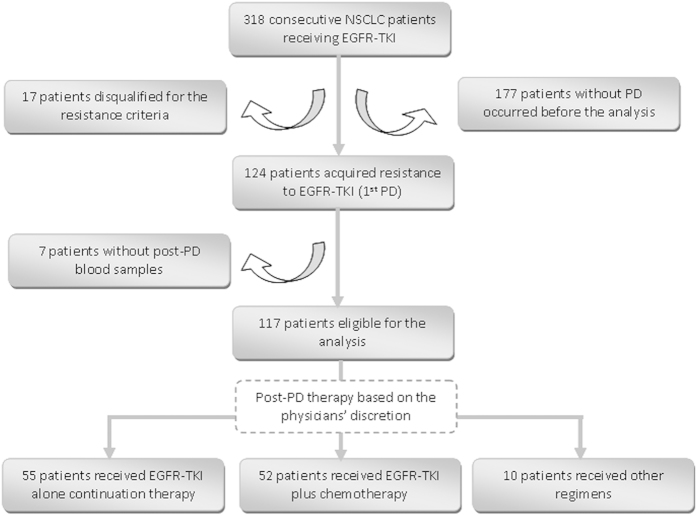
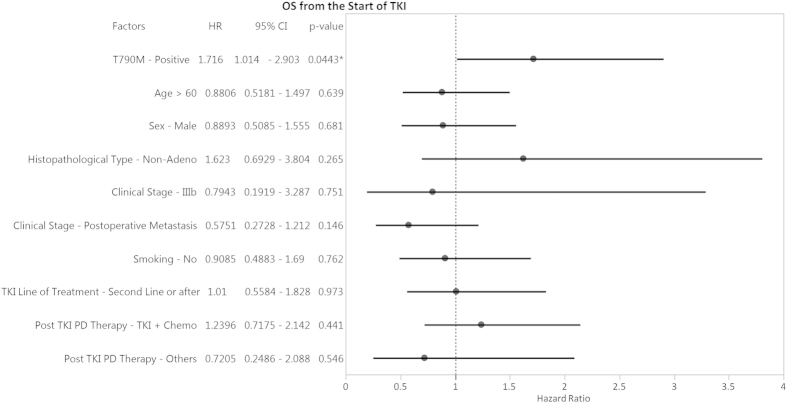
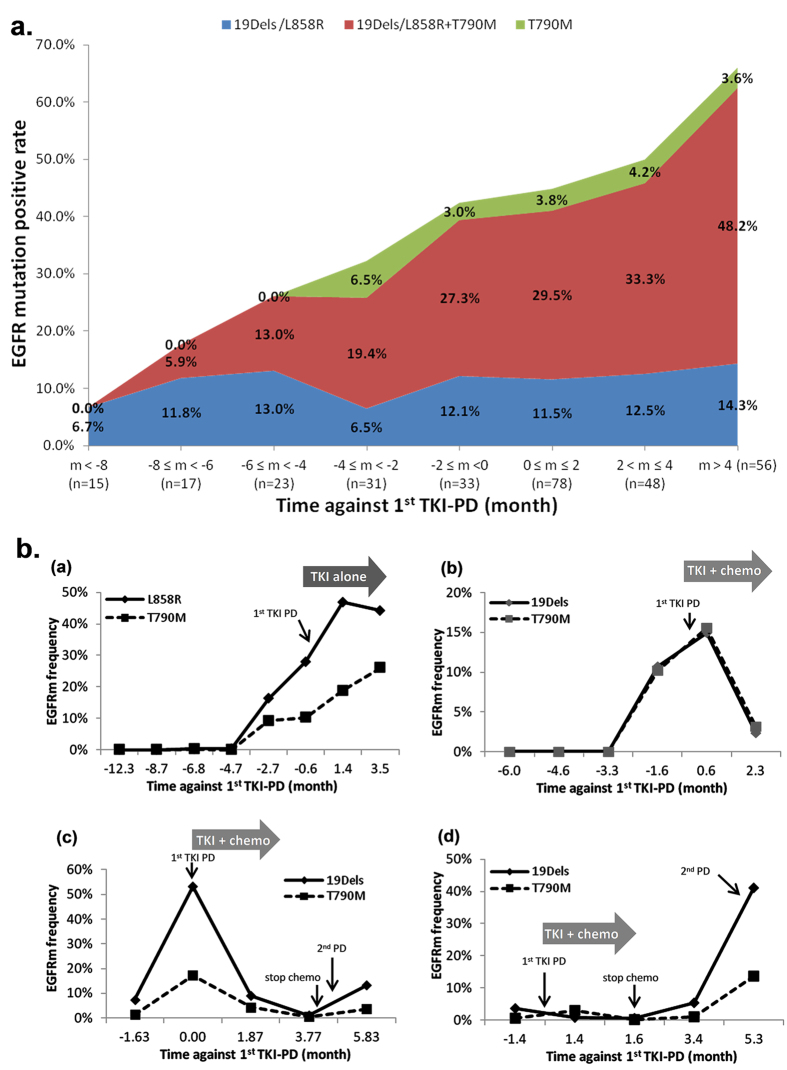
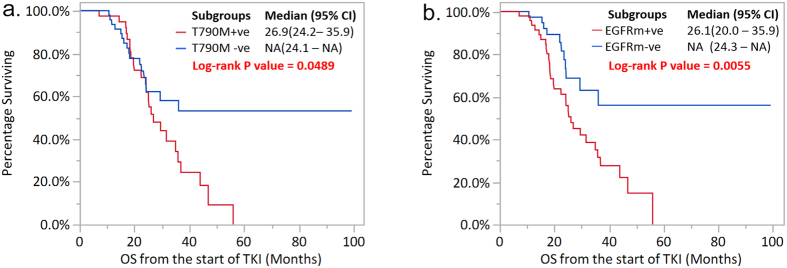
EGFR T790M mutation occurs in half of non-small cell lung cancer (NSCLC) patients with acquired EGFR-TKI (TKI) resistance, based on tumor re-biopsies using an invasive clinical procedure. Here, we dynamically monitored T790M mutation in circulating tumor DNA (ctDNA) using serial plasma samples from NSCLC patients receiving TKI through Droplet Digital PCR (ddPCR) method and the associations between overall survival (OS) starting from initial TKI treatment and the T790M ctDNA status detected in plasma were analyzed. Among 318 patients, 117 who acquired TKI resistance were eligible for the analysis. T790M ctDNA was detected in the plasma of 55/117 (47%) patients. Almost half of the T790M ctDNA positive patients were identified at a median time of 2.2 months prior to clinically progressive disease (PD). Furthermore, within the patients receiving TKI treatment at 2(nd) line or later, the T790M ctDNA positive group had significantly shorter OS than the negative group (median OS: 26.9 months versus NA, P = 0.0489). Our study demonstrates the feasibility of monitoring EGFR mutation dynamics in serial plasma samples from NSCLC patients receiving TKI therapy. T790M ctDNA can be detected in plasma before and after PD as a poor prognostic factor.
基于采用侵入性临床程序进行的肿瘤再次活检,在一半获得性表皮生长因子受体酪氨酸激酶抑制剂(EGFR-TKI)耐药的非小细胞肺癌(NSCLC)患者中发生了EGFR T790M突变。在此,我们通过液滴数字PCR(ddPCR)方法,使用接受TKI治疗的NSCLC患者的系列血浆样本动态监测循环肿瘤DNA(ctDNA)中的T790M突变,并分析了从初始TKI治疗开始的总生存期(OS)与血浆中检测到的T790M ctDNA状态之间的关联。在318例患者中,117例获得TKI耐药的患者符合分析条件。在55/117(47%)例患者的血浆中检测到T790M ctDNA。几乎一半的T790M ctDNA阳性患者在临床疾病进展(PD)前的中位时间2.2个月时被识别出来。此外,在接受二线或更晚TKI治疗的患者中,T790M ctDNA阳性组的OS明显短于阴性组(中位OS:26.9个月对未达到,P = 0.0489)。我们的研究证明了监测接受TKI治疗的NSCLC患者系列血浆样本中EGFR突变动态的可行性。T790M ctDNA可在PD前后的血浆中被检测到,作为一个不良预后因素。