Department of Hepatology, Tokyo Metropolitan Cancer and Infectious Diseases Center Komagome Hospital, 3-18-22 Honkomagome, Bunkyo-ku, Tokyo 113-8677, Japan.
Department of Molecular Medical Research and Cell Biology, Tokyo Metropolitan Institute of Medical Science, 2-1-6 Kami-kitazawa, Setagaya-ku, Tokyo 156-8506, Japan.
EBioMedicine. 2015 Oct 8;2(11):1751-8. doi: 10.1016/j.ebiom.2015.10.010. eCollection 2015 Nov.
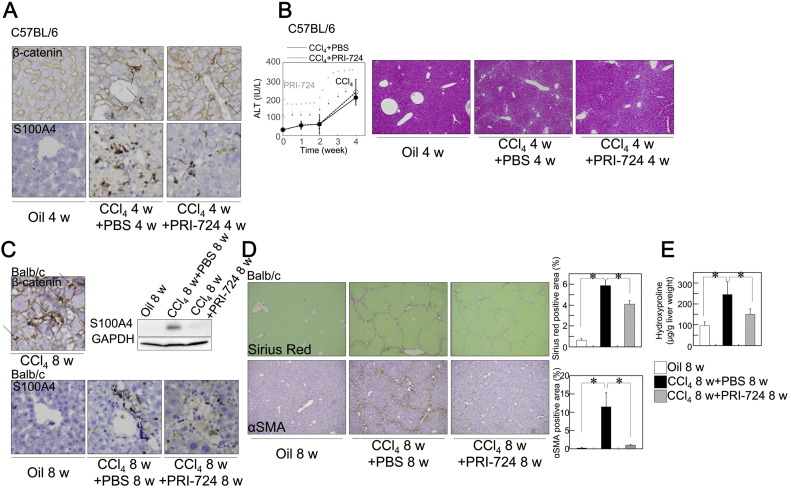
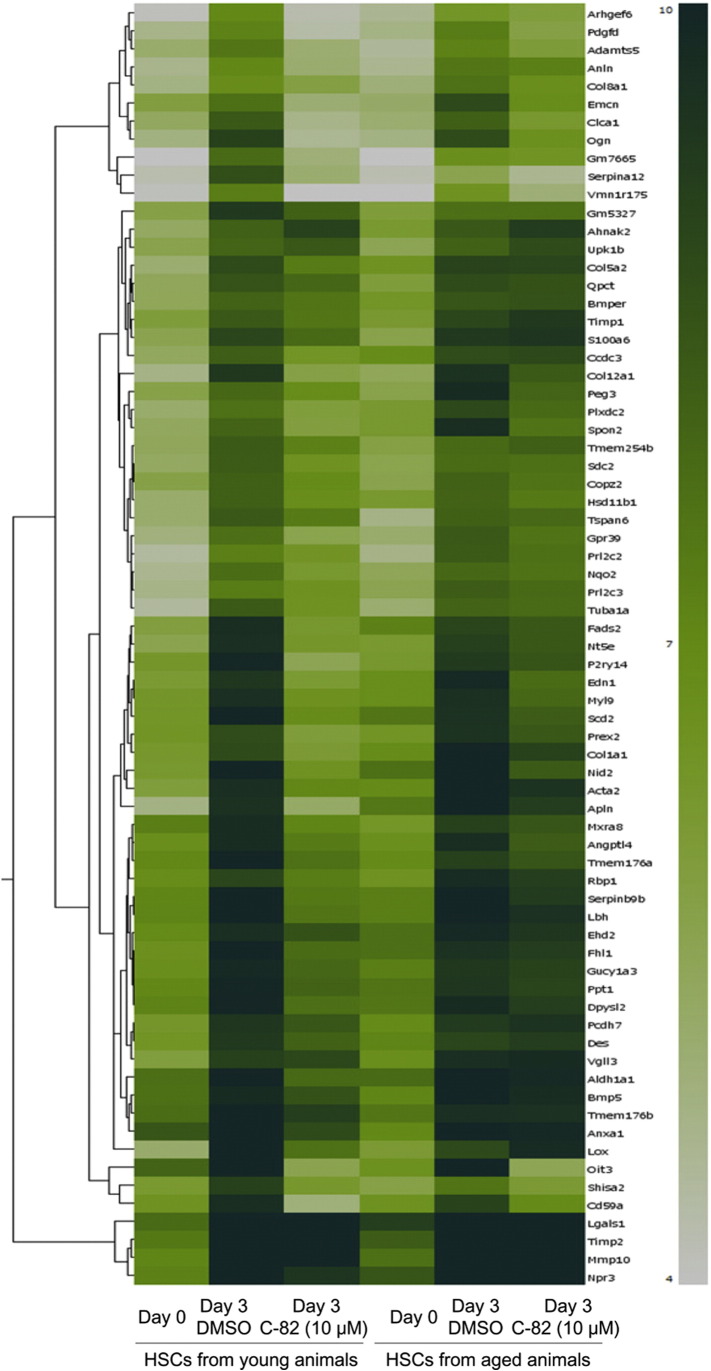
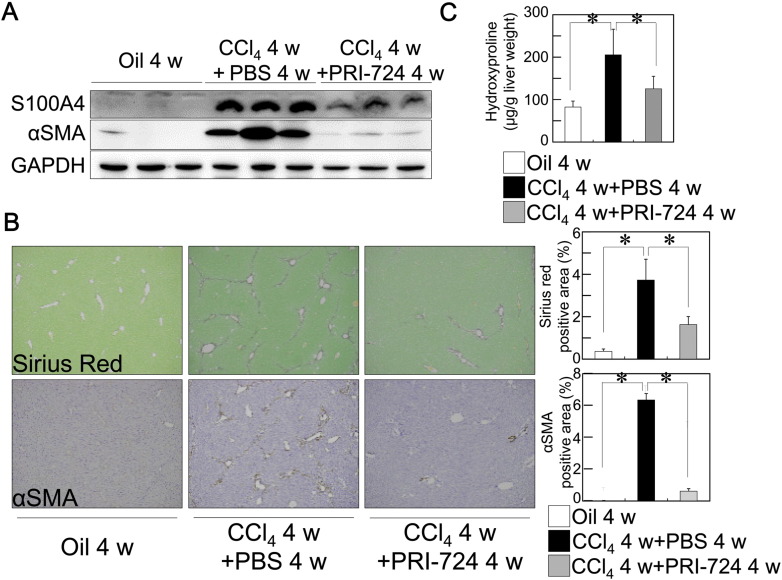
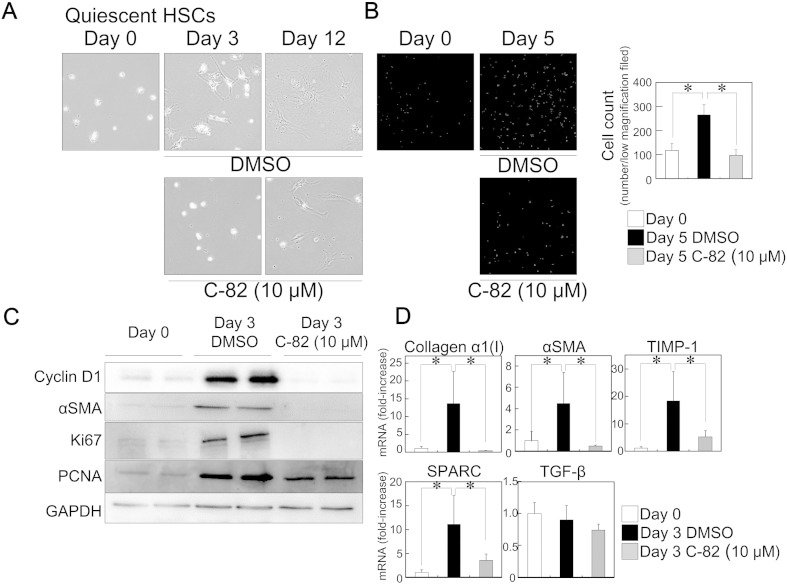
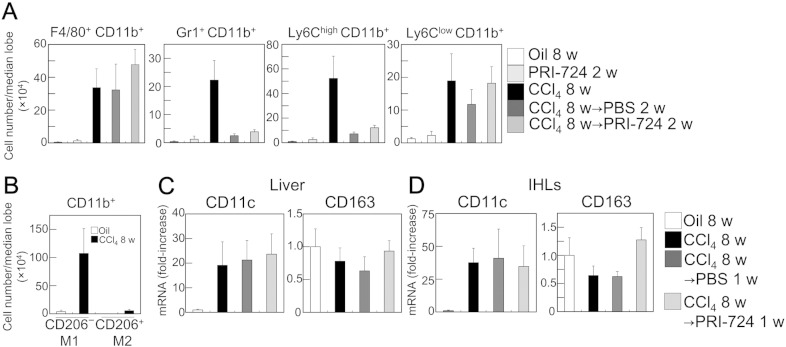
Wnt/β-catenin is involved in every aspect of embryonic development and in the pathogenesis of many human diseases, and is also implicated in organ fibrosis. However, the role of β-catenin-mediated signaling on liver fibrosis remains unclear. To explore this issue, the effects of PRI-724, a selective inhibitor of the cAMP-response element-binding protein-binding protein (CBP)/β-catenin interaction, on liver fibrosis were examined using carbon tetrachloride (CCl4)- or bile duct ligation (BDL)-induced mouse liver fibrosis models. Following repetitive CCl4 administrations, the nuclear translocation of β-catenin was observed only in the non-parenchymal cells in the liver. PRI-724 treatment reduced the fibrosis induced by CCl4 or BDL. C-82, an active form of PRI-724, inhibited the activation of isolated primary mouse quiescent hepatic stellate cells (HSCs) and promoted cell death in culture-activated HSCs. During the fibrosis resolution period, an increase in F4/80(+) CD11b(+) and Ly6C(low) CD11b(+) macrophages was induced by CCl4 and was sustained for two weeks thereafter, even after having stopped CCl4 treatment. PRI-724 accelerated the resolution of CCl4-induced liver fibrosis, and this was accompanied by increased matrix metalloproteinase (MMP)-9, MMP-2, and MMP-8 expression in intrahepatic leukocytes. In conclusion, targeting the CBP/β-catenin interaction may become a new therapeutic strategy in treating liver fibrosis.
Wnt/β-catenin 参与胚胎发育的各个方面以及许多人类疾病的发病机制,也与器官纤维化有关。然而,β-catenin 介导的信号转导在肝纤维化中的作用尚不清楚。为了探讨这个问题,使用四氯化碳 (CCl4) 或胆管结扎 (BDL) 诱导的小鼠肝纤维化模型,研究了选择性抑制 cAMP 反应元件结合蛋白结合蛋白 (CBP)/β-catenin 相互作用的 PRI-724 对肝纤维化的影响。在重复 CCl4 给药后,仅在肝脏的非实质细胞中观察到 β-catenin 的核易位。PRI-724 治疗可减少 CCl4 或 BDL 诱导的纤维化。PRI-724 的活性形式 C-82 抑制分离的原代小鼠静止肝星状细胞 (HSCs) 的激活,并促进培养激活的 HSCs 细胞死亡。在纤维化消退期间,CCl4 诱导 F4/80(+) CD11b(+) 和 Ly6C(low) CD11b(+) 巨噬细胞增加,并持续两周,即使在停止 CCl4 治疗后也是如此。PRI-724 加速 CCl4 诱导的肝纤维化消退,这伴随着肝内白细胞中基质金属蛋白酶 (MMP)-9、MMP-2 和 MMP-8 表达增加。总之,靶向 CBP/β-catenin 相互作用可能成为治疗肝纤维化的一种新的治疗策略。