Ma Zhicong, Han Qi, Wang Xiaolei, Ai Zisheng, Zheng Yongjun
Department of Anesthesiology, The 2nd Hospital of Shanxi Medical University, Taiyuan, 030001, China.
Department of Anesthesiology, Xiangya Hospitalaffiliated to Central South University, Changsha 410008, China.
PLoS One. 2016 Feb 12;11(2):e0148792. doi: 10.1371/journal.pone.0148792. eCollection 2016.
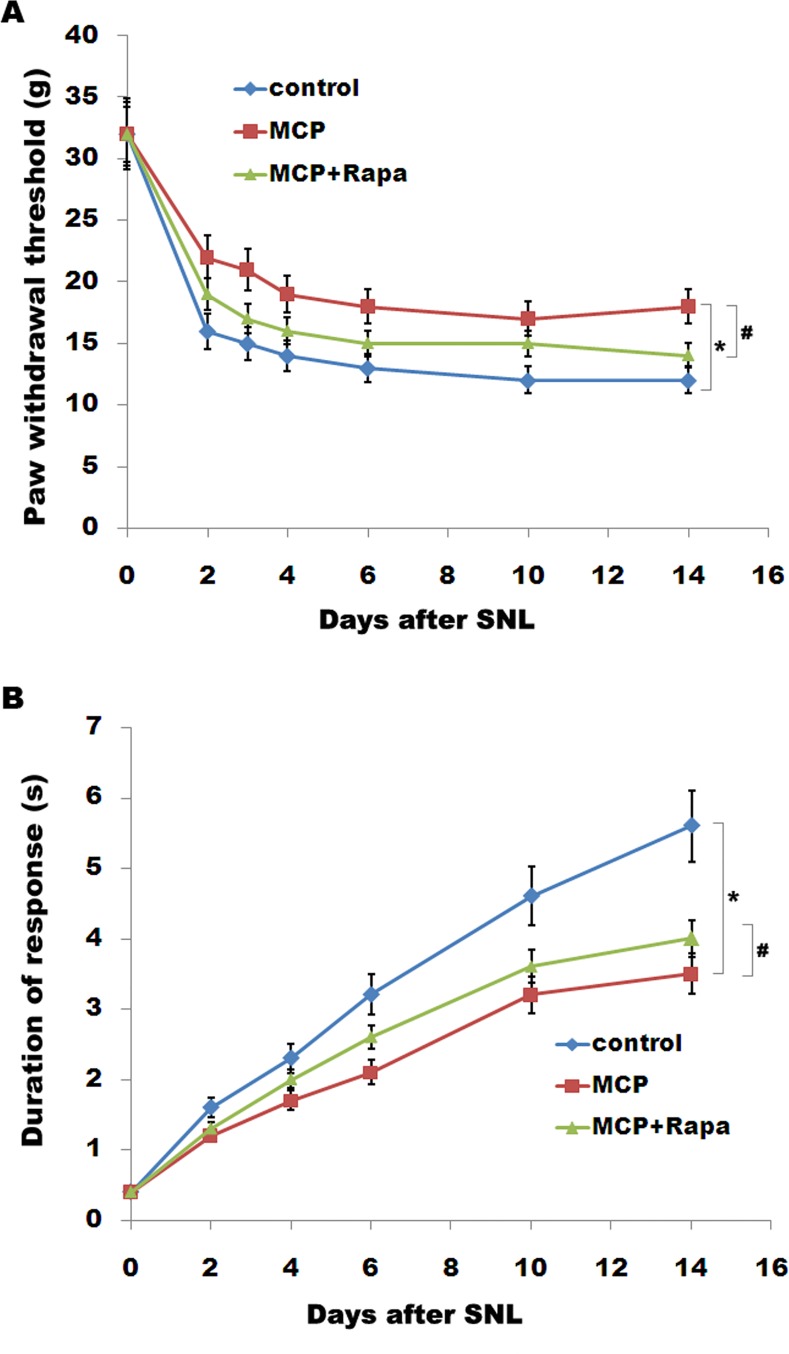
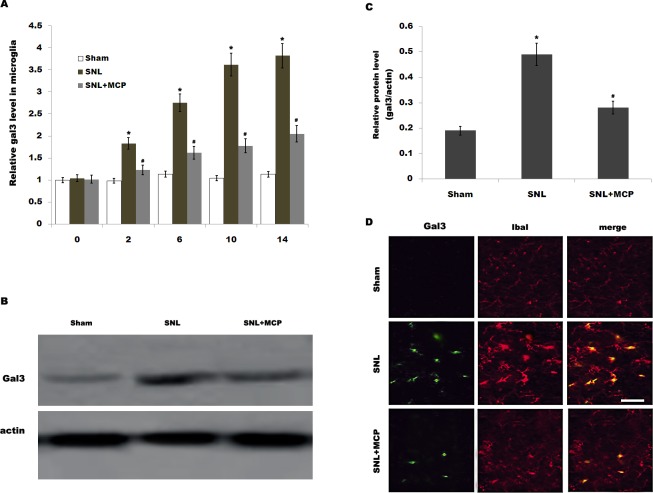
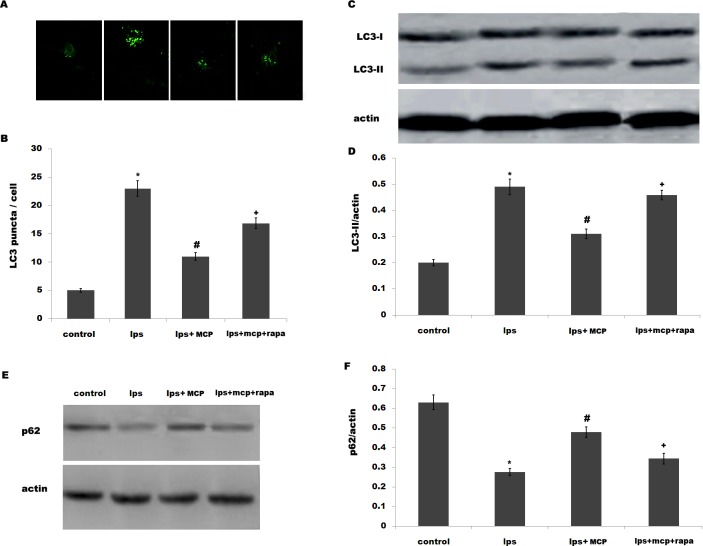
Neuropathic pain remains a prevalent and persistent clinical problem because it is often poorly responsive to the currently used analgesics. It is very urgent to develop novel drugs to alleviate neuropathic pain. Galectin-3 (gal3) is a multifunctional protein belonging to the carbohydrate-ligand lectin family, which is expressed by different cells. Emerging studies showed that gal3 elicits a pro-inflammatory response by recruiting and activating lymphocytes, macrophages and microglia. In the study we investigated whether gal3 inhibition could suppress neuroinflammation and alleviate neuropathic pain following peripheral nerve injury. We found that L5 spinal nerve ligation (SNL) increases the expression of gal3 in dorsal root ganglions at the mRNA and protein level. Intrathecal administration of modified citrus pectin (MCP), a gal3 inhibitor, reduces gal3 expression in dorsal root ganglions. MCP treatment also inhibits SNL-induced gal3 expression in primary rat microglia. SNL results in an increased activation of autophagy that contributes to microglial activation and subsequent inflammatory response. Intrathecal administration of MCP significantly suppresses SNL-induced autophagy activation. MCP also inhibits lipopolysaccharide (LPS)-induced autophagy in cultured microglia in vitro. MCP further decreases LPS-induced expression of proinflammatory mediators including IL-1β, TNF-α and IL-6 by regulating autophagy. Intrathecal administration of MCP results in adecreased mechanical and cold hypersensitivity following SNL. These results demonstrated that gal3 inhibition is associated with the suppression of SNL-induced inflammatory process andneurophathic pain attenuation.
神经性疼痛仍然是一个普遍且持续存在的临床问题,因为它对目前使用的镇痛药往往反应不佳。开发新型药物来缓解神经性疼痛非常紧迫。半乳糖凝集素-3(gal3)是一种属于碳水化合物配体凝集素家族的多功能蛋白质,由不同细胞表达。新出现的研究表明,gal3通过招募和激活淋巴细胞、巨噬细胞和小胶质细胞引发促炎反应。在本研究中,我们调查了抑制gal3是否能抑制神经炎症并减轻周围神经损伤后的神经性疼痛。我们发现,L5脊神经结扎(SNL)在mRNA和蛋白质水平上增加了背根神经节中gal3的表达。鞘内注射半乳糖凝集素-3抑制剂改性柑橘果胶(MCP)可降低背根神经节中gal3的表达。MCP治疗还可抑制原代大鼠小胶质细胞中SNL诱导的gal3表达。SNL导致自噬激活增加,这有助于小胶质细胞激活和随后的炎症反应。鞘内注射MCP可显著抑制SNL诱导的自噬激活。MCP在体外也能抑制培养的小胶质细胞中脂多糖(LPS)诱导的自噬。MCP通过调节自噬进一步降低LPS诱导的促炎介质包括IL-1β、TNF-α和IL-6的表达。鞘内注射MCP可减轻SNL后的机械性和冷超敏反应。这些结果表明,抑制gal3与抑制SNL诱导的炎症过程和减轻神经性疼痛有关。