Egger David A, Rappe Andrew M, Kronik Leeor
Department of Materials and Interfaces, Weizmann Institute of Science , Rehovoth 76100, Israel.
The Makineni Theoretical Laboratories, Department of Chemistry, University of Pennsylvania , Philadelphia, Pennsylvania 19104-6323, United States.
Acc Chem Res. 2016 Mar 15;49(3):573-81. doi: 10.1021/acs.accounts.5b00540. Epub 2016 Feb 15.
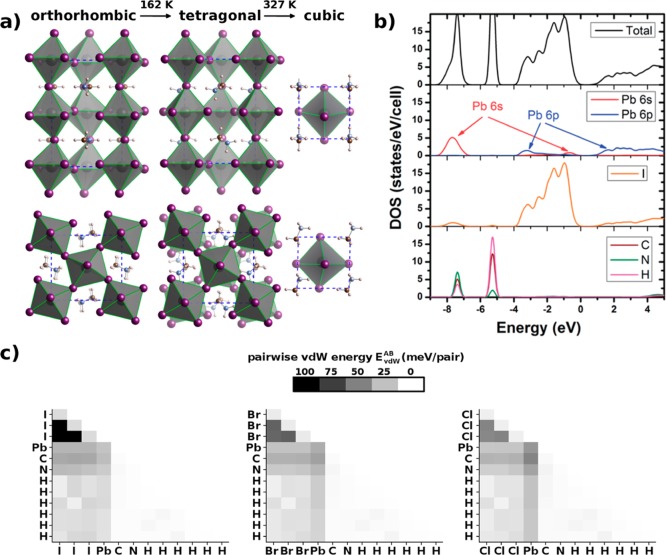
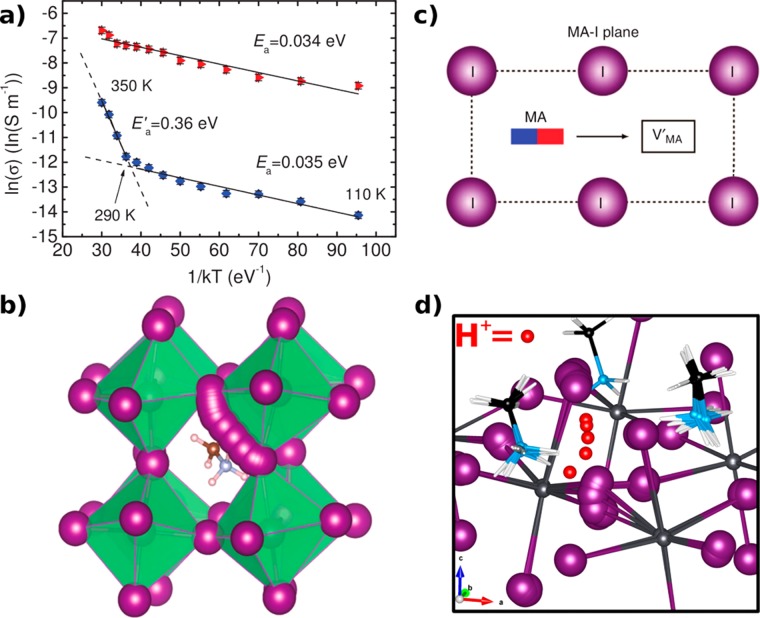
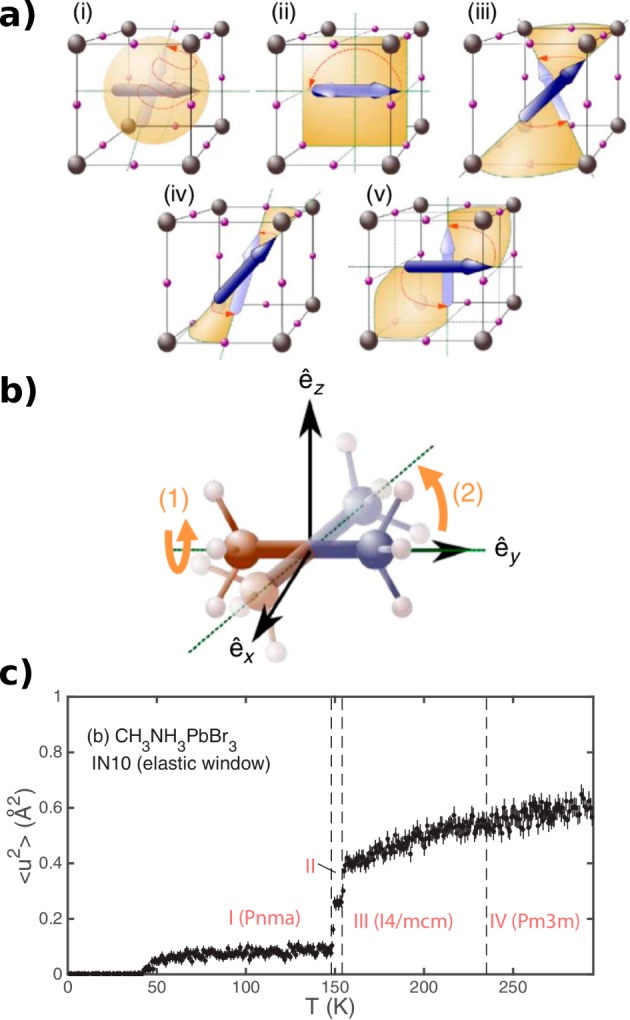
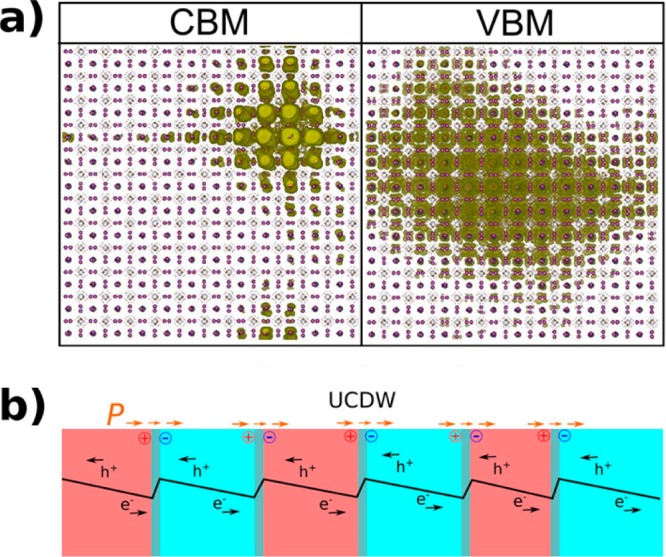
Hybrid organic-inorganic perovskites (HOIPs) are crystals with the structural formula ABX3, where A, B, and X are organic and inorganic ions, respectively. While known for several decades, HOIPs have only in recent years emerged as extremely promising semiconducting materials for solar energy applications. In particular, power-conversion efficiencies of HOIP-based solar cells have improved at a record speed and, after only little more than 6 years of photovoltaics research, surpassed the 20% threshold, which is an outstanding result for a solution-processable material. It is thus of fundamental importance to reveal physical and chemical phenomena that contribute to, or limit, these impressive photovoltaic efficiencies. To understand charge-transport and light-absorption properties of semiconducting materials, one often invokes a lattice of ions displaced from their static positions only by harmonic vibrations. However, a preponderance of recent studies suggests that this picture is not sufficient for HOIPs, where a variety of structurally dynamic effects, beyond small harmonic vibrations, arises already at room temperature. In this Account, we focus on these effects. First, we review structure and bonding in HOIPs and relate them to the promising charge-transport and absorption properties of these materials, in terms of favorable electronic properties. We point out that HOIPs are much "softer" mechanically, compared to other efficient solar-cell materials, and that this can result in large ionic displacements at room temperature. We therefore focus next on dynamic structural effects in HOIPs, going beyond a static band-structure picture. Specifically, we discuss pertinent experimental and theoretical findings as to phase-transition behavior and molecular/octahedral rearrangements. We then discuss atomic diffusion phenomena in HOIPs, with an emphasis on the migration of intrinsic and extrinsic ionic species. From this combined perspective, HOIPs appear as highly dynamic materials, in which structural fluctuations and long-range ionic motion have an unusually strong impact on charge-transport and optical properties. We highlight the potential implications of these effects for several intriguing phenomenological observations, ranging from scattering mechanisms and lifetimes of charge carriers to light-induced structural effects and ionic conduction.
有机-无机杂化钙钛矿(HOIPs)是一种化学式为ABX₃的晶体,其中A、B和X分别为有机离子和无机离子。尽管HOIPs已为人所知数十年,但直到近年来才成为太阳能应用中极具潜力的半导体材料。特别是,基于HOIPs的太阳能电池的功率转换效率以创纪录的速度提高,在仅仅6年多的光伏研究之后,就超过了20%的阈值,这对于一种可溶液加工的材料来说是一个出色的结果。因此,揭示有助于或限制这些令人印象深刻的光伏效率的物理和化学现象至关重要。为了理解半导体材料的电荷传输和光吸收特性,人们常常设想一个离子晶格,其中离子仅通过简谐振动偏离其静态位置。然而,最近的大量研究表明,对于HOIPs来说,这种情况并不充分,在室温下就已经出现了除小简谐振动之外的各种结构动力学效应。在本综述中,我们将重点关注这些效应。首先,我们回顾HOIPs的结构和键合,并根据有利的电子性质将它们与这些材料有前景的电荷传输和吸收特性联系起来。我们指出,与其他高效太阳能电池材料相比,HOIPs在机械性能上要“软”得多,这可能导致室温下出现大的离子位移。因此,接下来我们将重点关注HOIPs中的动态结构效应,超越静态能带结构的描述。具体来说,我们将讨论关于相变行为和分子/八面体重排的相关实验和理论发现。然后,我们将讨论HOIPs中的原子扩散现象,重点是本征和非本征离子物种的迁移。从这个综合的角度来看,HOIPs似乎是高度动态的材料,其中结构波动和长程离子运动对电荷传输和光学性质有着异常强烈的影响。我们强调这些效应对于几个有趣的现象学观察的潜在影响,从电荷载流子的散射机制和寿命到光致结构效应和离子传导。