Zhuo Ren-Gong, Peng Peng, Liu Xiao-Yan, Yan Hai-Tao, Xu Jiang-Ping, Zheng Jian-Quan, Wei Xiao-Li, Ma Xiao-Yun
State Key Laboratory of Toxicology and Medical Countermeasures, Beijing Key Laboratory of Neuropsychopharmacology, Department of Biochemical Pharmacology, Beijing Institute of Pharmacology and Toxicology, Beijing 100850, China.
Anesthesia and Operation Center, PLA General Hospital, Beijing 100853, China.
Sci Rep. 2016 Feb 16;6:21248. doi: 10.1038/srep21248.
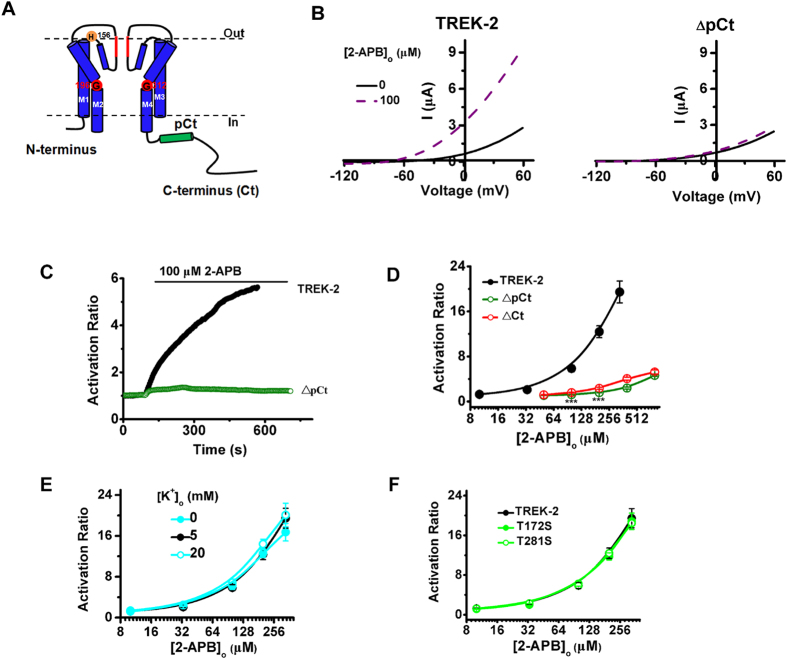
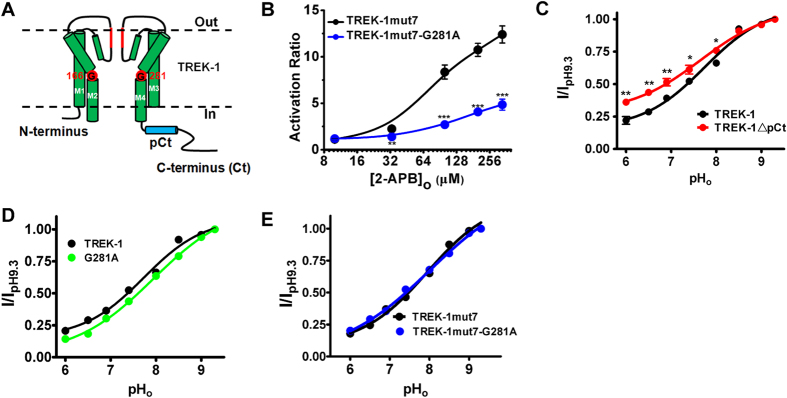
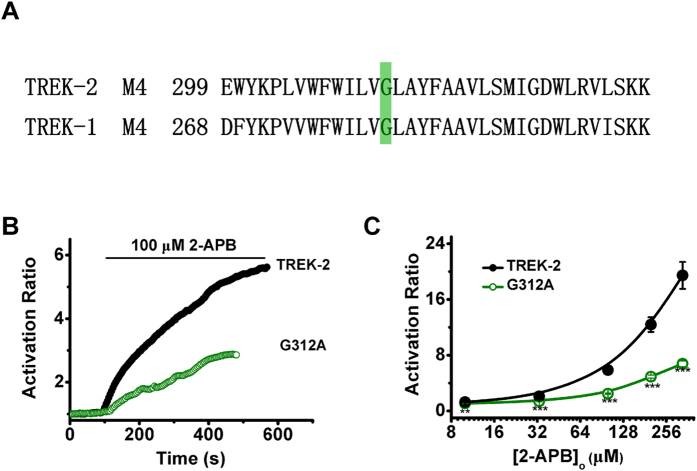
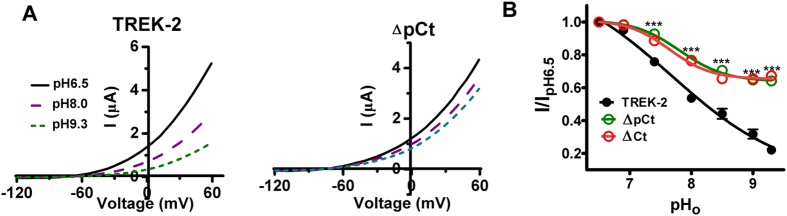
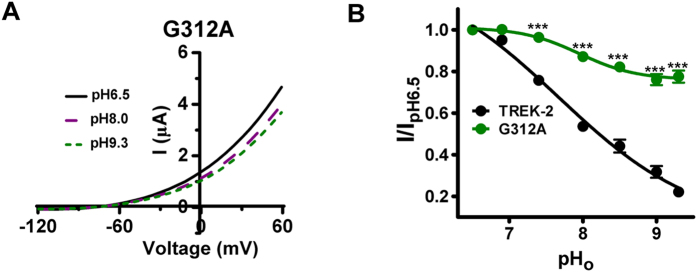
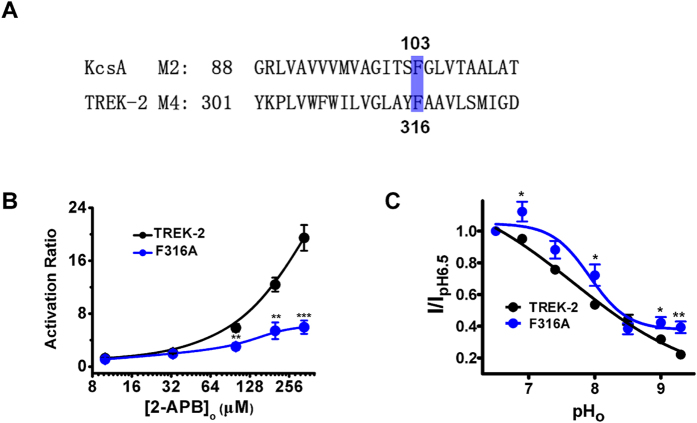
TREK-2, a member of two-pore-domain potassium channel family, regulates cellular excitability in response to diverse stimuli. However, how such stimuli control channel function remains unclear. Here, by characterizing the responses of cytosolic proximal C-terminus deletant (ΔpCt) and transmembrane segment 4 (M4)-glycine hinge mutant (G312A) to 2-Aminoethoxydiphenyl borate (2-APB), an activator of TREK-2, we show that the transduction initiated from pCt domain is allosterically coupled with the conformation of selectivity filter (SF) via the movements of M4, without depending on the original status of SF. Moreover, ΔpCt and G312A also exhibited blunted responses to extracellular alkalization, a model to induce SF conformational transition. These results suggest that the coupling between pCt domain and SF is bidirectional, and M4 movements are involved in both processes. Further mechanistic exploration reveals that the function of Phe316, a residue close to the C-terminus of M4, is associated with such communications. However, unlike TREK-2, M4-hinge of TREK-1 only controls the transmission from pCt to SF, rather than SF conformational changes triggered by pHo changes. Together, our findings uncover the unique gating properties of TREK-2, and elucidate the mechanisms for how the extracellular and intracellular stimuli harness the pore gating allosterically.
TREK - 2是双孔域钾通道家族的成员,可响应多种刺激调节细胞兴奋性。然而,此类刺激如何控制通道功能仍不清楚。在此,通过表征胞质近端C末端缺失突变体(ΔpCt)和跨膜片段4(M4)-甘氨酸铰链突变体(G312A)对TREK - 2激活剂2 - 氨基乙氧基二苯硼酸盐(2 - APB)的反应,我们发现从pCt结构域起始的信号转导通过M4的移动与选择性过滤器(SF)的构象发生变构偶联,而不依赖于SF的初始状态。此外,ΔpCt和G312A对细胞外碱化(一种诱导SF构象转变的模型)也表现出反应迟钝。这些结果表明pCt结构域与SF之间的偶联是双向的,且M4的移动参与了这两个过程。进一步的机制探索表明,靠近M4 C末端的残基Phe316的功能与这种通讯有关。然而,与TREK - 2不同,TREK - 1的M4铰链仅控制从pCt到SF的信号传递,而非由细胞外pH值变化触发的SF构象变化。总之,我们的研究结果揭示了TREK - 2独特的门控特性,并阐明了细胞外和细胞内刺激如何变构调控孔道门控的机制。