Lolicato Marco, Arrigoni Cristina, Mori Takahiro, Sekioka Yoko, Bryant Clifford, Clark Kimberly A, Minor Daniel L
Cardiovascular Research Institute, University of California, San Francisco, California 941158-9001, USA.
Ono Pharmaceutical Co. Ltd, Mishima-Gun, Osaka 618-8585, Japan.
Nature. 2017 Jul 20;547(7663):364-368. doi: 10.1038/nature22988. Epub 2017 Jul 10.
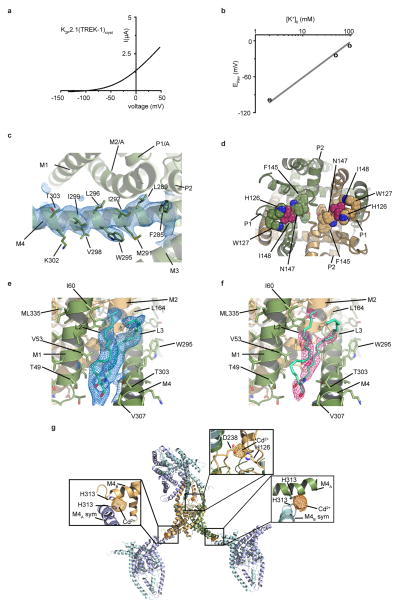
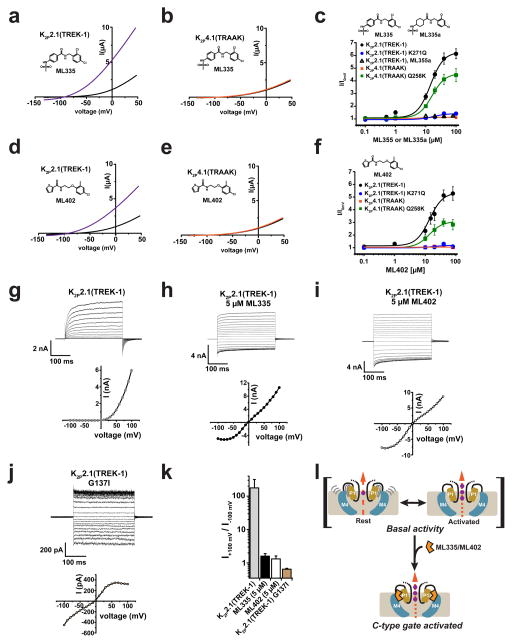
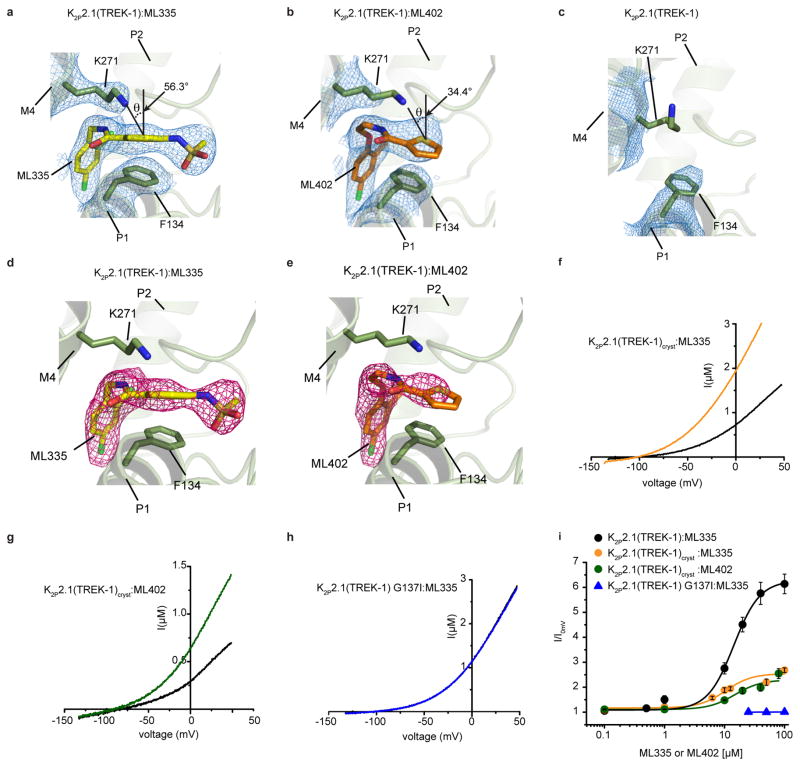
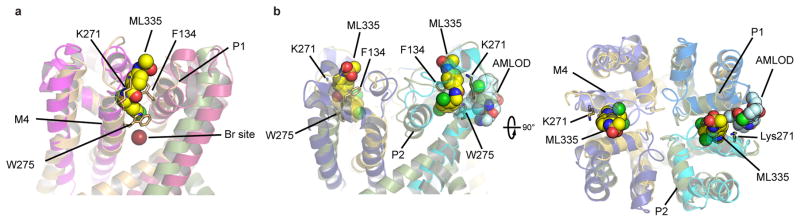
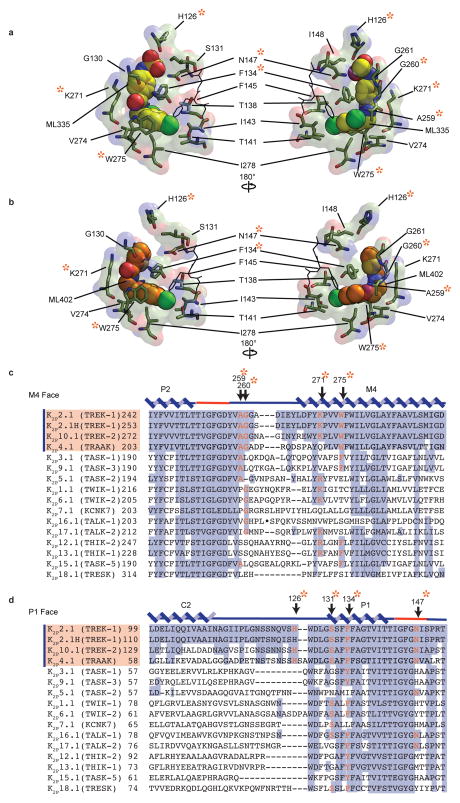
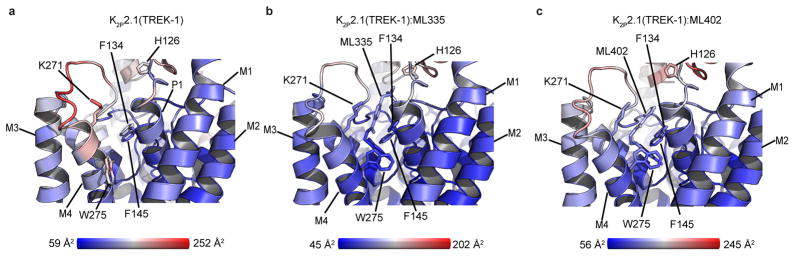
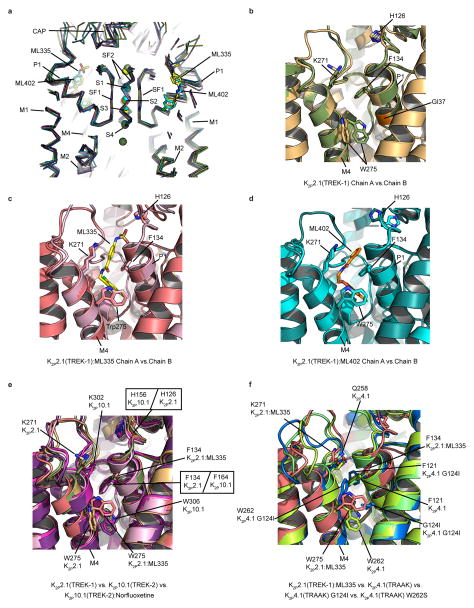
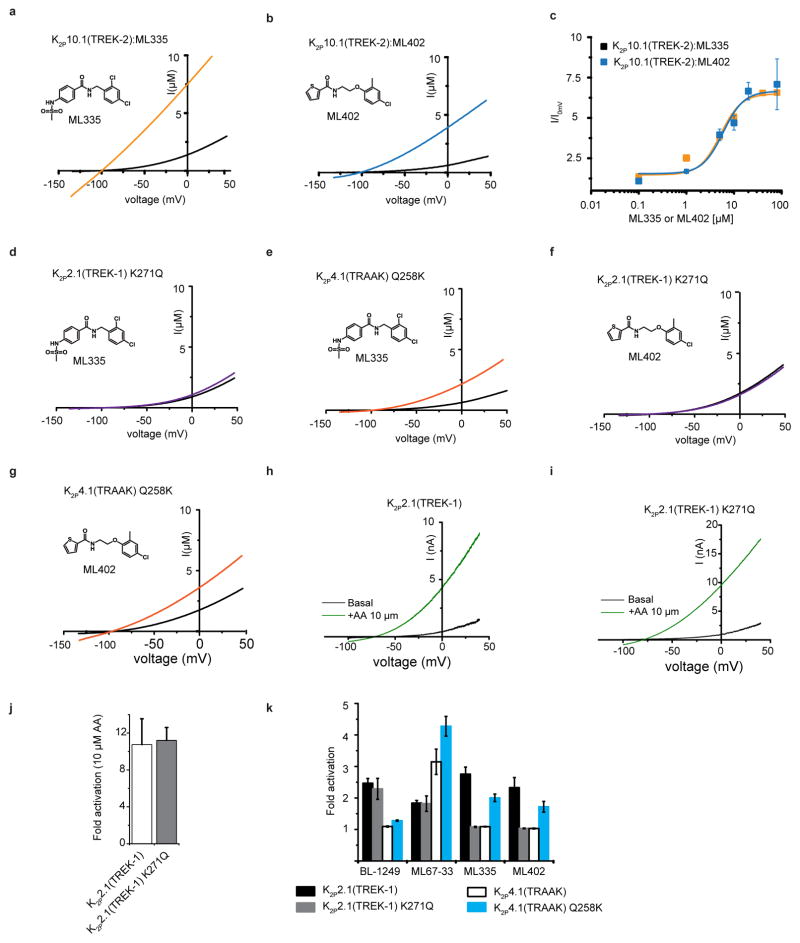
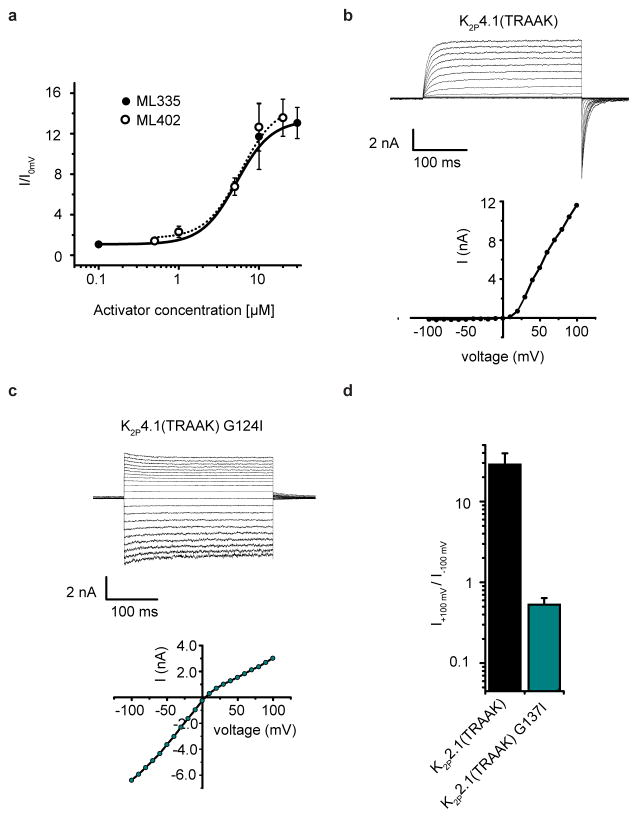
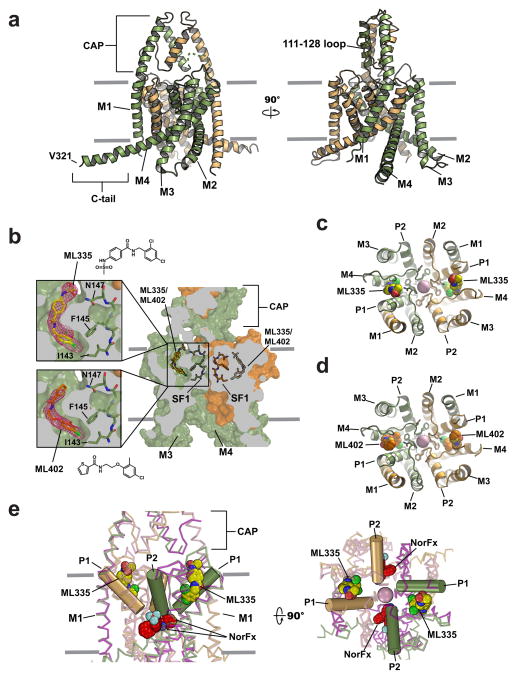
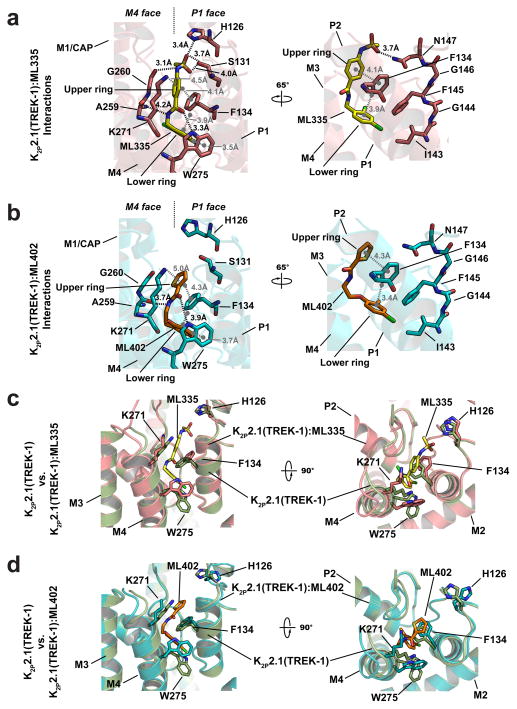
Polymodal thermo- and mechanosensitive two-pore domain potassium (K) channels of the TREK subfamily generate 'leak' currents that regulate neuronal excitability, respond to lipids, temperature and mechanical stretch, and influence pain, temperature perception and anaesthetic responses. These dimeric voltage-gated ion channel (VGIC) superfamily members have a unique topology comprising two pore-forming regions per subunit. In contrast to other potassium channels, K channels use a selectivity filter 'C-type' gate as the principal gating site. Despite recent advances, poor pharmacological profiles of K channels limit mechanistic and biological studies. Here we describe a class of small-molecule TREK activators that directly stimulate the C-type gate by acting as molecular wedges that restrict interdomain interface movement behind the selectivity filter. Structures of K2.1 (also known as TREK-1) alone and with two selective K2.1 (TREK-1) and K10.1 (TREK-2) activators-an N-aryl-sulfonamide, ML335, and a thiophene-carboxamide, ML402-define a cryptic binding pocket unlike other ion channel small-molecule binding sites and, together with functional studies, identify a cation-π interaction that controls selectivity. Together, our data reveal a druggable K site that stabilizes the C-type gate 'leak mode' and provide direct evidence for K selectivity filter gating.
TREK亚家族的多模态热敏和机械敏感双孔结构域钾(K)通道产生“泄漏”电流,调节神经元兴奋性,对脂质、温度和机械拉伸作出反应,并影响疼痛、温度感知和麻醉反应。这些二聚体电压门控离子通道(VGIC)超家族成员具有独特的拓扑结构,每个亚基包含两个成孔区域。与其他钾通道不同,TREK通道使用选择性过滤器“C型”门作为主要门控位点。尽管最近取得了进展,但TREK通道较差的药理学特性限制了其机制和生物学研究。在这里,我们描述了一类小分子TREK激活剂,它们通过充当分子楔来限制选择性过滤器后面的结构域间界面移动,从而直接刺激C型门。单独的K2.1(也称为TREK-1)以及与两种选择性K2.1(TREK-1)和K10.1(TREK-2)激活剂——一种N-芳基磺酰胺ML335和一种噻吩甲酰胺ML402——的结构定义了一个与其他离子通道小分子结合位点不同的隐秘结合口袋,并且与功能研究一起,确定了一种控制选择性的阳离子-π相互作用。总之,我们的数据揭示了一个可药物作用的TREK位点,该位点稳定C型门的“泄漏模式”,并为TREK选择性过滤器门控提供了直接证据。