Avnir Yuval, Watson Corey T, Glanville Jacob, Peterson Eric C, Tallarico Aimee S, Bennett Andrew S, Qin Kun, Fu Ying, Huang Chiung-Yu, Beigel John H, Breden Felix, Zhu Quan, Marasco Wayne A
Department of Cancer Immunology &AIDS, Dana-Farber Cancer Institute; Department of Medicine, Harvard Medical School, 450 Brookline Avenue, Boston, Massachusetts 02215, USA.
Department of Biological Sciences, Simon Fraser University, Burnaby, British Columbia, V5A 1S6, Canada.
Sci Rep. 2016 Feb 16;6:20842. doi: 10.1038/srep20842.
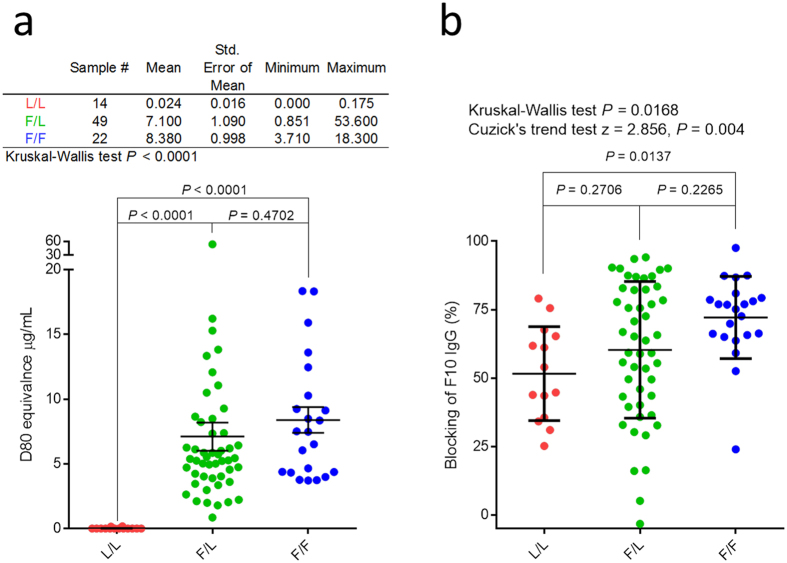
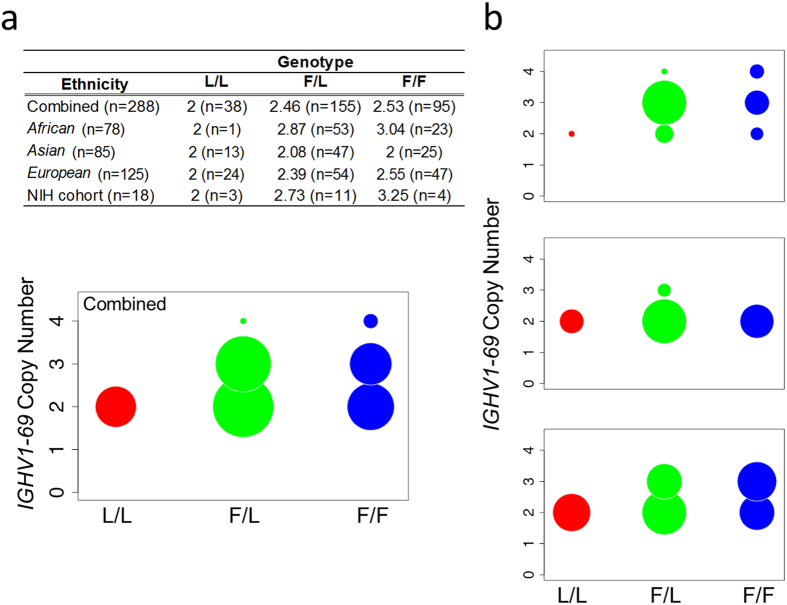
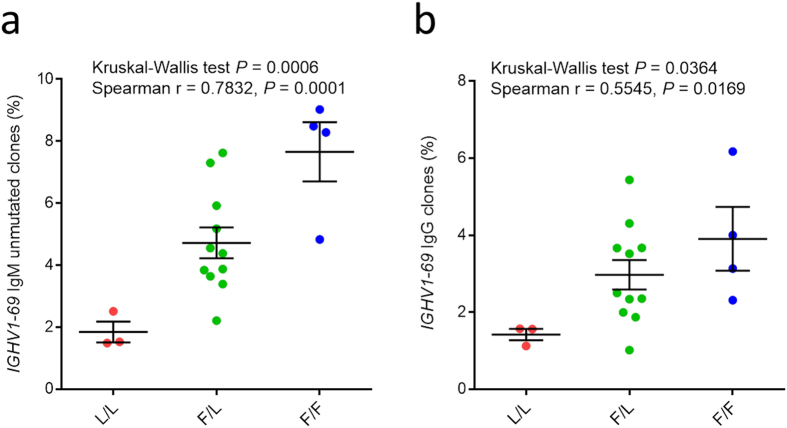
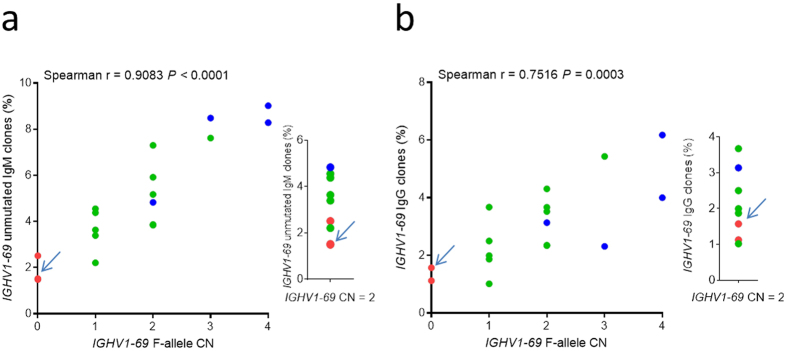
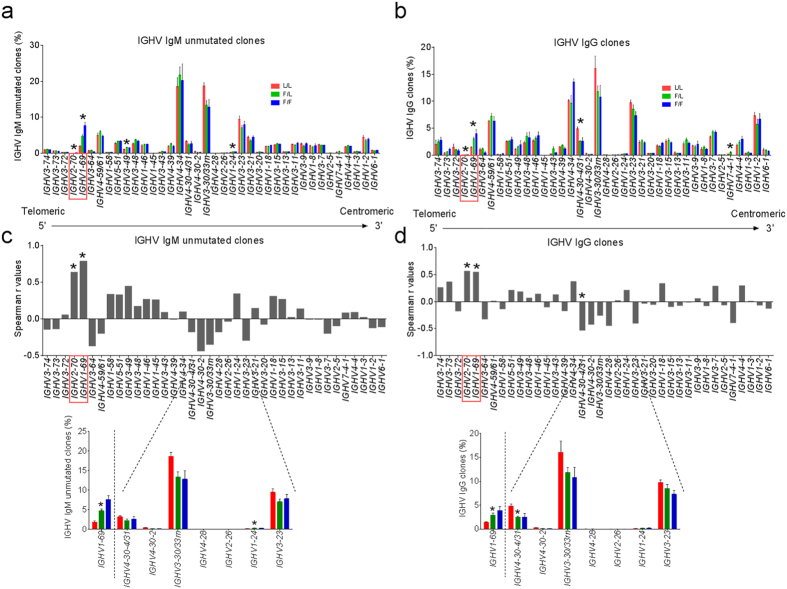
IGHV polymorphism provides a rich source of humoral immune system diversity. One important example is the IGHV1-69 germline gene where the biased use of alleles that encode the critical CDR-H2 Phe54 (F-alleles) to make broadly neutralizing antibodies (HV1-69-sBnAb) to the influenza A hemagglutinin stem domain has been clearly established. However, whether IGHV1-69 polymorphism can also modulate B cell function and Ab repertoire expression through promoter and copy number (CN) variations has not been reported, nor has whether IGHV1-69 allelic distribution is impacted by ethnicity. Here we studied a cohort of NIH H5N1 vaccinees and demonstrate for the first time the influence of IGHV1-69 polymorphism on V-segment usage, somatic hypermutation and B cell expansion that elucidates the dominance of F-alleles in HV1-69-sBnAbs. We provide evidence that Phe54/Leu54 (F/L) polymorphism correlates with shifted repertoire usage of other IGHV germline genes. In addition, we analyzed ethnically diverse individuals within the 1000 genomes project and discovered marked variations in F- and L- genotypes and CN among the various ethnic groups that may impact HV1-69-sBnAb responses. These results have immediate implications for understanding HV1-69-sBnAb responses at the individual and population level and for the design and implementation of "universal" influenza vaccine.
IGHV基因多态性为体液免疫系统多样性提供了丰富来源。一个重要例子是IGHV1-69种系基因,其中编码关键互补决定区H2苯丙氨酸54(F等位基因)的等位基因偏向性使用,以产生针对甲型流感血凝素茎域的广泛中和抗体(HV1-69-sBnAb),这一点已得到明确证实。然而,IGHV1-69基因多态性是否也能通过启动子和拷贝数(CN)变异来调节B细胞功能和抗体库表达尚未见报道,IGHV1-69等位基因分布是否受种族影响也未见报道。在这里,我们研究了一组美国国立卫生研究院的H5N1疫苗接种者,并首次证明了IGHV1-69基因多态性对V基因片段使用、体细胞高频突变和B细胞扩增的影响,这阐明了F等位基因在HV1-69-sBnAb中的优势地位。我们提供的证据表明,苯丙氨酸54/亮氨酸54(F/L)多态性与其他IGHV种系基因的抗体库使用变化相关。此外,我们分析了千人基因组计划中不同种族的个体,发现不同种族之间F和L基因型及拷贝数存在显著差异,这可能会影响HV1-69-sBnAb反应。这些结果对于在个体和群体水平上理解HV1-69-sBnAb反应以及“通用”流感疫苗的设计和实施具有直接意义。