Taïhi Ihsène, Nassif Ali, Berbar Tsouria, Isaac Juliane, Berdal Ariane, Gogly Bruno, Fournier Benjamin Philippe
Laboratory of Molecular Oral Physiopathology, INSERM UMRS 1138, Cordeliers Research Center, 75006 Paris, France; Paris-Descartes, Pierre and Marie Curie, and Paris-Diderot Universities, UFR Odontology, 75006 Paris, France; AP-HP, Hospital Complex Henri-Mondor Albert-Chenevier, CIC-BT-504, 94000 Creteil, France.
Laboratory of Molecular Oral Physiopathology, INSERM UMRS 1138, Cordeliers Research Center, 75006 Paris, France; Paris-Descartes, Pierre and Marie Curie, and Paris-Diderot Universities, UFR Odontology, 75006 Paris, France.
Stem Cells Int. 2016;2016:6261490. doi: 10.1155/2016/6261490. Epub 2015 Dec 30.
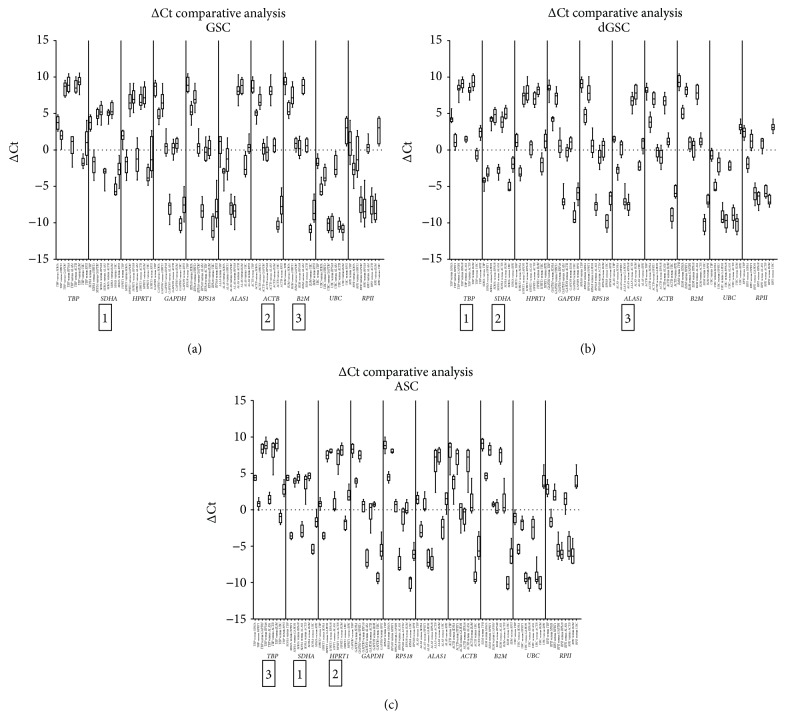
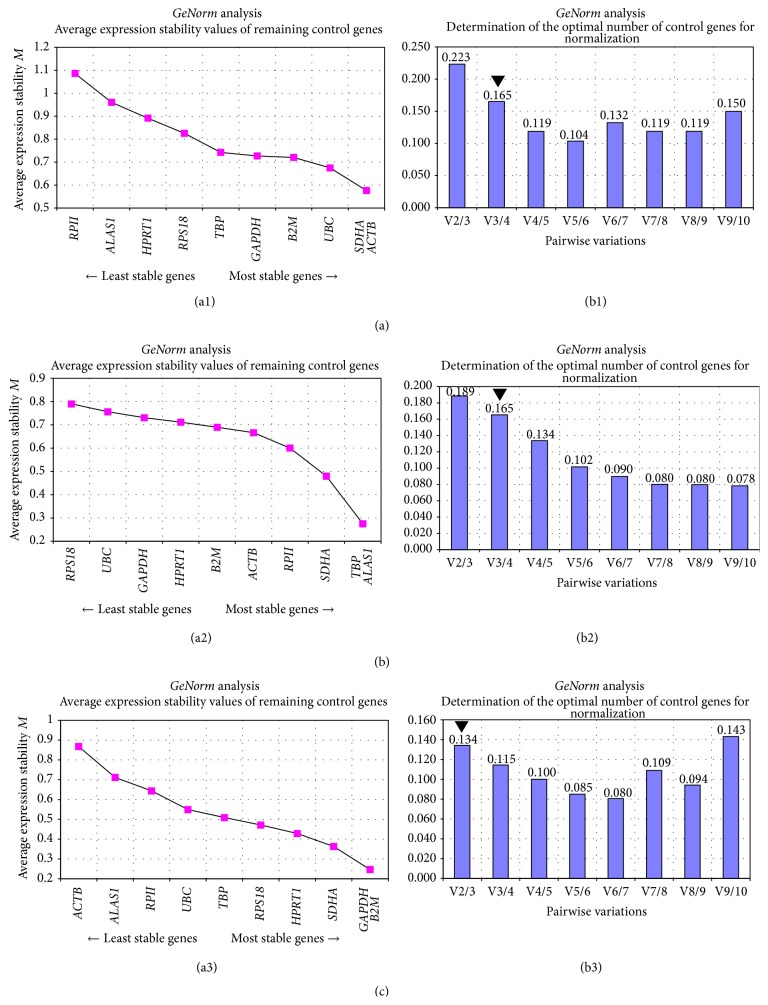
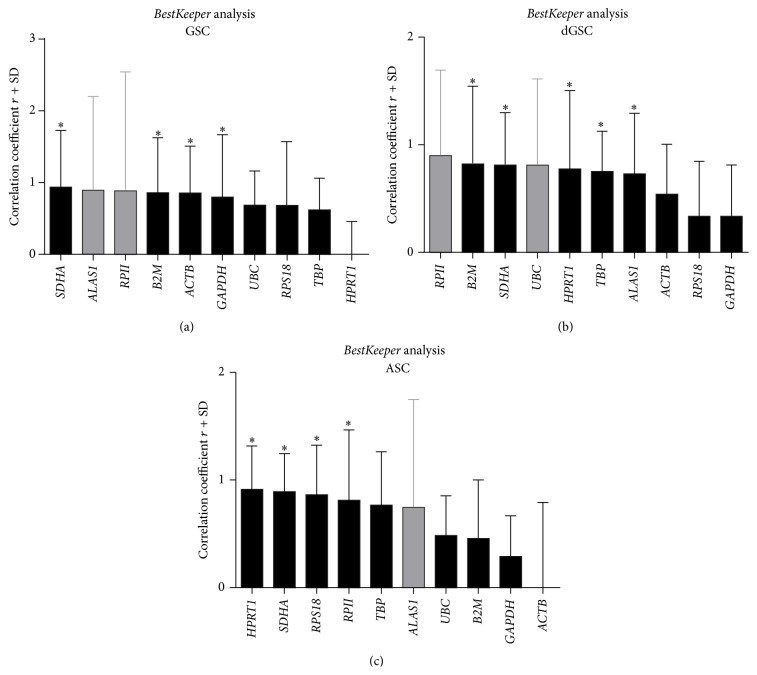
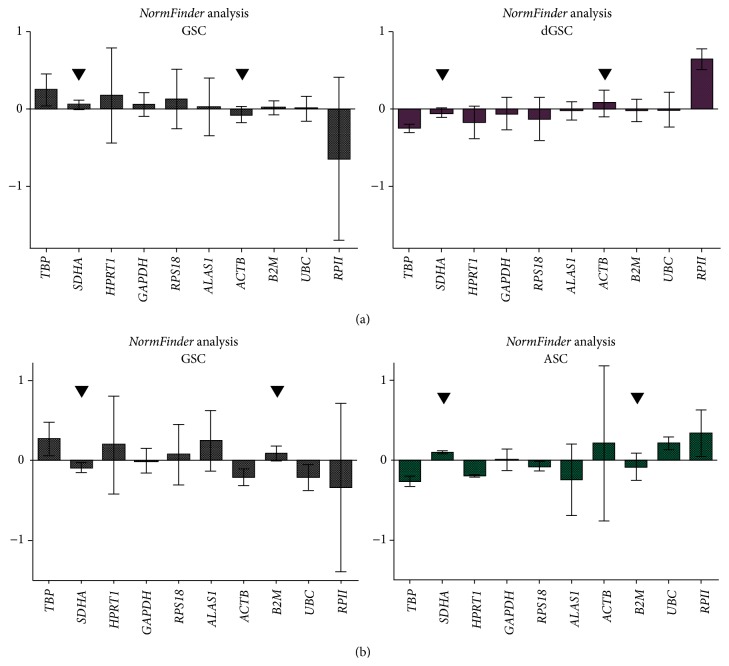
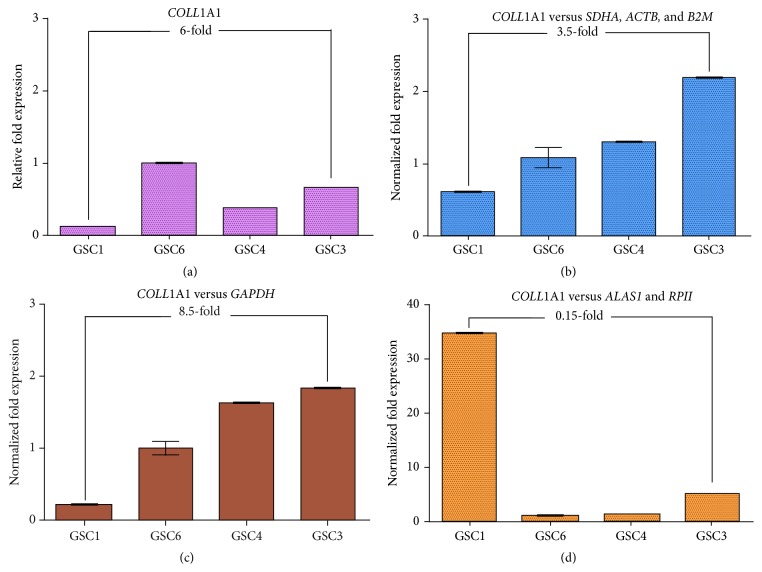
Gingival stem cells (GSCs) are recently isolated multipotent cells. Their osteogenic capacity has been validated in vitro and may be transferred to human cell therapy for maxillary large bone defects, as they share a neural crest cell origin with jaw bone cells. RT-qPCR is a widely used technique to study gene expression and may help us to follow osteoblast differentiation of GSCs. For accurate results, the choice of reliable housekeeping genes (HKGs) is crucial. The aim of this study was to select the most reliable HKGs for GSCs study and their osteogenic differentiation (dGSCs). The analysis was performed with ten selected HKGs using four algorithms: ΔCt comparative method, GeNorm, BestKeeper, and NormFinder. This study demonstrated that three HKGs, SDHA, ACTB, and B2M, were the most stable to study GSC, whereas TBP, SDHA, and ALAS1 were the most reliable to study dGSCs. The comparison to stem cells of mesenchymal origin (ASCs) showed that SDHA/HPRT1 were the most appropriate for ASCs study. The choice of suitable HKGs for GSCs is important as it gave access to an accurate analysis of osteogenic differentiation. It will allow further study of this interesting stem cells source for future human therapy.
牙龈干细胞(GSCs)是最近分离出的多能细胞。它们的成骨能力已在体外得到验证,并且由于它们与颌骨细胞具有共同的神经嵴细胞起源,可能会被应用于上颌大骨缺损的人类细胞治疗。逆转录定量聚合酶链反应(RT-qPCR)是一种广泛用于研究基因表达的技术,可能有助于我们追踪GSCs的成骨细胞分化。为了获得准确的结果,选择可靠的管家基因(HKGs)至关重要。本研究的目的是为GSCs研究及其成骨分化(dGSCs)选择最可靠的HKGs。使用四种算法对十个选定的HKGs进行分析:ΔCt比较法、GeNorm、BestKeeper和NormFinder。本研究表明,三个HKGs,即琥珀酸脱氢酶A(SDHA)、肌动蛋白β(ACTB)和β2微球蛋白(B2M),在研究GSC时最稳定,而TATA结合蛋白(TBP)、SDHA和δ-氨基-γ-酮戊酸合成酶1(ALAS1)在研究dGSCs时最可靠。与间充质来源的干细胞(ASCs)的比较表明,SDHA/次黄嘌呤磷酸核糖转移酶1(HPRT1)最适合用于ASCs研究。为GSCs选择合适的HKGs很重要,因为它有助于对成骨分化进行准确分析。这将为未来人类治疗中进一步研究这种有趣的干细胞来源提供可能。