Deng C, Zhang B, Zhang S, Duan C, Cao Y, Kang W, Yan H, Ding X, Zhou F, Wu L, Duan G, Shen S, Xu G, Zhang W, Chen M, Huang S, Zhang X, Lv Y, Ling T, Wang L, Zou X
Department of Gastroenterology, Drum Tower Hospital, Medical School of Nanjing University, Jiangsu Province, China.
Department of Anatomical and Cellular Pathology, State Key Laboratory in Oncology in South China, Prince of Wales Hospital, The Chinese University of Hong Kong, Hong Kong SAR, PR China.
Cell Death Dis. 2016 Feb 18;7(2):e2106. doi: 10.1038/cddis.2016.13.
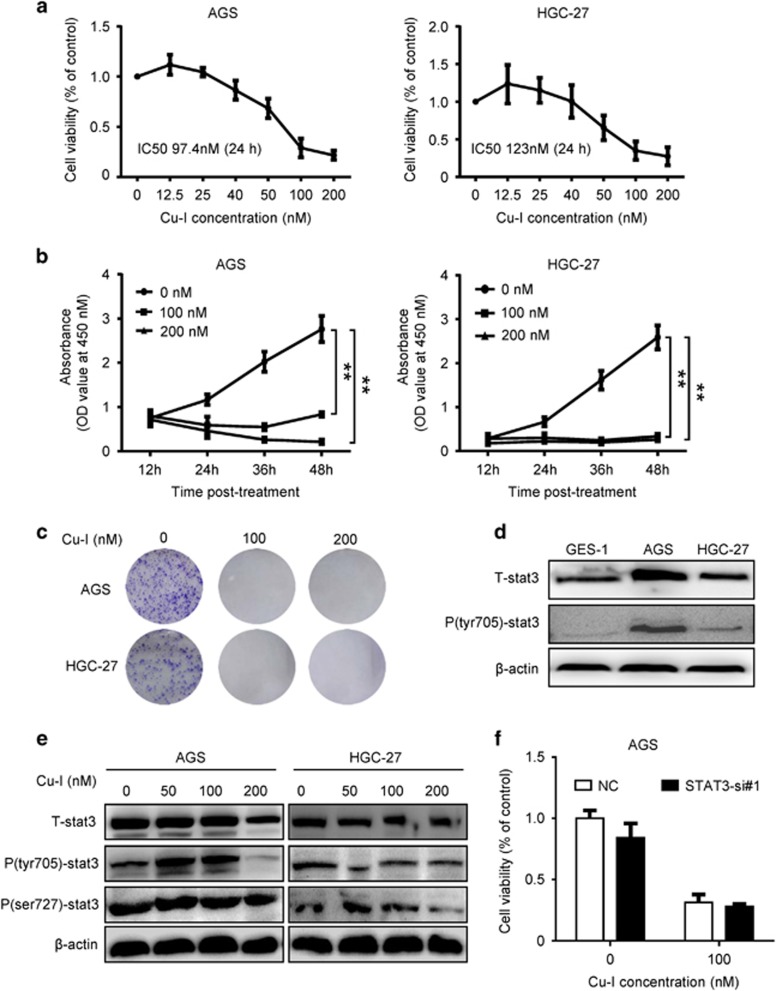
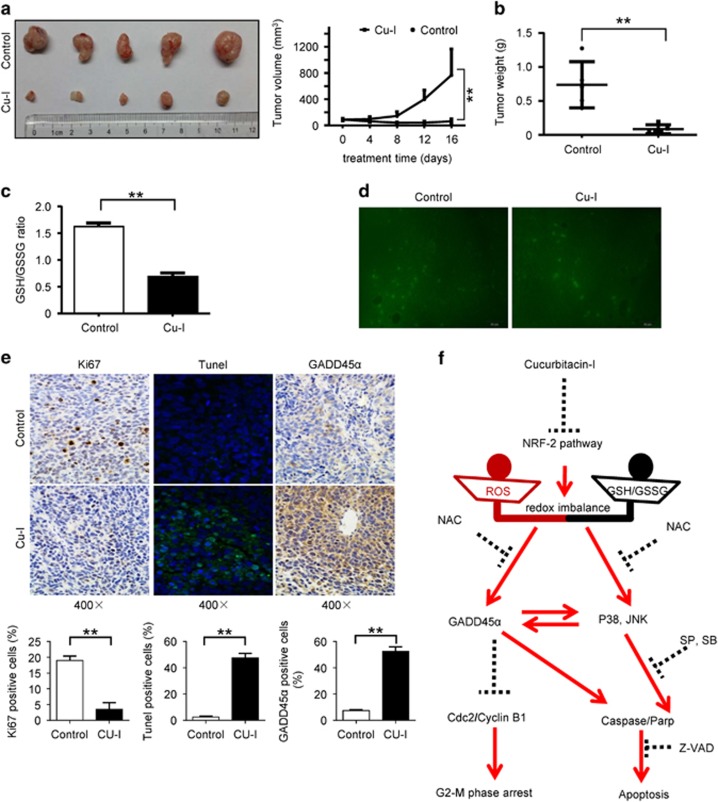
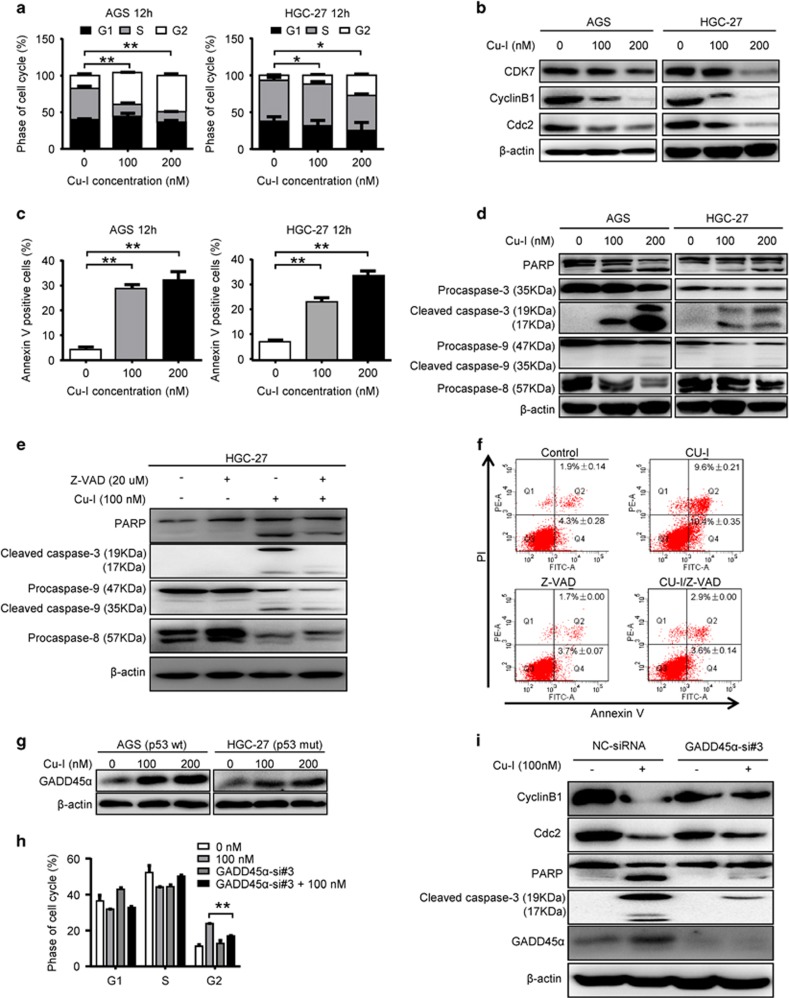
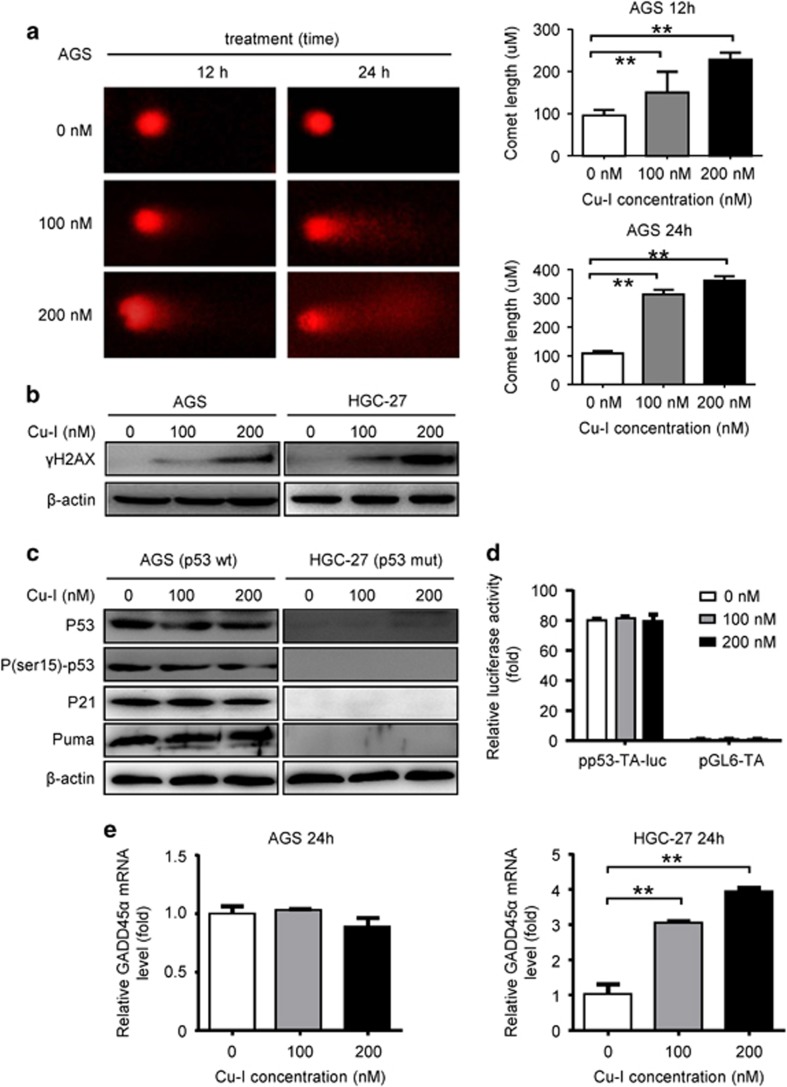
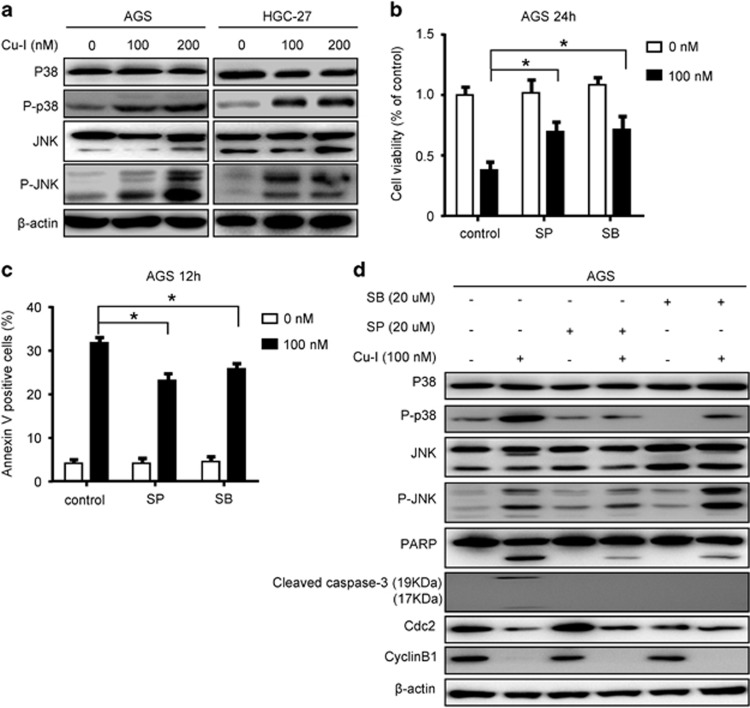
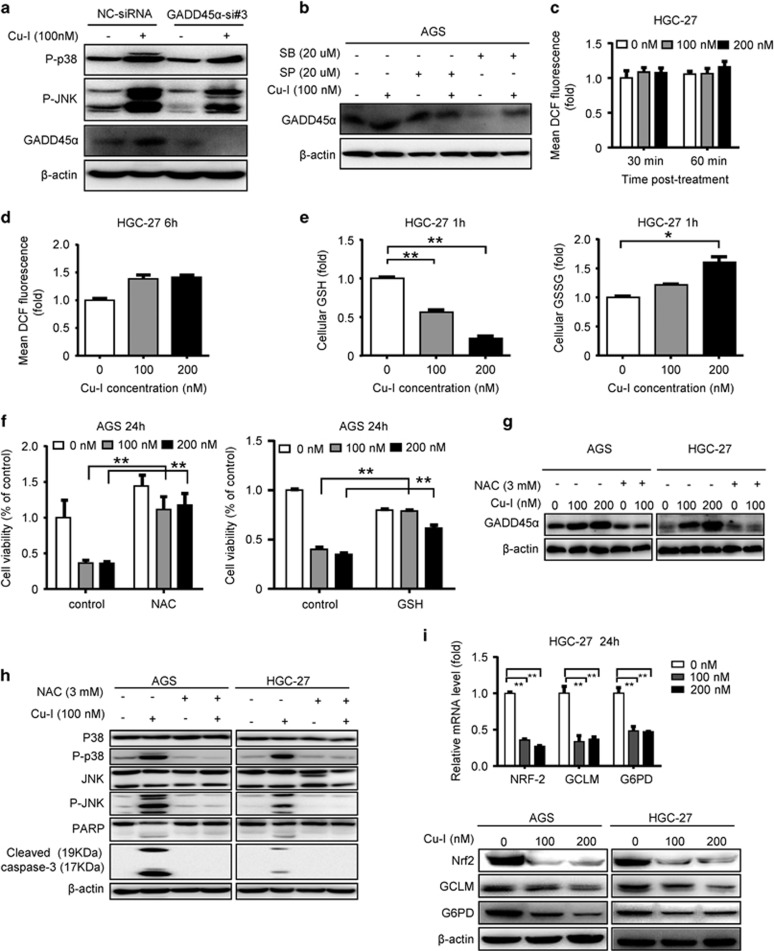
Cucurbitacin-I (Cu-I, also known as Elatericin B or JSI-124) is developed to inhibit constitutive and abnormal activation of STAT3 in many cancers, demonstrating a potent anticancer activity by targeting disruption of STAT3 function. Here, we for the first time systematically studied the underlying molecular mechanisms of Cu-I-induced gastric cancer cell death both in vitro and in vivo. In our study, we show that Cu-I markedly inhibits gastric cancer cell growth by inducing G2/M phase cell cycle arrest and apoptosis at low nanomolar concentrations via a STAT3-independent mechanism. Notably, Cu-I significantly decreases intracellular GSH/GSSG ratio by inhibiting NRF2 pathway to break cellular redox homeostasis, and subsequently induces the expression of GADD45α in a p53-independent manner, and activates JNK/p38 MAPK signaling. Interestingly, Cu-I-induced GADD45α and JNK/p38 MAPK signaling form a positive feedback loop and can be reciprocally regulated by each other. Therefore, the present study provides new insights into the mechanisms of antitumor effects of Cu-I, supporting Cu-I as an attractive therapeutic drug in gastric cancer by modulating the redox balance.
葫芦素-I(Cu-I,也称为异欧前胡素B或JSI-124)被开发用于抑制多种癌症中STAT3的组成性和异常激活,通过靶向破坏STAT3功能展现出强大的抗癌活性。在此,我们首次系统地研究了Cu-I在体外和体内诱导胃癌细胞死亡的潜在分子机制。在我们的研究中,我们表明Cu-I在低纳摩尔浓度下通过一种不依赖STAT3的机制诱导G2/M期细胞周期阻滞和凋亡,从而显著抑制胃癌细胞生长。值得注意的是,Cu-I通过抑制NRF2途径来打破细胞氧化还原稳态,从而显著降低细胞内谷胱甘肽/氧化型谷胱甘肽比值,随后以不依赖p53的方式诱导GADD45α的表达,并激活JNK/p38 MAPK信号通路。有趣的是,Cu-I诱导的GADD45α和JNK/p38 MAPK信号通路形成一个正反馈环,并且可以相互调节。因此,本研究为Cu-I的抗肿瘤作用机制提供了新的见解,支持Cu-I作为一种通过调节氧化还原平衡来治疗胃癌的有吸引力的治疗药物。