Beckouët Frederic, Srinivasan Madhusudhan, Roig Maurici Brunet, Chan Kok-Lung, Scheinost Johanna C, Batty Paul, Hu Bin, Petela Naomi, Gligoris Thomas, Smith Alexandra C, Strmecki Lana, Rowland Benjamin D, Nasmyth Kim
Department of Biochemistry, University of Oxford, South Parks Road, Oxford OX1 3QU, UK; Laboratoire de Biologie Moléculaire Eucaryote, UMR 5099 University Paul Sabatier Toulouse III CNRS, 118, Route de Narbonne, 31062 Toulouse, France.
Department of Biochemistry, University of Oxford, South Parks Road, Oxford OX1 3QU, UK.
Mol Cell. 2016 Feb 18;61(4):563-574. doi: 10.1016/j.molcel.2016.01.026.
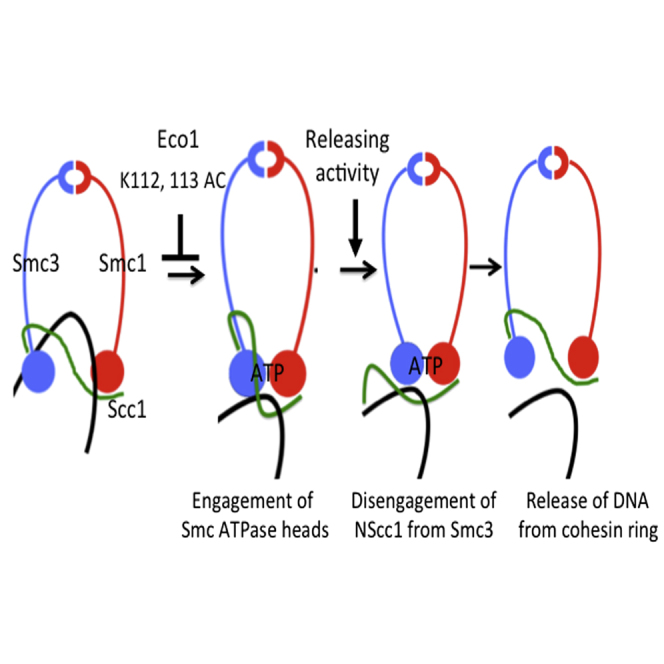
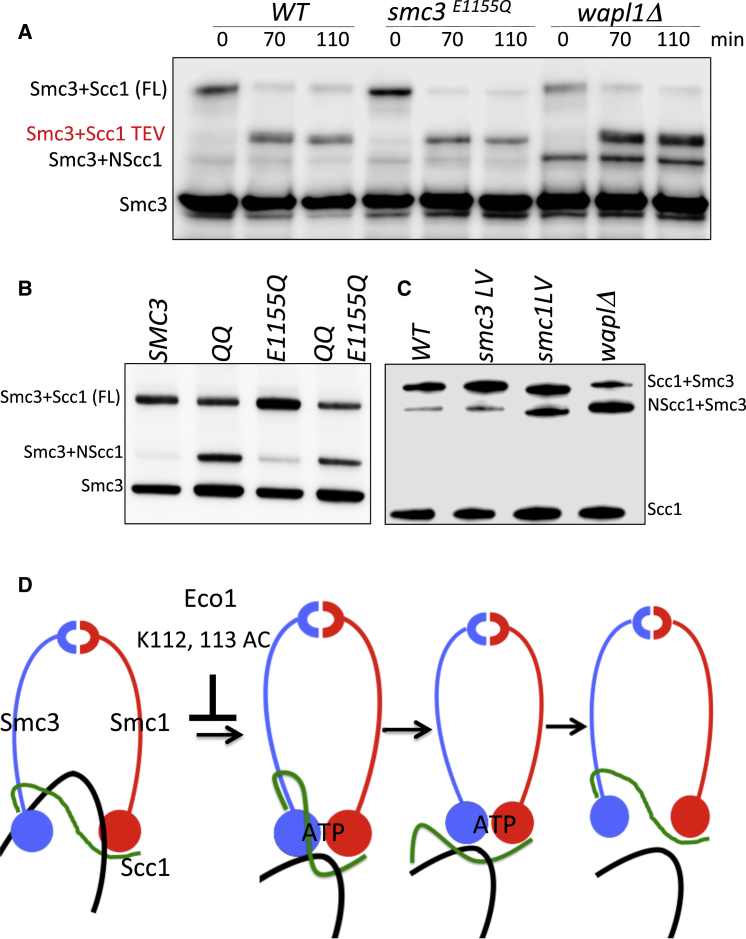
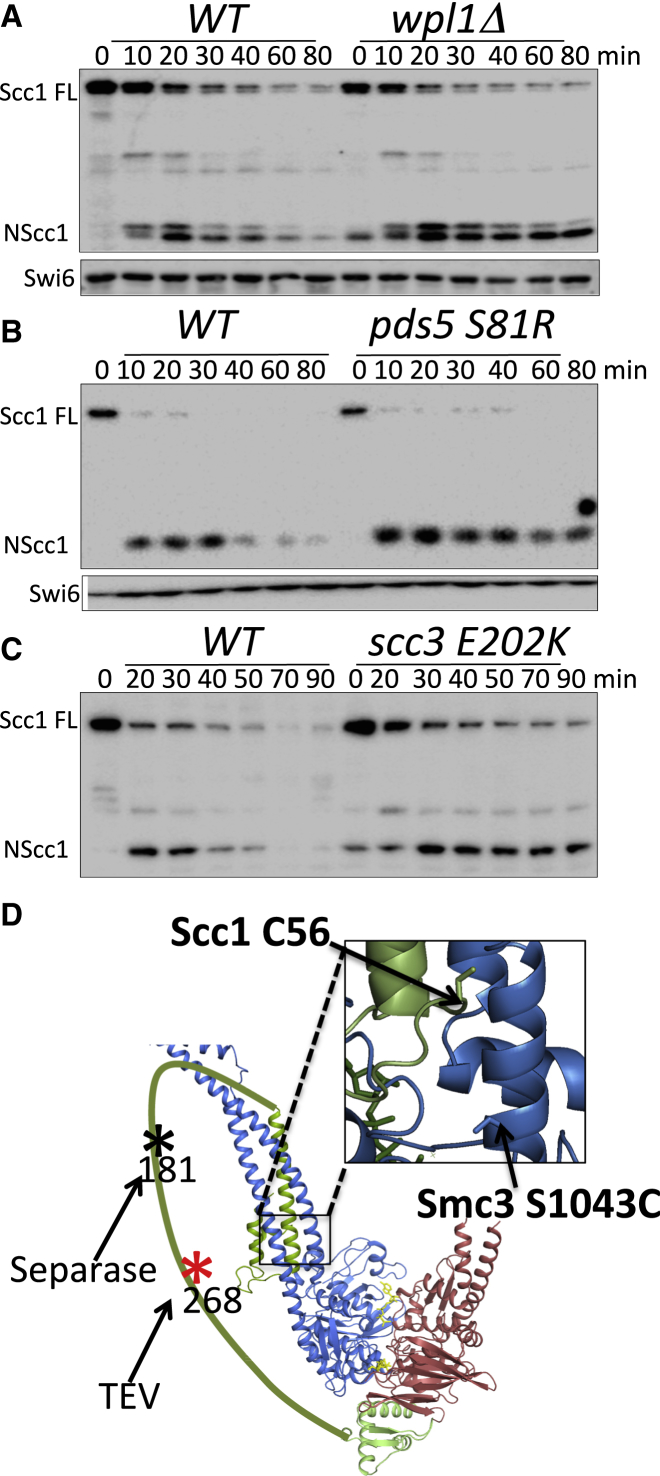
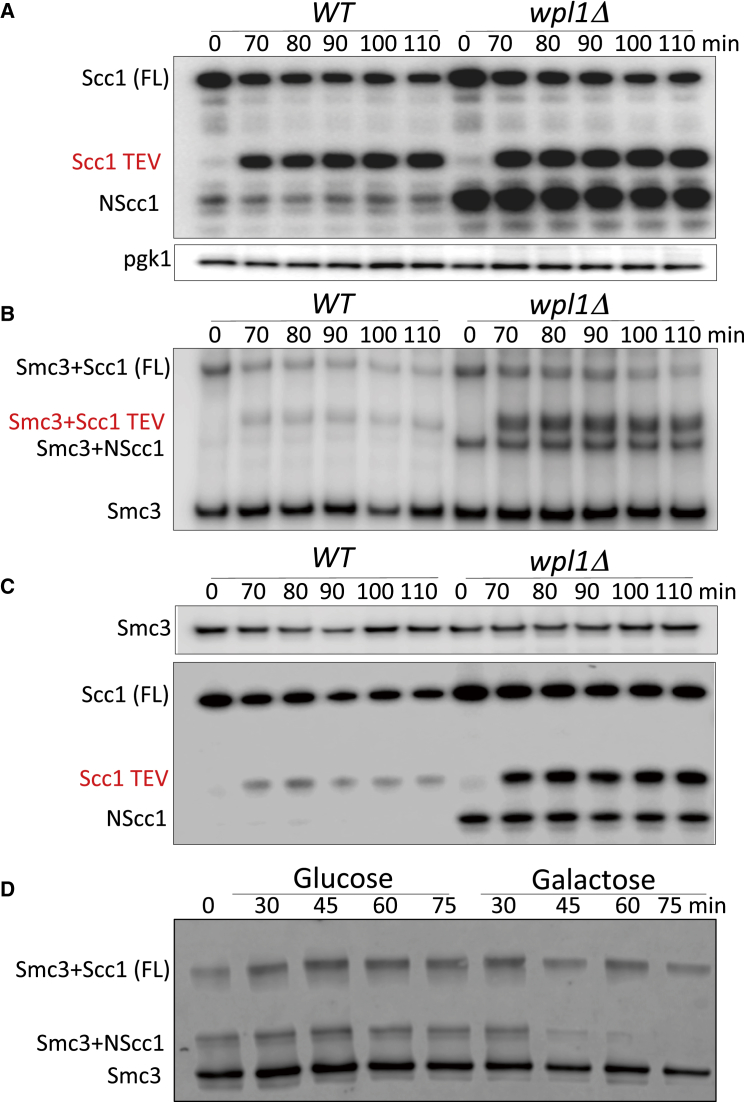
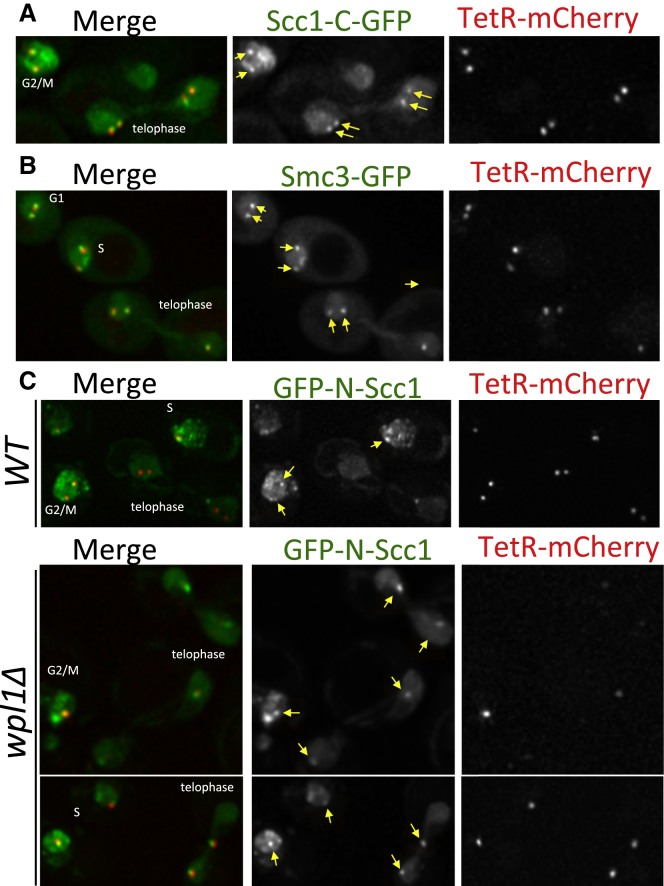
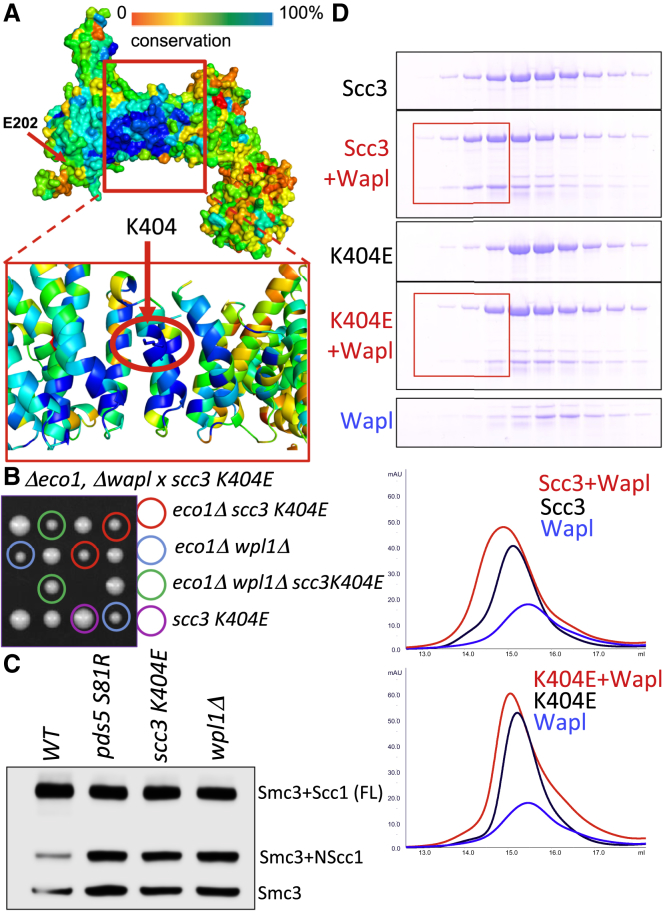
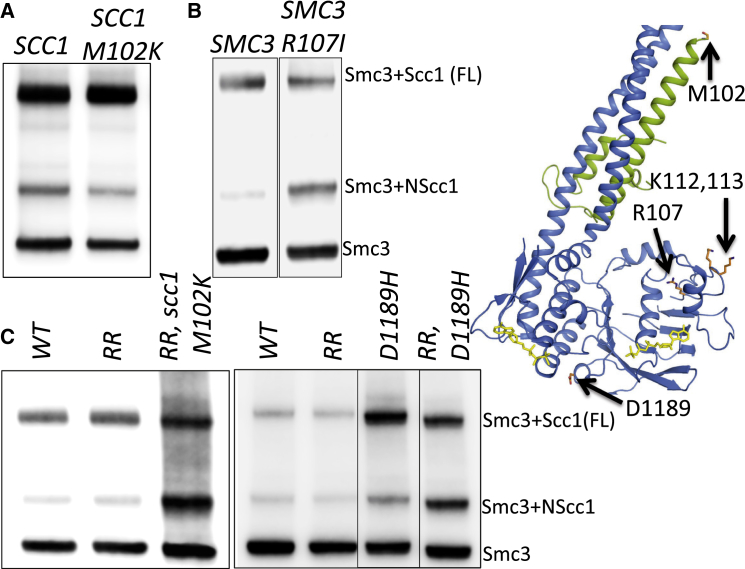
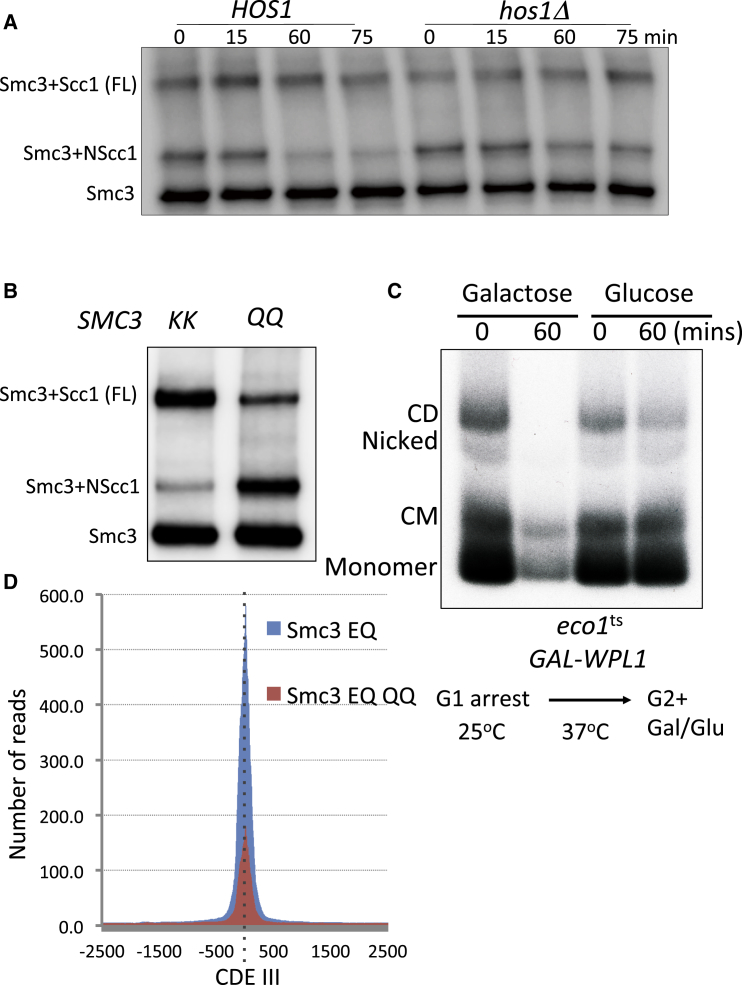
Sister chromatid cohesion conferred by entrapment of sister DNAs within a tripartite ring formed between cohesin's Scc1, Smc1, and Smc3 subunits is created during S and destroyed at anaphase through Scc1 cleavage by separase. Cohesin's association with chromosomes is controlled by opposing activities: loading by Scc2/4 complex and release by a separase-independent releasing activity as well as by cleavage. Coentrapment of sister DNAs at replication is accompanied by acetylation of Smc3 by Eco1, which blocks releasing activity and ensures that sisters remain connected. Because fusion of Smc3 to Scc1 prevents release and bypasses the requirement for Eco1, we suggested that release is mediated by disengagement of the Smc3/Scc1 interface. We show that mutations capable of bypassing Eco1 in Smc1, Smc3, Scc1, Wapl, Pds5, and Scc3 subunits reduce dissociation of N-terminal cleavage fragments of Scc1 (NScc1) from Smc3. This process involves interaction between Smc ATPase heads and is inhibited by Smc3 acetylation.
由黏连蛋白的Scc1、Smc1和Smc3亚基之间形成的三方环内姐妹DNA的捕获所赋予的姐妹染色单体黏连,在S期形成,并在后期通过分离酶切割Scc1而被破坏。黏连蛋白与染色体的结合受相反活性的控制:由Scc2/4复合物加载,以及通过一种不依赖分离酶的释放活性和切割作用来释放。复制时姐妹DNA的共同捕获伴随着Eco1对Smc3的乙酰化,这会阻断释放活性并确保姐妹染色单体保持连接。由于将Smc3与Scc1融合可防止释放并绕过对Eco1的需求,我们提出释放是由Smc3/Scc1界面的脱离介导的。我们表明,在Smc1、Smc3、Scc1、Wapl、Pds5和Scc3亚基中能够绕过Eco1的突变会减少Scc1的N端切割片段(NScc1)与Smc3的解离。这个过程涉及Smc ATP酶头部之间的相互作用,并受到Smc3乙酰化的抑制。