Meo Marianna, Meste Olivier, Signore Sergio, Sorrentino Andrea, Cannata Antonio, Zhou Yu, Matsuda Alex, Luciani Marco, Kannappan Ramaswamy, Goichberg Polina, Leri Annarosa, Anversa Piero, Rota Marcello
Division of Cardiovascular Medicine, Departments of Anesthesia and Medicine, Brigham and Women's Hospital, Harvard Medical School, Boston, MA.
Laboratoire d'Informatique, Signaux et Systèmes de Sophia Antipolis (I3S), Université Nice Sophia Antipolis, CNRS, Nice, France.
J Am Heart Assoc. 2016 Feb 19;5(2):e003078. doi: 10.1161/JAHA.115.003078.
Diabetes is associated with prolongation of the QT interval of the electrocardiogram and enhanced dispersion of ventricular repolarization, factors that, together with atherosclerosis and myocardial ischemia, may promote the occurrence of electrical disorders. Thus, we tested the possibility that alterations in transmembrane ionic currents reduce the repolarization reserve of myocytes, leading to action potential (AP) prolongation and enhanced beat-to-beat variability of repolarization.
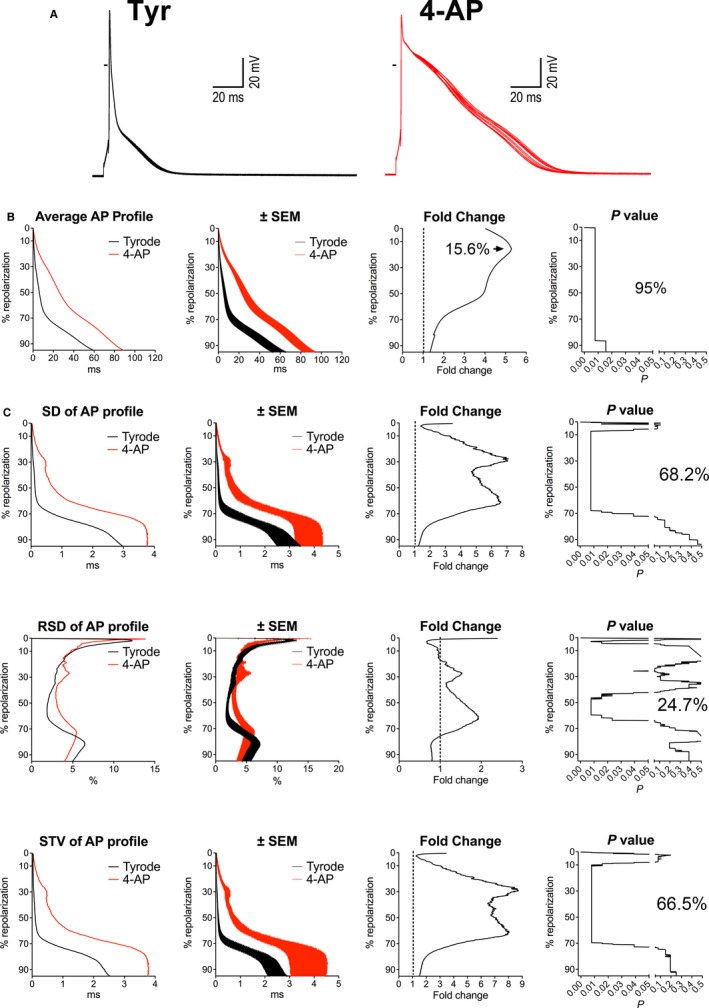
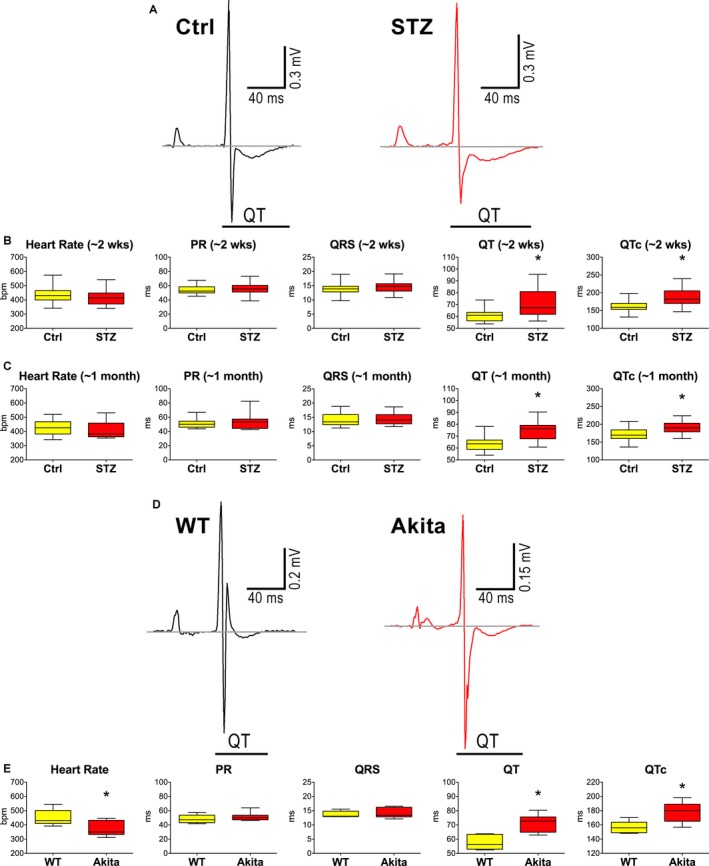
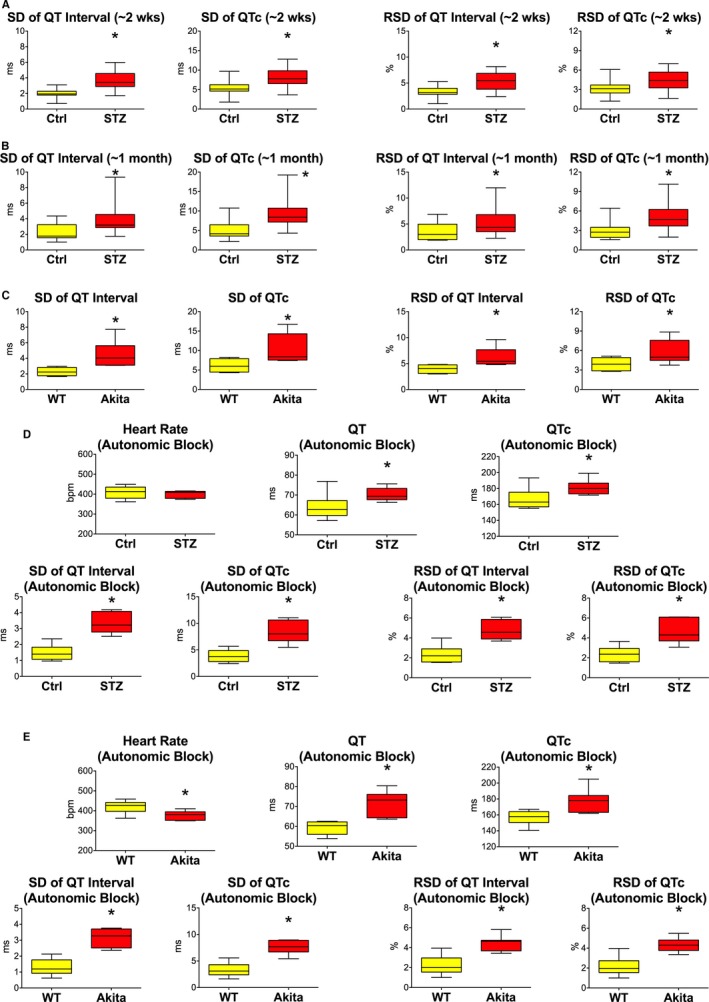
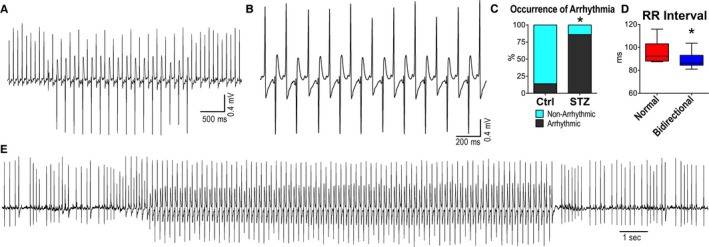
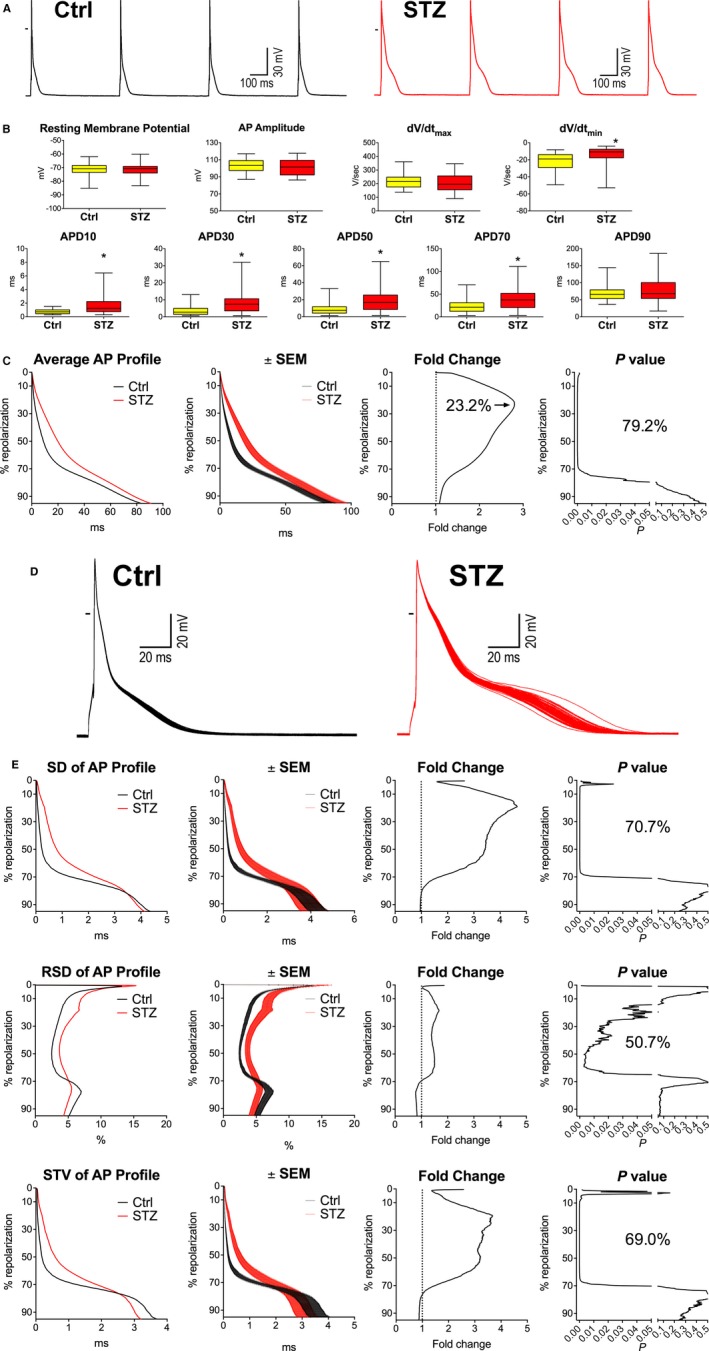
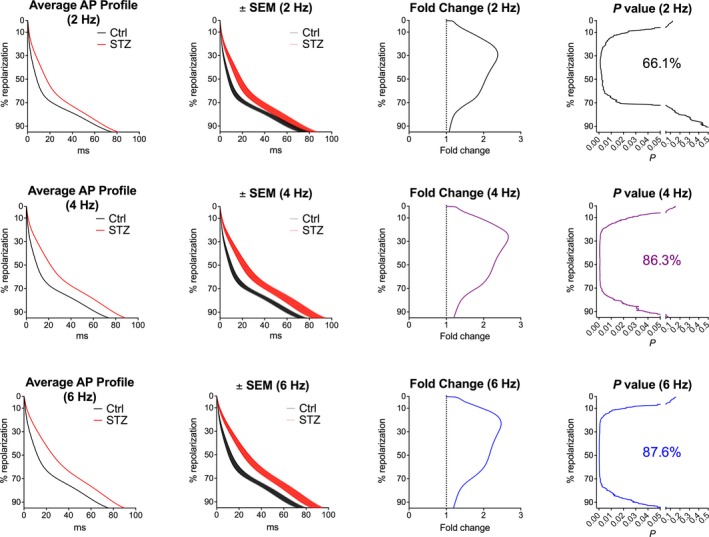
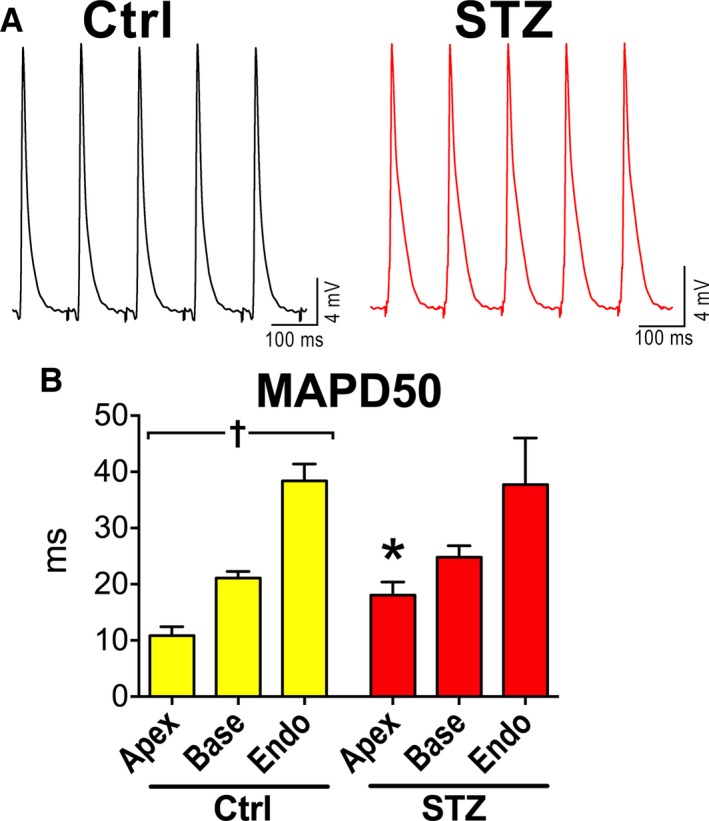
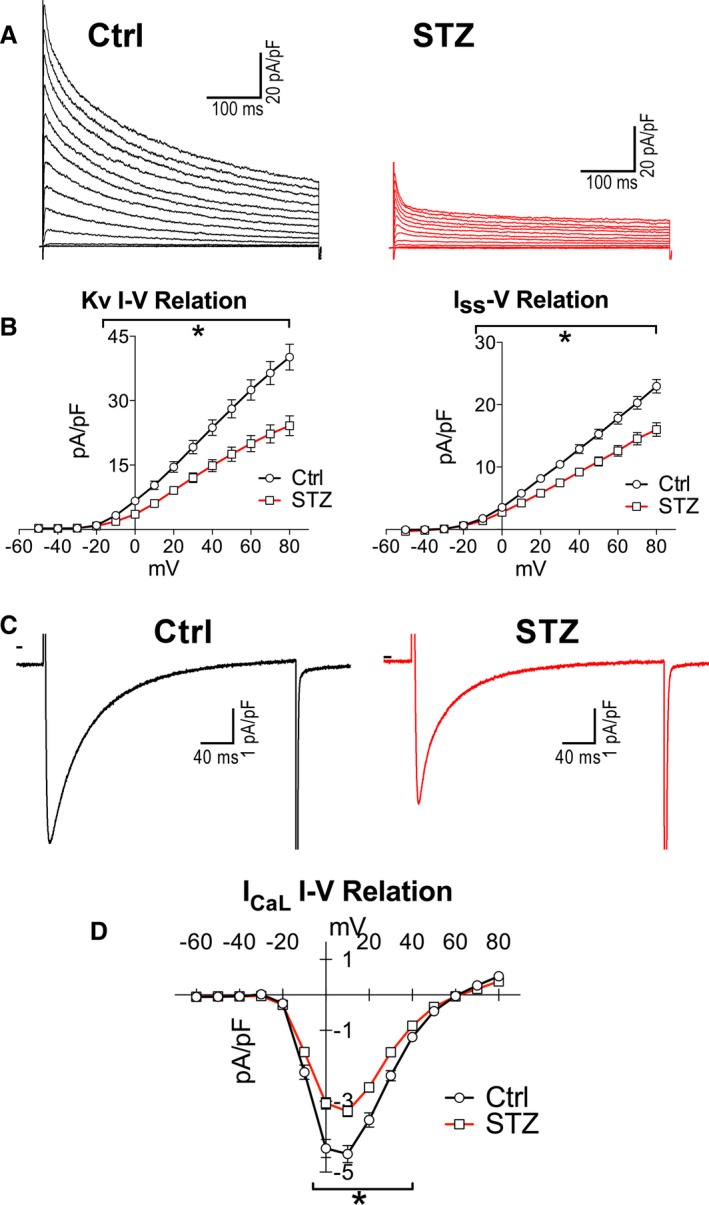
Diabetes was induced in mice with streptozotocin (STZ), and effects of hyperglycemia on electrical properties of whole heart and myocytes were studied with respect to an untreated control group (Ctrl) using electrocardiographic recordings in vivo, ex vivo perfused hearts, and single-cell patch-clamp analysis. Additionally, a newly developed algorithm was introduced to obtain detailed information of the impact of high glucose on AP profile. Compared to Ctrl, hyperglycemia in STZ-treated animals was coupled with prolongation of the QT interval, enhanced temporal dispersion of electrical recovery, and susceptibility to ventricular arrhythmias, defects observed, in part, in the Akita mutant mouse model of type I diabetes. AP was prolonged and beat-to-beat variability of repolarization was enhanced in diabetic myocytes, with respect to Ctrl cells. Density of Kv K(+) and L-type Ca(2+) currents were decreased in STZ myocytes, in comparison to cells from normoglycemic mice. Pharmacological reduction of Kv currents in Ctrl cells lengthened AP duration and increased temporal dispersion of repolarization, reiterating features identified in diabetic myocytes.
Reductions in the repolarizing K(+) currents may contribute to electrical disturbances of the diabetic heart.
糖尿病与心电图QT间期延长及心室复极离散度增加有关,这些因素与动脉粥样硬化和心肌缺血共同作用,可能促使心律失常的发生。因此,我们检验了跨膜离子电流改变会降低心肌细胞复极储备,导致动作电位(AP)延长和复极逐搏变异性增加的可能性。
用链脲佐菌素(STZ)诱导小鼠患糖尿病,并使用体内心电图记录、离体灌注心脏和单细胞膜片钳分析,研究高血糖对整个心脏和心肌细胞电生理特性的影响,以未治疗的对照组(Ctrl)作为对照。此外,引入一种新开发的算法以获取高糖对AP形态影响的详细信息。与Ctrl组相比,STZ处理的动物出现高血糖,同时伴有QT间期延长、电恢复的时间离散度增加以及对室性心律失常的易感性增加,部分缺陷在I型糖尿病的秋田突变小鼠模型中也有观察到。与Ctrl细胞相比,糖尿病心肌细胞的AP延长,复极逐搏变异性增加。与血糖正常小鼠的细胞相比,STZ处理的心肌细胞中Kv K(+)和L型Ca(2+)电流密度降低。药理学方法降低Ctrl细胞中的Kv电流可延长AP持续时间并增加复极的时间离散度,重现了糖尿病心肌细胞中发现的特征。
复极化K(+)电流的减少可能导致糖尿病心脏的电紊乱。