Boulberdaa Mounia, Scott Elizabeth, Ballantyne Margaret, Garcia Raquel, Descamps Betty, Angelini Gianni D, Brittan Mairi, Hunter Amanda, McBride Martin, McClure John, Miano Joseph M, Emanueli Costanza, Mills Nicholas L, Mountford Joanne C, Baker Andrew H
Institute of Cardiovascular and Medical Sciences, BHF Glasgow Cardiovascular Research Centre, University of Glasgow, Glasgow, UK.
BHF/University Centre for Cardiovascular Science, University of Edinburgh, Edinburgh, UK.
Mol Ther. 2016 May;24(5):978-90. doi: 10.1038/mt.2016.41. Epub 2016 Feb 22.
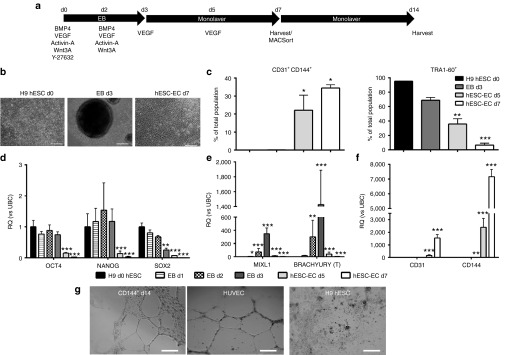
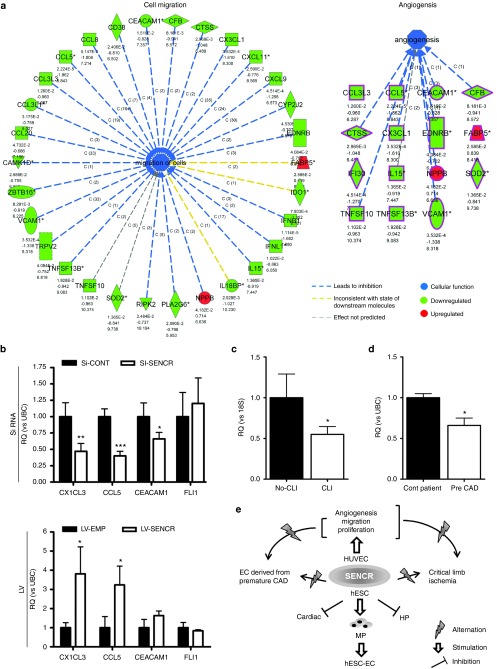
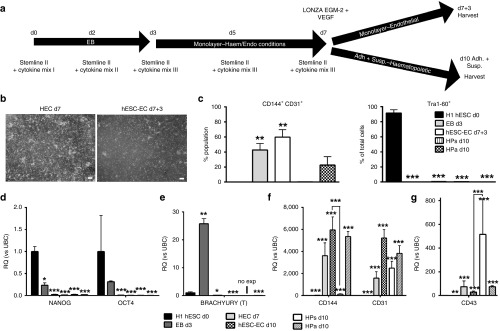
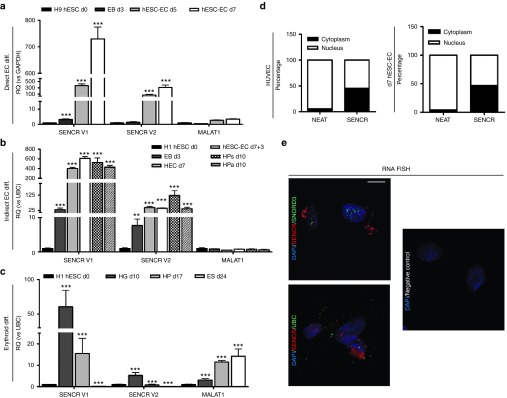
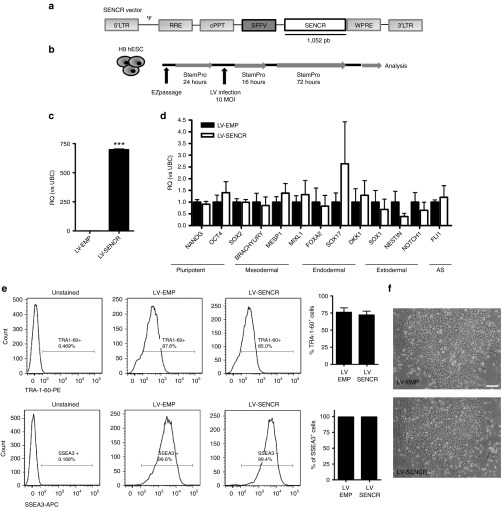
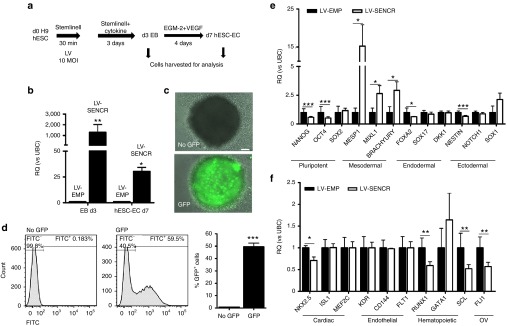
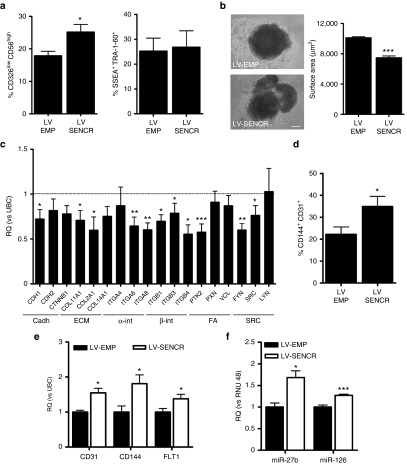
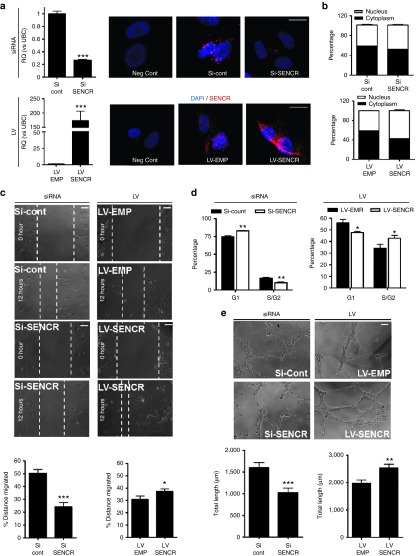
Despite the increasing importance of long noncoding RNA in physiology and disease, their role in endothelial biology remains poorly understood. Growing evidence has highlighted them to be essential regulators of human embryonic stem cell differentiation. SENCR, a vascular-enriched long noncoding RNA, overlaps the Friend Leukemia Integration virus 1 (FLI1) gene, a regulator of endothelial development. Therefore, we wanted to test the hypothesis that SENCR may contribute to mesodermal and endothelial commitment as well as in endothelial function. We thus developed new differentiation protocols allowing generation of endothelial cells from human embryonic stem cells using both directed and hemogenic routes. The expression of SENCR was markedly regulated during endothelial commitment using both protocols. SENCR did not control the pluripotency of pluripotent cells; however its overexpression significantly potentiated early mesodermal and endothelial commitment. In human umbilical endothelial cell (HUVEC), SENCR induced proliferation, migration, and angiogenesis. SENCR expression was altered in vascular tissue and cells derived from patients with critical limb ischemia and premature coronary artery disease compared to controls. Here, we showed that SENCR contributes to the regulation of endothelial differentiation from pluripotent cells and controls the angiogenic capacity of HUVEC. These data give novel insight into the regulatory processes involved in endothelial development and function.
尽管长链非编码RNA在生理学和疾病中的重要性日益增加,但其在内皮生物学中的作用仍知之甚少。越来越多的证据表明它们是人类胚胎干细胞分化的关键调节因子。SENCR是一种血管富集的长链非编码RNA,与内皮发育调节因子Friend白血病整合病毒1(FLI1)基因重叠。因此,我们想验证SENCR可能有助于中胚层和内皮细胞定向分化以及内皮功能的这一假设。因此,我们开发了新的分化方案,可通过定向和造血途径从人类胚胎干细胞生成内皮细胞。在使用这两种方案进行内皮细胞定向分化过程中,SENCR的表达受到显著调控。SENCR并不控制多能细胞的多能性;然而,其过表达显著增强了早期中胚层和内皮细胞的定向分化。在人脐静脉内皮细胞(HUVEC)中,SENCR可诱导细胞增殖、迁移和血管生成。与对照组相比,严重肢体缺血和早发冠状动脉疾病患者的血管组织和细胞中SENCR表达发生改变。在此,我们表明SENCR有助于调节多能细胞向内皮细胞的分化,并控制HUVEC的血管生成能力。这些数据为内皮发育和功能相关的调节过程提供了新的见解。