University/BHF Centre for Cardiovascular Science, Queens Medical Research Institute, University of Edinburgh, 47 Little France Crescent, Edinburgh EH16 4TJ, UK.
Institute of Cardiovascular and Medical Sciences, University of Glasgow, 126 University Pl, Glasgow G12 8TA, UK.
Cardiovasc Res. 2020 Oct 1;116(12):1981-1994. doi: 10.1093/cvr/cvaa008.
Long non-coding RNAs (lncRNAs) play functional roles in physiology and disease, yet understanding of their contribution to endothelial cell (EC) function is incomplete. We identified lncRNAs regulated during EC differentiation and investigated the role of LINC00961 and its encoded micropeptide, small regulatory polypeptide of amino acid response (SPAAR), in EC function.
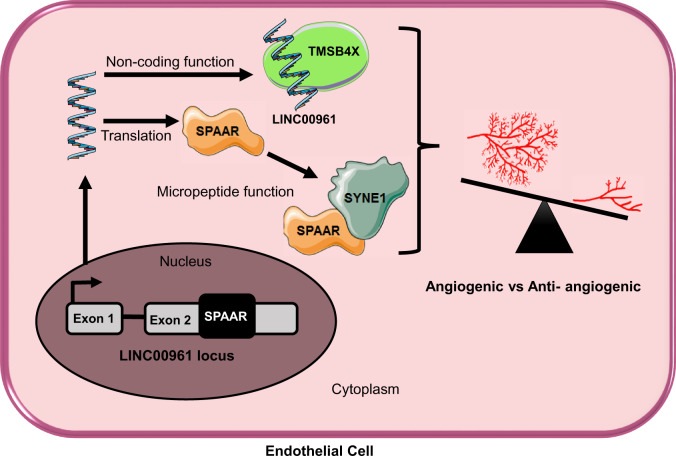
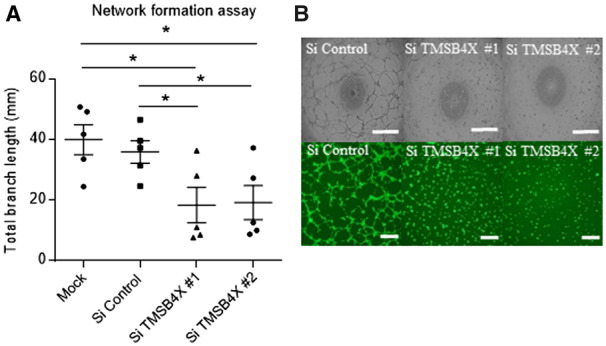
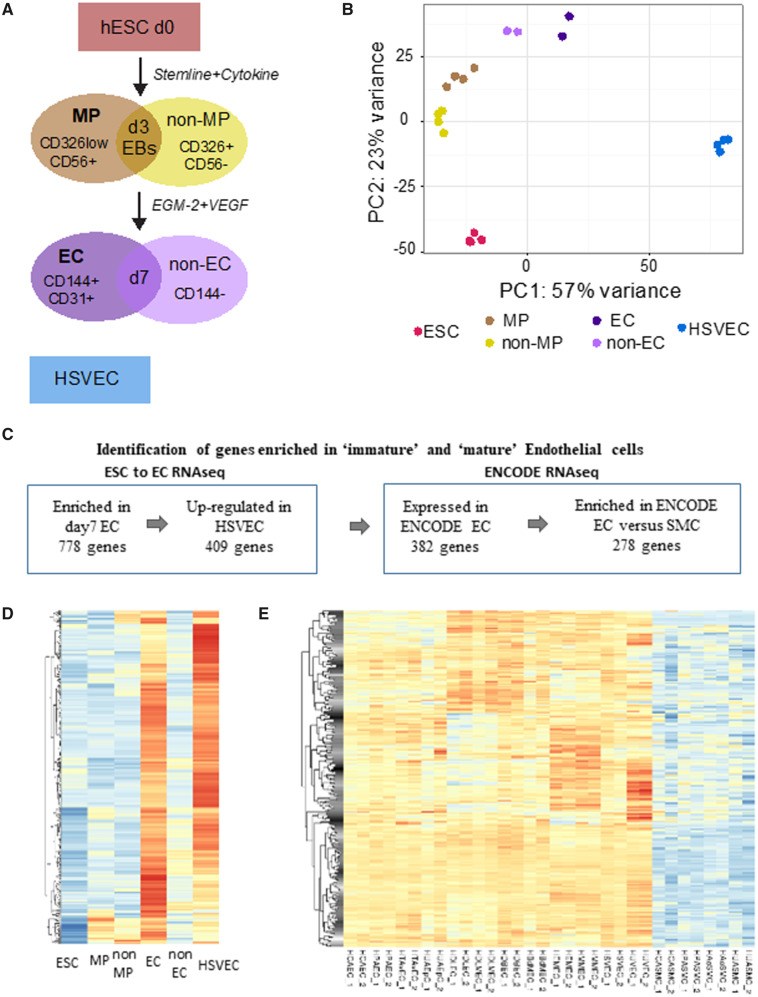
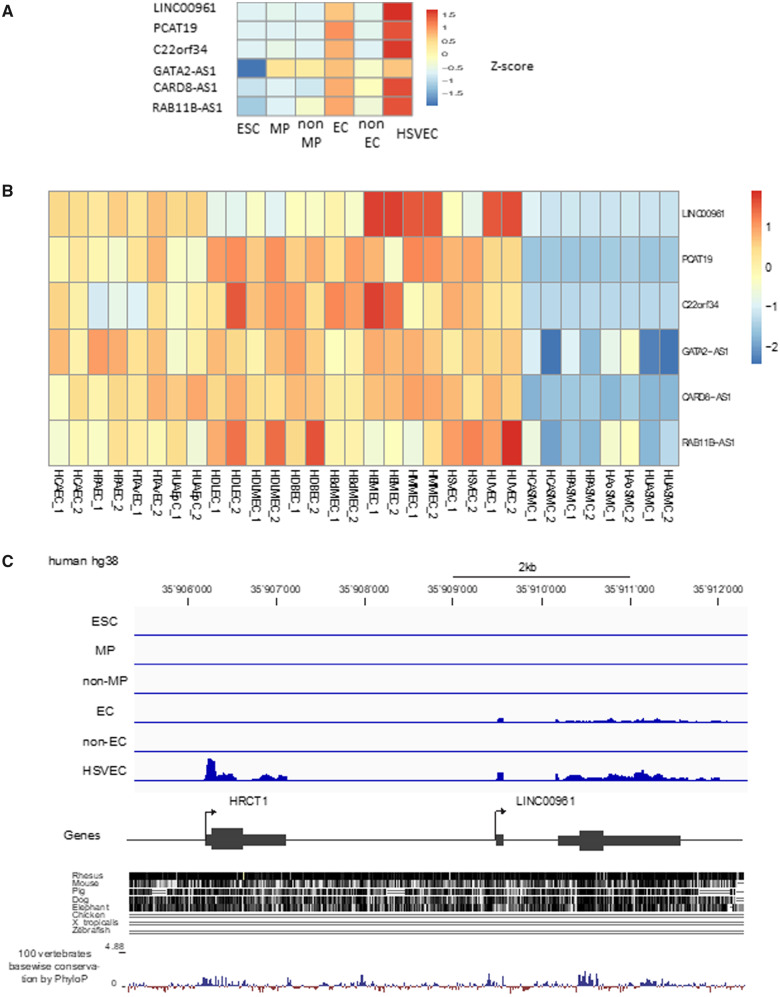
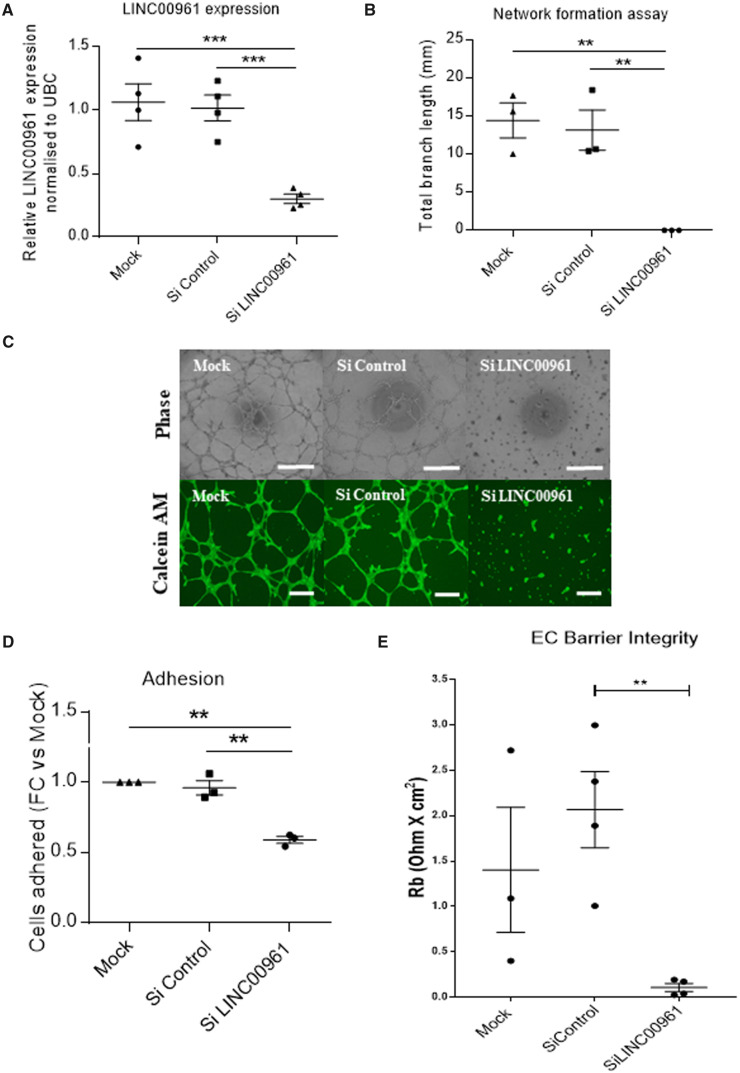
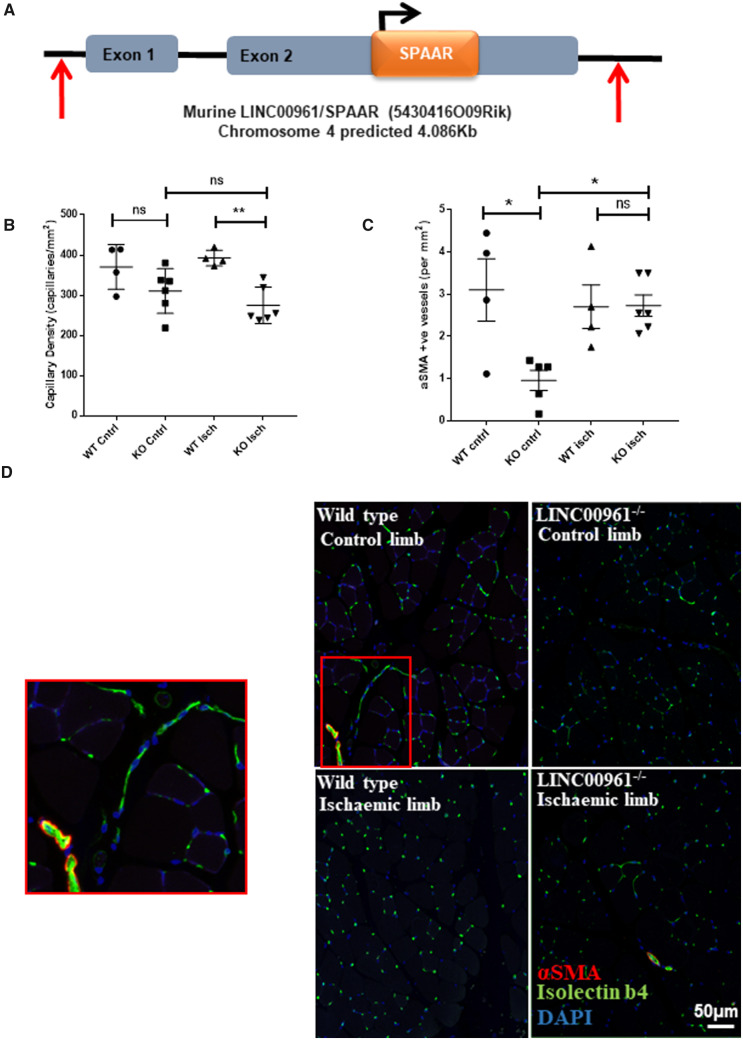
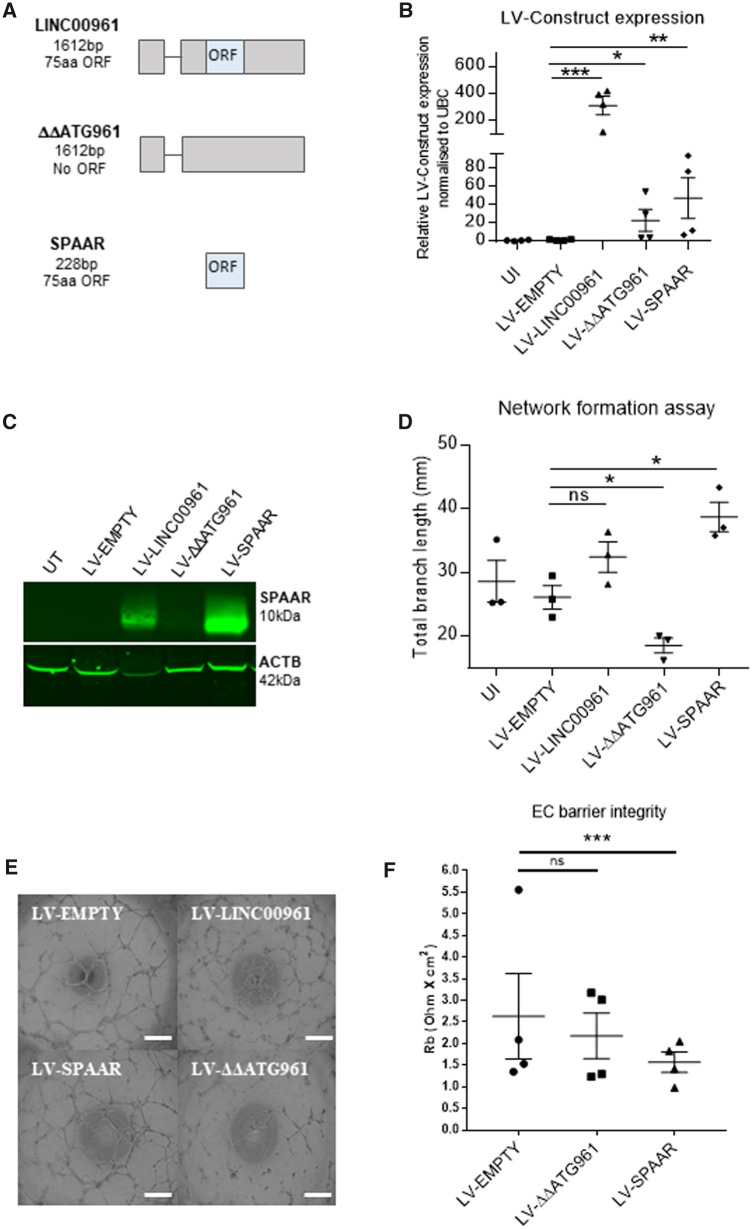
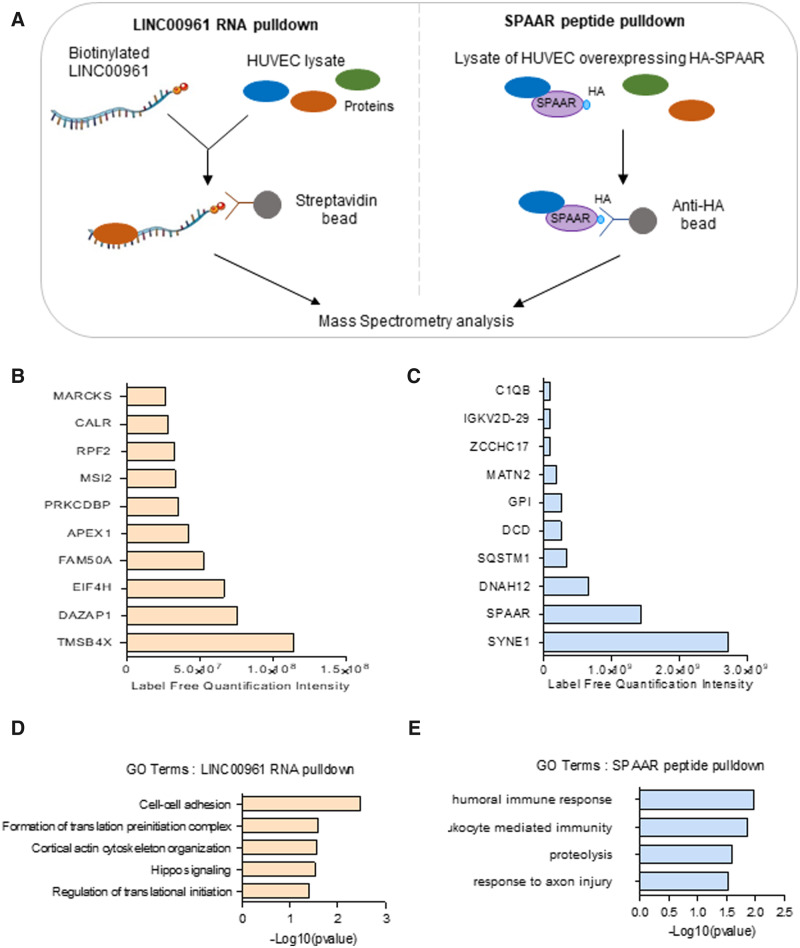
Deep sequencing of human embryonic stem cell differentiation to ECs was combined with Encyclopedia of DNA Elements (ENCODE) RNA-seq data from vascular cells, identifying 278 endothelial enriched genes, including 6 lncRNAs. Expression of LINC00961, first annotated as an lncRNA but reassigned as a protein-coding gene for the SPAAR micropeptide, was increased during the differentiation and was EC enriched. LINC00961 transcript depletion significantly reduced EC adhesion, tube formation, migration, proliferation, and barrier integrity in primary ECs. Overexpression of the SPAAR open reading frame increased tubule formation; however, overexpression of the full-length transcript did not, despite production of SPAAR. Furthermore, overexpression of an ATG mutant of the full-length transcript reduced network formation, suggesting a bona fide non-coding RNA function of the transcript with opposing effects to SPAAR. As the LINC00961 locus is conserved in mouse, we generated an LINC00961 locus knockout (KO) mouse that underwent hind limb ischaemia (HLI) to investigate the angiogenic role of this locus in vivo. In agreement with in vitro data, KO animals had a reduced capillary density in the ischaemic adductor muscle after 7 days. Finally, to characterize LINC00961 and SPAAR independent functions in ECs, we performed pull-downs of both molecules and identified protein-binding partners. LINC00961 RNA binds the G-actin sequestering protein thymosin beta-4x (Tβ4) and Tβ4 depletion phenocopied the overexpression of the ATG mutant. SPAAR binding partners included the actin-binding protein, SYNE1.
The LINC00961 locus regulates EC function in vitro and in vivo. The gene produces two molecules with opposing effects on angiogenesis: SPAAR and LINC00961.
长链非编码 RNA(lncRNA)在生理和疾病中发挥功能作用,但人们对其在血管内皮细胞(EC)功能中的作用仍知之甚少。本研究旨在鉴定在 EC 分化过程中受到调控的 lncRNA,并研究 LINC00961 及其编码的微肽小分子氨基酸反应调节肽(SPAAR)在 EC 功能中的作用。
对人胚胎干细胞向 EC 分化的深度测序与血管细胞中的 DNA 元件百科全书(ENCODE)RNA-seq 数据相结合,鉴定出 278 个内皮细胞丰富的基因,包括 6 个 lncRNA。LINC00961 的表达在分化过程中增加,并且在 EC 中富集,该基因最初被注释为 lncRNA,但后来被重新分配为编码 SPAAR 微肽的基因。LINC00961 转录本耗竭显著降低了原代 EC 的黏附、管形成、迁移、增殖和屏障完整性。全长转录本的过表达增加了管形成;然而,尽管产生了 SPAAR,但全长转录本的过表达并没有增加。此外,全长转录本的 ATG 突变体的过表达减少了网络形成,这表明该转录本具有真正的非编码 RNA 功能,与 SPAAR 的作用相反。由于 LINC00961 基因座在小鼠中保守,我们生成了 LINC00961 基因座敲除(KO)小鼠,并对其进行了后肢缺血(HLI)处理,以研究该基因座在体内的血管生成作用。与体外数据一致,KO 动物在缺血性内收肌中 7 天后毛细血管密度降低。最后,为了鉴定 LINC00961 和 SPAAR 在 EC 中的独立功能,我们进行了这两种分子的下拉实验,并鉴定了蛋白结合伴侣。LINC00961 RNA 结合肌动蛋白结合蛋白胸腺素β-4x(Tβ4)并使其隔离,Tβ4 耗竭与 ATG 突变体的过表达表型相似。SPAAR 的结合伴侣包括肌动蛋白结合蛋白 SYNE1。
LINC00961 基因座在体外和体内调节 EC 功能。该基因产生两种对血管生成具有相反作用的分子:SPAAR 和 LINC00961。