Molnár Judit, Szebeni Gábor J, Csupor-Löffler Boglárka, Hajdú Zsuzsanna, Szekeres Thomas, Saiko Philipp, Ocsovszki Imre, Puskás László G, Hohmann Judit, Zupkó István
Department of Pharmacodynamics and Biopharmacy, University of Szeged, H-6720 Szeged, Hungary.
AVIDIN Ltd., H-6726 Szeged, Hungary.
Int J Mol Sci. 2016 Feb 17;17(2):83. doi: 10.3390/ijms17020083.
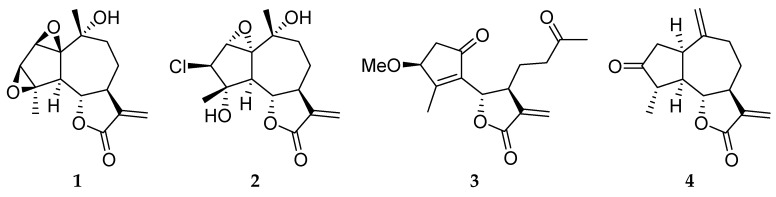
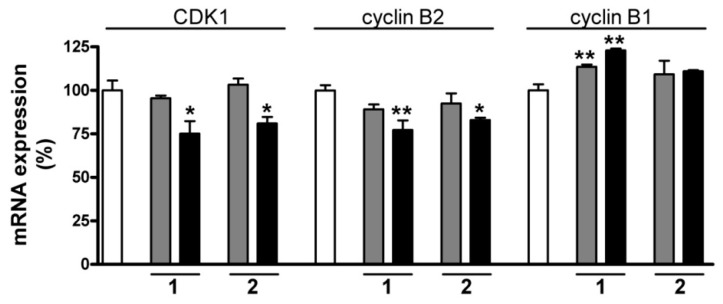
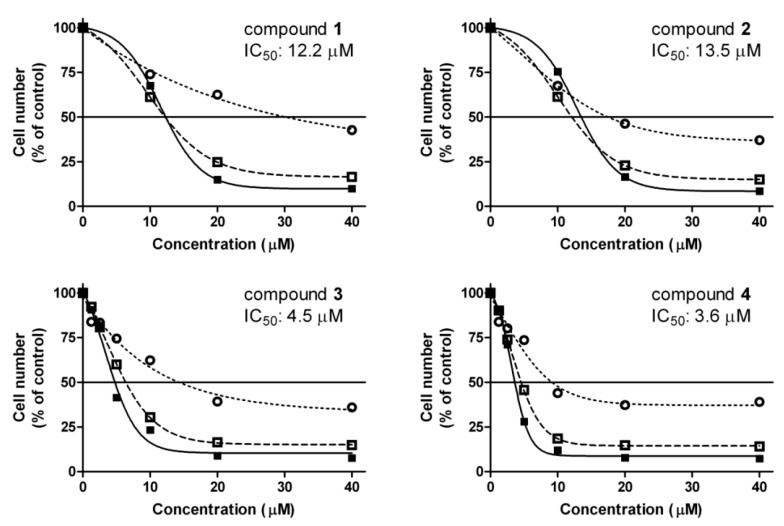
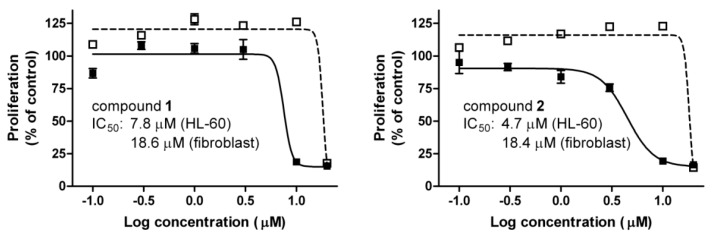
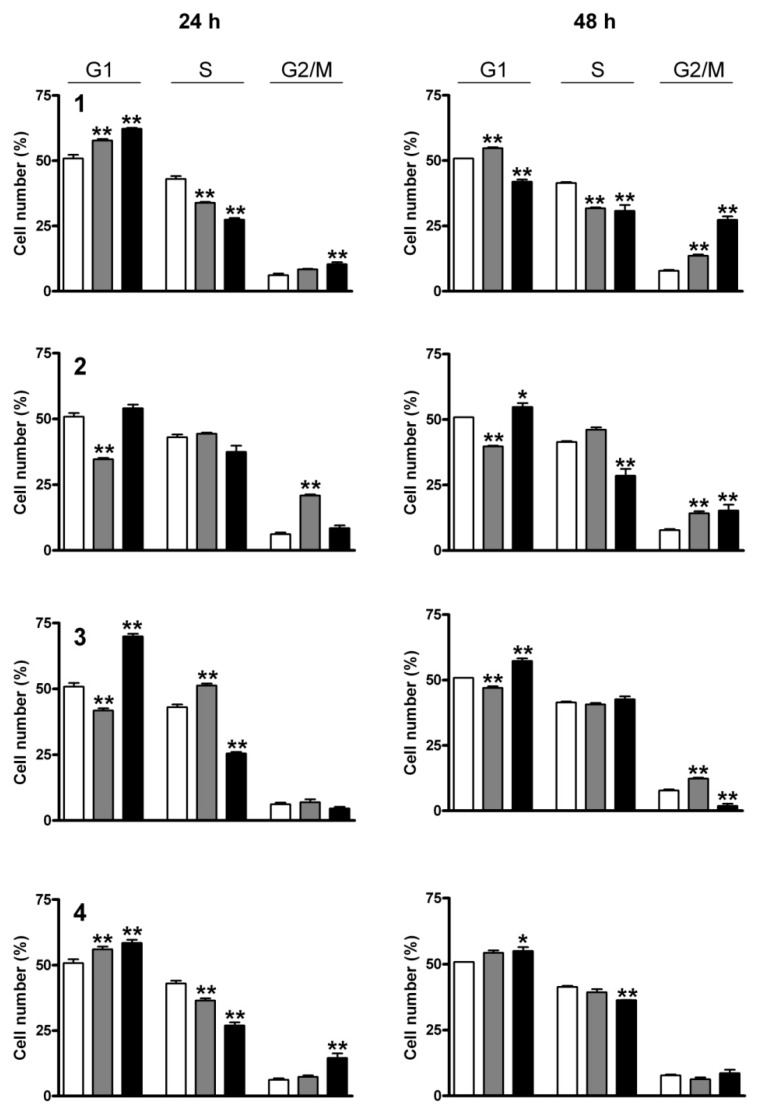
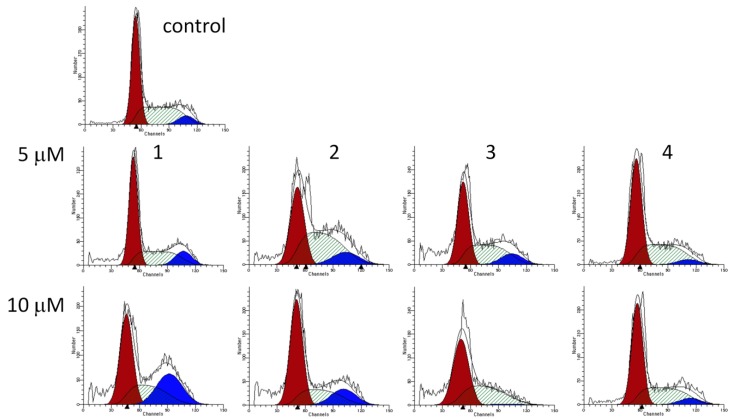
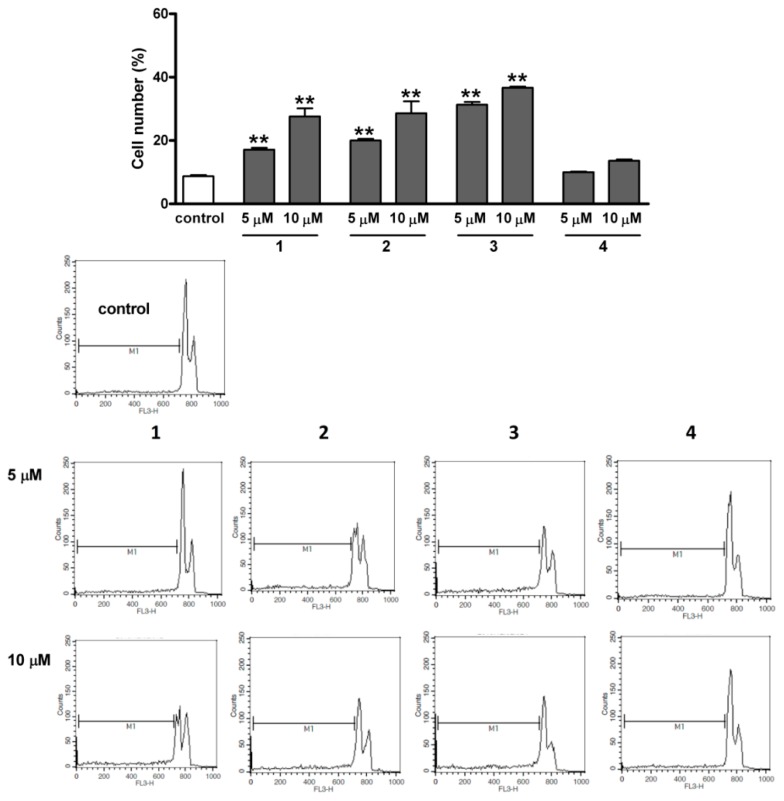
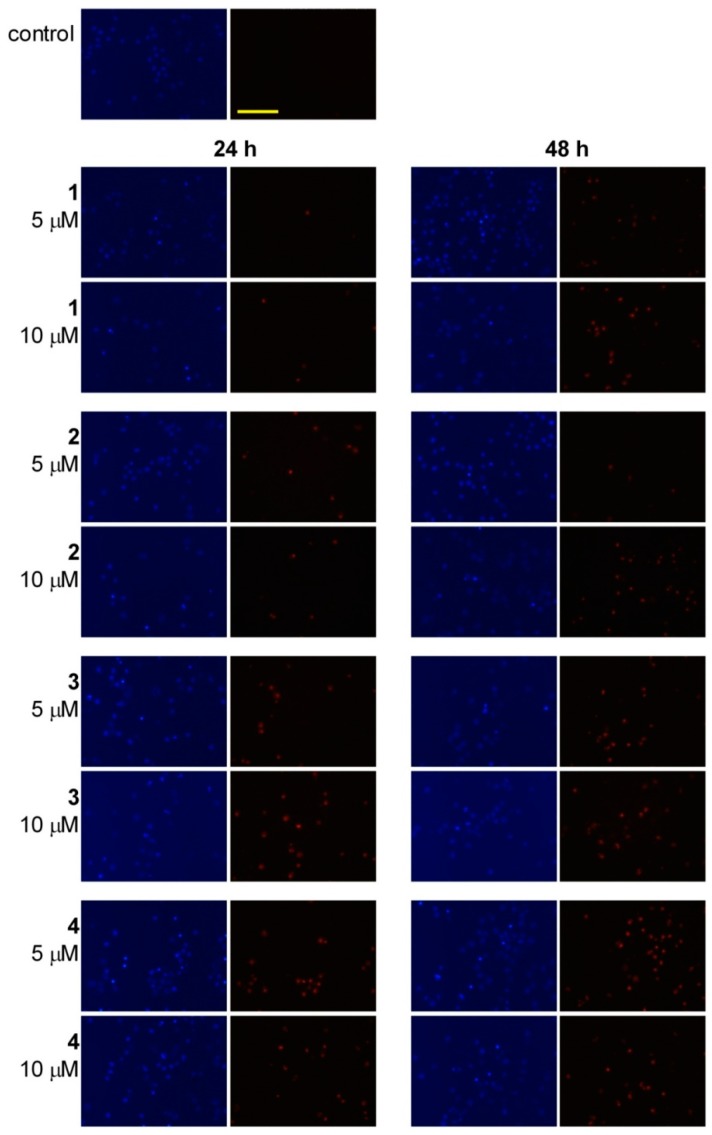
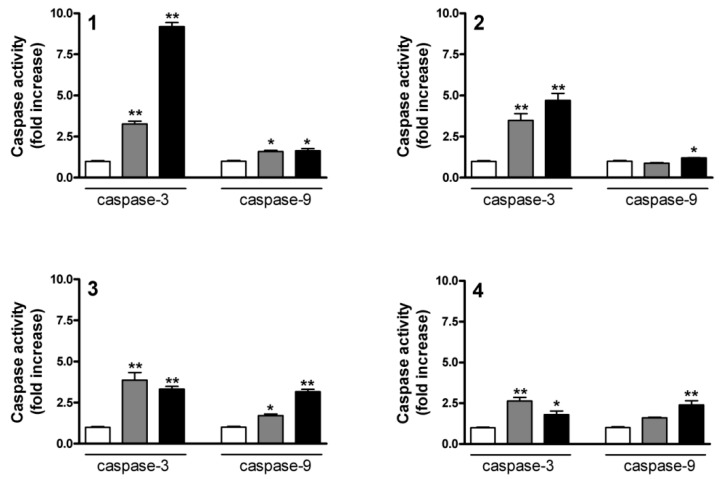
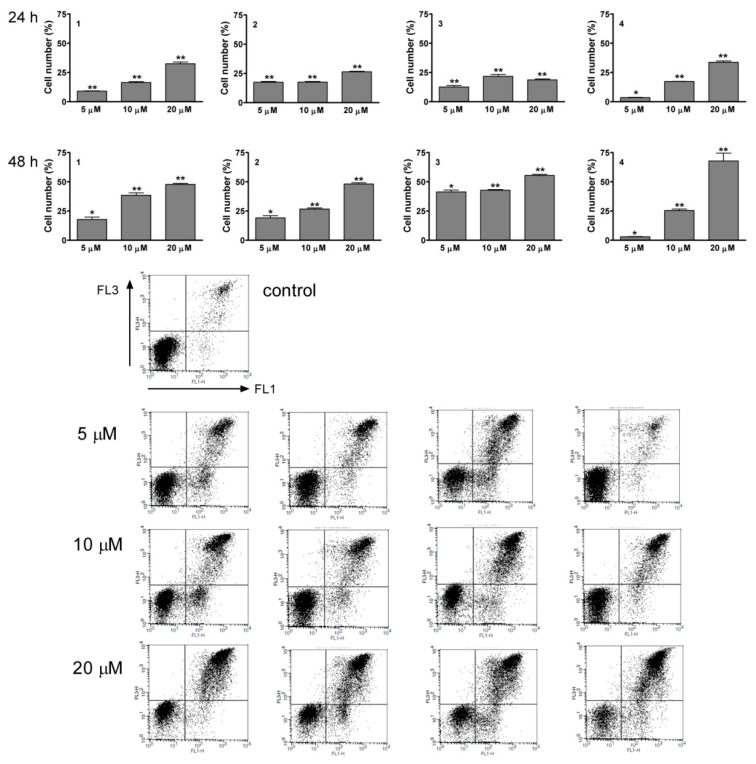
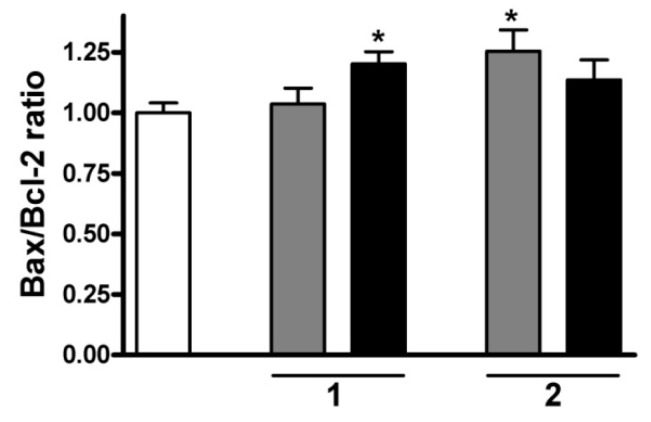
Plants and plant extracts play a crucial role in the research into novel antineoplastic agents. Four sesquiterpene lactones, artecanin (1), 3β-chloro-4α,10α-dihydroxy-1α,2α-epoxy-5α,7αH-guaia-11(13)-en-12,6α-olide (2), iso-seco-tanapartholide 3-O-methyl ether (3) and 4β,15-dihydro-3-dehydrozaluzanin C (4), were isolated from two traditionally used Asteraceae species (Onopordum acanthium and Artemisia asiatica). When tested for antiproliferative action on HL-60 leukemia cells, these compounds exhibited reasonable IC50 values in the range 3.6-13.5 μM. Treatment with the tested compounds resulted in a cell cycle disturbance characterized by increases in the G1 and G2/M populations, while there was a decrease in the S phase. Additionally, 1-3 elicited increases in the hypodiploid (subG1) population. The compounds elicited concentration-dependent chromatin condensation and disruption of the membrane integrity, as revealed by Hoechst 33258-propidium staining. Treatment for 24 h resulted in significant increases in activity of caspases-3 and -9, indicating that the tested sesquiterpenes induced the mitochondrial pathway of apoptosis. The proapoptotic properties of the sesquiterpene lactones were additionally demonstrated withannexin V staining. Compounds 1 and 2 increased the Bax/Bcl-2 expression and decreased the expressions of CDK1 and cyclin B2, as determined at the mRNA level by means of RT-PCR. These experimental results indicate that sesquiterpene lactones may be regarded as potential starting structures for the development of novel anticancer agents.
植物及植物提取物在新型抗肿瘤药物的研究中发挥着关键作用。从两种传统使用的菊科植物(刺苞菜蓟和亚洲蒿)中分离出了四种倍半萜内酯,分别是artecanin(1)、3β-氯-4α,10α-二羟基-1α,2α-环氧-5α,7αH-愈创木-11(13)-烯-12,6α-内酯(2)、异断-塔纳帕托内酯3-O-甲基醚(3)和4β,15-二氢-3-脱氢扎鲁扎宁C(4)。当对HL-60白血病细胞进行抗增殖作用测试时,这些化合物表现出合理的IC50值,范围在3.6 - 13.5 μM之间。用测试化合物处理导致细胞周期紊乱,其特征是G1期和G2/M期细胞群体增加,而S期细胞群体减少。此外,化合物1 - 3使亚二倍体(subG1)细胞群体增加。通过Hoechst 33258-碘化丙啶染色显示,这些化合物引起浓度依赖性的染色质浓缩和膜完整性破坏。处理24小时导致半胱天冬酶-3和-9的活性显著增加,表明测试的倍半萜诱导了凋亡的线粒体途径。用膜联蛋白V染色进一步证明了倍半萜内酯的促凋亡特性。通过RT-PCR在mRNA水平测定,化合物1和2增加了Bax/Bcl-2的表达,并降低了CDK1和细胞周期蛋白B2的表达。这些实验结果表明,倍半萜内酯可被视为开发新型抗癌药物的潜在起始结构。