Kryza David, Debordeaux Frédéric, Azéma Laurent, Hassan Aref, Paurelle Olivier, Schulz Jürgen, Savona-Baron Catherine, Charignon Elsa, Bonazza Pauline, Taleb Jacqueline, Fernandez Philippe, Janier Marc, Toulmé Jean Jacques
UNIV Lyon, Université Claude Bernard Lyon 1, LAGEP UMR 5007 CNRS, Villeurbanne, France.
Hospices Civils de Lyon, Imthernat plateform, Lyon, France.
PLoS One. 2016 Feb 22;11(2):e0149387. doi: 10.1371/journal.pone.0149387. eCollection 2016.
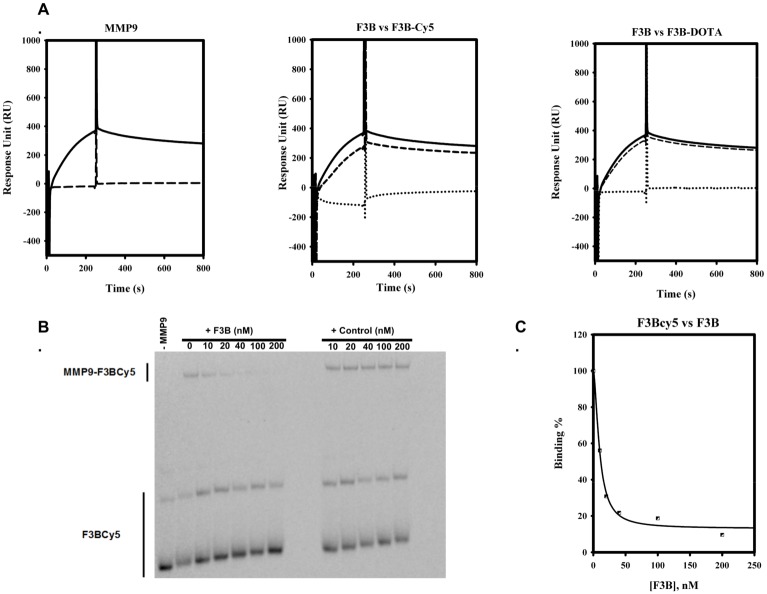
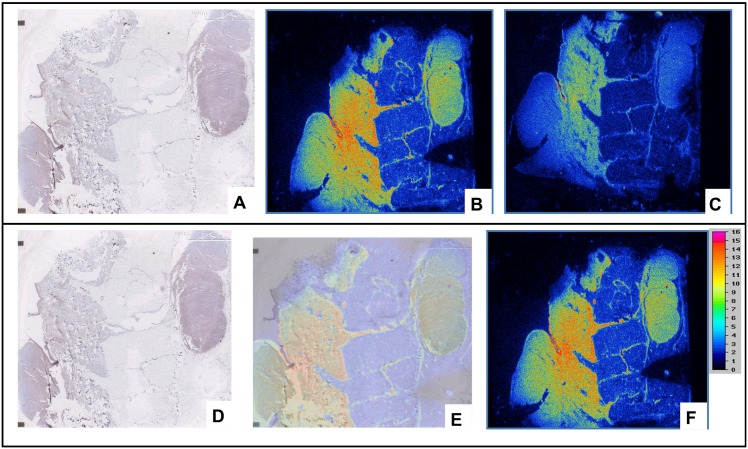
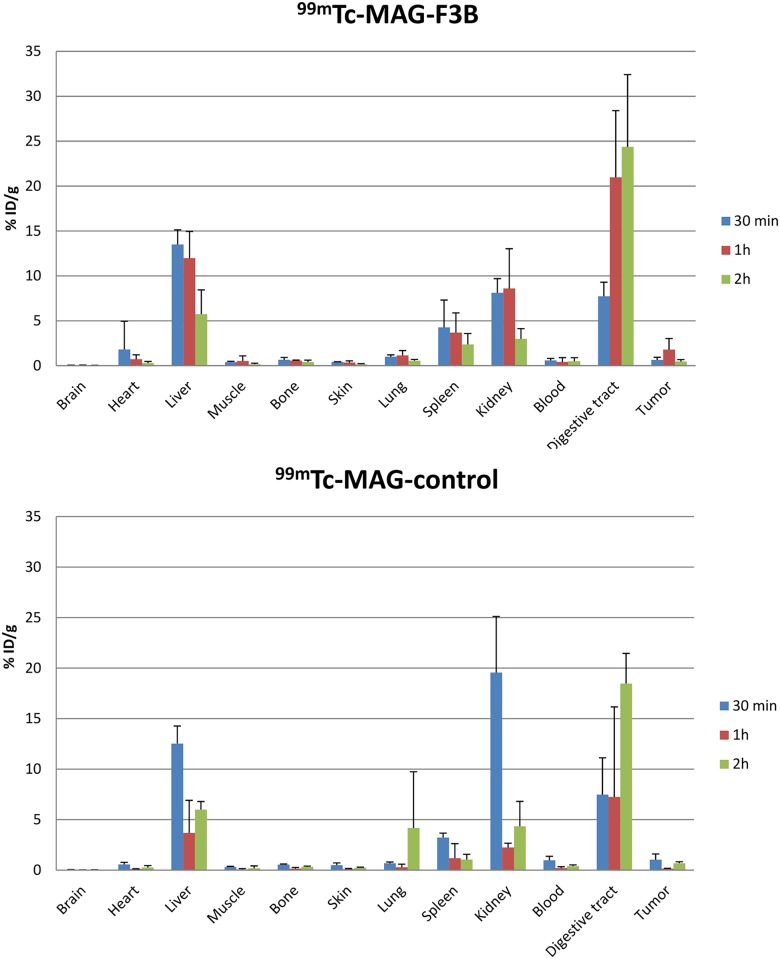
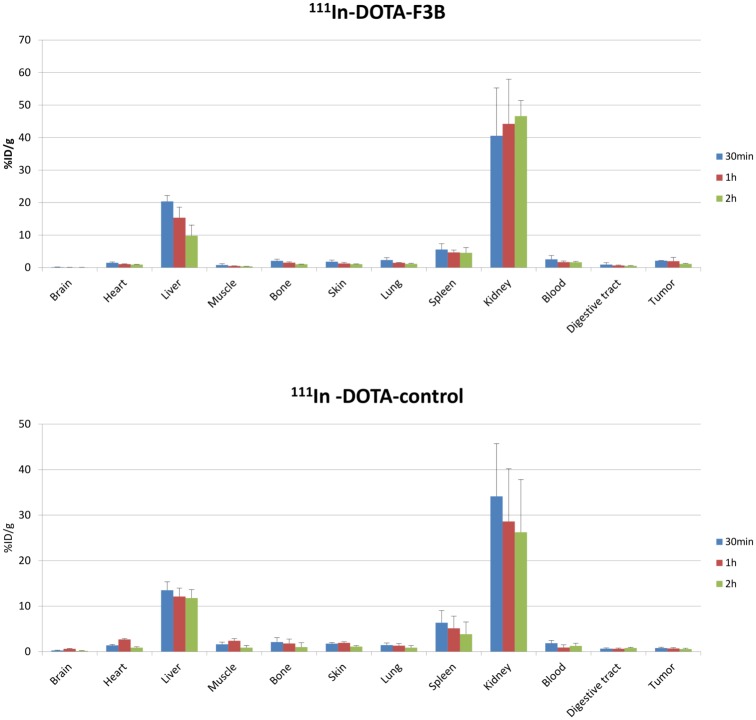
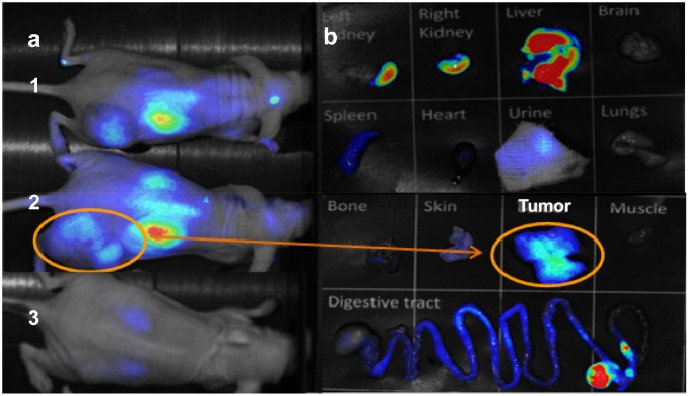
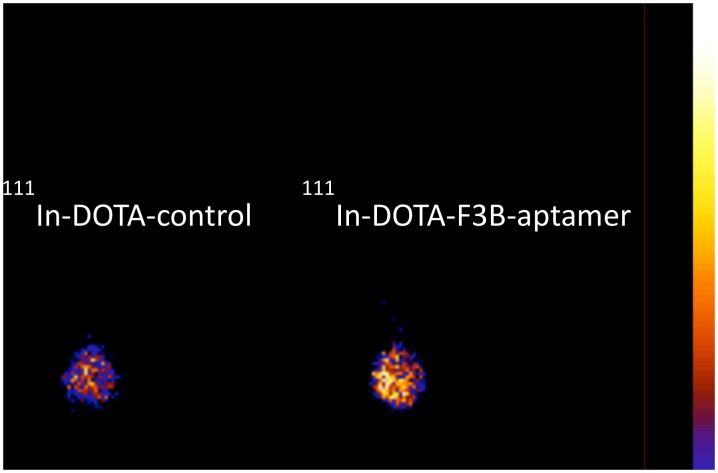
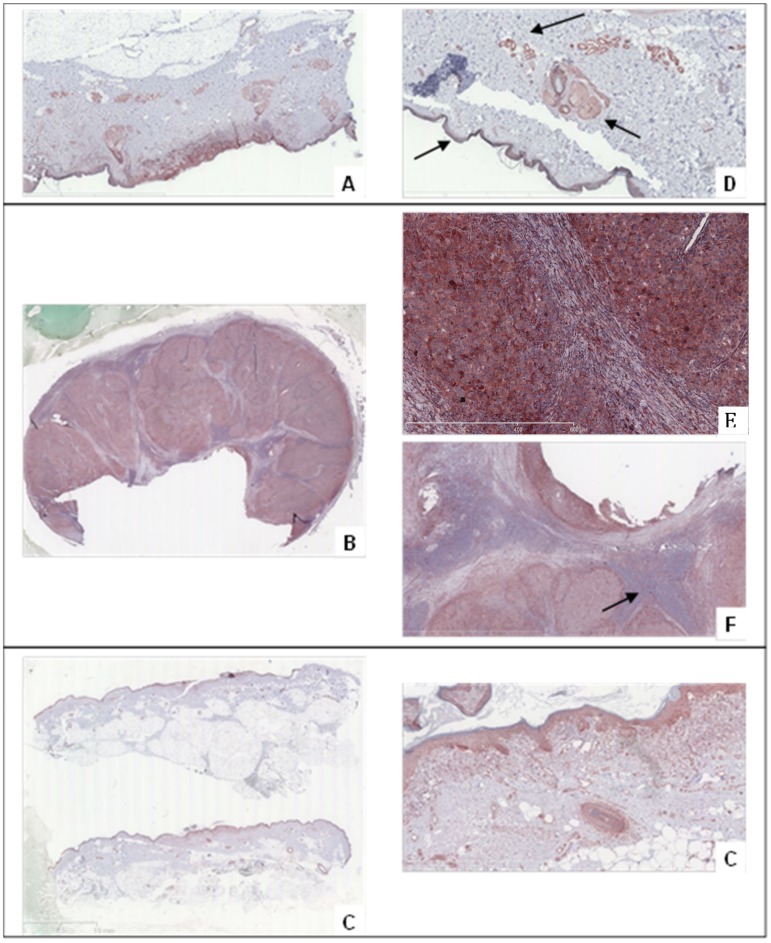
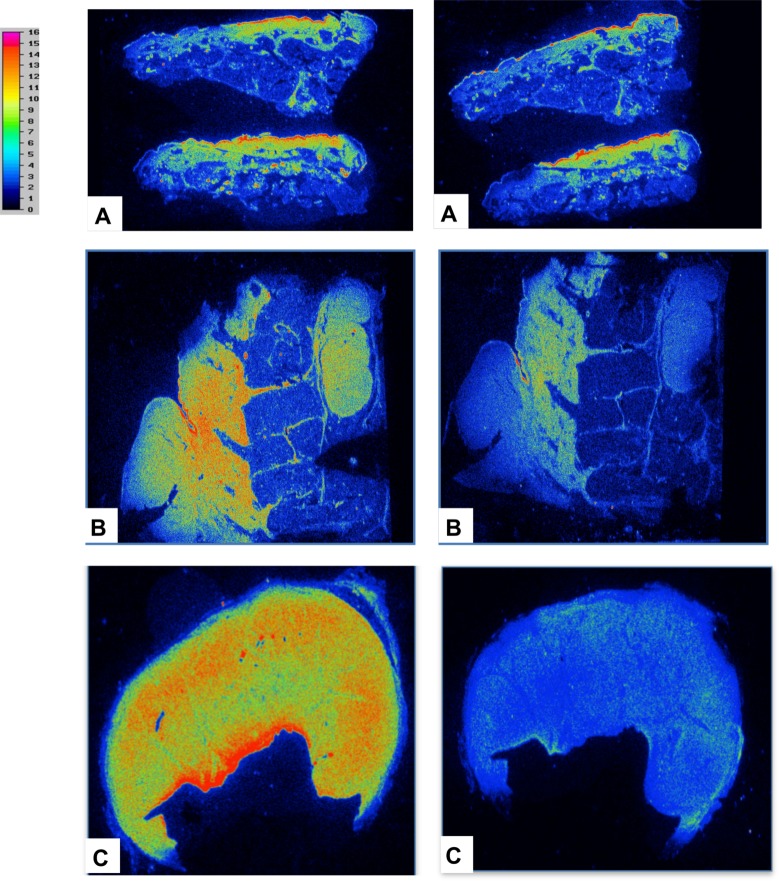
The human Matrix MetalloProtease-9 (hMMP-9) is overexpressed in tumors where it promotes the release of cancer cells thus contributing to tumor metastasis. We raised aptamers against hMMP-9, which constitutes a validated marker of malignant tumors, in order to design probes for imaging tumors in human beings. A chemically modified RNA aptamer (F3B), fully resistant to nucleases was previously described. This compound was subsequently used for the preparation of F3B-Cy5, F3B-S-acetylmercaptoacetyltriglycine (MAG) and F3B-DOTA. The binding properties of these derivatives were determined by surface plasmon resonance and electrophoretic mobility shift assay. Optical fluorescence imaging confirmed the binding to hMMP-9 in A375 melanoma bearing mice. Quantitative biodistribution studies were performed at 30 min, 1h and 2 h post injection of 99mTc-MAG-aptamer and 111In-DOTA-F3B. 99mTc radiolabeled aptamer specifically detected hMMP-9 in A375 melanoma tumors but accumulation in digestive tract was very high. Following i.v. injection of 111In-DOTA-F3B, high level of radioactivity was observed in kidneys and bladder but digestive tract uptake was very limited. Tumor uptake was significantly (student t test, p<0.05) higher for 111In-DOTA-F3B with 2.0%ID/g than for the 111In-DOTA-control oligonucleotide (0.7%ID/g) with tumor to muscle ratio of 4.0. Such difference in tumor accumulation has been confirmed by ex vivo scintigraphic images performed at 1h post injection and by autoradiography, which revealed the overexpression of hMMP-9 in sections of human melanomas. These results demonstrate that F3B aptamer is of interest for detecting hMMP-9 in melanoma tumor.
人基质金属蛋白酶-9(hMMP-9)在肿瘤中过度表达,它能促进癌细胞的释放,从而导致肿瘤转移。我们制备了针对hMMP-9的适体,hMMP-9是一种经过验证的恶性肿瘤标志物,目的是设计用于人类肿瘤成像的探针。之前已描述了一种对核酸酶完全抗性的化学修饰RNA适体(F3B)。该化合物随后被用于制备F3B-Cy5、F3B-S-乙酰巯基乙酰三甘氨酸(MAG)和F3B-DOTA。通过表面等离子体共振和电泳迁移率变动分析确定了这些衍生物的结合特性。光学荧光成像证实了其在荷A375黑色素瘤小鼠中与hMMP-9的结合。在注射99mTc-MAG-适体和111In-DOTA-F3B后30分钟、1小时和2小时进行了定量生物分布研究。99mTc放射性标记的适体在A375黑色素瘤肿瘤中特异性检测到hMMP-9,但在消化道中的蓄积非常高。静脉注射111In-DOTA-F3B后,在肾脏和膀胱中观察到高水平的放射性,但消化道摄取非常有限。111In-DOTA-F3B的肿瘤摄取量显著(学生t检验,p<0.05)高于111In-DOTA对照寡核苷酸(0.7%ID/g),肿瘤与肌肉的比值为4.0。注射后1小时进行的离体闪烁图像和放射自显影证实了肿瘤蓄积的这种差异,放射自显影显示人黑色素瘤切片中hMMP-9的过度表达。这些结果表明,F3B适体对于检测黑色素瘤肿瘤中的hMMP-9具有重要意义。