
HIV-1包膜糖蛋白gp120的计算机模拟分析揭示了病毒在生长受限细胞中适应性的结构基础。
In silico Analysis of HIV-1 Env-gp120 Reveals Structural Bases for Viral Adaptation in Growth-Restrictive Cells.
作者信息
Yokoyama Masaru, Nomaguchi Masako, Doi Naoya, Kanda Tadahito, Adachi Akio, Sato Hironori
机构信息
Laboratory of Viral Genomics, Pathogen Genomics Center, National Institute of Infectious Diseases Tokyo, Japan.
Department of Microbiology, Institute of Biomedical Sciences, Tokushima University Graduate School Tokushima, Japan.
出版信息
Front Microbiol. 2016 Feb 9;7:110. doi: 10.3389/fmicb.2016.00110. eCollection 2016.
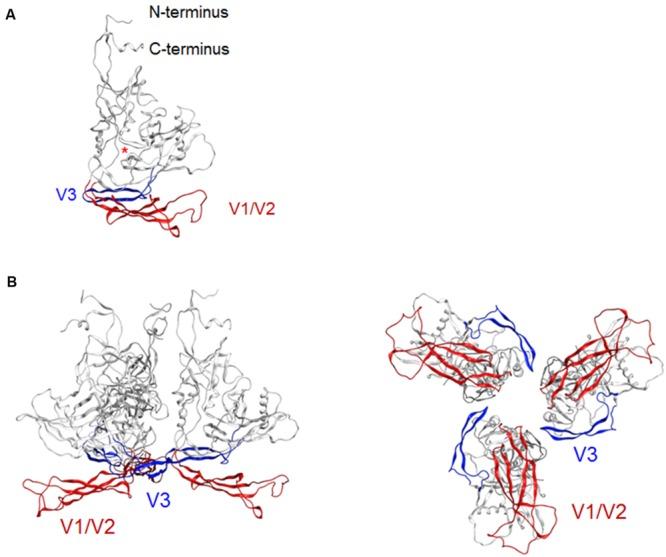
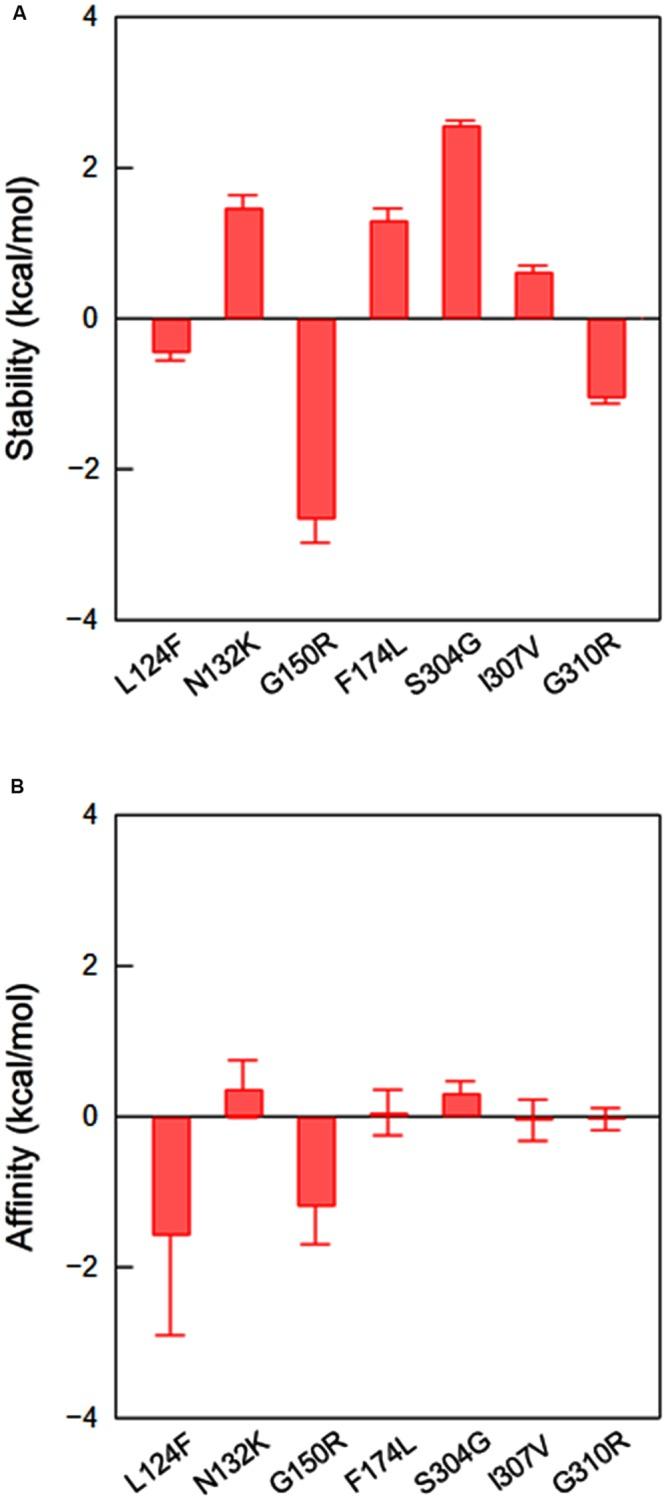
Variable V1/V2 and V3 loops on human immunodeficiency virus type 1 (HIV-1) envelope-gp120 core play key roles in modulating viral competence to recognize two infection receptors, CD4 and chemokine-receptors. However, molecular bases for the modulation largely remain unclear. To address these issues, we constructed structural models for a full-length gp120 in CD4-free and -bound states. The models showed topologies of gp120 surface loop that agree with those in reported structural data. Molecular dynamics simulation showed that in the unliganded state, V1/V2 loop settled into a thermodynamically stable arrangement near V3 loop for conformational masking of V3 tip, a potent neutralization epitope. In the CD4-bound state, however, V1/V2 loop was rearranged near the bound CD4 to support CD4 binding. In parallel, cell-based adaptation in the absence of anti-viral antibody pressures led to the identification of amino acid substitutions that individually enhance viral entry and growth efficiencies in association with reduced sensitivity to CCR5 antagonist TAK-779. Notably, all these substitutions were positioned on the receptors binding surfaces in V1/V2 or V3 loop. In silico structural studies predicted some physical changes of gp120 by substitutions with alterations in viral replication phenotypes. These data suggest that V1/V2 loop is critical for creating a gp120 structure that masks co-receptor binding site compatible with maintenance of viral infectivity, and for tuning a functional balance of gp120 between immune escape ability and infectivity to optimize HIV-1 replication fitness.
人类免疫缺陷病毒1型(HIV-1)包膜糖蛋白gp120核心上的可变V1/V2和V3环在调节病毒识别两种感染受体(CD4和趋化因子受体)的能力方面发挥着关键作用。然而,这种调节的分子基础在很大程度上仍不清楚。为了解决这些问题,我们构建了处于无CD4结合状态和有CD4结合状态的全长gp120的结构模型。这些模型显示的gp120表面环拓扑结构与已报道的结构数据一致。分子动力学模拟表明,在未结合配体的状态下,V1/V2环在V3环附近形成一种热力学稳定的排列,以构象性掩盖V3顶端这一有效的中和表位。然而,在CD4结合状态下,V1/V2环在结合的CD4附近重新排列以支持CD4结合。同时,在没有抗病毒抗体压力的情况下进行的基于细胞的适应性研究导致鉴定出一些氨基酸替代,这些替代单独增强了病毒进入和生长效率,并降低了对CCR5拮抗剂TAK-779的敏感性。值得注意的是,所有这些替代都位于V1/V2或V3环中的受体结合表面上。计算机模拟结构研究预测了gp120因替代而导致的一些物理变化,这些替代伴随着病毒复制表型的改变。这些数据表明,V1/V2环对于形成一种掩盖与维持病毒感染性相容的共受体结合位点的gp120结构至关重要,并且对于调节gp120在免疫逃逸能力和感染性之间的功能平衡以优化HIV-1复制适应性也至关重要。




 Zotero 插件