Lewis Adam J, Dhakal Bijaya K, Liu Ting, Mulvey Matthew A
Department of Pathology, University of Utah, 15 N. Medical Drive E., Salt Lake City, UT 84112, USA.
Huntsman Cancer Institute, University of Utah, 2000 Circle of Hope, Salt Lake City, UT 84112, USA.
Pathogens. 2016 Feb 14;5(1):20. doi: 10.3390/pathogens5010020.
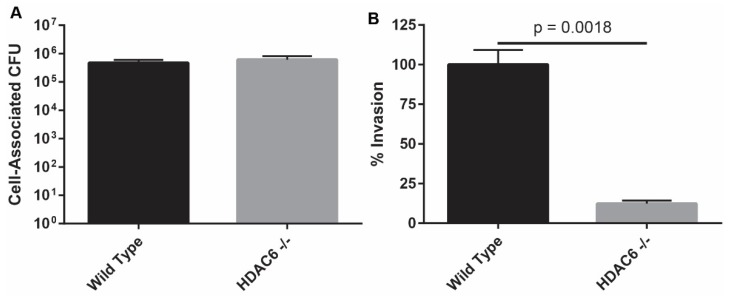
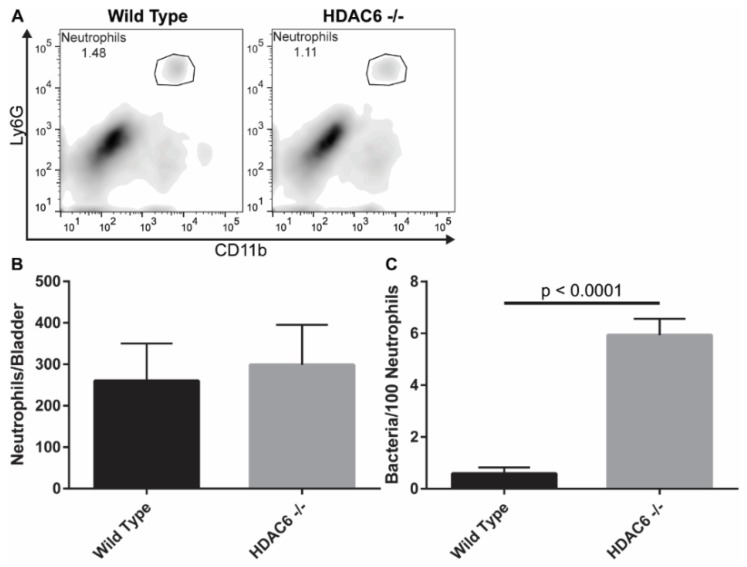
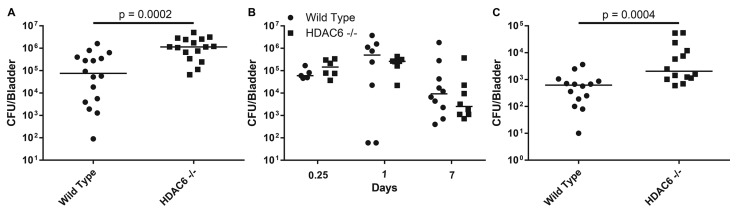
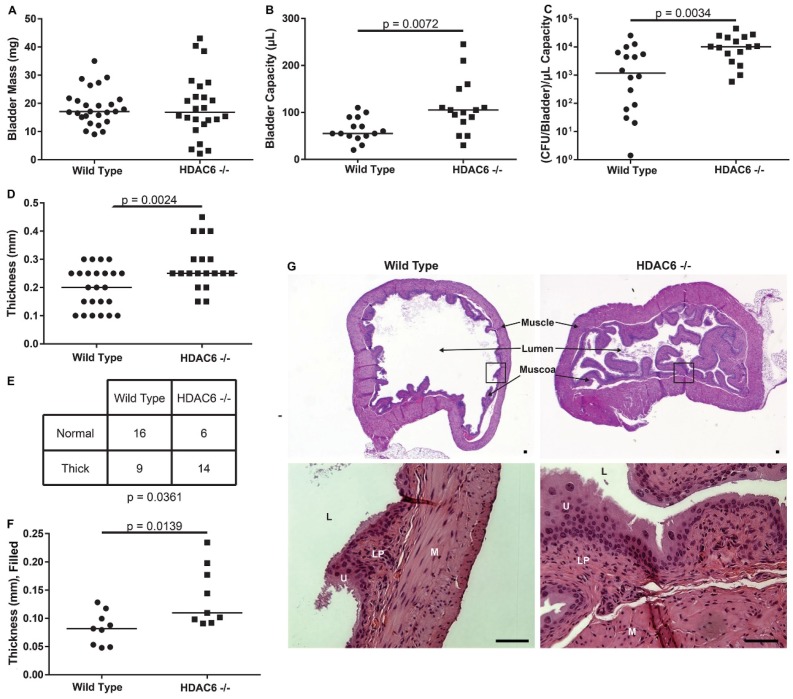
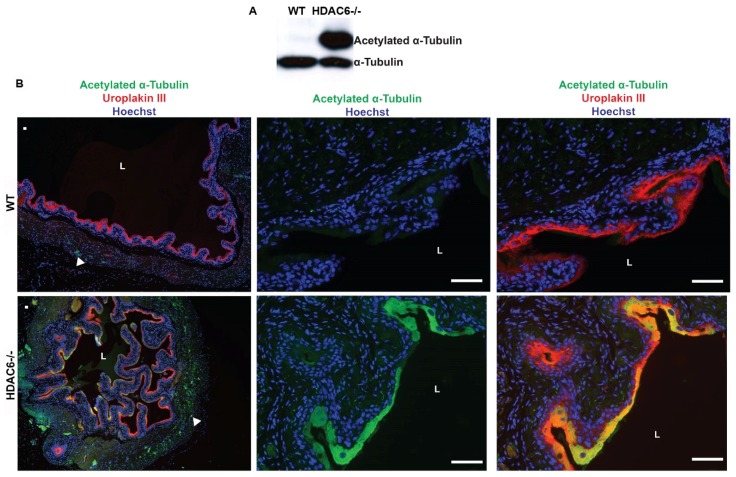
Histone deacetylase 6 (HDAC6) is a non-canonical, mostly cytosolic histone deacetylase that has a variety of interacting partners and substrates. Previous work using cell-culture based assays coupled with pharmacological inhibitors and gene-silencing approaches indicated that HDAC6 promotes the actin- and microtubule-dependent invasion of host cells by uropathogenic Escherichia coli (UPEC). These facultative intracellular pathogens are the major cause of urinary tract infections. Here, we examined the involvement of HDAC6 in bladder colonization by UPEC using HDAC6 knockout mice. Though UPEC was unable to invade HDAC6(-/-) cells in culture, the bacteria had an enhanced ability to colonize the bladders of mice that lacked HDAC6. This effect was transient, and by six hours post-inoculation bacterial titers in the HDAC6(-/-) mice were reduced to levels seen in wild type control animals. Subsequent analyses revealed that the mutant mice had greater bladder volume capacity and fluid retention, along with much higher levels of acetylated a-tubulin. In addition, infiltrating neutrophils recovered from the HDAC6(-/-) bladder harbored significantly more viable bacteria than their wild type counterparts. Cumulatively, these changes may negate any inhibitory effects that the lack of HDAC6 has on UPEC entry into individual host cells, and suggest roles for HDAC6 in other urological disorders such as urinary retention.
组蛋白去乙酰化酶6(HDAC6)是一种非典型的、主要存在于胞质中的组蛋白去乙酰化酶,它有多种相互作用的伴侣和底物。以往基于细胞培养的实验结合药理学抑制剂和基因沉默方法的研究表明,HDAC6可促进致病性大肠杆菌(UPEC)对宿主细胞的肌动蛋白和微管依赖性侵袭。这些兼性细胞内病原体是尿路感染的主要原因。在此,我们使用HDAC6基因敲除小鼠研究了HDAC6在UPEC膀胱定植中的作用。尽管在培养中UPEC无法侵袭HDAC6基因敲除(-/-)细胞,但这种细菌在缺乏HDAC6的小鼠膀胱中定植的能力增强。这种效应是短暂的,接种后6小时,HDAC6基因敲除(-/-)小鼠中的细菌滴度降至野生型对照动物中的水平。随后的分析表明,突变小鼠的膀胱容量和液体潴留更大,同时乙酰化α-微管蛋白水平更高。此外,从HDAC6基因敲除(-/-)膀胱中回收的浸润中性粒细胞中存活的细菌明显多于野生型对照中的中性粒细胞。总体而言,这些变化可能抵消了缺乏HDAC6对UPEC进入单个宿主细胞的任何抑制作用,并提示HDAC6在其他泌尿系统疾病如尿潴留中发挥作用。