Dvořák Filip, Farnesi Camellone Matteo, Tovt Andrii, Tran Nguyen-Dung, Negreiros Fabio R, Vorokhta Mykhailo, Skála Tomáš, Matolínová Iva, Mysliveček Josef, Matolín Vladimír, Fabris Stefano
Charles University in Prague, Faculty of Mathematics and Physics, V Holešovičkách 2, Prague 18000, Czech Republic.
CNR-IOM DEMOCRITOS, Istituto Officina dei Materiali, Consiglio Nazionale delle Ricerche, Via Bonomea 265, Trieste 34136, Italy.
Nat Commun. 2016 Feb 24;7:10801. doi: 10.1038/ncomms10801.
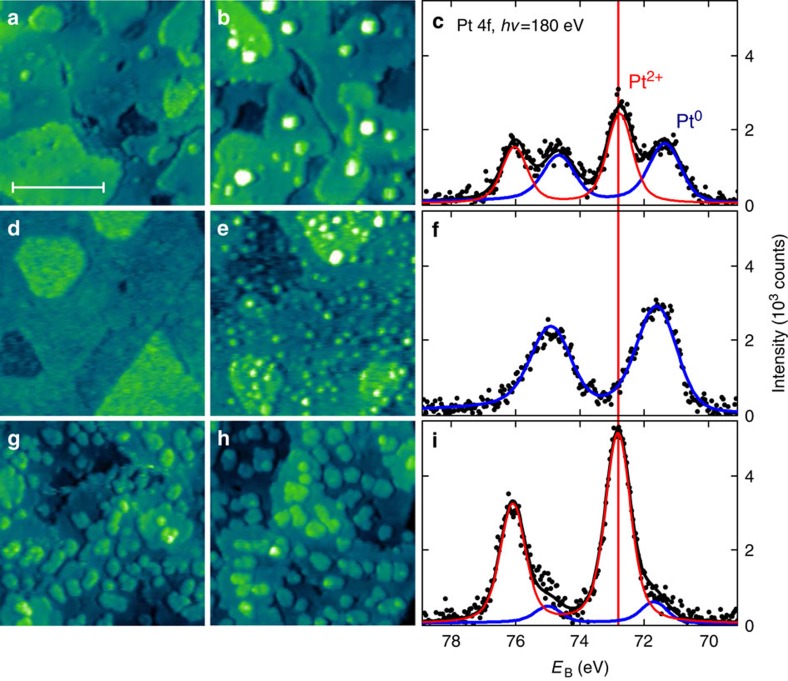
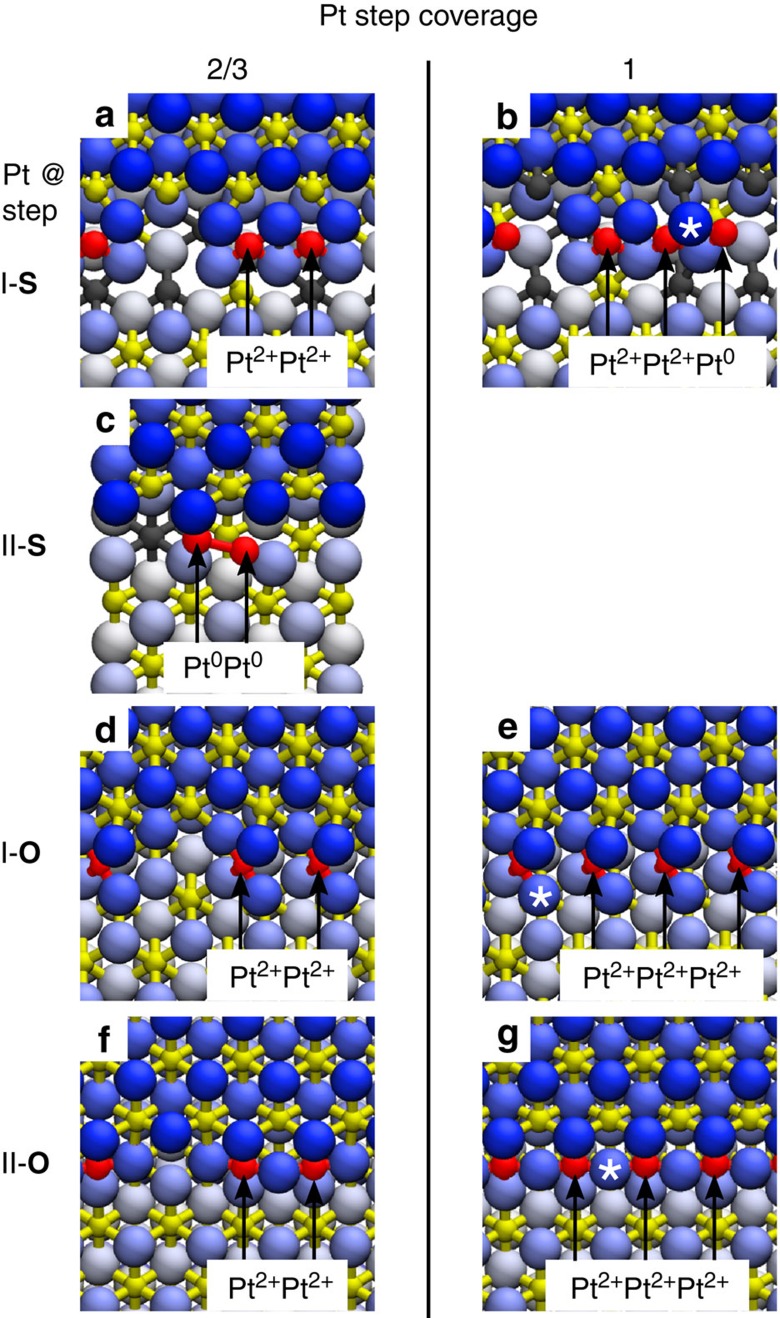
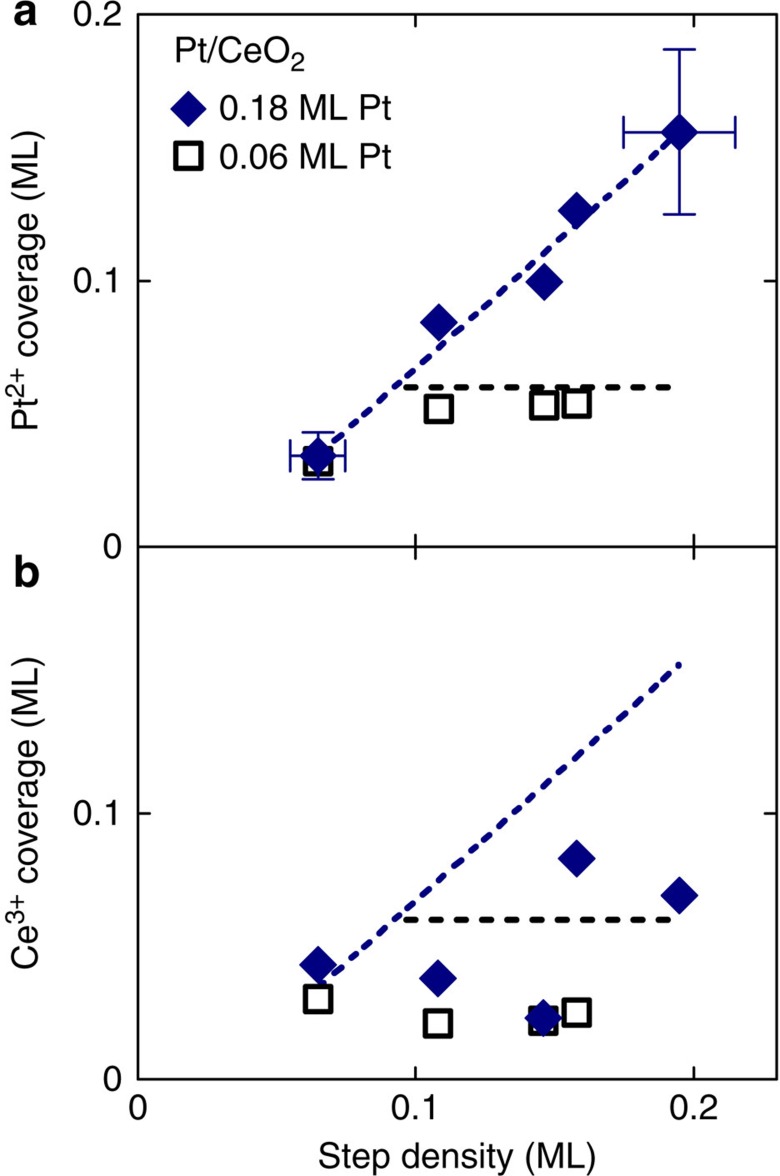
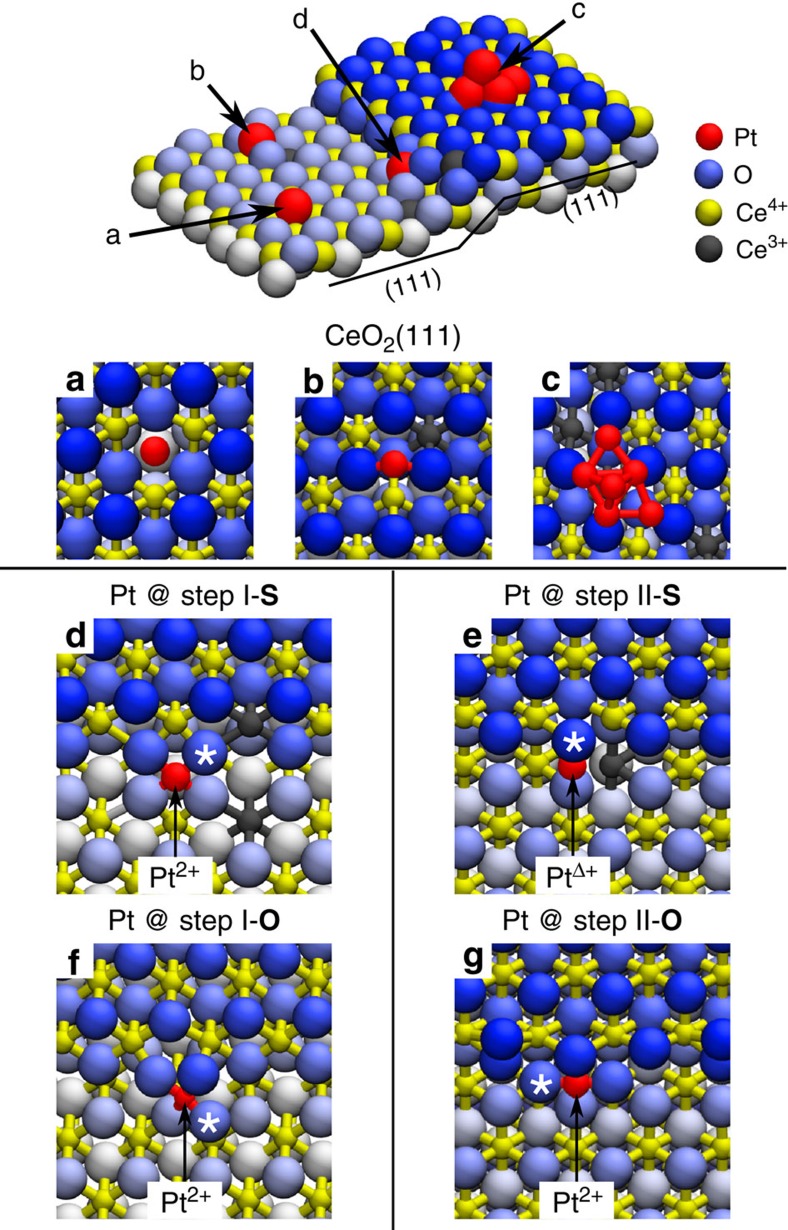
Single-atom catalysts maximize the utilization of supported precious metals by exposing every single metal atom to reactants. To avoid sintering and deactivation at realistic reaction conditions, single metal atoms are stabilized by specific adsorption sites on catalyst substrates. Here we show by combining photoelectron spectroscopy, scanning tunnelling microscopy and density functional theory calculations that Pt single atoms on ceria are stabilized by the most ubiquitous defects on solid surfaces--monoatomic step edges. Pt segregation at steps leads to stable dispersions of single Pt(2+) ions in planar PtO4 moieties incorporating excess O atoms and contributing to oxygen storage capacity of ceria. We experimentally control the step density on our samples, to maximize the coverage of monodispersed Pt(2+) and demonstrate that step engineering and step decoration represent effective strategies for understanding and design of new single-atom catalysts.
单原子催化剂通过使每一个金属原子都暴露于反应物中,从而最大限度地提高了负载型贵金属的利用率。为了避免在实际反应条件下烧结和失活,单金属原子通过催化剂载体上的特定吸附位点得以稳定。在此,我们通过结合光电子能谱、扫描隧道显微镜和密度泛函理论计算表明,二氧化铈上的铂单原子是由固体表面最普遍存在的缺陷——单原子台阶边缘所稳定的。台阶处的铂偏析导致单个Pt(2+)离子在包含过量氧原子并有助于二氧化铈储氧能力的平面PtO4部分中稳定分散。我们通过实验控制样品上的台阶密度,以最大化单分散Pt(2+)的覆盖率,并证明台阶工程和台阶修饰是理解和设计新型单原子催化剂的有效策略。