Ma Lianyue, Ni Mei, Hao Panpan, Lu Huixia, Yang Xiaoyan, Xu Xingli, Zhang Cheng, Huang Shanying, Zhao Yuxia, Liu Xiaoling, Zhang Yun
The Key Laboratory of Cardiovascular Remodeling and Function Research, Chinese Ministry of Education and Chinese Ministry of Health, Qilu Hospital, Shandong University, Shandong 250012, P.R. China.
The State and Shandong Province Joint Key Laboratory of Translational Cardiovascular Medicine, Qilu Hospital, Shandong University, Shandong 250012, P.R. China.
Oncotarget. 2016 Mar 29;7(13):16194-204. doi: 10.18632/oncotarget.7477.
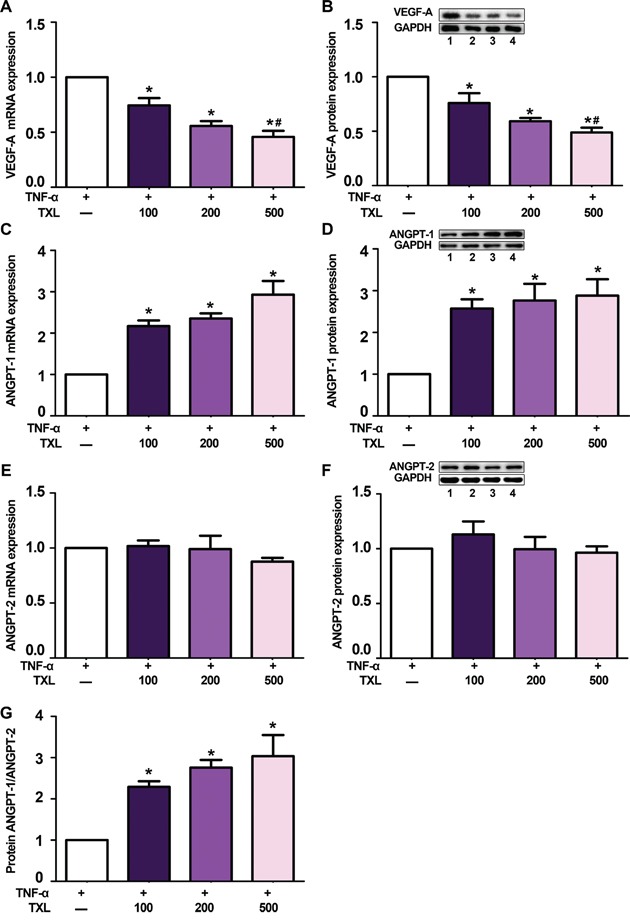
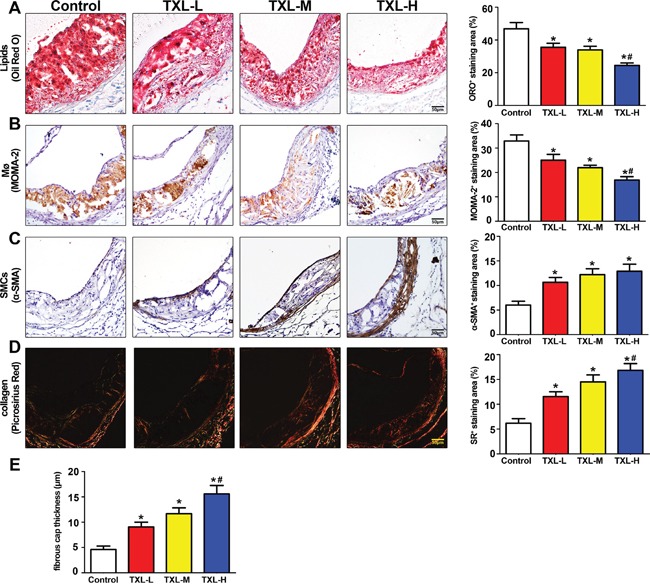
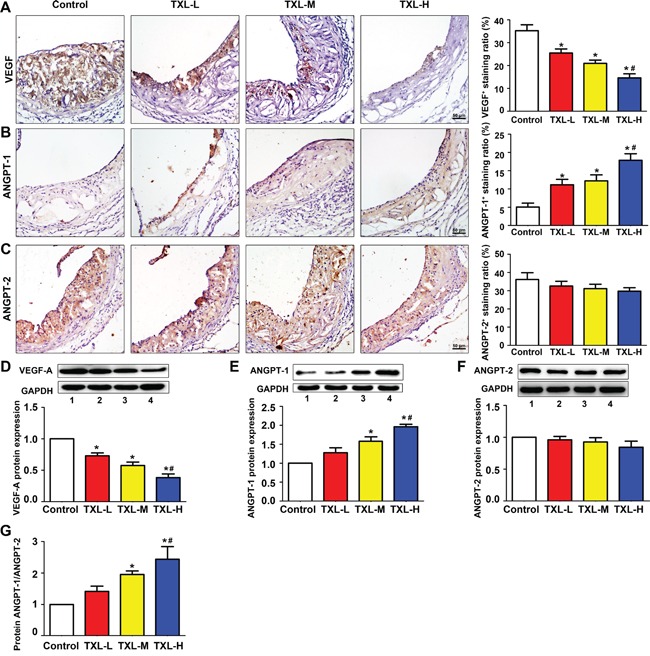
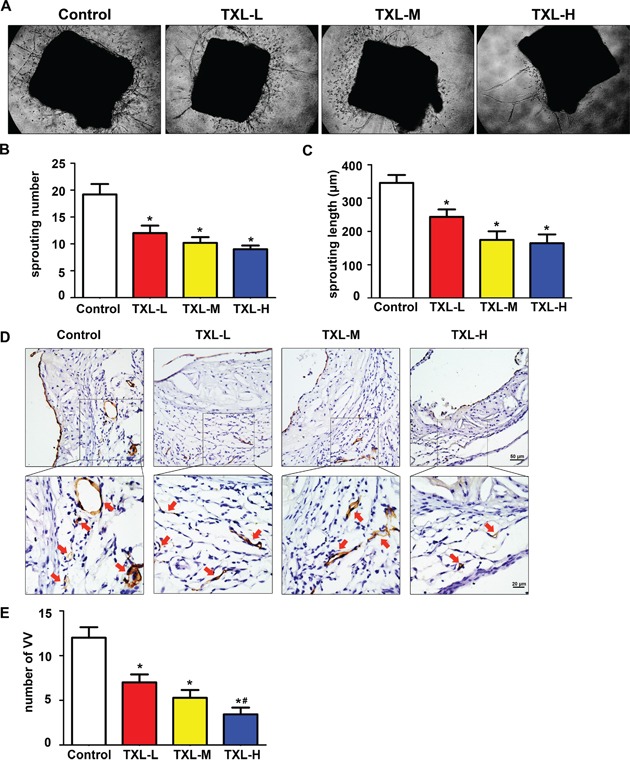
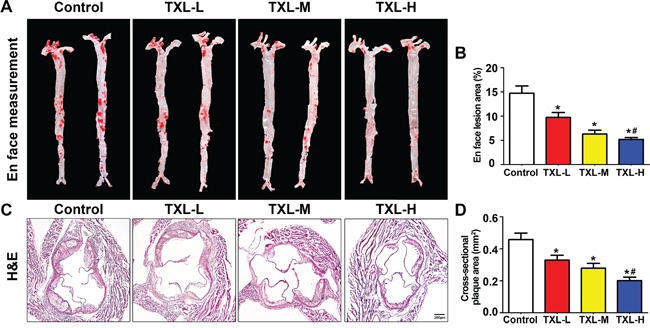
Vasa vasorum (VV) neovascularization contributes to atherogenesis and its expansion and distribution is correlated with intraplaque expression of angiogenic factors. The present study investigated the roles of Tongxinluo (TXL), a traditional Chinese medication, on VV proliferation and atherogenesis. In vitro, TXL pre-treatment reversed the tumor necrosis factor-a (TNF-a) induced expression of vascular endothelial growth factor A (VEGF-A) and angiopoietin-1 (ANGPT-1) but not ANGPT-2, leading to increased ratio of ANGPT-1 to ANGPT-2. Consistently, TXL treatment (at a dosage of 0.38, 0.75, 1.5 g/kg/d, respectively) decreased the expression of VEGF-A while increased that of ANGPT-1 in early atherosclerotic lesions of apolipoprotein E deficient (apoE-/-) mice. On aortic ring assay, microvessels sprouting from aortas were significantly inhibited in TXL-treated mice. Moreover, VV neovascularization in plaques was markedly reduced with TXL treatment. Histological and morphological analysis demonstrated that TXL treatment reduced plaque burden, plaque size and changed the plaque composition. These data suggest that TXL inhibits early atherogenesis through regulating angiogenic factor expression and inhibiting VV proliferation in atherosclerotic plaque. Our study shed new light on the anti-atherosclerotic effect of TXL.
血管滋养血管(VV)新生血管形成促进动脉粥样硬化的发生,其扩展和分布与斑块内血管生成因子的表达相关。本研究探讨了中药通心络(TXL)对VV增殖和动脉粥样硬化发生的作用。在体外,TXL预处理逆转了肿瘤坏死因子-α(TNF-α)诱导的血管内皮生长因子A(VEGF-A)和血管生成素-1(ANGPT-1)的表达,但未逆转ANGPT-2的表达,导致ANGPT-1与ANGPT-2的比例增加。同样,TXL治疗(分别以0.38、0.75、1.5 g/kg/d的剂量)降低了载脂蛋白E缺陷(apoE-/-)小鼠早期动脉粥样硬化病变中VEGF-A的表达,同时增加了ANGPT-1的表达。在主动脉环实验中,TXL治疗的小鼠主动脉微血管的芽生明显受到抑制。此外,TXL治疗可显著减少斑块中的VV新生血管形成。组织学和形态学分析表明,TXL治疗可减轻斑块负荷、减小斑块大小并改变斑块组成。这些数据表明,TXL通过调节血管生成因子表达和抑制动脉粥样硬化斑块中的VV增殖来抑制早期动脉粥样硬化的发生。我们的研究为TXL的抗动脉粥样硬化作用提供了新的线索。