Heymann Dominique
INSERM, UMR 957, Nantes F-44035, France; Université de Nantes, Nantes atlantique universités, Laboratoire de Physiopathologie de la Résorption Osseuse et Thérapie des Tumeurs Osseuses Primitives, Nantes F-44035, France; CHU de Nantes, Nantes F-44035, France; Equipe Labellisee LIGUE 2012, Nantes, France.
J Bone Oncol. 2012 Apr 26;1(1):2-11. doi: 10.1016/j.jbo.2012.03.001. eCollection 2012 Jun.
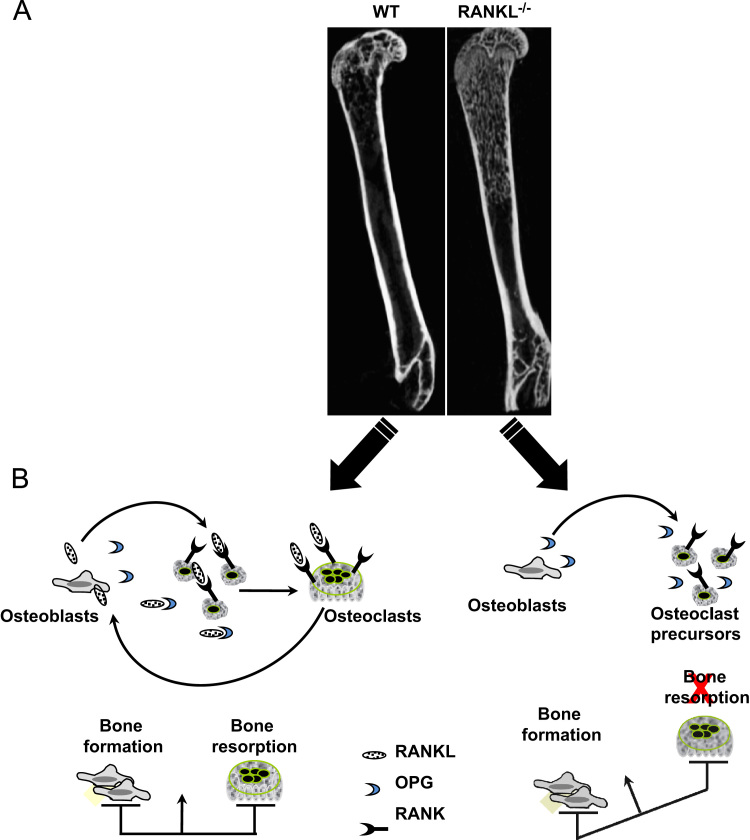
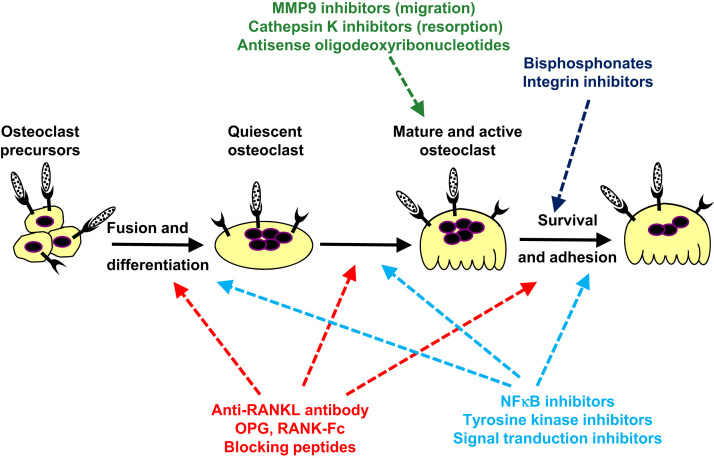
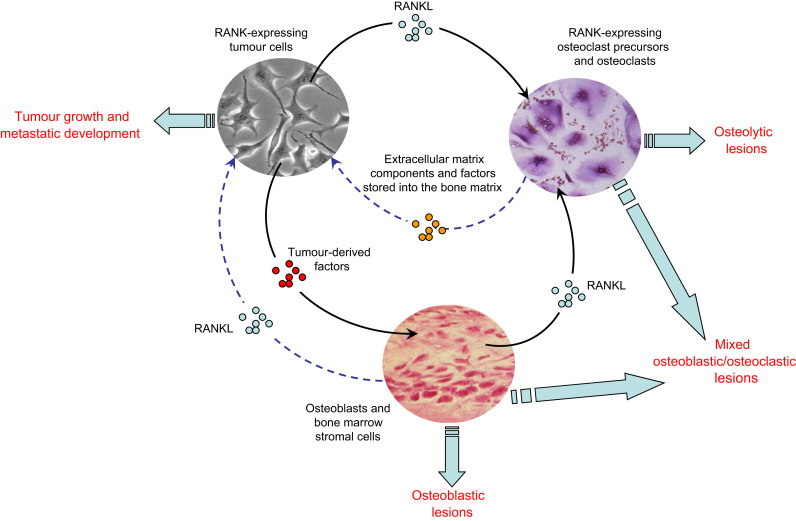
Bone remodelling is related to coordinated phases of bone resorption and bone apposition allowing the maintenance of bone integrity, the phosphocalcic homoeostasis all along the life and consequently the bone adaptation to mechanical constraints or/and to endocrine fluctuations. Unfortunately, bone is a frequent site of tumour development originated from bone cell lineages (primary bone tumours: bone sarcomas) or from nonosseous origins (bone metastases: carcinomas). These tumour cells disrupt the balance between osteoblast and osteoclast activities resulting in a disturbed bone remodelling weakening the bone tissue, in a strongly altered bone microenvironment and consequently facilitating the tumour growth. At the early stage of tumour development, osteoclast differentiation and recruitment of mature osteoclasts are strongly activated resulting in a strong bone matrix degradation and release of numerous growth factors initially stored into this organic/calcified matrix. In turn these soluble factors stimulate the proliferation of tumour cells and exacerbate their migration and their ability to initiate metastases. Because Receptor Activator of NFκB Ligand (RANKL) is absolutely required for in vivo osteoclastogenesis, its role in the bone tumour growth has been immediately pointed out and has consequently allowed the development of new targeted therapies of these malignant diseases. The present review summarises the role of RANKL in the bone tumour microenvironment, the most recent pre-clinical and clinical evidences of its targeting in bone metastases and bone sarcomas. The following sections position RANKL targeted therapy among the other anti-resorptive therapies available and underline the future directions which are currently under investigations.
骨重塑与骨吸收和骨沉积的协调阶段相关,有助于维持骨的完整性、整个生命周期中的钙磷稳态,从而使骨适应机械负荷或/和内分泌波动。不幸的是,骨是肿瘤发生的常见部位,肿瘤起源于骨细胞谱系(原发性骨肿瘤:骨肉瘤)或非骨源性(骨转移瘤:癌)。这些肿瘤细胞破坏了成骨细胞和破骨细胞活性之间的平衡,导致骨重塑紊乱,削弱骨组织,使骨微环境发生强烈改变,从而促进肿瘤生长。在肿瘤发展的早期,破骨细胞分化和成熟破骨细胞的募集被强烈激活,导致强烈的骨基质降解,并释放出最初储存在这种有机/钙化基质中的多种生长因子。反过来,这些可溶性因子刺激肿瘤细胞增殖,加剧其迁移和启动转移的能力。由于核因子κB受体活化因子配体(RANKL)在体内破骨细胞生成中是绝对必需的,其在骨肿瘤生长中的作用立即被指出,因此促成了针对这些恶性疾病的新靶向治疗的发展。本综述总结了RANKL在骨肿瘤微环境中的作用,以及其在骨转移瘤和骨肉瘤靶向治疗方面最新的临床前和临床证据。以下部分将RANKL靶向治疗置于其他可用的抗吸收治疗方法之中,并强调了目前正在研究的未来方向。