Laboratory of Orthopaedic Research, Chosun University Hospital, Dong-Gu, Gwangju, Republic of Korea.
Department of Orthopaedic Surgery, Chosun University Hospital, Dong-Gu, Gwangju, Republic of Korea.
Clin Transl Med. 2021 Mar;11(3):e368. doi: 10.1002/ctm2.368.
The discovery of receptor activator of nuclear factor-ĸB ligand (RANKL) as the final effector in the pathogenesis of osteoporosis has led to a better understanding of bone remodeling. When RANKL binds to its receptor (RANK), osteoclastic differentiation and activation are initiated. Herein, we propose a strategy using a novel RANKL variant as a competitive inhibitor for RANKL. The RANKL variant activates LGR4 signaling, which competitively regulates RANK and acts as an immunogen that induces anti-RANKL antibody production.
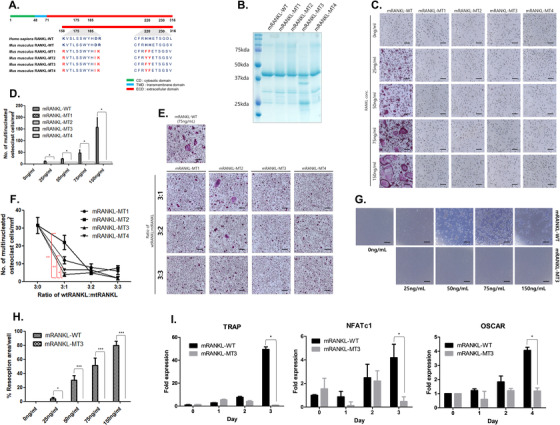
We modified the RANK-binding site on RANKL using minimal amino acid changes in the RANKL complex and its counterpart receptor RANK and tried to evaluate the inhibitory effects on osteoclastogenesis.
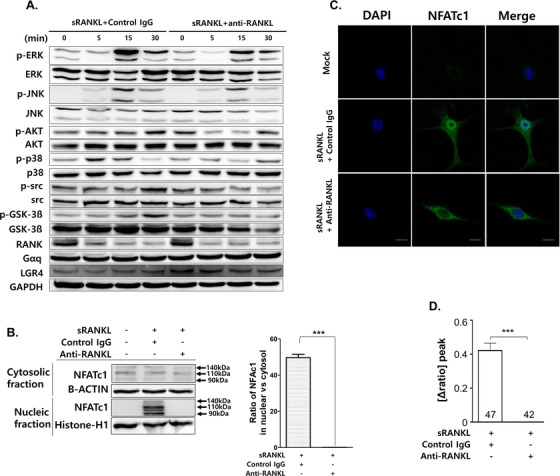
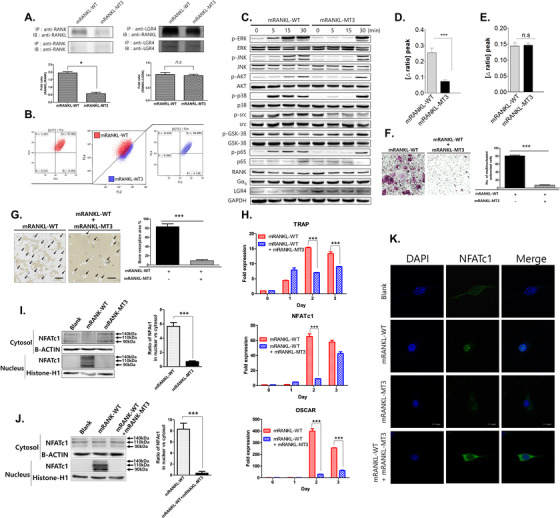
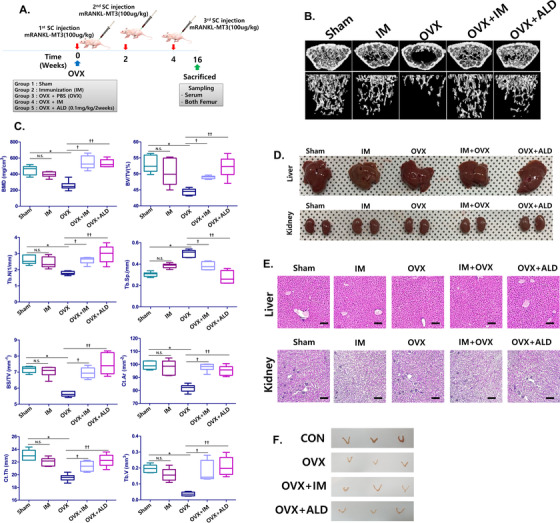
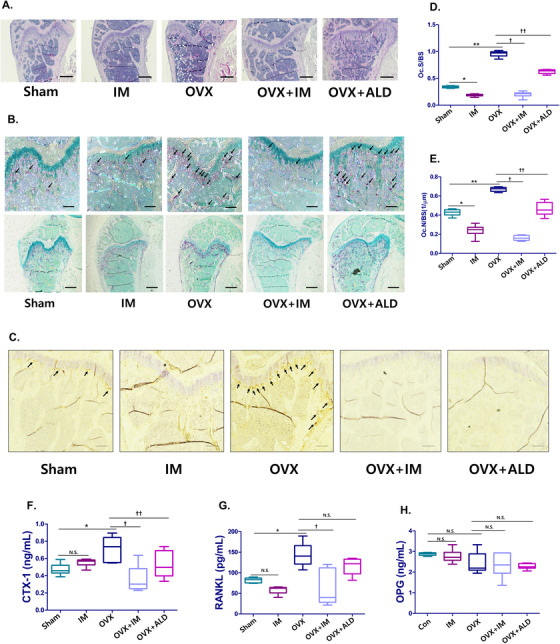
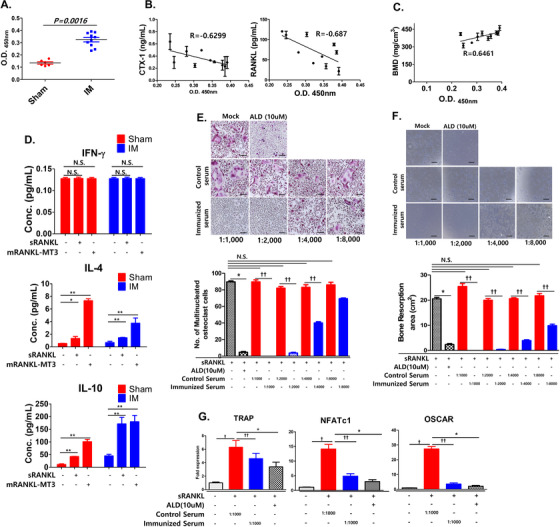
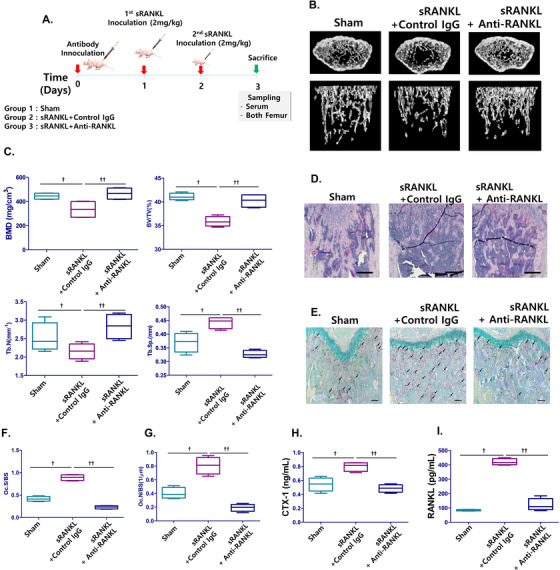
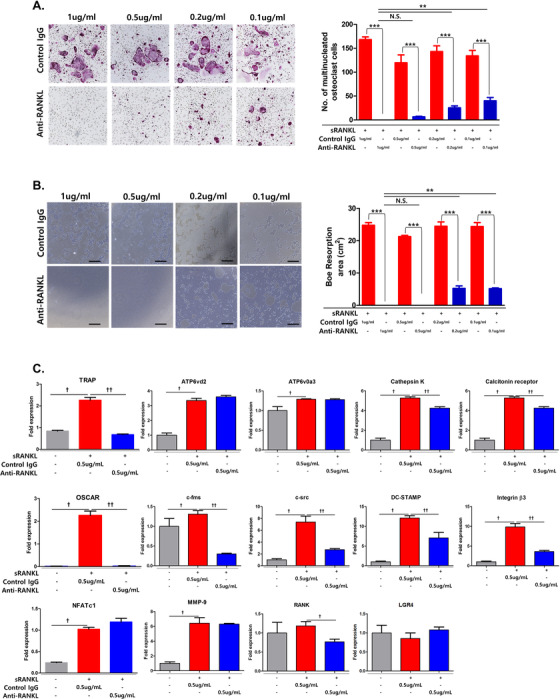
The novel RANKL variant did not bind RANK in osteoclast progenitor cells, but activated LGR4 through the GSK3-β signaling pathway, thereby suppressing activated T cell cytoplasmic nuclear factor calcineurin-dependent 1 (NFATc1) expression and activity during osteoclastogenesis. Our RANKL variant generated high levels of RANKL-specific antibodies, blocked osteoclastogenesis, and inhibited osteoporosis in ovariectomized mouse models. Generated anti-RANKL antibodies showed a high inhibitory effect on osteoclastogenesis in vivo and in vitro.
We observed that the novel RANKL indeed blocks RANKL via LGR4 signaling and generates anti-RANKL antibodies, demonstrating an innovative strategy in the development of general immunotherapy.
核因子-κB 配体受体激活剂(RANKL)作为骨质疏松症发病机制中的最终效应物被发现,这使得人们对骨重塑有了更好的理解。当 RANKL 与其受体(RANK)结合时,破骨细胞的分化和激活就会启动。在此,我们提出了一种使用新型 RANKL 变体作为 RANKL 竞争性抑制剂的策略。该 RANKL 变体激活 LGR4 信号通路,竞争性调节 RANK,并作为一种免疫原诱导抗 RANKL 抗体的产生。
我们使用 RANKL 复合物及其相应受体 RANK 中的最小氨基酸变化修饰 RANK 结合位点,并尝试评估其对破骨细胞生成的抑制作用。
新型 RANKL 变体在破骨细胞前体细胞中不与 RANK 结合,但通过 GSK3-β 信号通路激活 LGR4,从而抑制破骨细胞生成过程中激活的 T 细胞细胞质核因子 NFATc1 的表达和活性。我们的 RANKL 变体产生了高水平的 RANKL 特异性抗体,阻断了破骨细胞生成,并抑制了去卵巢小鼠模型中的骨质疏松症。产生的抗 RANKL 抗体在体内和体外均显示出对破骨细胞生成的高抑制作用。
我们观察到新型 RANKL 通过 LGR4 信号确实阻断了 RANKL,并产生了抗 RANKL 抗体,这表明在开发通用免疫疗法方面具有创新性策略。