Zhao Shangang, Poursharifi Pegah, Mugabo Yves, Levens Emily J, Vivot Kevin, Attane Camille, Iglesias Jose, Peyot Marie-Line, Joly Erik, Madiraju S R Murthy, Prentki Marc
Departments of Nutrition, Biochemistry and Molecular Medicine, Montreal Diabetes Research Center, CRCHUM and Université de Montréal, Montreal, QC, Canada.
Mol Metab. 2015 Oct 8;4(12):940-50. doi: 10.1016/j.molmet.2015.09.012. eCollection 2015 Dec.
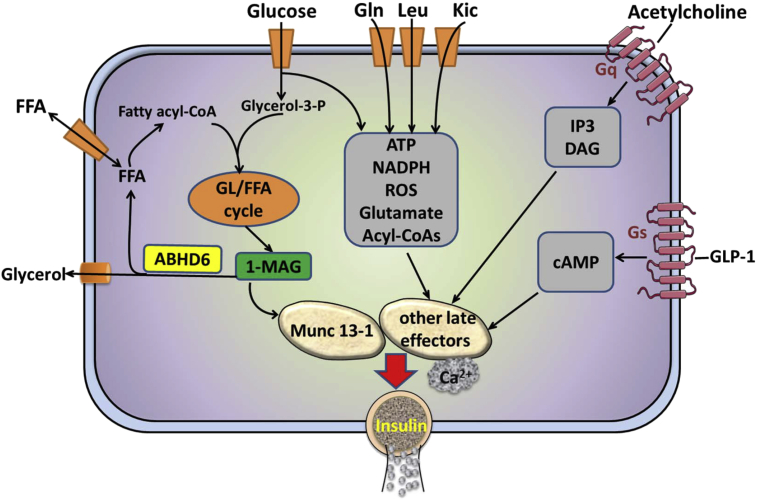
α/β-Hydrolase domain-6 (ABHD6) is a newly identified monoacylglycerol (MAG) lipase. We recently reported that it negatively regulates glucose stimulated insulin secretion (GSIS) in the β cells by hydrolyzing lipolysis-derived MAG that acts as a metabolic coupling factor and signaling molecule via exocytotic regulator Munc13-1. Whether ABHD6 and MAG play a role in response to all classes of insulin secretagogues, in particular various fuel and non-fuel stimuli, is unknown.
Insulin secretion in response to various classes of secretagogues, exogenous MAG and pharmacological agents was measured in islets of mice deficient in ABHD6 specifically in the β cell (BKO). Islet perifusion experiments and determinations of glucose and fatty acid metabolism, cytosolic Ca(2+) and MAG species levels were carried out.
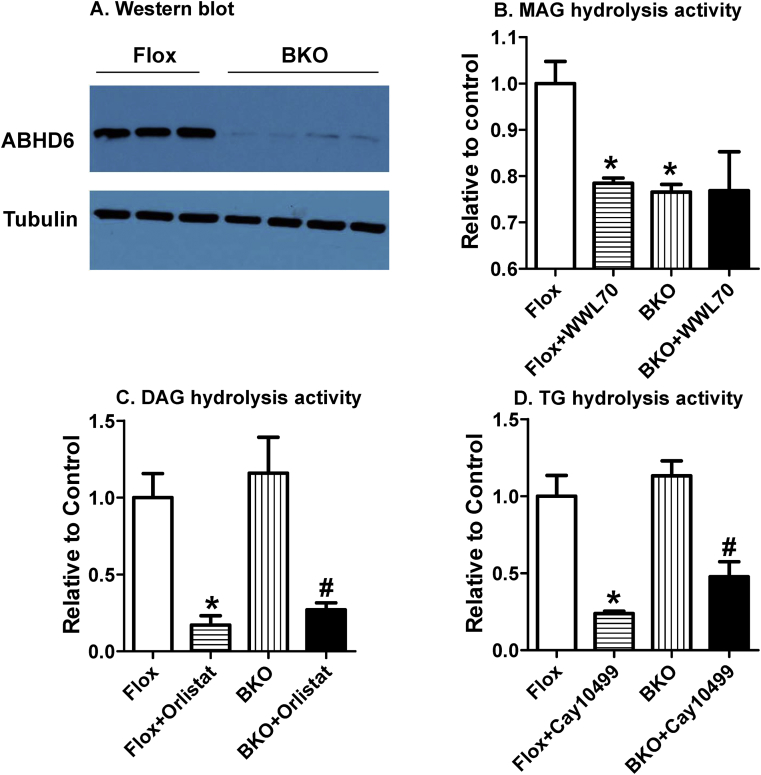
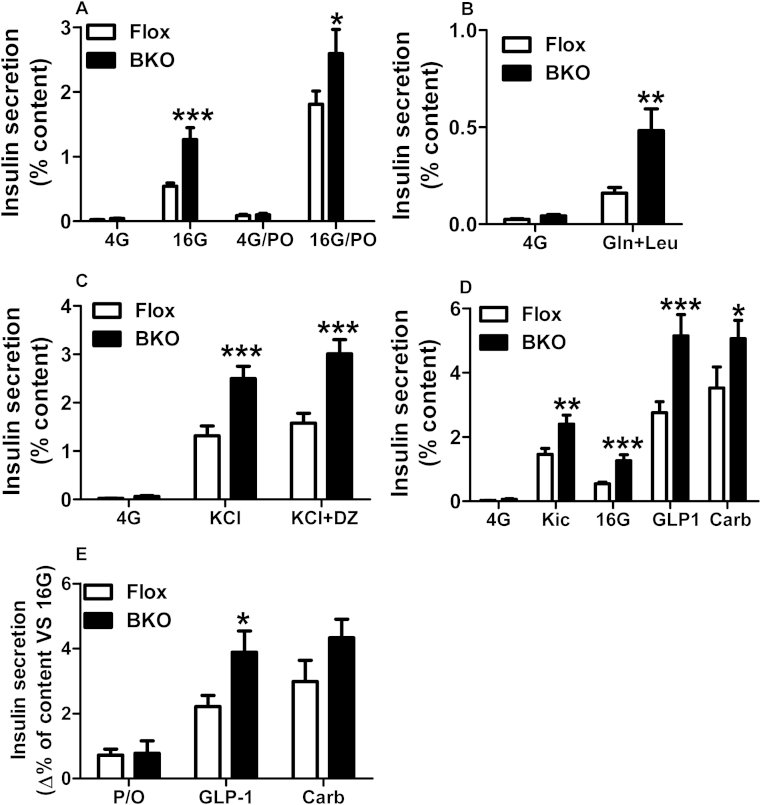
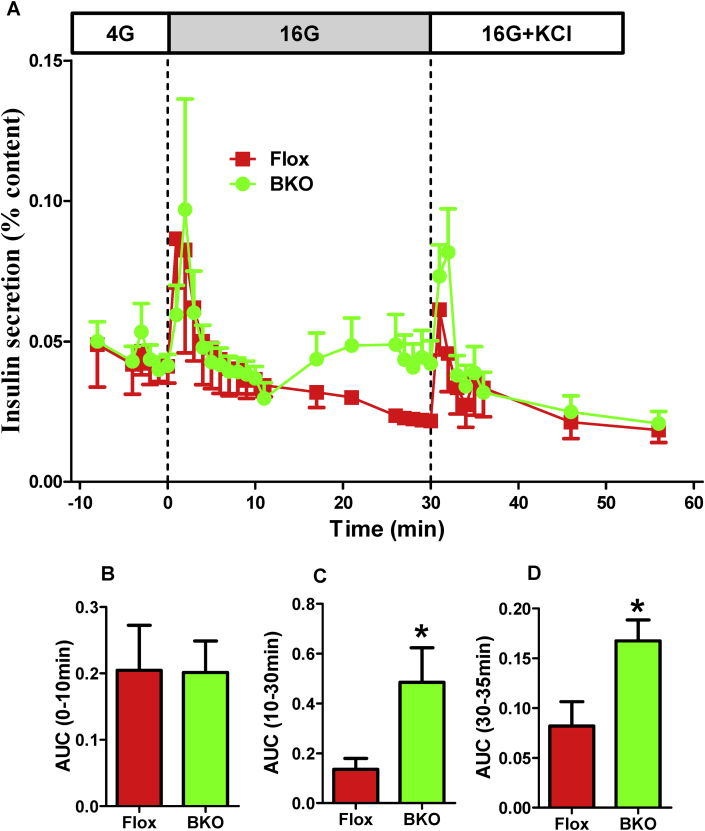
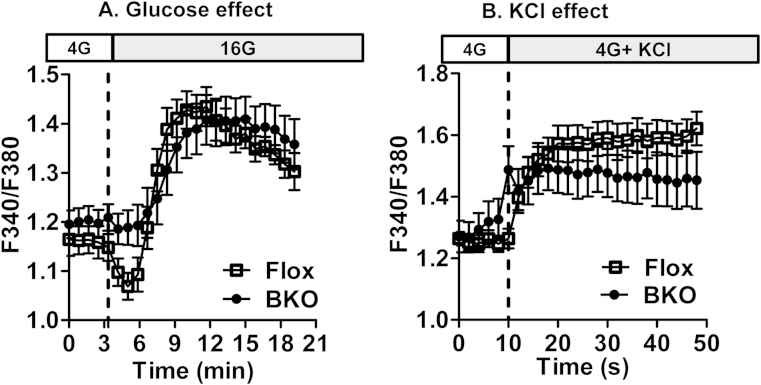
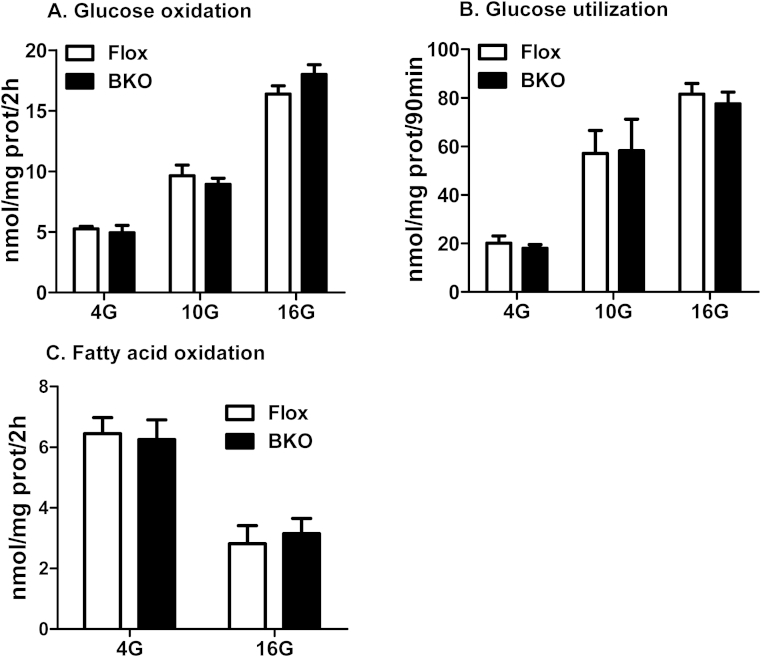
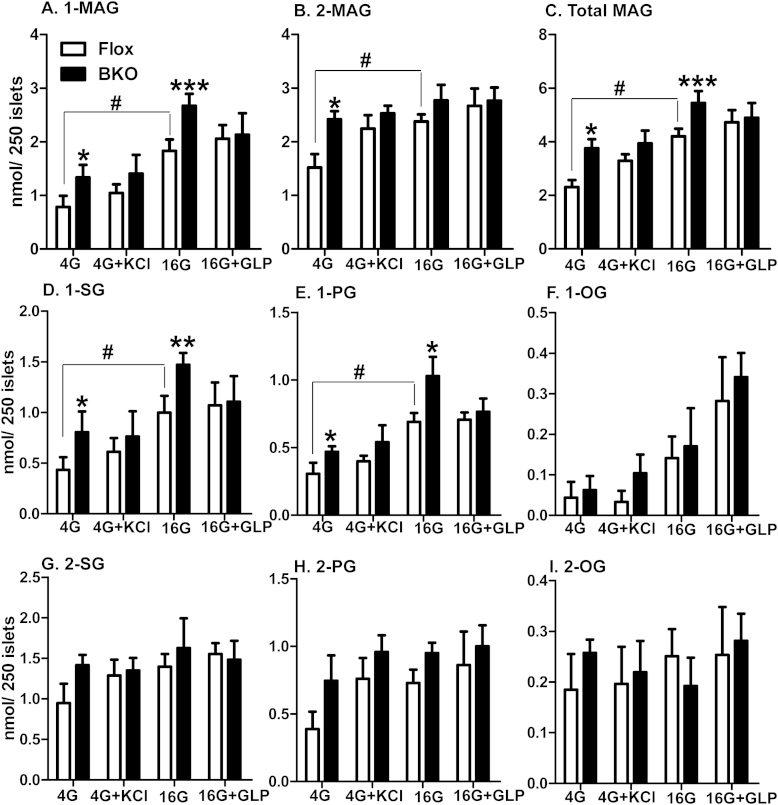
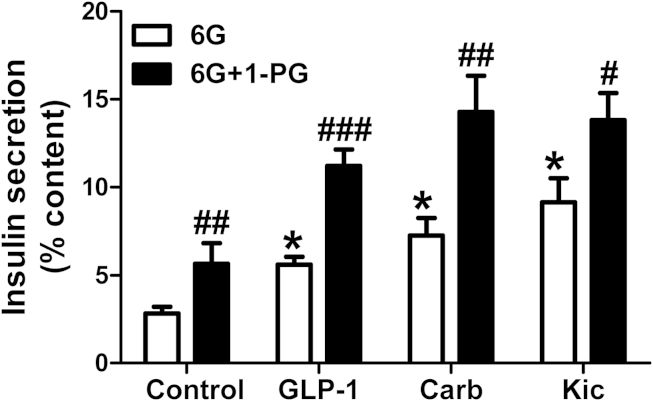
Deletion of ABHD6 potentiated insulin secretion in response to the fuels glutamine plus leucine and α-ketoisocaproate and to the non-fuel stimuli glucagon-like peptide 1, carbamylcholine and elevated KCl. Fatty acids amplified GSIS in control and BKO mice to the same extent. Exogenous 1-MAG amplified insulin secretion in response to fuel and non-fuel stimuli. MAG hydrolysis activity was greatly reduced in BKO islets without changes in total diacylglycerol and triacylglycerol lipase activity. ABHD6 deletion induced insulin secretion independently from KATP channels and did not alter the glucose induced rise in intracellular Ca(2+). Perifusion studies showed elevated insulin secretion during second phase of GSIS in BKO islets that was not due to altered cytosolic Ca(2+) signaling or because of changes in glucose and fatty acid metabolism. Glucose increased islet saturated long chain 1-MAG species and ABHD6 deletion caused accumulation of these 1-MAG species at both low and elevated glucose.
ABHD6 regulates insulin secretion in response to fuel stimuli at large and some non-fuel stimuli by controlling long chain saturated 1-MAG levels that synergize with other signaling pathways for secretion.
α/β-水解酶结构域6(ABHD6)是一种新发现的单酰甘油(MAG)脂肪酶。我们最近报道,它通过水解脂解衍生的MAG来负向调节β细胞中葡萄糖刺激的胰岛素分泌(GSIS),该MAG通过胞吐调节因子Munc13-1作为代谢偶联因子和信号分子发挥作用。ABHD6和MAG是否在对所有类型的胰岛素促分泌剂(特别是各种燃料和非燃料刺激)的反应中发挥作用尚不清楚。
在β细胞特异性缺失ABHD6的小鼠(BKO)胰岛中,测量对各种类型促分泌剂、外源性MAG和药物的胰岛素分泌。进行胰岛灌注实验以及葡萄糖和脂肪酸代谢、胞质Ca(2+)和MAG种类水平的测定。
ABHD6的缺失增强了对燃料谷氨酰胺加亮氨酸和α-酮异己酸以及非燃料刺激胰高血糖素样肽1、氨甲酰胆碱和升高的KCl的胰岛素分泌。脂肪酸在对照小鼠和BKO小鼠中同等程度地放大了GSIS。外源性1-MAG增强了对燃料和非燃料刺激的胰岛素分泌。BKO胰岛中的MAG水解活性大大降低,而总二酰甘油和三酰甘油脂肪酶活性没有变化。ABHD6缺失独立于KATP通道诱导胰岛素分泌,并且没有改变葡萄糖诱导的细胞内Ca(2+)升高。灌注研究表明,BKO胰岛在GSIS的第二阶段胰岛素分泌增加,这不是由于胞质Ca(2+)信号改变或葡萄糖和脂肪酸代谢变化所致。葡萄糖增加了胰岛饱和长链1-MAG种类,ABHD6缺失导致这些1-MAG种类在低葡萄糖和高葡萄糖水平下均积累。
ABHD6通过控制长链饱和1-MAG水平来调节对大量燃料刺激和一些非燃料刺激的胰岛素分泌,这些长链饱和1-MAG水平与其他分泌信号通路协同作用。