Hofstetter Amelia R, De La Cruz Juan A, Cao Weiping, Patel Jenish, Belser Jessica A, McCoy James, Liepkalns Justine S, Amoah Samuel, Cheng Guangjie, Ranjan Priya, Diebold Becky A, Shieh Wun-Ju, Zaki Sherif, Katz Jacqueline M, Sambhara Suryaprakash, Lambeth J David, Gangappa Shivaprakash
Influenza Division, Centers for Disease Control and Prevention, Atlanta, Georgia, United States of America.
Department of Pathology and Laboratory Medicine, Emory University, Atlanta, Georgia, United States of America.
PLoS One. 2016 Feb 24;11(2):e0149864. doi: 10.1371/journal.pone.0149864. eCollection 2016.
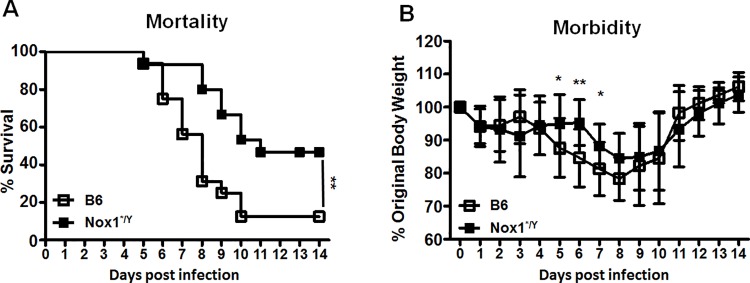
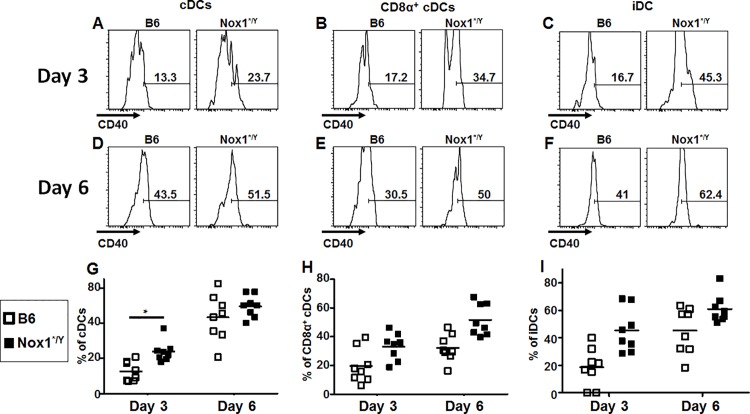
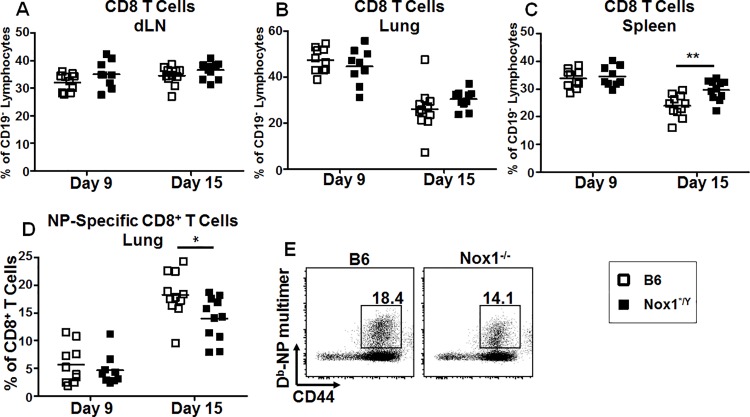
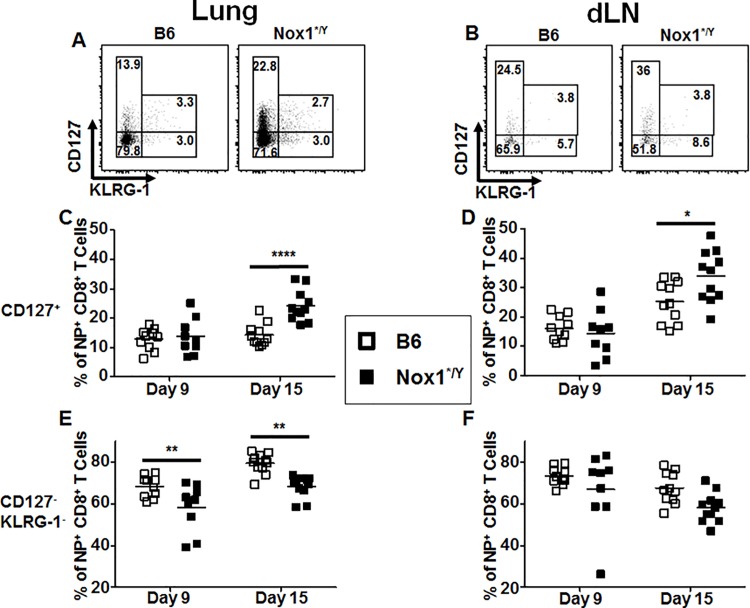
The role of the reactive oxygen species-producing NADPH oxidase family of enzymes in the pathology of influenza A virus infection remains enigmatic. Previous reports implicated NADPH oxidase 2 in influenza A virus-induced inflammation. In contrast, NADPH oxidase 1 (Nox1) was reported to decrease inflammation in mice within 7 days post-influenza A virus infection. However, the effect of NADPH oxidase 1 on lethality and adaptive immunity after influenza A virus challenge has not been explored. Here we report improved survival and decreased morbidity in mice with catalytically inactive NADPH oxidase 1 (Nox1*/Y) compared with controls after challenge with A/PR/8/34 influenza A virus. While changes in lung inflammation were not obvious between Nox1*/Y and control mice, we observed alterations in the T cell response to influenza A virus by day 15 post-infection, including increased interleukin-7 receptor-expressing virus-specific CD8+ T cells in lungs and draining lymph nodes of Nox1*/Y, and increased cytokine-producing T cells in lungs and spleen. Furthermore, a greater percentage of conventional and interstitial dendritic cells from Nox1*/Y draining lymph nodes expressed the co-stimulatory ligand CD40 within 6 days post-infection. Results indicate that NADPH oxidase 1 modulates the innate and adaptive cellular immune response to influenza virus infection, while also playing a role in host survival. Results suggest that NADPH oxidase 1 inhibitors may be beneficial as adjunct therapeutics during acute influenza infection.
产生活性氧的烟酰胺腺嘌呤二核苷酸磷酸(NADPH)氧化酶家族在甲型流感病毒感染病理过程中的作用仍不明确。先前的报道表明NADPH氧化酶2参与甲型流感病毒诱导的炎症反应。相比之下,有报道称NADPH氧化酶1(Nox1)在甲型流感病毒感染后7天内可减轻小鼠炎症。然而,NADPH氧化酶1对甲型流感病毒攻击后的致死率和适应性免疫的影响尚未得到研究。在此,我们报告,在用A/PR/8/34甲型流感病毒攻击后,与对照小鼠相比,催化失活的NADPH氧化酶1(Nox1*/Y)的小鼠存活率提高,发病率降低。虽然Nox1*/Y小鼠和对照小鼠之间肺部炎症变化不明显,但我们观察到感染后第15天T细胞对甲型流感病毒的反应发生了改变,包括Nox1*/Y小鼠肺部和引流淋巴结中表达白细胞介素-7受体的病毒特异性CD8+T细胞增加,以及肺部和脾脏中产生细胞因子的T细胞增加。此外,在感染后6天内,来自Nox1*/Y引流淋巴结的常规树突状细胞和间质树突状细胞中有更大比例表达共刺激配体CD40。结果表明,NADPH氧化酶1调节对流感病毒感染的先天性和适应性细胞免疫反应,同时也在宿主存活中发挥作用。结果提示,NADPH氧化酶1抑制剂作为急性流感感染期间的辅助治疗药物可能有益。