Li Jin, Ye Lin, Shi Xiaoshun, Chen Jingyi, Feng Fenglan, Chen Yaoqi, Xiao Yiren, Shen Jianfei, Li Peng, Jiang Wen G, He Jianxing
State Key Laboratory of Respiratory Disease, The First Affiliated Hospital of Guangzhou Medical University, National Clinical Research Center for Respiratory Disease, Guangzhou 510530, China.
Cardiff-China Medical Research Collaborative, Cardiff University School of Medicine, Cardiff, CF14 4XN, UK.
Oncotarget. 2016 Mar 29;7(13):15678-89. doi: 10.18632/oncotarget.7463.
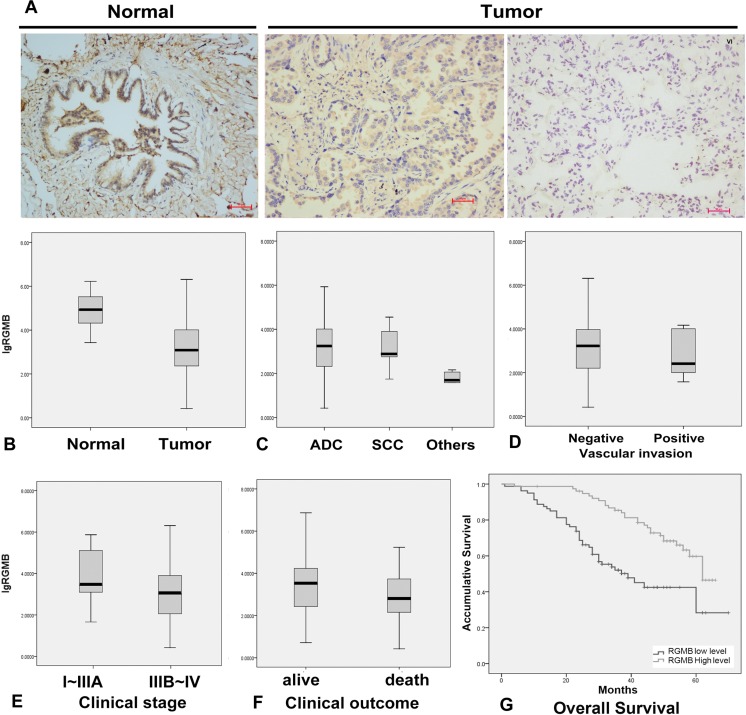
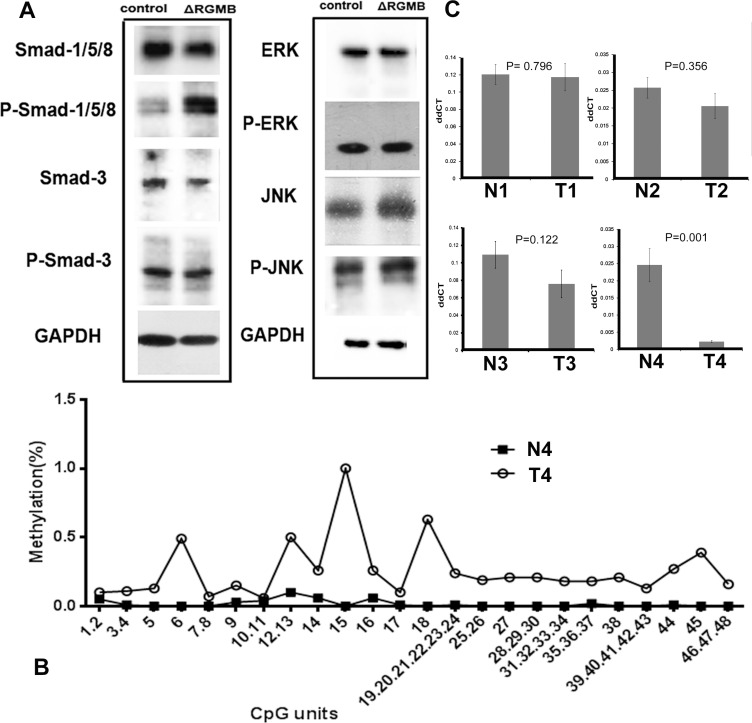
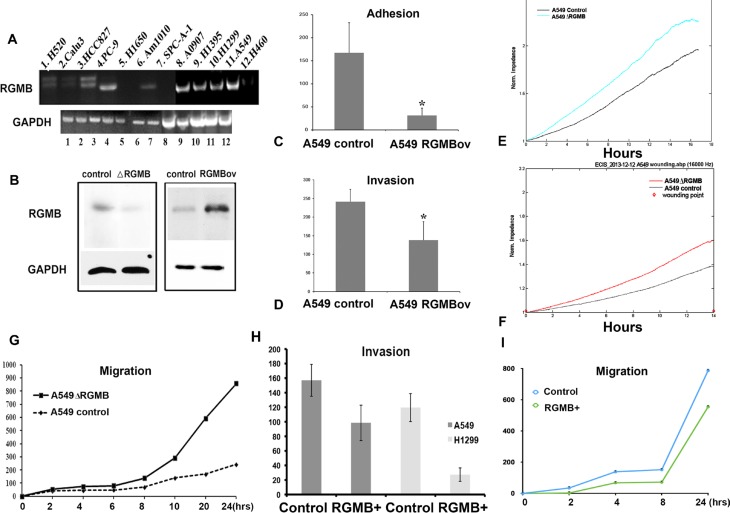
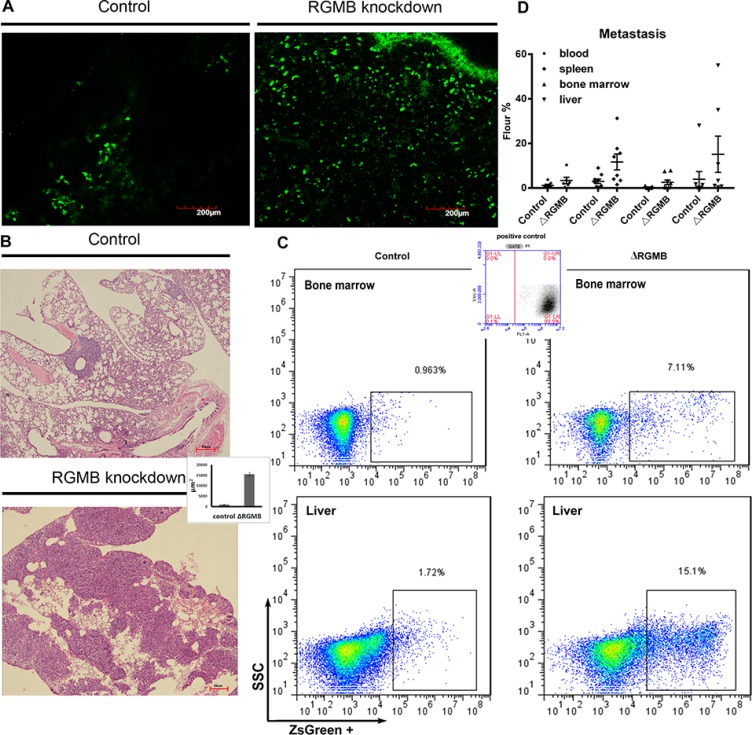
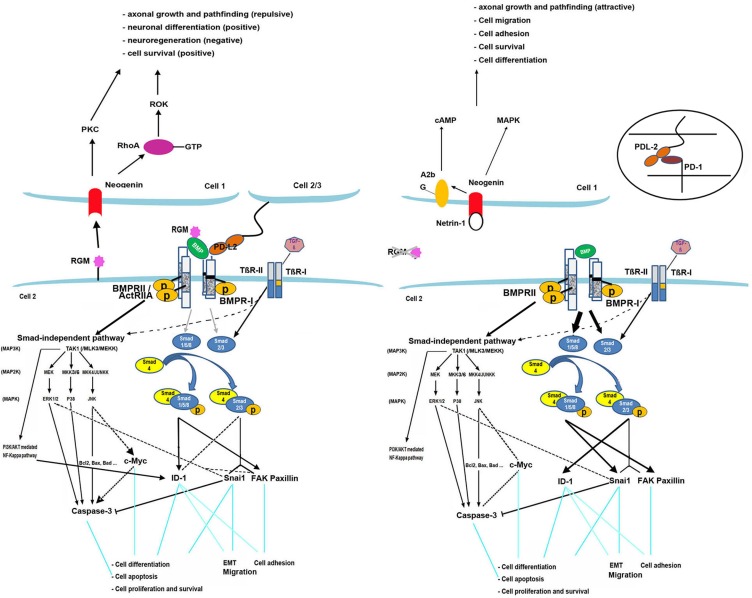
Repulsive guidance molecules (RGMs) are co-receptors of bone morphogenetic proteins (BMPs) and programmed death ligand 2 (PD-L2), and might be involved in lung and other cancers. We evaluated repulsive guidance molecule B (RGMB) expression in 165 non-small cell lung cancer (NSCLC) tumors and 22 normal lung tissue samples, and validated the results in an independent series of 131 samples. RGMB was downregulated in NSCLC (P ≤ 0.001), possibly through promoter hypermethylation. Reduced RGMB expression was observed in advanced-stage tumors (P = 0.017) and in tumors with vascular invasion (P < 0.01), and was significantly associated with poor overall survival (39 vs. 62 months, P < 0.001) and with disease-associated patient mortality (P = 0.015). RGMB knockdown promoted cell adhesion, invasion and migration, in both NSCLC cell lines and an in vivo mouse model, which enhanced metastatic potential. Conversely, RGMB overexpression and secretion suppressed cancer progression. The tumor-suppressing effect of RGMB was exerted through inhibition of the Smad1/5/8 pathway. Our results demonstrate that RGMB is an important inhibitor of NSCLC metastasis and that low RGMB expression is a novel predictor or a poor prognosis.
排斥性导向分子(RGMs)是骨形态发生蛋白(BMPs)和程序性死亡配体2(PD-L2)的共受体,可能与肺癌及其他癌症有关。我们评估了165例非小细胞肺癌(NSCLC)肿瘤组织和22例正常肺组织样本中排斥性导向分子B(RGMB)的表达情况,并在另一组独立的131个样本中验证了结果。NSCLC中RGMB表达下调(P≤0.001),可能是由于启动子高甲基化所致。在晚期肿瘤(P = 0.017)和有血管侵犯的肿瘤(P < 0.01)中观察到RGMB表达降低,且与总体生存率低(39个月对62个月,P < 0.001)及疾病相关的患者死亡率显著相关(P = 0.015)。在NSCLC细胞系和体内小鼠模型中,RGMB基因敲低均促进了细胞黏附、侵袭和迁移,增强了转移潜能。相反,RGMB过表达和分泌则抑制癌症进展。RGMB的抑癌作用是通过抑制Smad1/5/8信号通路实现的。我们的结果表明,RGMB是NSCLC转移的重要抑制剂,低RGMB表达是一种新的预后不良预测指标。