Stupfler Benjamin, Birck Catherine, Séraphin Bertrand, Mauxion Fabienne
Institut de Génétique et de Biologie Moléculaire et Cellulaire, 67404 Illkirch, France.
Centre National de la Recherche Scientifique UMR7104, 67404 Illkirch, France.
Nat Commun. 2016 Feb 25;7:10811. doi: 10.1038/ncomms10811.
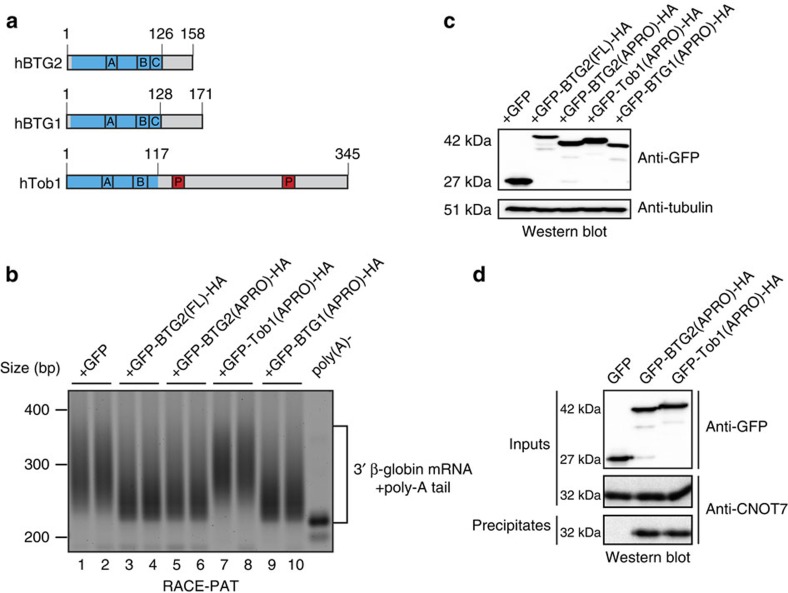
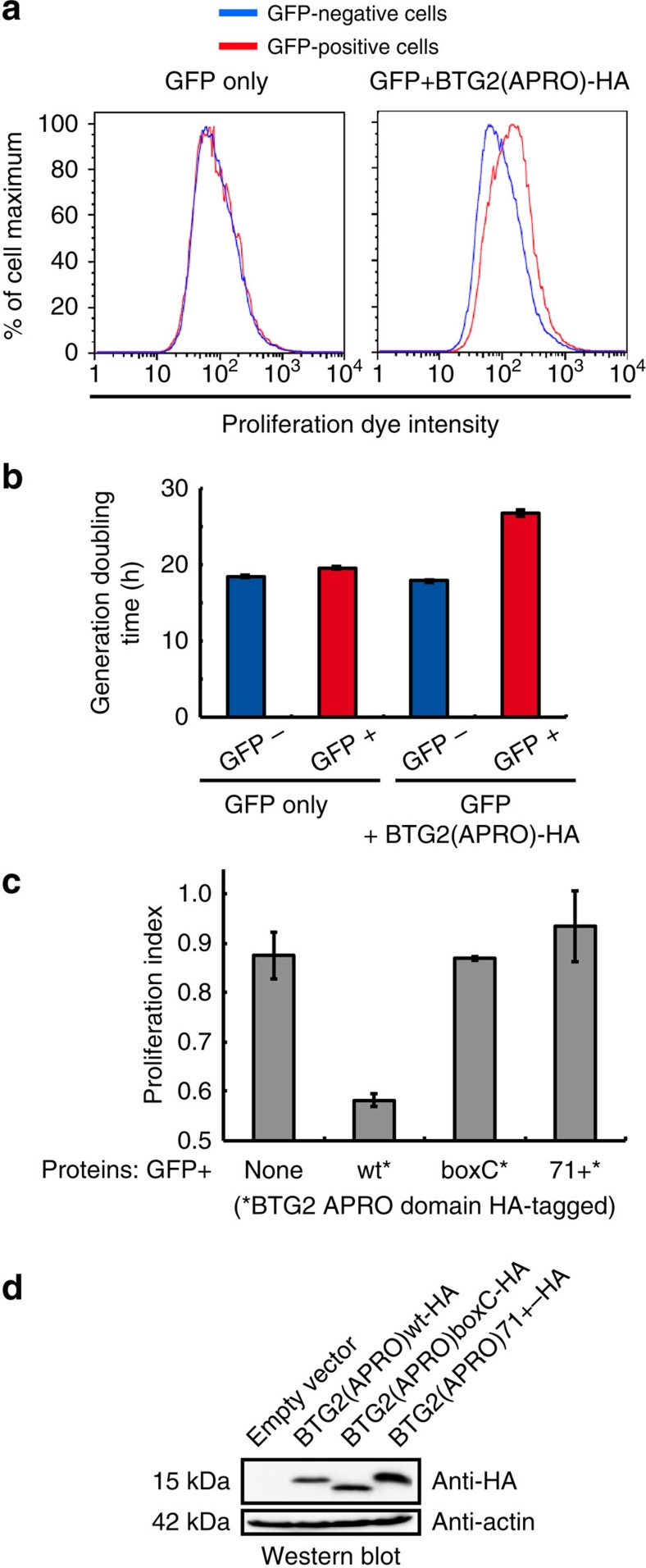
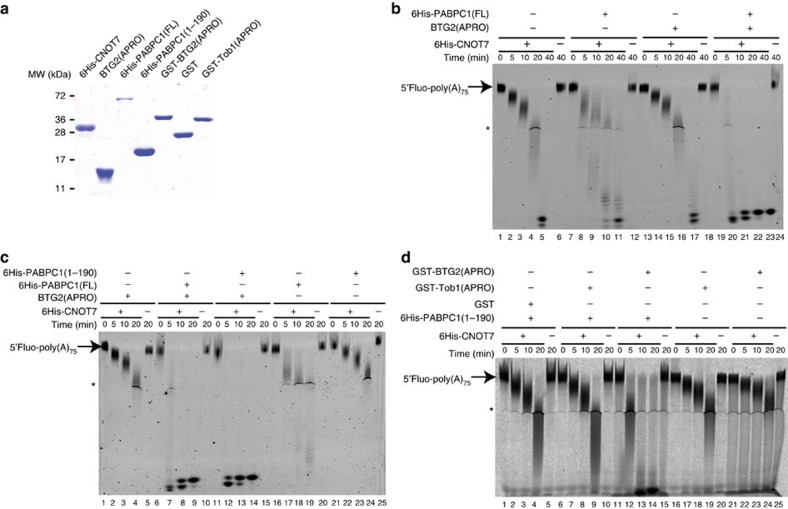
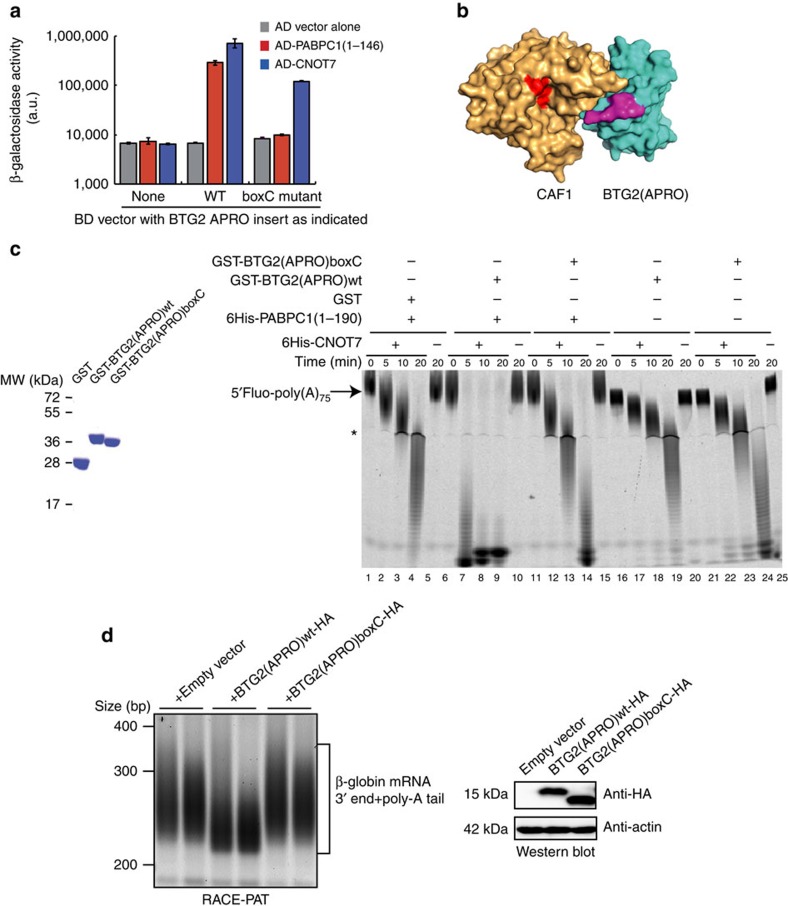
While BTG2 plays an important role in cellular differentiation and cancer, its precise molecular function remains unclear. BTG2 interacts with CAF1 deadenylase through its APRO domain, a defining feature of BTG/Tob factors. Our previous experiments revealed that expression of BTG2 promoted mRNA poly(A) tail shortening through an undefined mechanism. Here we report that the APRO domain of BTG2 interacts directly with the first RRM domain of the poly(A)-binding protein PABPC1. Moreover, PABPC1 RRM and BTG2 APRO domains are sufficient to stimulate CAF1 deadenylase activity in vitro in the absence of other CCR4-NOT complex subunits. Our results unravel thus the mechanism by which BTG2 stimulates mRNA deadenylation, demonstrating its direct role in poly(A) tail length control. Importantly, we also show that the interaction of BTG2 with the first RRM domain of PABPC1 is required for BTG2 to control cell proliferation.
虽然BTG2在细胞分化和癌症中发挥着重要作用,但其精确的分子功能仍不清楚。BTG2通过其APRO结构域与CAF1去腺苷酸化酶相互作用,这是BTG/Tob因子的一个决定性特征。我们之前的实验表明,BTG2的表达通过一种未明确的机制促进mRNA聚(A)尾巴缩短。在此我们报告,BTG2的APRO结构域直接与聚(A)结合蛋白PABPC1的第一个RRM结构域相互作用。此外,在没有其他CCR4-NOT复合物亚基的情况下,PABPC1的RRM结构域和BTG2的APRO结构域足以在体外刺激CAF1去腺苷酸化酶活性。因此,我们的结果揭示了BTG2刺激mRNA去腺苷酸化的机制,证明了其在聚(A)尾巴长度控制中的直接作用。重要的是,我们还表明,BTG2与PABPC1的第一个RRM结构域的相互作用是BTG2控制细胞增殖所必需的。