Stroke Unit, Department of Neurological and Sensorineural Sciences, Azienda Ospedaliera Universitaria Senese, "Santa Maria alle Scotte" General Hospital, viale Bracci, Siena, Italy.
Department of Medical Sciences, Surgery and Neurosciences, University of Siena, viale Bracci, Siena, Italy.
J Stroke. 2016 May;18(2):157-68. doi: 10.5853/jos.2015.01599. Epub 2016 Feb 26.
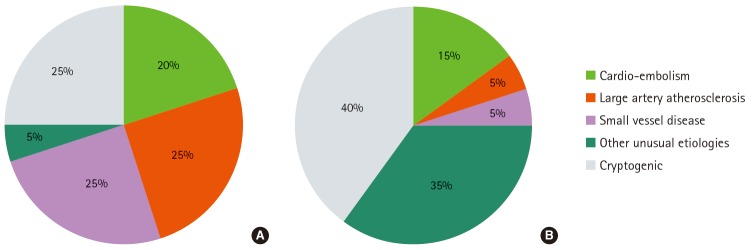
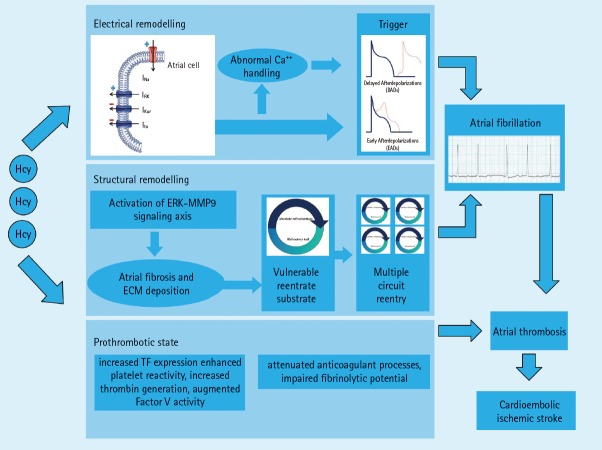
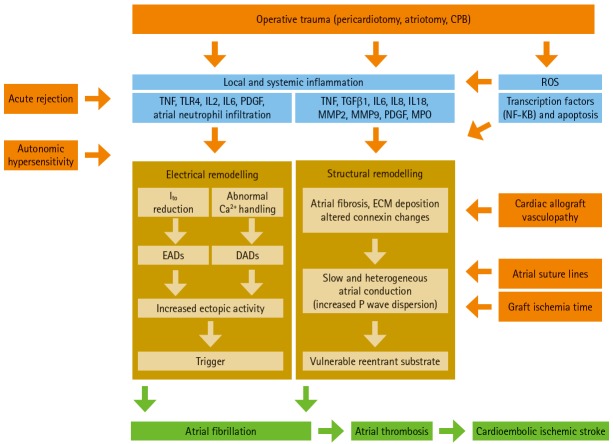
Cerebrovascular complications after orthotopic heart transplantation (OHT) are more common in comparison with neurological sequelae subsequent to routine cardiac surgery. Ischemic stroke and transient ischemic attack (TIA) are more common (with an incidence of up to 13%) than intracranial hemorrhage (2.5%). Clinically, ischemic stroke is manifested by the appearance of focal neurologic deficits, although sometimes a stroke may be silent or manifests itself by the appearance of encephalopathy, reflecting a diffuse brain disorder. Ischemic stroke subtypes distribution in perioperative and postoperative period after OHT is very different from classical distribution, with different pathogenic mechanisms. Infact, ischemic stroke may be caused by less common and unusual mechanisms, linked to surgical procedures and to postoperative inflammation, peculiar to this group of patients. However, many strokes (40%) occur without a well-defined etiology (cryptogenic strokes). A silent atrial fibrillation (AF) may play a role in pathogenesis of these strokes and P wave dispersion may represent a predictor of AF. In OHT patients, P wave dispersion correlates with homocysteine plasma levels and hyperhomocysteinemia could play a role in the pathogenesis of these strokes with multiple mechanisms increasing the risk of AF. In conclusion, stroke after heart transplantation represents a complication with considerable impact not only on mortality but also on subsequent poor functional outcome.
心脏移植(OHT)后的脑血管并发症比常规心脏手术后的神经后遗症更为常见。与颅内出血(2.5%)相比,缺血性中风和短暂性脑缺血发作(TIA)更为常见(发生率高达 13%)。临床上,缺血性中风表现为局灶性神经功能缺损,尽管有时中风可能是无症状的,或以脑病的出现为表现,反映出弥漫性脑障碍。OHT 术后围手术期缺血性中风亚型的分布与经典分布非常不同,其发病机制也不同。事实上,缺血性中风可能由不太常见和不寻常的机制引起,这些机制与手术程序和术后炎症有关,这些炎症是这群患者所特有的。然而,许多中风(40%)没有明确的病因(隐匿性中风)。隐匿性心房颤动(AF)可能在这些中风的发病机制中起作用,而 P 波离散度可能是 AF 的预测指标。在 OHT 患者中,P 波离散度与血浆同型半胱氨酸水平相关,高同型半胱氨酸血症可能通过多种机制增加 AF 的风险,从而在这些中风的发病机制中发挥作用。总之,心脏移植后中风是一种并发症,不仅对死亡率有很大影响,而且对随后的不良功能预后也有很大影响。