Ng Kevin Tak-Pan, Lo Chung Mau, Wong Nathalie, Li Chang Xian, Qi Xiang, Liu Xiao Bing, Geng Wei, Yeung Oscar Wai-Ho, Ma Yuen Yuen, Chan See Ching, Man Kwan
Department of Surgery, The University of Hong Kong, Hong Kong.
Collaborative Innovation Center for Diagnosis and Treatment of Infectious Diseases, Hangzhou, China.
Oncotarget. 2016 Apr 12;7(15):19824-39. doi: 10.18632/oncotarget.7627.
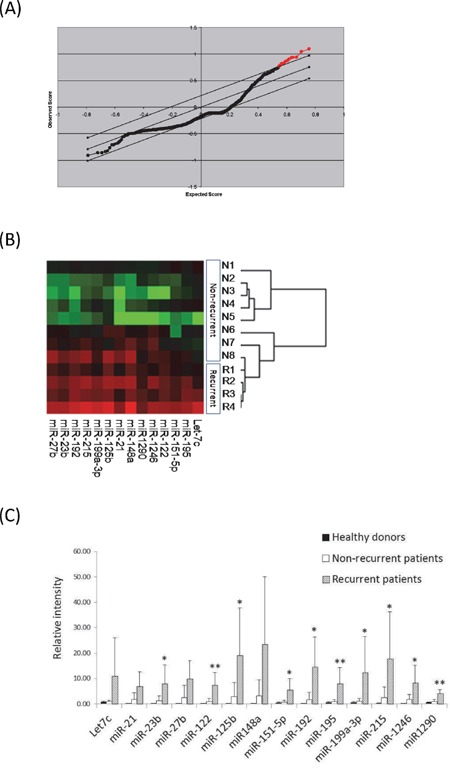
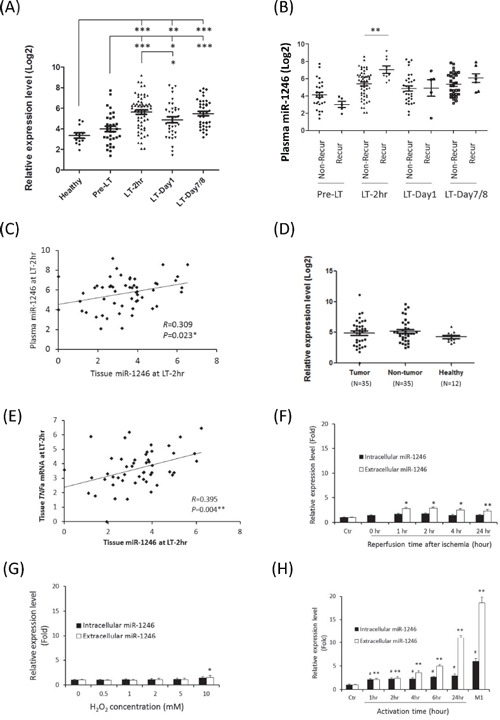
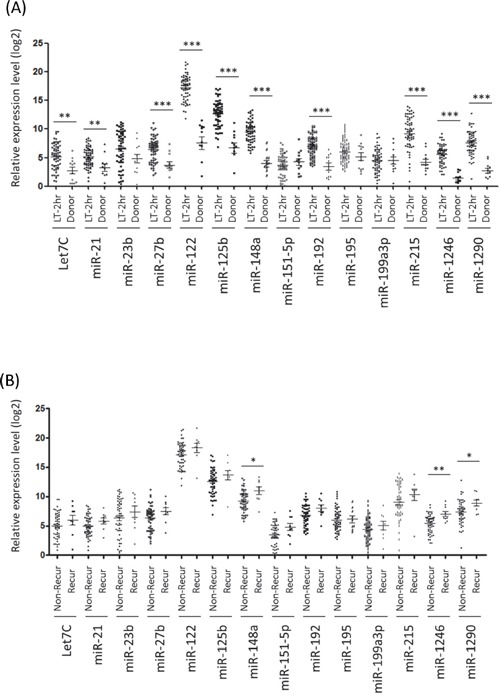
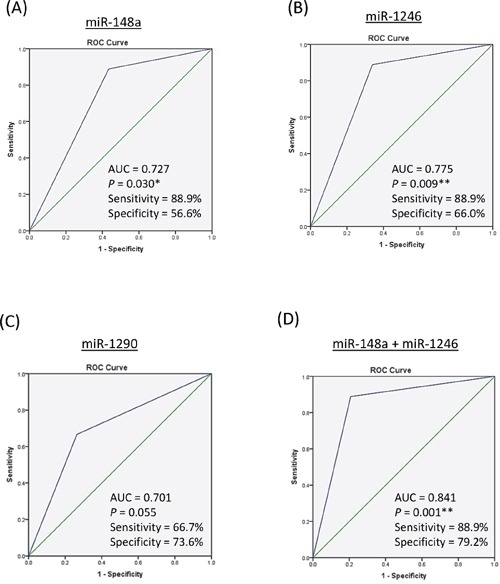
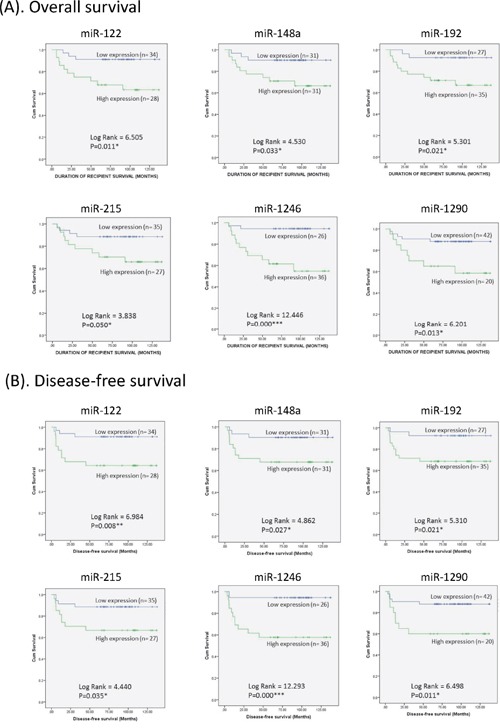
Post-liver transplantation tumor recurrence is a major challenge for hepatocellular carcinoma (HCC) recipients. We aimed to identify early-phase circulating microRNAs after liver transplantation for predicting tumor recurrence and survival of HCC recipients. Circulating microRNA profiles at early-phase (2-hour after portal vein reperfusion) after liver transplantation were compared between HCC recipients with (n=4) and without tumor recurrence (n=8) by microarray analyses. Candidate microRNAs were validated in 62 HCC recipients by quantitative RT-PCR. The prognostic values of microRNAs for tumor recurrence and survival were examined. Simulated in vitro ischemia-reperfusion injury models were employed to characterize the possible mechanism of up-regulation of circulating microRNAs. Our results showed that up-regulation of circulating miR-148a, miR-1246 or miR-1290 at early-phase was significantly associated with HCC recurrence after liver transplantation. Among them, miR-148a (p=0.030) and miR-1246 (p=0.009) were significant predictors of HCC recurrence. MiR-1246 was an independent predictor of overall (p=0.023) and disease-free survival (p=0.020) of HCC recipients. The level of early-phase circulating miR-1246 was positively correlated with serum AST and ALT levels in HCC recipients after liver transplantation. The expression of hepatic miR-1246 was positively correlated with TNFα mRNA. In vitro experiments indicated that injury-induced activation and differentiation of macrophages significantly elevated the expression and secretion of miR-1246. In conclusion, early-phase circulating miR-1246 is an indicator of hepatic injury and a novel prognostic biomarker for tumor recurrence and survival of HCC recipients after liver transplantation.
肝移植后肿瘤复发是肝细胞癌(HCC)患者面临的一项重大挑战。我们旨在识别肝移植后的早期循环微小RNA,以预测HCC患者的肿瘤复发和生存情况。通过微阵列分析比较了肝移植后早期(门静脉再灌注后2小时)有肿瘤复发(n = 4)和无肿瘤复发(n = 8)的HCC患者的循环微小RNA谱。通过定量RT-PCR在62例HCC患者中验证候选微小RNA。研究了微小RNA对肿瘤复发和生存的预后价值。采用体外模拟缺血再灌注损伤模型来表征循环微小RNA上调的可能机制。我们的结果表明,早期循环miR-148a、miR-1246或miR-1290的上调与肝移植后HCC复发显著相关。其中,miR-148a(p = 0.030)和miR-1246(p = 0.009)是HCC复发的显著预测因子。miR-1246是HCC患者总生存(p = 0.023)和无病生存(p = 0.020)的独立预测因子。肝移植后HCC患者早期循环miR-1246水平与血清AST和ALT水平呈正相关。肝脏miR-1246的表达与TNFα mRNA呈正相关。体外实验表明,损伤诱导的巨噬细胞活化和分化显著提高了miR-1246的表达和分泌。总之,早期循环miR-1246是肝损伤的指标,也是肝移植后HCC患者肿瘤复发和生存的新型预后生物标志物。