Hansen Grith Lærkholm, Foli-Andersen Pia, Fredheim Siri, Juhl Claus, Remvig Line Sofie, Rose Martin H, Rosenzweig Ivana, Beniczky Sándor, Olsen Birthe, Pilgaard Kasper, Johannesen Jesper
Pediatric Department, Copenhagen University Hospital Herlev, Denmark.
Hypo-Safe A/S, Lyngby, Denmark.
J Diabetes Sci Technol. 2016 Nov 1;10(6):1222-1229. doi: 10.1177/1932296816634357. Print 2016 Nov.
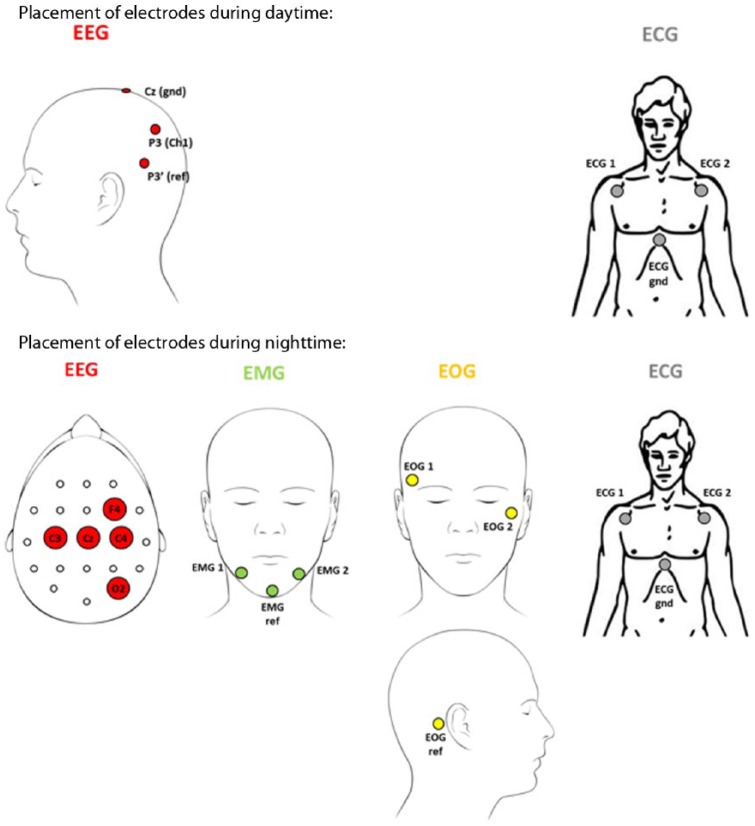
The purpose of this study was to explore the possible difference in the electroencephalogram (EEG) pattern between euglycemia and hypoglycemia in children with type 1 diabetes (T1D) during daytime and during sleep. The aim is to develop a hypoglycemia alarm based on continuous EEG measurement and real-time signal processing.
Eight T1D patients aged 6-12 years were included. A hyperinsulinemic hypoglycemic clamp was performed to induce hypoglycemia both during daytime and during sleep. Continuous EEG monitoring was performed. For each patient, quantitative EEG (qEEG) measures were calculated. A within-patient analysis was conducted comparing hypoglycemia versus euglycemia changes in the qEEG. The nonparametric Wilcoxon signed rank test was performed. A real-time analyzing algorithm developed for adults was applied.
The qEEG showed significant differences in specific bands comparing hypoglycemia to euglycemia both during daytime and during sleep. In daytime the EEG-based algorithm identified hypoglycemia in all children on average at a blood glucose (BG) level of 2.5 ± 0.5 mmol/l and 18.4 (ranging from 0 to 55) minutes prior to blood glucose nadir. During sleep the nighttime algorithm did not perform.
We found significant differences in the qEEG in euglycemia and hypoglycemia both during daytime and during sleep. The algorithm developed for adults detected hypoglycemia in all children during daytime. The algorithm had too many false alarms during the night because it was more sensitive to deep sleep EEG patterns than hypoglycemia-related EEG changes. An algorithm for nighttime EEG is needed for accurate detection of nocturnal hypoglycemic episodes in children. This study indicates that a hypoglycemia alarm may be developed using real-time continuous EEG monitoring.
本研究的目的是探讨1型糖尿病(T1D)儿童在白天和睡眠期间血糖正常与低血糖时脑电图(EEG)模式的可能差异。目的是基于连续脑电图测量和实时信号处理开发一种低血糖警报器。
纳入8名6 - 12岁的T1D患者。进行高胰岛素低血糖钳夹试验以在白天和睡眠期间诱导低血糖。进行连续脑电图监测。对每位患者计算定量脑电图(qEEG)指标。进行患者内分析,比较qEEG中低血糖与血糖正常时的变化。采用非参数Wilcoxon符号秩检验。应用为成年人开发的实时分析算法。
qEEG显示,在白天和睡眠期间,低血糖与血糖正常相比,特定频段存在显著差异。在白天,基于脑电图的算法平均在血糖水平为2.5±0.5 mmol/l时以及血糖最低点前18.4(范围为0至55)分钟识别出所有儿童的低血糖情况。在睡眠期间,夜间算法未起作用。
我们发现白天和睡眠期间血糖正常与低血糖时qEEG存在显著差异。为成年人开发的算法在白天检测到了所有儿童的低血糖情况。该算法在夜间有太多误报,因为它对深度睡眠脑电图模式比对低血糖相关的脑电图变化更敏感。需要一种夜间脑电图算法来准确检测儿童夜间低血糖发作。本研究表明,使用实时连续脑电图监测可能开发出一种低血糖警报器。