Department of Endocrinology, Diabetes, Nutrition, Montpellier University Hospital, Montpellier, France.
Department of Physiology, Institute of Functional Genomics, CNRS, INSERM, University of Montpellier, Montpellier, France.
Diabetes Metab Res Rev. 2021 Oct;37(7):e3449. doi: 10.1002/dmrr.3449. Epub 2021 Mar 24.
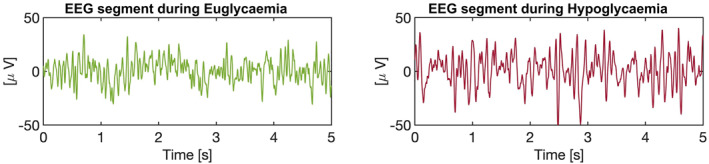
The main objective of diabetes control is to correct hyperglycaemia while avoiding hypoglycaemia, especially in insulin-treated patients. Fear of hypoglycaemia is a hurdle to effective correction of hyperglycaemia because it promotes under-dosing of insulin. Strategies to minimise hypoglycaemia include education and training for improved hypoglycaemia awareness and the development of technologies to allow their early detection and thus minimise their occurrence. Patients with impaired hypoglycaemia awareness would benefit the most from these technologies. The purpose of this systematic review is to review currently available or in-development technologies that support detection of hypoglycaemia or hypoglycaemia risk, and identify gaps in the research. Nanomaterial use in sensors is a promising strategy to increase the accuracy of continuous glucose monitoring devices for low glucose values. Hypoglycaemia is associated with changes on vital signs, so electrocardiogram and encephalogram could also be used to detect hypoglycaemia. Accuracy improvements through multivariable measures can make already marketed galvanic skin response devices a good noninvasive alternative. Breath volatile organic compounds can be detected by dogs and devices and alert patients at hypoglycaemia onset, while near-infrared spectroscopy can also be used as a hypoglycaemia alarms. Finally, one of the main directions of research are deep learning algorithms to analyse continuous glucose monitoring data and provide earlier and more accurate prediction of hypoglycaemia. Current developments for early identification of hypoglycaemia risk combine improvements of available 'needle-type' enzymatic glucose sensors and noninvasive alternatives. Patient usability will be essential to demonstrate to allow their implementation for daily use in diabetes management.
糖尿病控制的主要目标是纠正高血糖,同时避免低血糖,尤其是在胰岛素治疗的患者中。对低血糖的恐惧是有效纠正高血糖的障碍,因为它会导致胰岛素剂量不足。减少低血糖的策略包括教育和培训,以提高对低血糖的认识,并开发技术以早期发现低血糖,从而最大限度地减少其发生。低血糖意识受损的患者将从这些技术中获益最多。本系统评价的目的是审查目前可用于或正在开发的支持低血糖或低血糖风险检测的技术,并确定研究中的差距。纳米材料在传感器中的应用是提高连续血糖监测设备对低血糖值准确性的有前途的策略。低血糖与生命体征的变化有关,因此心电图和脑电图也可用于检测低血糖。通过多变量措施提高准确性,可以使已经上市的皮肤电反应设备成为一种很好的非侵入性替代方法。呼吸挥发性有机化合物可以被狗和设备检测到,并在低血糖发作时提醒患者,而近红外光谱也可以用作低血糖警报。最后,研究的主要方向之一是深度学习算法,以分析连续血糖监测数据,并提供更早和更准确的低血糖预测。早期识别低血糖风险的当前发展结合了改进现有的“针型”酶葡萄糖传感器和非侵入性替代方案。患者的可用性对于证明其用于糖尿病管理的日常使用至关重要。