Alvaro Christopher G, Aindow Ann, Thorner Jeremy
Division of Biochemistry, Biophysics and Structural Biology, Department of Molecular and Cell Biology, University of California, Berkeley, California 94720-3202.
Division of Biochemistry, Biophysics and Structural Biology, Department of Molecular and Cell Biology, University of California, Berkeley, California 94720-3202
Genetics. 2016 May;203(1):299-317. doi: 10.1534/genetics.115.186122. Epub 2016 Feb 26.
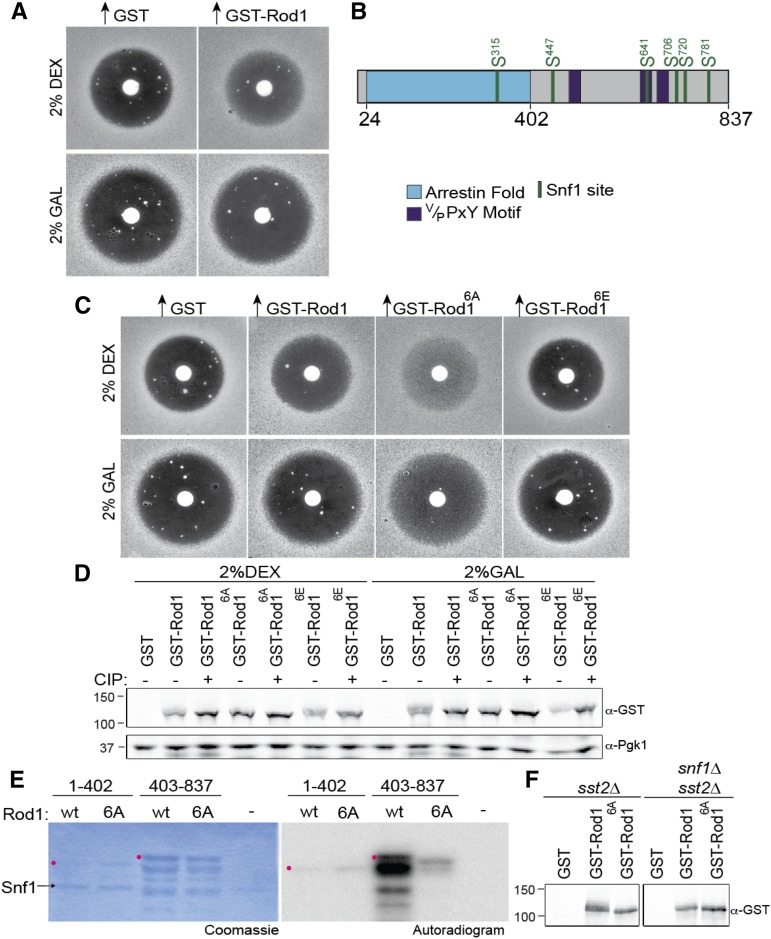
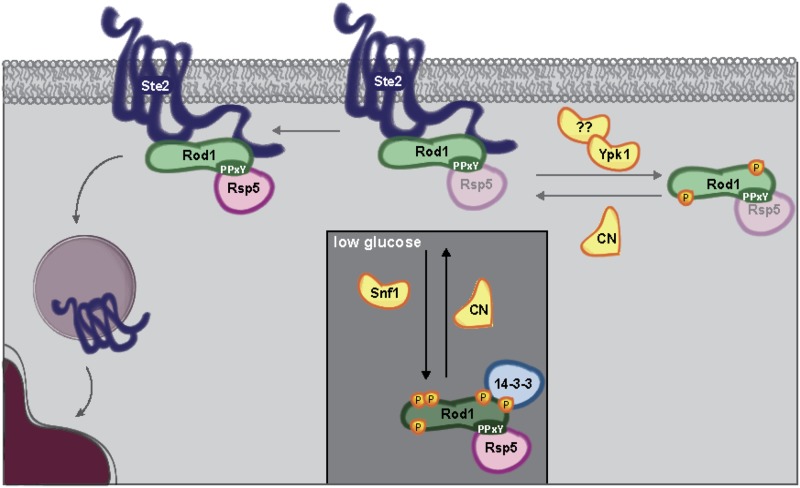
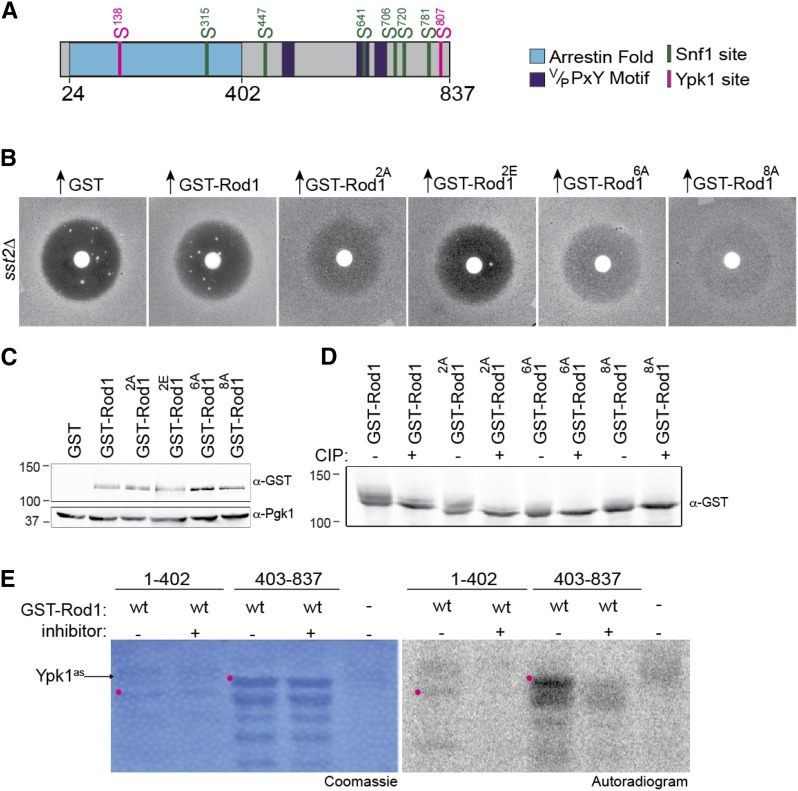
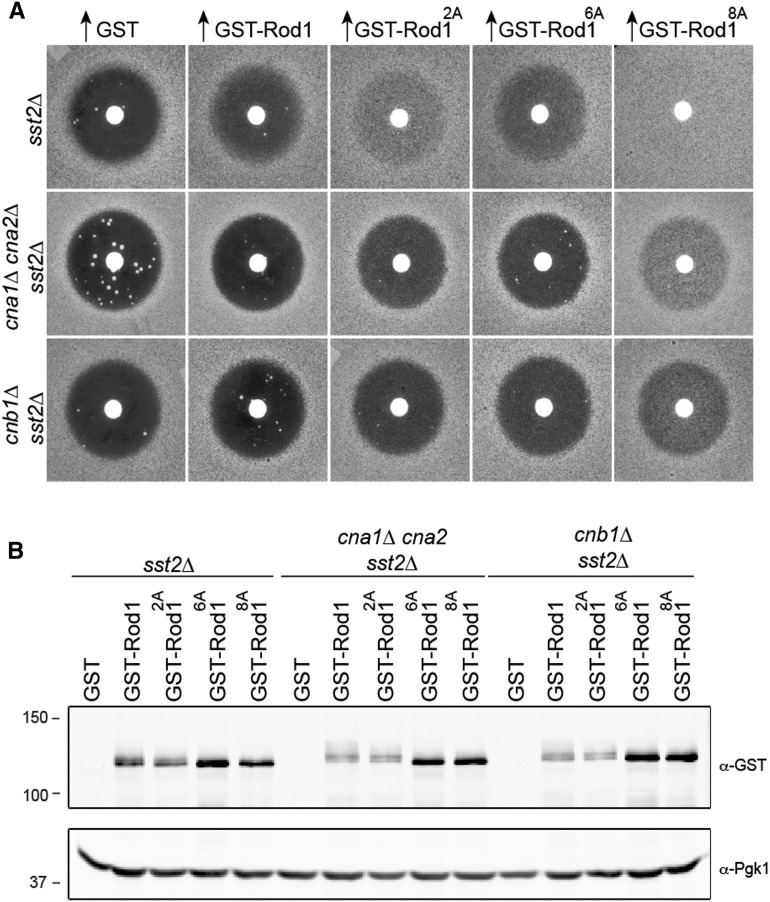
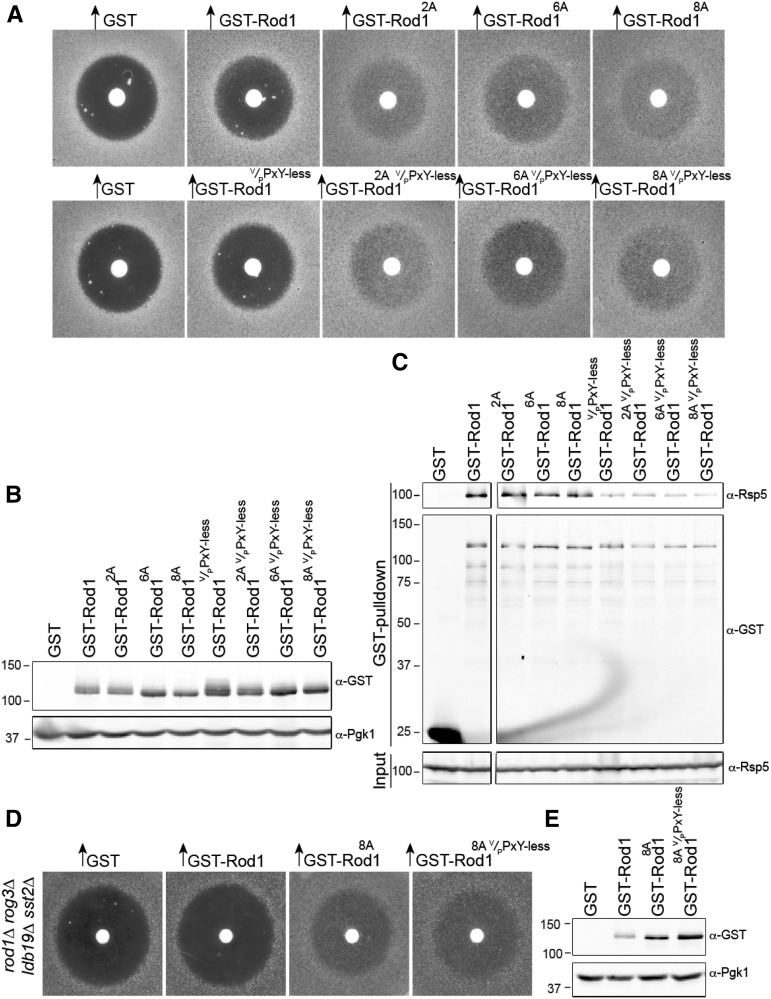
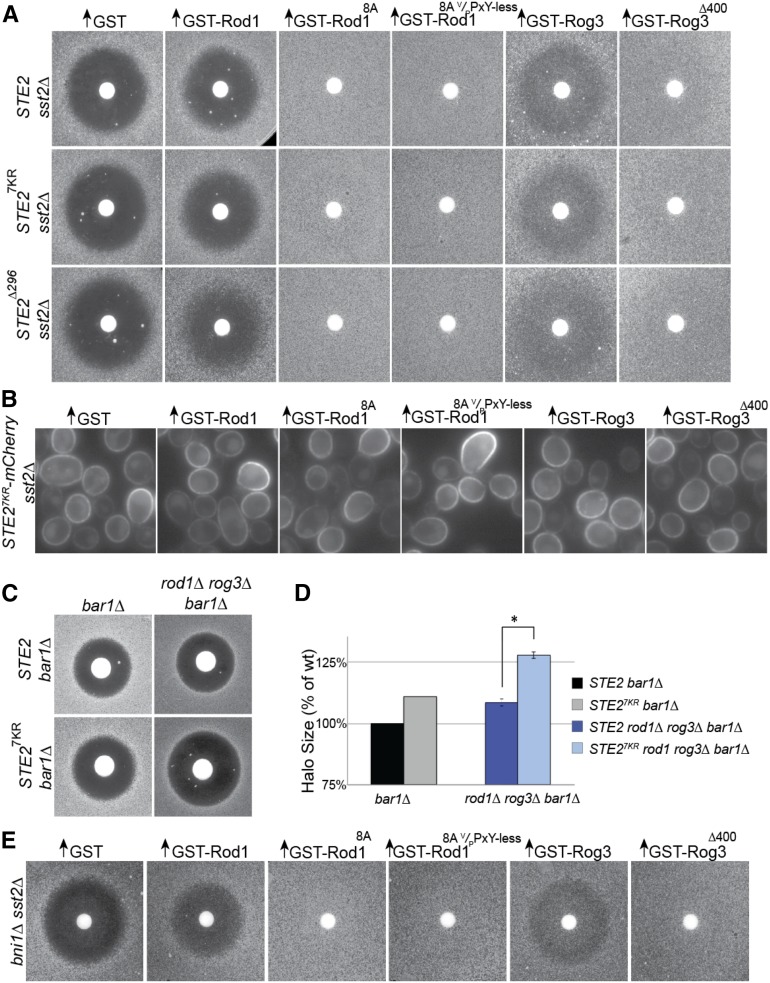
G-protein-coupled receptors (GPCRs) are integral membrane proteins that initiate stimulus-dependent activation of cognate heterotrimeric G-proteins, triggering ensuing downstream cellular responses. Tight regulation of GPCR-evoked pathways is required because prolonged stimulation can be detrimental to an organism. Ste2, a GPCR in Saccharomyces cerevisiae that mediates response of MATa haploids to the peptide mating pheromone α-factor, is down-regulated by both constitutive and agonist-induced endocytosis. Efficient agonist-stimulated internalization of Ste2 requires its association with an adaptor protein, the α-arrestin Rod1/Art4, which recruits the HECT-domain ubiquitin ligase Rsp5, allowing for ubiquitinylation of the C-terminal tail of the receptor and its engagement by the clathrin-dependent endocytic machinery. We previously showed that dephosphorylation of Rod1 by calcineurin (phosphoprotein phosphatase 2B) is required for optimal Rod1 function in Ste2 down-regulation. We show here that negative regulation of Rod1 by phosphorylation is mediated by two distinct stress-activated protein kinases, Snf1/AMPK and Ypk1/SGK1, and demonstrate both in vitro and in vivo that this phospho-regulation impedes the ability of Rod1 to promote mating pathway desensitization. These studies also revealed that, in the absence of its phosphorylation, Rod1 can promote adaptation independently of Rsp5-mediated receptor ubiquitinylation, consistent with recent evidence that α-arrestins can contribute to cargo recognition by both clathrin-dependent and clathrin-independent mechanisms. However, in cells lacking a component (formin Bni1) required for clathrin-independent entry, Rod1 derivatives that are largely unphosphorylated and unable to associate with Rsp5 still promote efficient adaptation, indicating a third mechanism by which this α-arrestin promotes desensitization of the pheromone-response pathway.
G蛋白偶联受体(GPCRs)是整合膜蛋白,可启动同源异源三聚体G蛋白的刺激依赖性激活,引发随后的下游细胞反应。由于长时间刺激可能对生物体有害,因此需要对GPCR引发的信号通路进行严格调控。Ste2是酿酒酵母中的一种GPCR,介导MATa单倍体对肽类交配信息素α因子的反应,它通过组成型和激动剂诱导的内吞作用而下调。Ste2的有效激动剂刺激内化需要其与衔接蛋白α-抑制蛋白Rod1/Art4结合,后者招募HECT结构域泛素连接酶Rsp5,使受体的C末端尾巴发生泛素化,并通过网格蛋白依赖性内吞机制与之结合。我们之前表明,钙调神经磷酸酶(磷蛋白磷酸酶2B)对Rod1的去磷酸化是Ste2下调中Rod1发挥最佳功能所必需的。我们在此表明,Rod1的磷酸化负调控由两种不同的应激激活蛋白激酶Snf1/AMPK和Ypk1/SGK1介导,并在体外和体内证明这种磷酸化调节会阻碍Rod1促进交配途径脱敏的能力。这些研究还表明,在没有磷酸化的情况下,Rod1可以独立于Rsp5介导的受体泛素化促进适应性,这与最近的证据一致,即α-抑制蛋白可以通过网格蛋白依赖性和非网格蛋白依赖性机制促进货物识别。然而,在缺乏非网格蛋白依赖性内吞所需成分(formin Bni1)的细胞中,基本上未磷酸化且无法与Rsp5结合的Rod1衍生物仍能促进有效的适应性,这表明这种α-抑制蛋白促进信息素反应途径脱敏的第三种机制。