Morgese Maria Grazia, Tucci Paolo, Mhillaj Emanuela, Bove Maria, Schiavone Stefania, Trabace Luigia, Cuomo Vincenzo
Department of Clinical and Experimental Medicine, University of Foggia, Foggia, Italy.
Physiology and Pharmacology, La Sapienza, University of Rome, Rome, Italy.
Mol Neurobiol. 2017 Apr;54(3):2079-2089. doi: 10.1007/s12035-016-9809-2. Epub 2016 Feb 29.
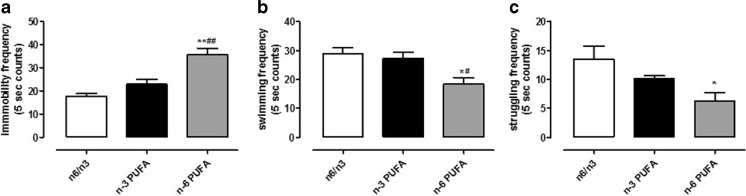
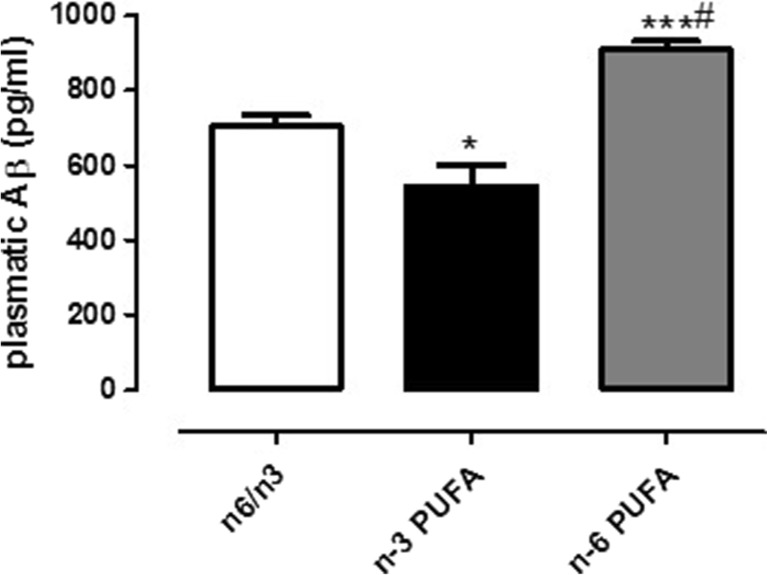
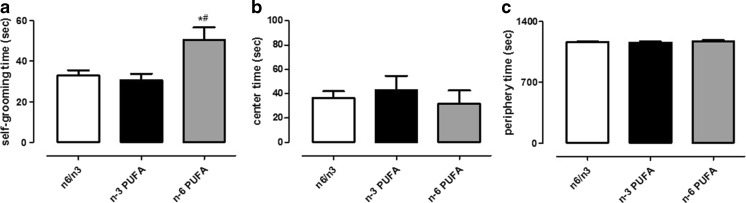
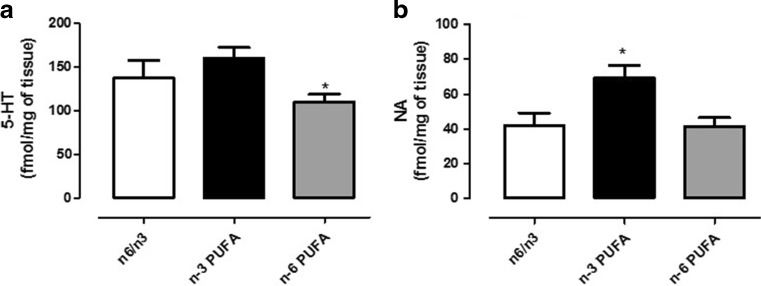
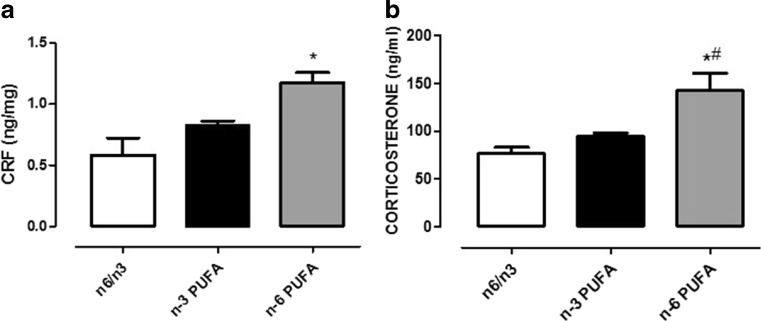
Recent evidence pointed out that the prevalence of depression has reached epidemic proportions in last decades. This increase has been linked to many environmental factors, among these the influence of dietary factors has gained great attention. In particular, it has been reported that low n-3 polyunsaturated fatty acid (n-3 PUFA) intake in diet is correlated to the development of depressive and anxiety-like symptoms. Furthermore, maternal malnutrition is a widely accepted risk factor for developing mental illness in later adulthood; among others, depression has been strongly associated to this event. On the other hand, we have previously found that acute intracerebral injection of the soluble beta amyloid 1-42 (Aβ) peptide induces a depressive-like behavior in rats, associated to altered hypothalamic-pituitary-adrenal (HPA) axis activation and reduced cortical serotonin and neurotrophin levels. The aim of the present work was to study the effect of pre- and post-natal (5 weeks post-weaning) exposure to diets differently enriched in n-3, n-6, as well as n-6/n-3 PUFA balanced, on immobility time displayed on the forced swimming test (FST), along with neuroendocrine quantification in offspring rats. Results showed that n-6 PUFA-enriched diet increased depressive- and anxiety-like behaviors, as shown by the elevation in the immobility time in the FST test and self-grooming in the open field test. Those effects were accompanied by reduced cortical serotonin, high plasmatic corticosterone and hypothalamic corticotropin-releasing factor levels. Finally, enhanced plasmatic Aβ levels after n-6 PUFA diet and reduced plasmatic Aβ levels after n-3 PUFA were found. Taken together, our data indicate that Aβ might be crucially involved in behavioral alterations found after n-6 rich PUFA diet and strongly endorse the protective role of n-3 and the detrimental effect of improper n-6 PUFA diet consumption.
最近的证据指出,在过去几十年中,抑郁症的患病率已达到流行程度。这种增加与许多环境因素有关,其中饮食因素的影响受到了极大关注。特别是,据报道,饮食中n-3多不饱和脂肪酸(n-3 PUFA)摄入量低与抑郁和焦虑样症状的发展相关。此外,母体营养不良是成年后期患精神疾病的一个广泛认可的风险因素;其中,抑郁症与这一情况密切相关。另一方面,我们之前发现,急性脑室内注射可溶性β淀粉样蛋白1-42(Aβ)肽会在大鼠中诱导出抑郁样行为,这与下丘脑-垂体-肾上腺(HPA)轴激活改变以及皮质血清素和神经营养因子水平降低有关。本研究的目的是研究产前和产后(断奶后5周)暴露于不同富含n-3、n-6以及n-6/n-3 PUFA平衡的饮食对强迫游泳试验(FST)中静止时间的影响,以及对后代大鼠的神经内分泌进行量化。结果表明,富含n-6 PUFA的饮食会增加抑郁和焦虑样行为,如FST试验中静止时间的延长和旷场试验中自我梳理行为的增加所示。这些影响伴随着皮质血清素减少、血浆皮质酮和下丘脑促肾上腺皮质激素释放因子水平升高。最后,发现富含n-6 PUFA的饮食后血浆Aβ水平升高,而富含n-3 PUFA的饮食后血浆Aβ水平降低。综上所述,我们的数据表明,Aβ可能在富含n-6的PUFA饮食后发现的行为改变中起关键作用,并有力地支持了n-3的保护作用以及不当摄入n-6 PUFA饮食的有害影响。