Banchelli Martina, Tiribilli Bruno, Pini Roberto, Dei Luigi, Matteini Paolo, Caminati Gabriella
Institute of Applied Physics, National Research Council - Via Madonna del Piano 10, I-50019 Sesto Fiorentino, Italy.
Institute for Complex Systems, National Research Council, Via Madonna del Piano 10, I-50019 Sesto Fiorentino, Italy.
Beilstein J Nanotechnol. 2016 Jan 6;7:9-21. doi: 10.3762/bjnano.7.2. eCollection 2016.
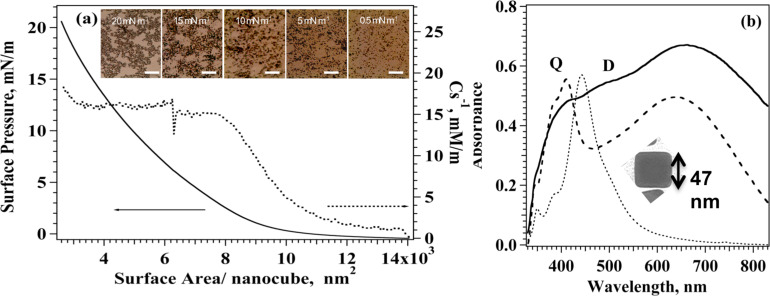
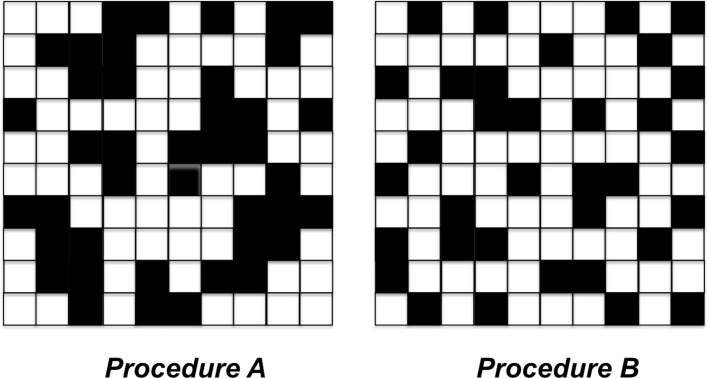
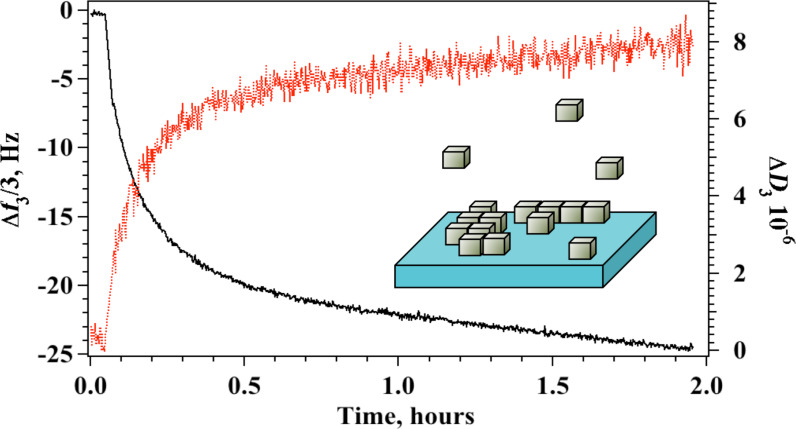
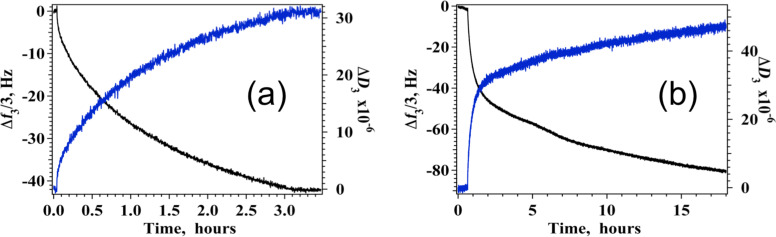
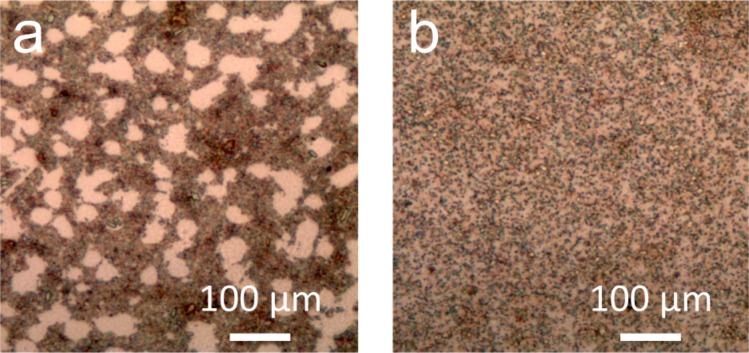
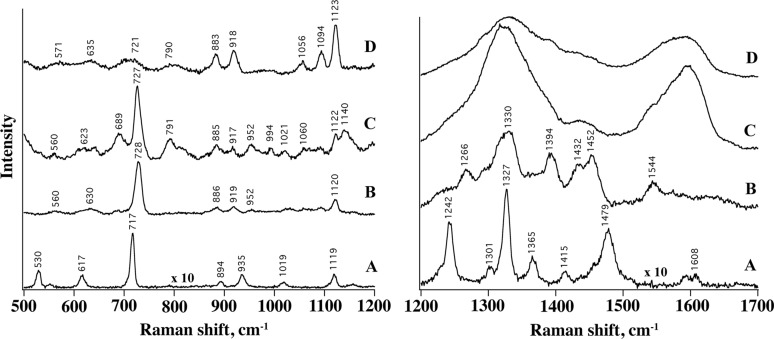
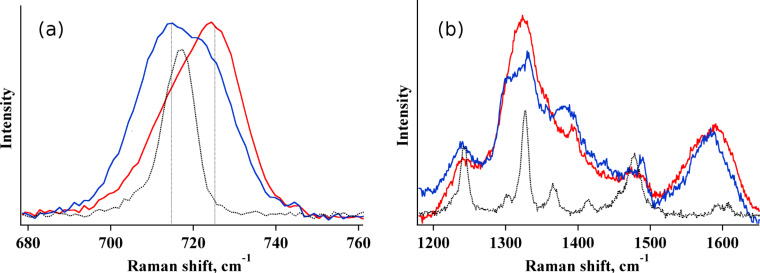
Hybrid graphene oxide/silver nanocubes (GO/AgNCs) arrays for surface-enhanced Raman spectroscopy (SERS) applications were prepared by means of two procedures differing for the method used in the assembly of the silver nanocubes onto the surface: Langmuir-Blodgett (LB) transfer and direct sequential physisorption of silver nanocubes (AgNCs). Adsorption of graphene oxide (GO) flakes on the AgNC assemblies obtained with both procedures was monitored by quartz crystal microbalance (QCM) technique as a function of GO bulk concentration. The experiment provided values of the adsorbed GO mass on the AgNC array and the GO saturation limit as well as the thickness and the viscoelastic properties of the GO film. Atomic force microscopy (AFM) measurements of the resulting samples revealed that a similar surface coverage was achieved with both procedures but with a different distribution of silver nanoparticles. In the GO covered LB film, the AgNC distribution is characterized by densely packed regions alternating with empty surface areas. On the other hand, AgNCs are more homogeneously dispersed over the entire sensor surface when the nanocubes spontaneously adsorb from solution. In this case, the assembly results in less-packed silver nanostructures with higher inter-cube distance. For the two assembled substrates, AFM of silver nanocubes layers fully covered with GO revealed the presence of a homogeneous, flexible and smooth GO sheet folding over the silver nanocubes and extending onto the bare surface. Preliminary SERS experiments on adenine showed a higher SERS enhancement factor for GO on Langmuir-Blodgett films of AgNCs with respect to bare AgNC systems. Conversely, poor SERS enhancement for adenine resulted for GO-covered AgNCs obtained by spontaneous adsorption. This indicated that the assembly and packing of AgNCs obtained in this way, although more homogeneous over the substrate surface, is not as effective for SERS analysis.
通过两种在将银纳米立方体组装到表面上所使用的方法不同的程序,制备了用于表面增强拉曼光谱(SERS)应用的氧化石墨烯/银纳米立方体(GO/AgNCs)混合阵列:朗缪尔-布洛杰特(LB)转移法和银纳米立方体(AgNCs)的直接顺序物理吸附法。用石英晶体微天平(QCM)技术监测了在这两种程序获得的AgNC组件上氧化石墨烯(GO)薄片的吸附情况,该吸附情况是作为GO本体浓度的函数。该实验提供了在AgNC阵列上吸附的GO质量值、GO饱和极限以及GO膜的厚度和粘弹性特性。对所得样品的原子力显微镜(AFM)测量表明,两种程序都实现了相似的表面覆盖率,但银纳米颗粒的分布不同。在GO覆盖的LB膜中,AgNC的分布特征是密集堆积区域与空白表面区域交替出现。另一方面,当纳米立方体从溶液中自发吸附时,AgNCs在整个传感器表面上更均匀地分散。在这种情况下,组装导致银纳米结构的堆积较少,立方体间距离更大。对于两种组装的基底,对完全被GO覆盖的银纳米立方体层进行AFM分析显示,存在一层均匀、柔韧且光滑的GO薄片,它折叠在银纳米立方体上并延伸到裸露表面。对腺嘌呤的初步SERS实验表明,相对于裸露的AgNC系统,在AgNCs的朗缪尔-布洛杰特膜上,GO的SERS增强因子更高。相反,通过自发吸附获得的GO覆盖的AgNCs对腺嘌呤的SERS增强效果较差。这表明以这种方式获得的AgNCs的组装和堆积,尽管在基底表面上更均匀,但对SERS分析而言效果不佳。