Kawasumi Hidenaga, Gono Takahisa, Kawaguchi Yasushi, Kuwana Masataka, Kaneko Hirotaka, Katsumata Yasuhiro, Kataoka Sayuri, Hanaoka Masanori, Yamanaka Hisashi
Institute of Rheumatology, Tokyo Women's Medical University, 10-22 Kawada-cho, Shinjuku-ku, Tokyo 162-0054, Japan.
Department of Allergy and Rheumatology, Nippon Medical School Graduate School of Medicine, 1-1-5 Sendagi, Bunkyo-ku, Tokyo 113-8603, Japan.
Biomed Res Int. 2016;2016:9163201. doi: 10.1155/2016/9163201. Epub 2016 Jan 26.
The physical function of PM/DM patients after remission induction therapy remains unknown adequately. The aim of our study was to evaluate the present status of physical dysfunction and to clarify the clinical manifestations and myositis-specific autoantibodies (MSAs) associated with physical dysfunction after treatment in PM/DM.
We obtained clinical data including the age at disease onset, gender, disease duration, laboratory data prior to initial treatment, and the specific treatment administered. We evaluated disease activity and physical dysfunction after treatment using the core set provided by the International Myositis Assessment and Clinical Studies Group.
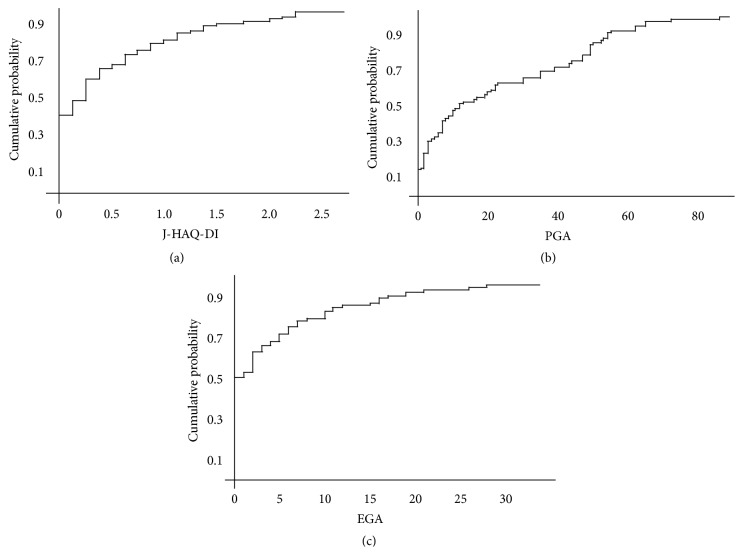
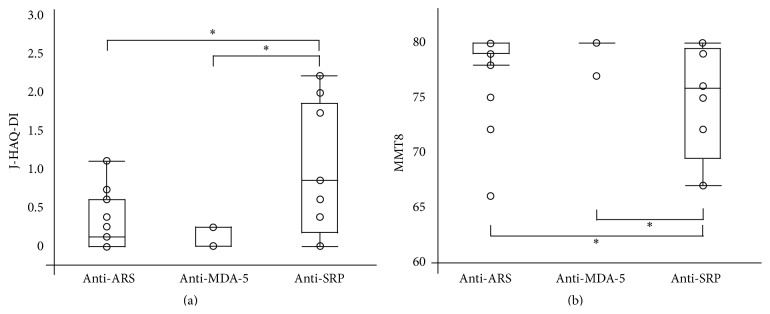
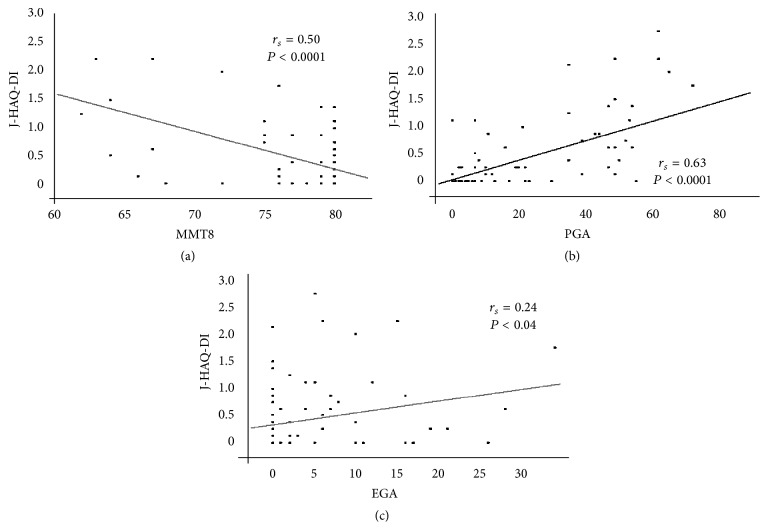
57% of the 77 enrolled patients with PM/DM had troubles in daily living after treatment. At the enrolment, disease activity evaluated by physicians was only revealed in 20% of patients. In a multivariate analysis, the age at disease onset, female gender, and CK levels before treatment were significantly associated with the severity of physical dysfunction after treatment. Anti-SRP positivity was associated with more severe physical dysfunction after treatment than anti-ARS or anti-MDA5.
Half of the PM/DM patients showed physical dysfunction after treatment. Age at disease onset, gender, CK level before treatment, and anti-SRP were significant predictors associated with physical dysfunction after treatment in PM/DM.
缓解诱导治疗后皮肌炎(PM)/多发性肌炎(DM)患者的身体功能仍未得到充分了解。本研究的目的是评估身体功能障碍的现状,并阐明PM/DM治疗后与身体功能障碍相关的临床表现和肌炎特异性自身抗体(MSA)。
我们获取了临床数据,包括发病年龄、性别、病程、初始治疗前的实验室数据以及所给予的具体治疗。我们使用国际肌炎评估和临床研究组提供的核心指标评估治疗后的疾病活动度和身体功能障碍。
77例入组的PM/DM患者中,57%在治疗后日常生活存在困难。入组时,医生评估的疾病活动度仅在20%的患者中表现出来。多因素分析显示,发病年龄、女性性别和治疗前的肌酸激酶(CK)水平与治疗后身体功能障碍的严重程度显著相关。与抗氨基酰-tRNA合成酶(anti-ARS)或抗黑色素瘤分化相关基因5(anti-MDA5)相比,抗信号识别颗粒(anti-SRP)阳性与治疗后更严重的身体功能障碍相关。
一半的PM/DM患者在治疗后出现身体功能障碍。发病年龄、性别、治疗前CK水平和anti-SRP是PM/DM治疗后与身体功能障碍相关的重要预测因素。