Schéle Erik, Bake Tina, Rabasa Cristina, Dickson Suzanne L
Institute of Neuroscience and Physiology, The Sahlgrenska Academy at the University of Gothenburg, Gothenburg, Sweden.
PLoS One. 2016 Feb 29;11(2):e0149456. doi: 10.1371/journal.pone.0149456. eCollection 2016.
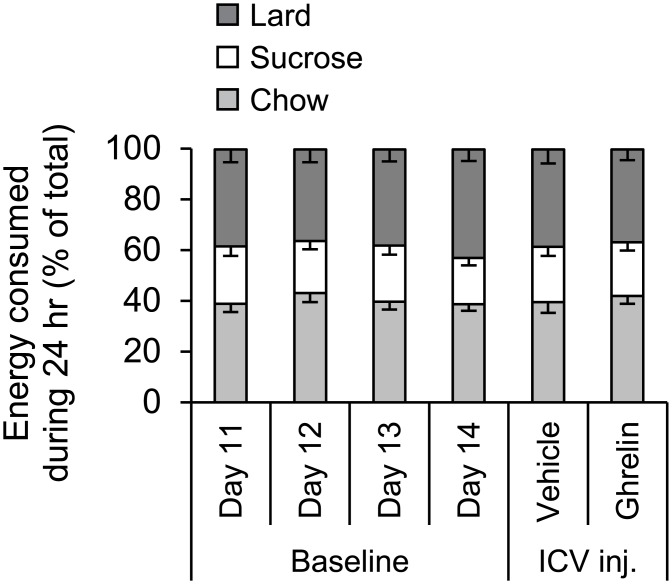
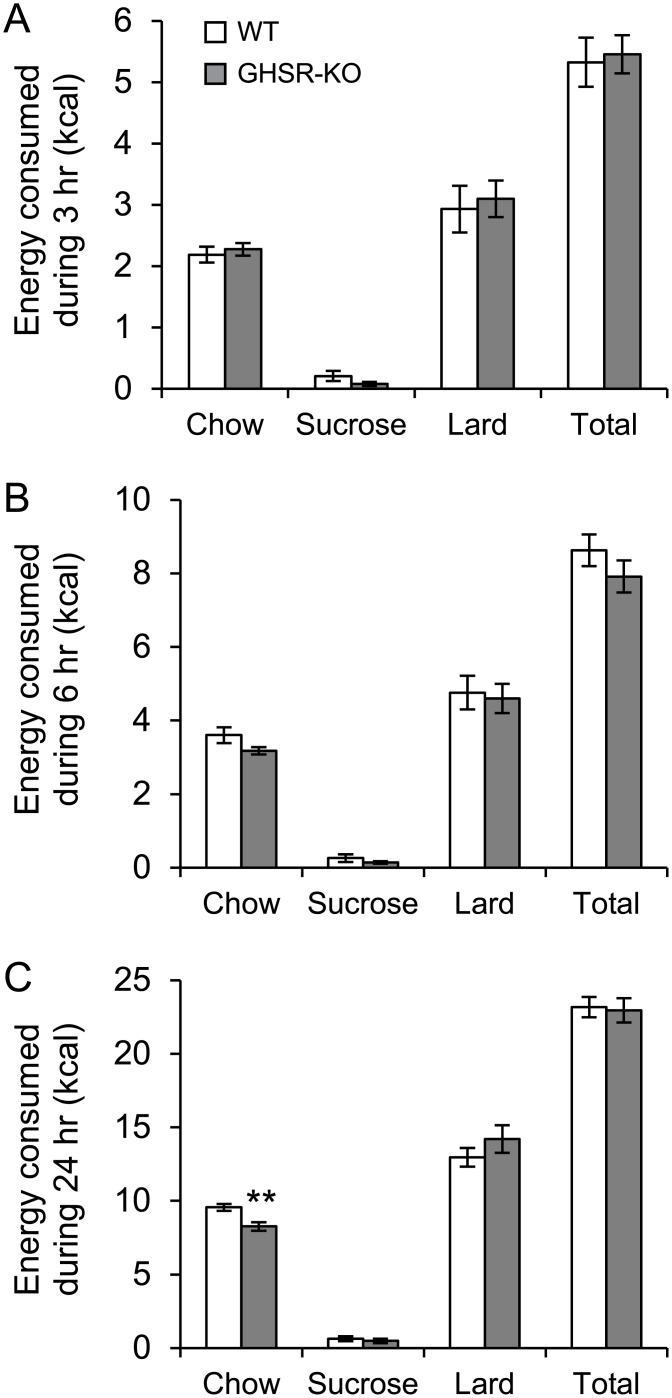
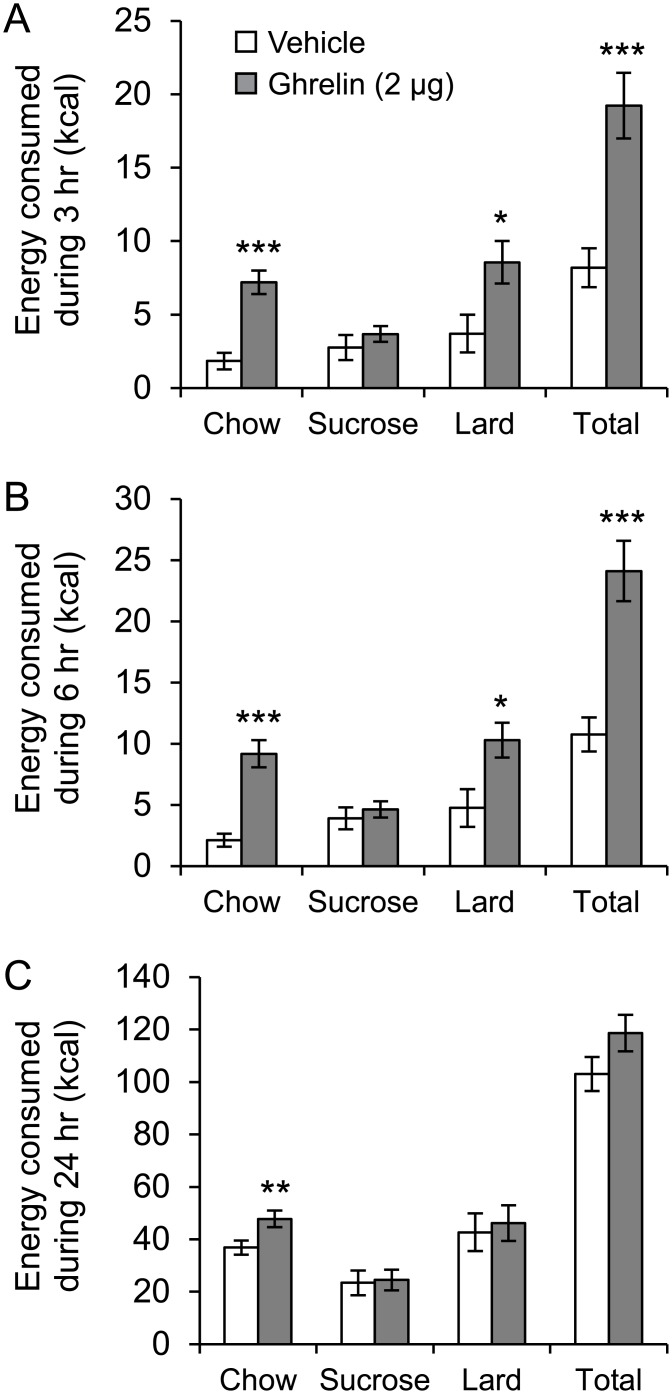
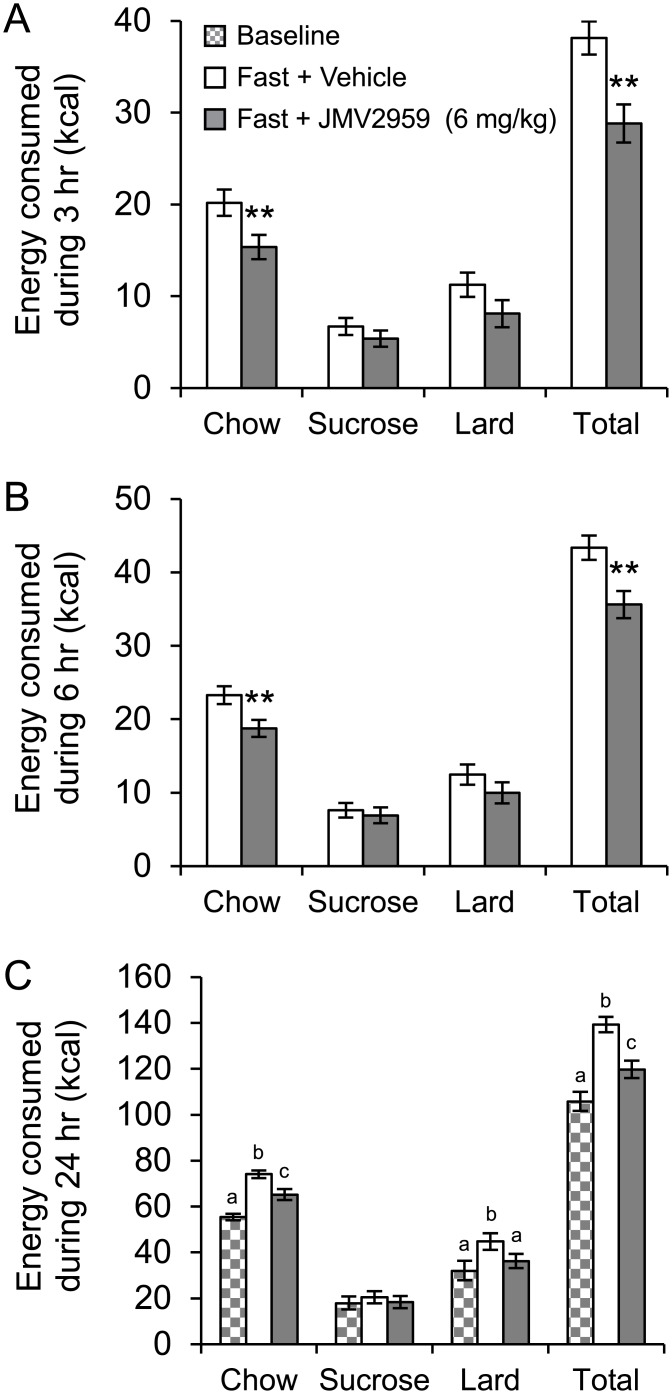
We sought to determine whether the orexigenic hormone, ghrelin, is involved in the intrinsic regulation of food choice in rats. Ghrelin would seem suited to serve such a role given that it signals hunger information from the stomach to brain areas important for feeding control, including the hypothalamus and reward system (e.g. ventral tegmental area, VTA). Thus, in rats offered a choice of palatable foods (sucrose pellets and lard) superimposed on regular chow for 2 weeks, we explored whether acute central delivery of ghrelin (intracerebroventricular (ICV) or intra-VTA) is able to redirect their dietary choice. The major unexpected finding is that, in rats with high baseline lard intake, acute ICV ghrelin injection increased their chow intake over 3-fold, relative to vehicle-injected controls, measured at both 3 hr and 6 hr after injection. Similar effects were observed when ghrelin was delivered to the VTA, thereby identifying the VTA as a likely contributing neurobiological substrate for these effects. We also explored food choice after an overnight fast, when endogenous ghrelin levels are elevated, and found similar effects of dietary choice to those described for ghrelin. These effects of fasting on food choice were suppressed in models of suppressed ghrelin signaling (i.e. peripheral injection of a ghrelin receptor antagonist to rats and ghrelin receptor (GHSR) knock-out mice), implicating a role for endogenous ghrelin in the changes in food choice that occur after an overnight fast. Thus, in line with its role as a gut-brain hunger hormone, ghrelin appears to be able to acutely alter food choice, with notable effects to promote "healthy" chow intake, and identify the VTA as a likely contributing neurobiological substrate for these effects.
我们试图确定食欲素激素胃饥饿素是否参与大鼠食物选择的内在调节。鉴于胃饥饿素能将来自胃的饥饿信息传递到对进食控制至关重要的脑区,包括下丘脑和奖赏系统(如腹侧被盖区,VTA),它似乎适合发挥这样的作用。因此,在给大鼠提供可口食物(蔗糖颗粒和猪油)并搭配常规食物长达2周的情况下,我们探究了急性中枢给予胃饥饿素(脑室内(ICV)或脑室内注射到VTA)是否能够改变它们的饮食选择。主要的意外发现是,在猪油摄入量基线较高的大鼠中,相对于注射赋形剂的对照组,急性脑室内注射胃饥饿素使它们在注射后3小时和6小时的常规食物摄入量增加了3倍多。当胃饥饿素注射到VTA时也观察到了类似的效果,从而确定VTA可能是这些效应的神经生物学基础。我们还探究了禁食一夜后(此时内源性胃饥饿素水平升高)的食物选择情况,发现其对饮食选择的影响与胃饥饿素的情况相似。在胃饥饿素信号被抑制的模型中(即给大鼠外周注射胃饥饿素受体拮抗剂以及胃饥饿素受体(GHSR)基因敲除小鼠),禁食对食物选择的这些影响受到了抑制,这表明内源性胃饥饿素在禁食一夜后食物选择的变化中发挥了作用。因此,与它作为肠脑饥饿激素的作用一致,胃饥饿素似乎能够急性改变食物选择,对促进“健康”常规食物摄入有显著影响,并确定VTA可能是这些效应的神经生物学基础。