Adak M Fatih, Yumusak Nejat
Computer Engineering Department, Computer and Information Sciences Faculty, Sakarya University, 2nd Ring Street, Esentepe Campus, Serdivan, Sakarya 54187, Turkey.
Sensors (Basel). 2016 Feb 27;16(3):304. doi: 10.3390/s16030304.
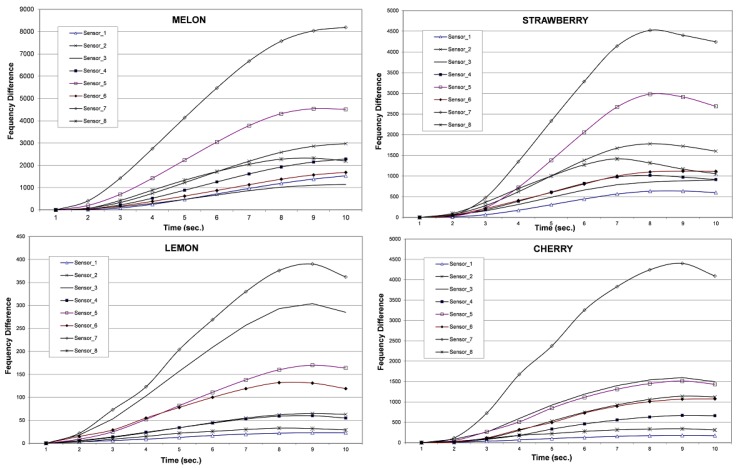
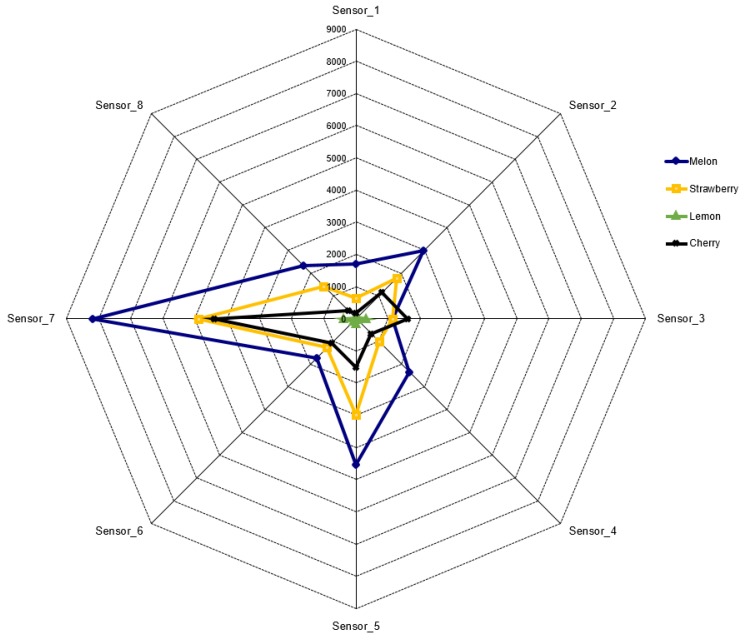
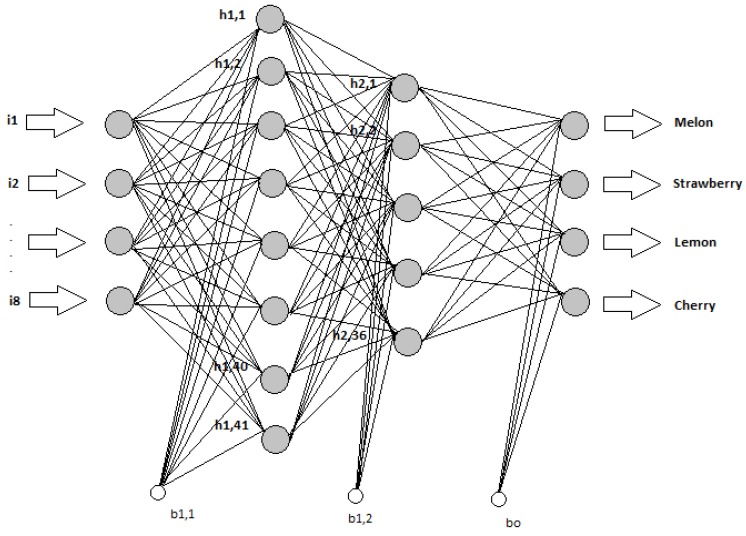
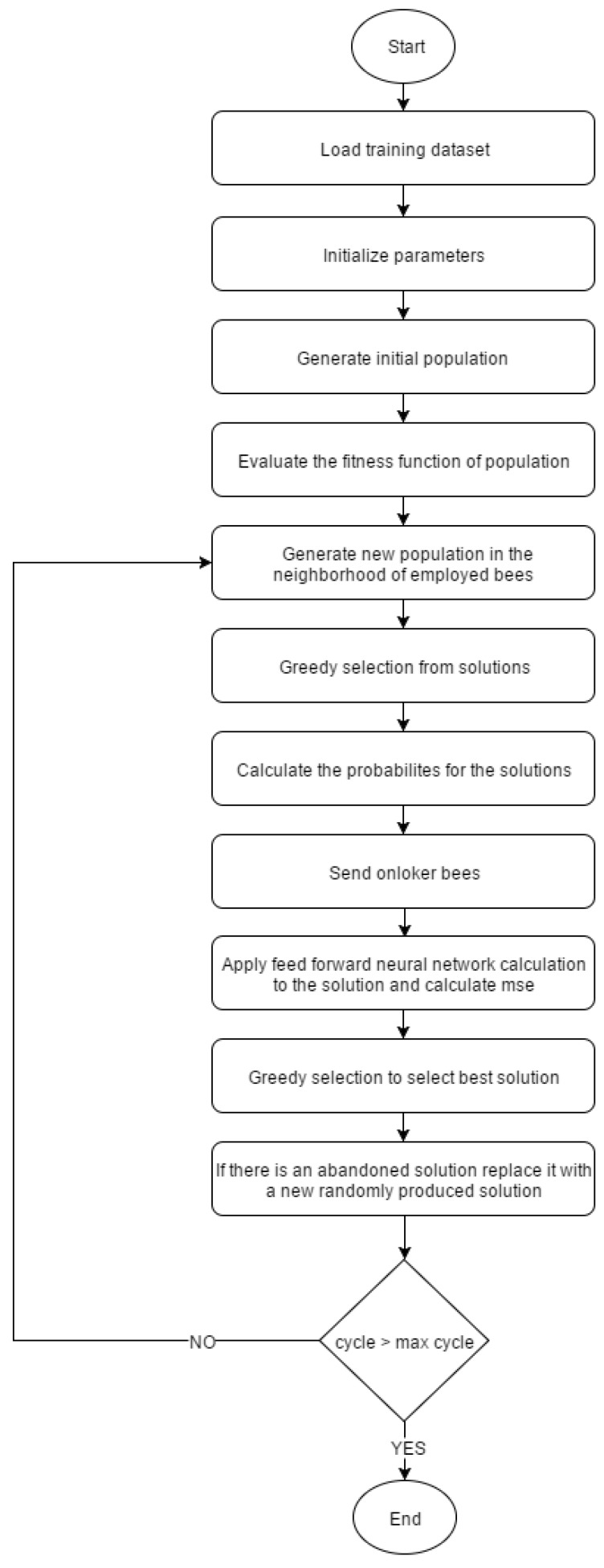
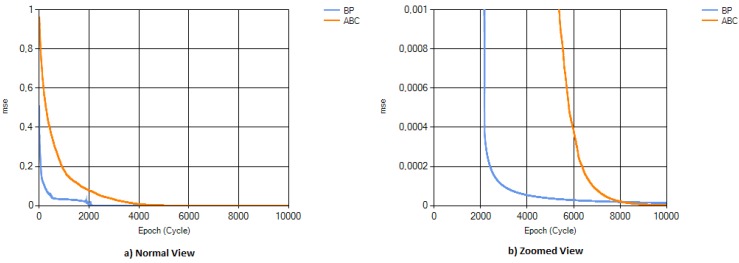
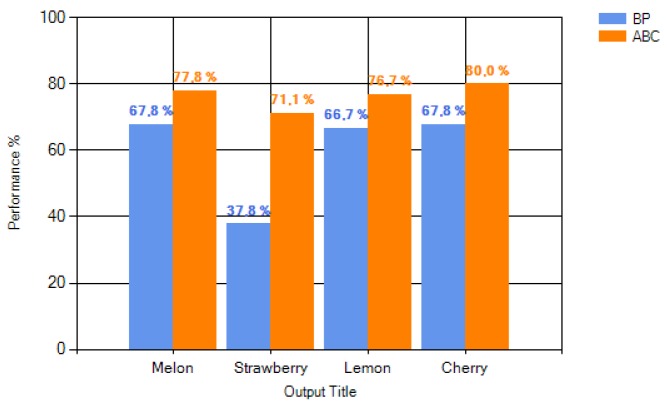
Electronic nose technology is used in many areas, and frequently in the beverage industry for classification and quality-control purposes. In this study, four different aroma data (strawberry, lemon, cherry, and melon) were obtained using a MOSES II electronic nose for the purpose of fruit classification. To improve the performance of the classification, the training phase of the neural network with two hidden layers was optimized using artificial bee colony algorithm (ABC), which is known to be successful in exploration. Test data were given to two different neural networks, each of which were trained separately with backpropagation (BP) and ABC, and average test performances were measured as 60% for the artificial neural network trained with BP and 76.39% for the artificial neural network trained with ABC. Training and test phases were repeated 30 times to obtain these average performance measurements. This level of performance shows that the artificial neural network trained with ABC is successful in classifying aroma data.
电子鼻技术在许多领域都有应用,在饮料行业中也经常用于分类和质量控制目的。在本研究中,使用MOSES II电子鼻获取了四种不同的香气数据(草莓、柠檬、樱桃和甜瓜),用于水果分类。为了提高分类性能,使用已知在探索方面很成功的人工蜂群算法(ABC)对具有两个隐藏层的神经网络的训练阶段进行了优化。将测试数据提供给两个不同的神经网络,每个网络分别使用反向传播(BP)和ABC进行训练,使用BP训练的人工神经网络的平均测试性能为60%,使用ABC训练的人工神经网络的平均测试性能为76.39%。为了获得这些平均性能测量值,训练和测试阶段重复了30次。这种性能水平表明,使用ABC训练的人工神经网络在对香气数据进行分类方面是成功的。