Srivastava Sharad, Misra Ankita, Kumar Dharmesh, Srivastava Amit, Sood Anil, Rawat Aks
Pharmacognosy and Ethnopharmacology Division, CSIR-National Botanical Research Institute, Lucknow, Uttar Pradesh, India.
Biotechnology Division, CSIR-Institute of Himalayan Bioresource Technology, Palampur, Himachal Pradesh, India.
Pharmacogn Mag. 2015 Oct;11(Suppl 3):S488-95. doi: 10.4103/0973-1296.168944.
Roscoea purpurea or Roscoea procera Wall. (Zingiberaceae) is traditionally used for nutrition and in the treatment of various ailments.
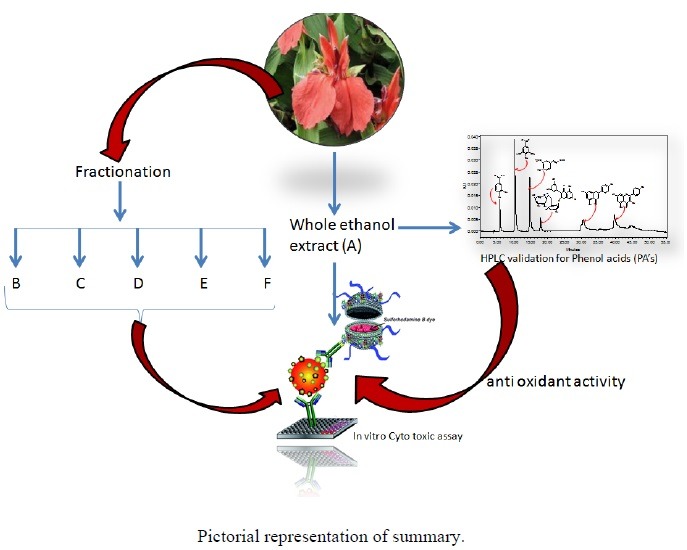
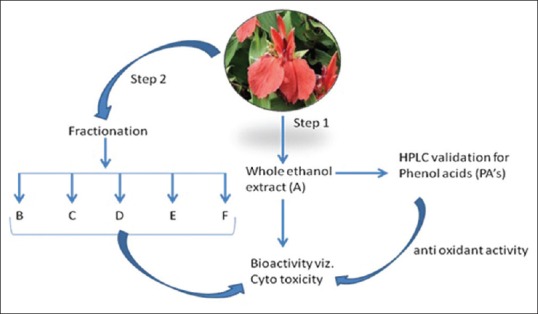
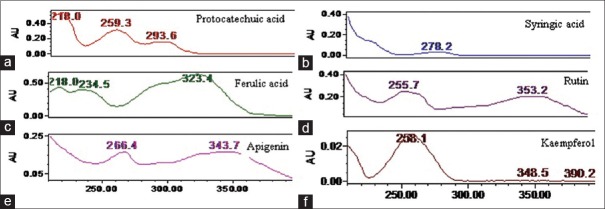
Simultaneous reversed-phase high-performance liquid chromatography-ultraviolet (RP-HPLC) photodiode array detector identification of phenolic acids (PA's) was carried out in whole extract of tuber and their cytotoxic potential was estimated along with radical scavenging action. Bioactivity guided fractionation was also done to check the response potential against the same assay.
Identification and method validation was performed on RP-HPLC column and in vitro assays were used for bioactivity.
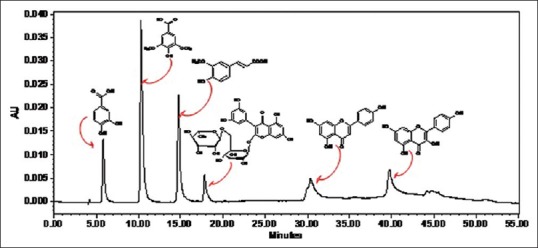
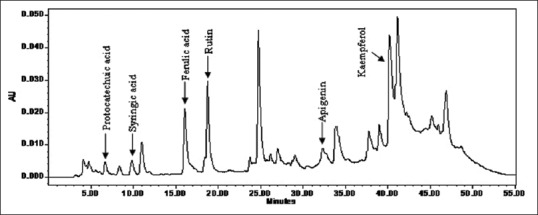
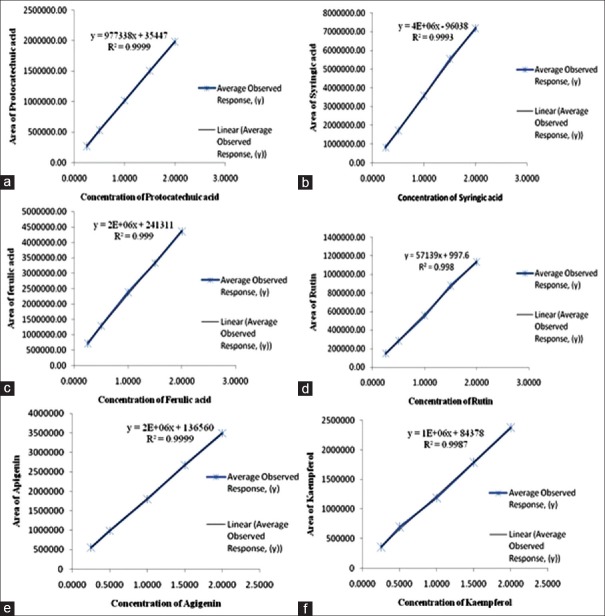
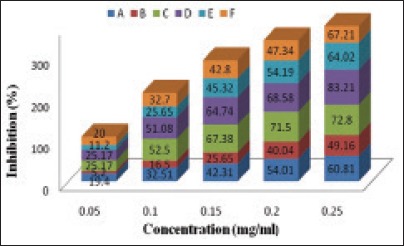
Protocatechuic acid, syringic acid, ferulic acid, rutin, apigenin, and kaempferol were quantified as 0.774%, 0.064%, 0.265%, 1.125%, 0.128%, and 0.528%, respectively. Validated method for simultaneous determination of PA's was found to be accurate, reproducible, and linearity was observed between peak area response and concentration. Recovery of identified PA's was within the acceptable limit of 97.40-104.05%. Significant pharmacological response was observed in whole extract against in vitro cytotoxic assay, that is, Sulforhodamine B assay, however, fractionation results in decreased action potential. Similar pattern of results were observed in the antioxidant assay, as total phenolic content and total flavonoid content were highest in whole extract and decreases with fractionation. Radical scavenging activity was prominent in chloroform fraction, exhibiting IC50 at 0.25 mg/mL.
Study, thus, reveals that R. purpurea exhibit significant efficacy in cytotoxic activity with the potentiality of scavenging free radicals due the presence of PA's as reported through RP-HPLC.
Proto-catechuic acid, syringic acid, ferulic acid, rutin, apigenin and kaempferol were quantified as 0.774, 0.064, 0.265, 1.125, 0.128 and 0.528 %Preliminary cytotoxic activity revealed that whole extract of R. purpurea exhibit promising effect and after fractionation the potentiation of action reducesThe radical scavenging potential of whole extract and fractions are well reflected by TPC, TFC and DPPH assay.
紫花象牙参或罗氏象牙参(姜科)传统上用于营养补充及治疗各种疾病。
采用反相高效液相色谱 - 紫外(RP - HPLC)光电二极管阵列检测器对块茎全提取物中的酚酸(PA)进行同时鉴定,并评估其细胞毒性潜力以及自由基清除作用。还进行了生物活性导向分级分离,以检查其对相同检测的反应潜力。
在RP - HPLC柱上进行鉴定和方法验证,并使用体外试验评估生物活性。
原儿茶酸、丁香酸、阿魏酸、芦丁、芹菜素和山奈酚的含量分别为0.774%、0.064%、0.265%、1.125%、0.128%和0.528%。同时测定PA的验证方法准确、可重复,峰面积响应与浓度之间呈线性关系。已鉴定PA的回收率在97.40 - 104.05%的可接受范围内。在体外细胞毒性试验即磺酰罗丹明B试验中,全提取物表现出显著的药理反应,然而分级分离导致作用潜力降低。在抗氧化试验中也观察到类似的结果模式,因为全提取物中的总酚含量和总黄酮含量最高,且随分级分离而降低。氯仿级分的自由基清除活性显著,IC50为0.25 mg/mL。
因此,研究表明,如通过RP - HPLC所报道,紫花象牙参由于PA的存在,在细胞毒性活性方面表现出显著功效,并具有清除自由基的潜力。
原儿茶酸、丁香酸、阿魏酸、芦丁、芹菜素和山奈酚的含量分别为0.774%、0.064%、0.265%、1.125%、0.128%和0.528%。初步细胞毒性活性表明,紫花象牙参全提取物表现出良好效果,分级分离后作用增强减弱。总酚含量、总黄酮含量和DPPH试验很好地反映了全提取物及其级分的自由基清除潜力。