Weber Alain R, Krawczyk Claudia, Robertson Adam B, Kuśnierczyk Anna, Vågbø Cathrine B, Schuermann David, Klungland Arne, Schär Primo
Department of Biomedicine, University of Basel, Mattenstrasse 28, Basel CH-4058, Switzerland.
Department of Molecular Microbiology, Oslo University Hospital, Rikshospitalet, NO-0372 Oslo, Norway.
Nat Commun. 2016 Mar 2;7:10806. doi: 10.1038/ncomms10806.
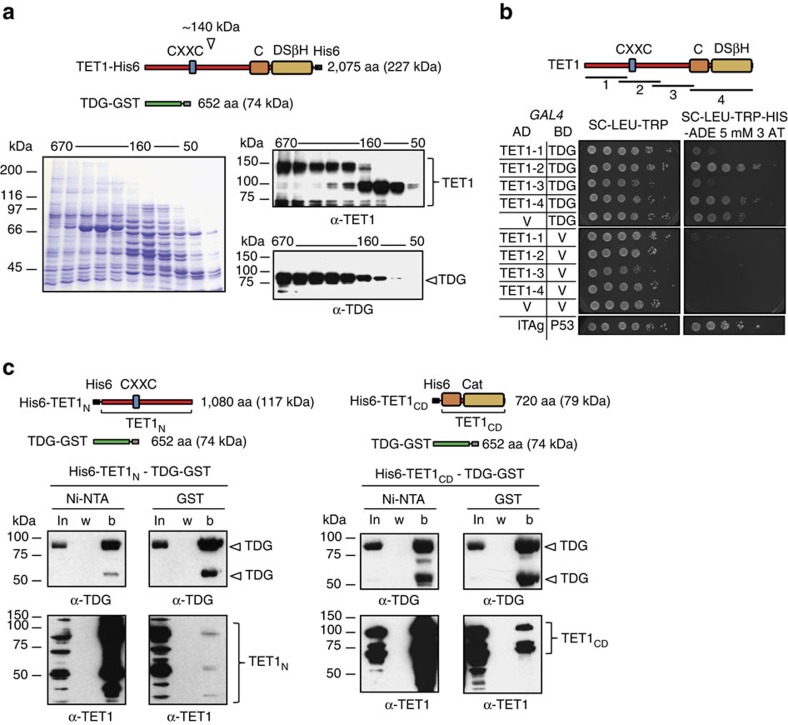
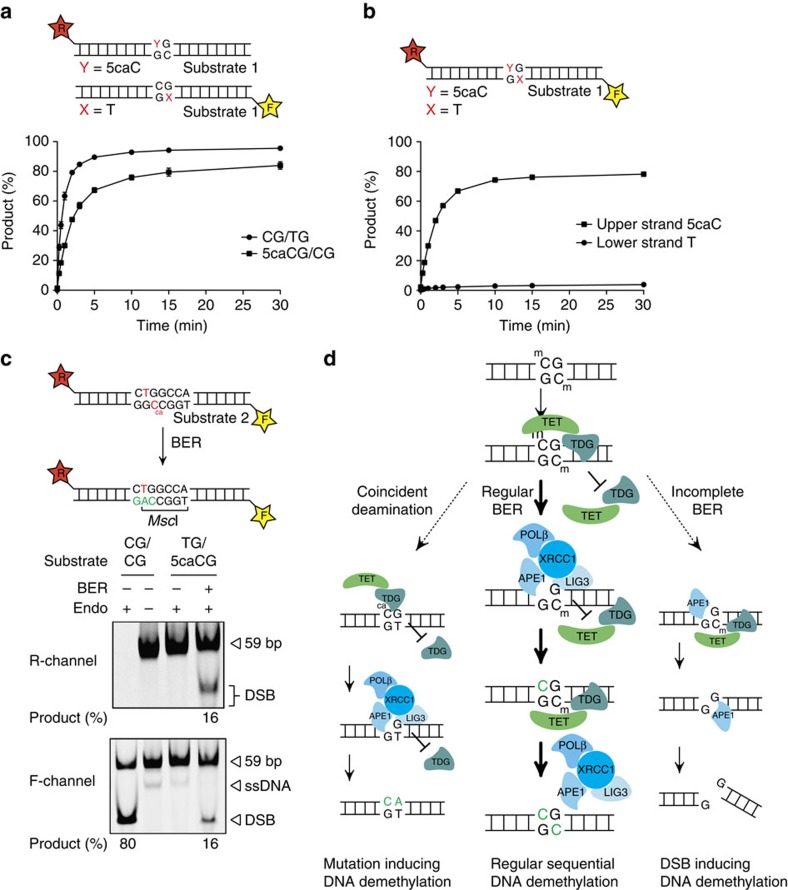
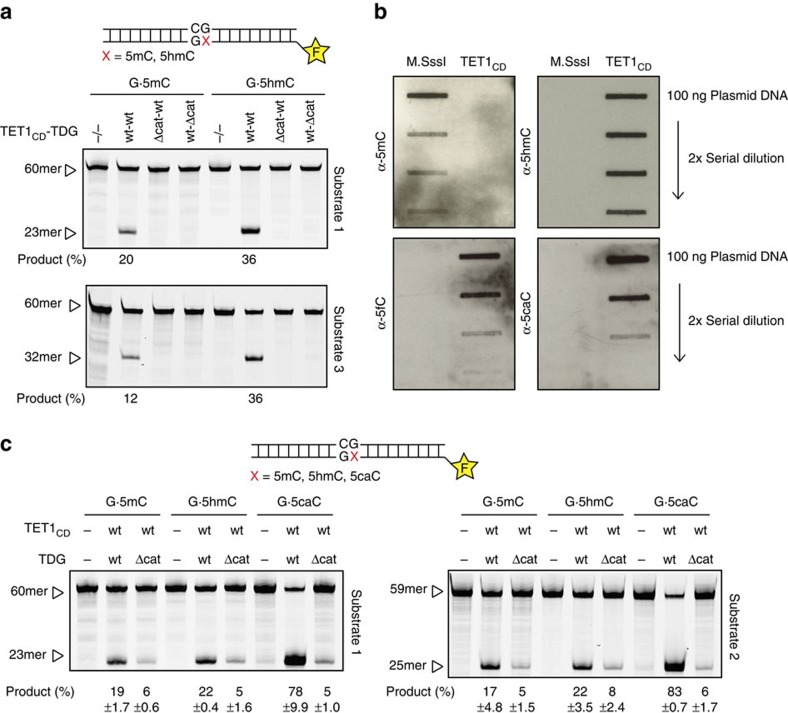
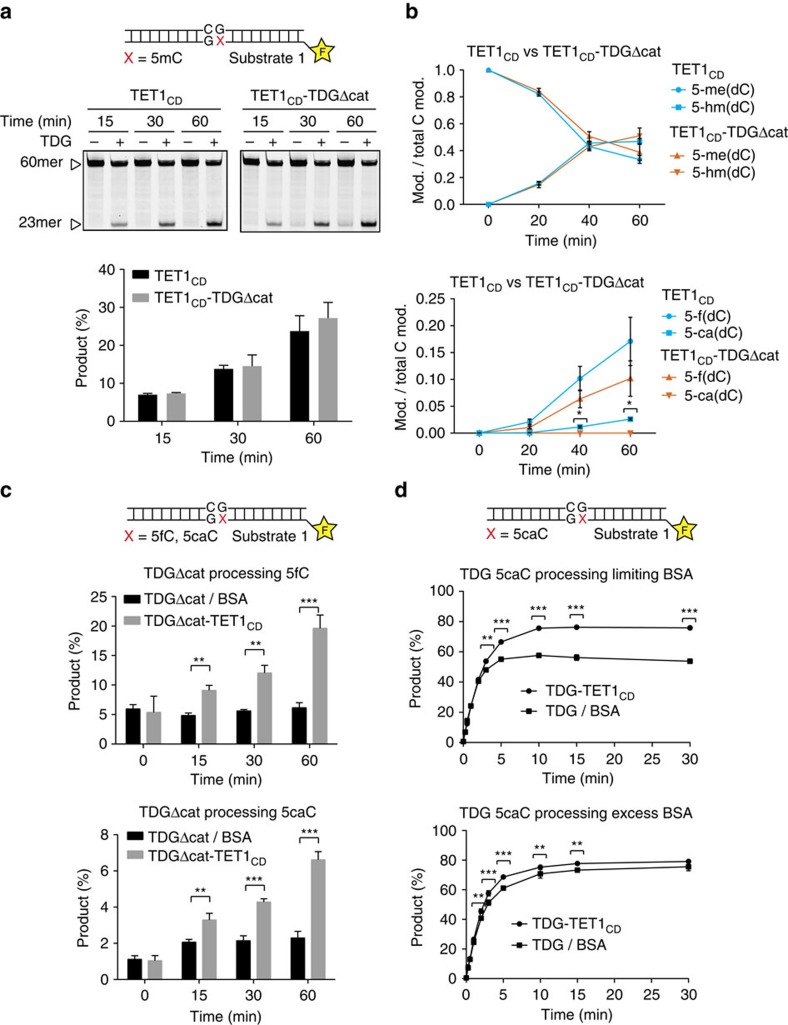
Cytosine methylation in CpG dinucleotides is an epigenetic DNA modification dynamically established and maintained by DNA methyltransferases and demethylases. Molecular mechanisms of active DNA demethylation began to surface only recently with the discovery of the 5-methylcytosine (5mC)-directed hydroxylase and base excision activities of ten-eleven translocation (TET) proteins and thymine DNA glycosylase (TDG). This implicated a pathway operating through oxidation of 5mC by TET proteins, which generates substrates for TDG-dependent base excision repair (BER) that then replaces 5mC with C. Yet, direct evidence for a productive coupling of TET with BER has never been presented. Here we show that TET1 and TDG physically interact to oxidize and excise 5mC, and proof by biochemical reconstitution that the TET-TDG-BER system is capable of productive DNA demethylation. We show that the mechanism assures a sequential demethylation of symmetrically methylated CpGs, thereby avoiding DNA double-strand break formation but contributing to the mutability of methylated CpGs.
CpG二核苷酸中的胞嘧啶甲基化是一种表观遗传DNA修饰,由DNA甲基转移酶和去甲基化酶动态建立和维持。直到最近,随着对10-11易位(TET)蛋白和胸腺嘧啶DNA糖基化酶(TDG)的5-甲基胞嘧啶(5mC)定向羟化酶和碱基切除活性的发现,DNA主动去甲基化的分子机制才开始浮出水面。这暗示了一条通过TET蛋白氧化5mC起作用的途径,该途径产生了依赖TDG的碱基切除修复(BER)的底物,然后用C取代5mC。然而,从未有过TET与BER有效偶联的直接证据。在这里,我们表明TET1和TDG发生物理相互作用以氧化和切除5mC,并通过生化重建证明TET-TDG-BER系统能够进行有效的DNA去甲基化。我们表明,该机制确保对称甲基化的CpG依次去甲基化,从而避免DNA双链断裂的形成,但增加了甲基化CpG的可变性。