Ghosh Sujoy, Kruger Claudia, Wicks Shawna, Simon Jacob, Kumar K Ganesh, Johnson William D, Mynatt Randall L, Noland Robert C, Richards Brenda K
Pennington Biomedical Research Center, Louisiana State University System, 6400 Perkins Road, Baton Rouge, LA 70808-4124 USA ; Duke-NUS Graduate Medical School, Singapore, 169857 Singapore.
Pennington Biomedical Research Center, Louisiana State University System, 6400 Perkins Road, Baton Rouge, LA 70808-4124 USA.
Nutr Metab (Lond). 2016 Mar 1;13:17. doi: 10.1186/s12986-016-0075-0. eCollection 2016.
The liver is an important site of fat oxidation, which participates in the metabolic regulation of food intake. We showed previously that mice with genetically inactivated Acads, encoding short-chain acyl-CoA dehydrogenase (SCAD), shift food consumption away from fat and toward carbohydrate when tested in a macronutrient choice paradigm. This phenotypic eating behavior suggests a link between fat oxidation and nutrient choice which may involve an energy sensing mechanism. To identify hepatic processes that could trigger energy-related signals, we have now performed transcriptional, metabolite and physiological analyses in Acads-/- mice following short-term (2 days) exposure to either high- or low-fat diet.
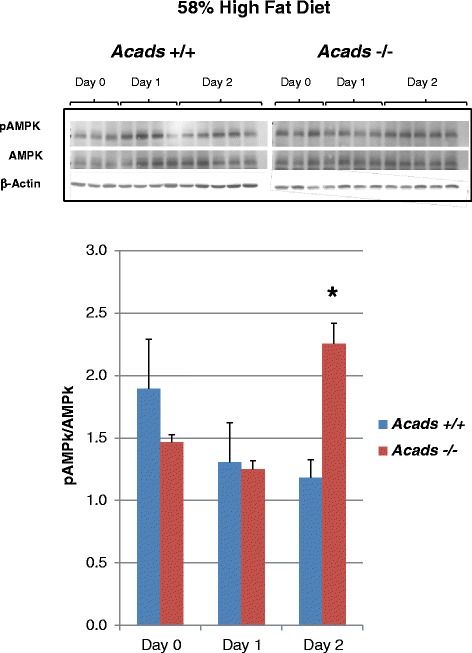
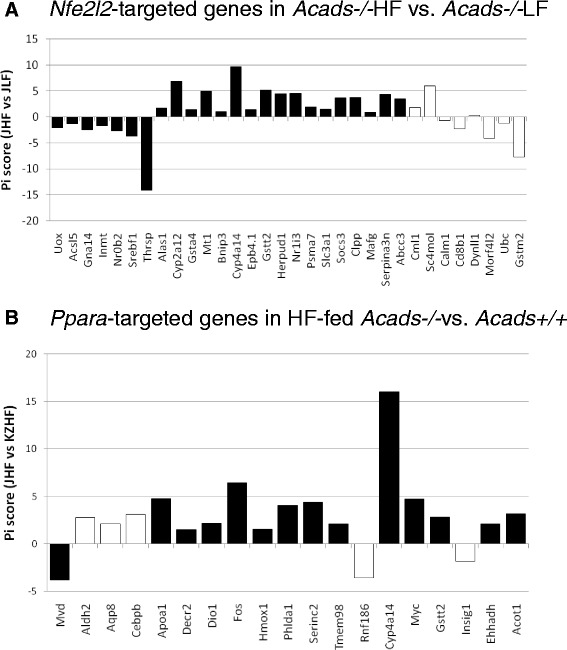
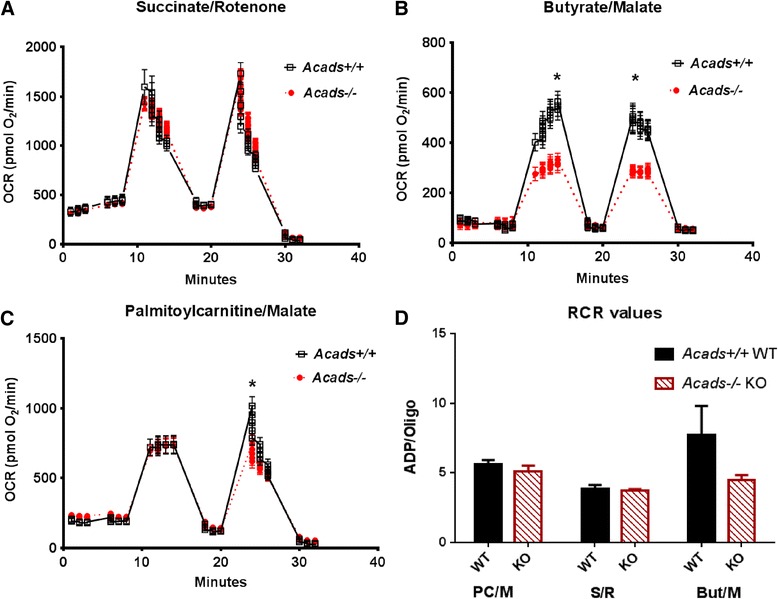
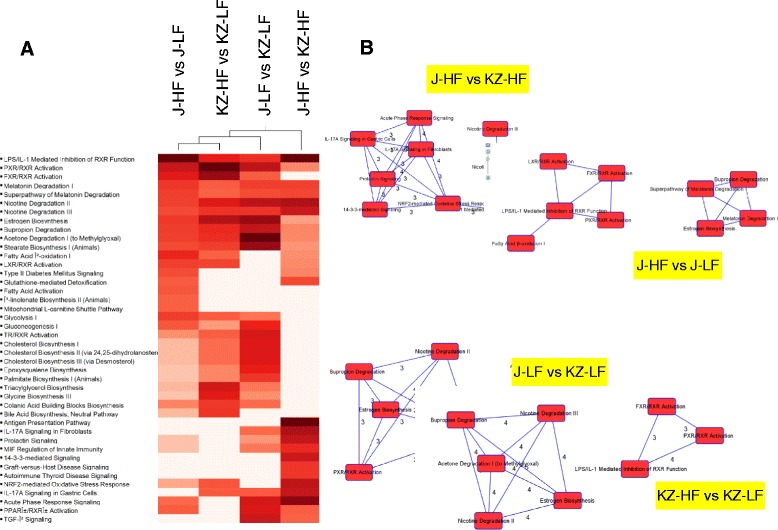
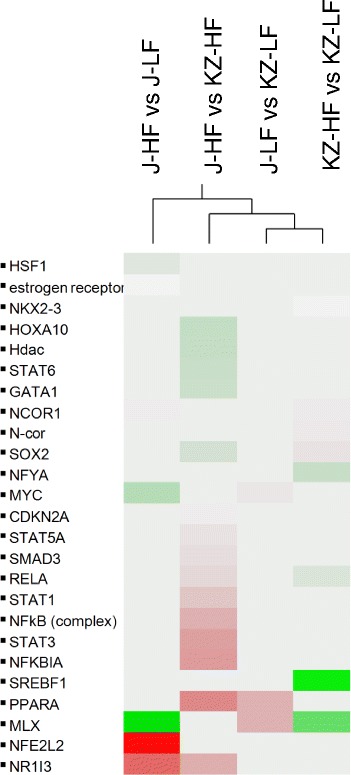
Metabolite analysis revealed 25 acylcarnitine species that were altered by diet and/or genotype. Compared to wild-type mice, phosphorylated AMP-activated protein kinase was 40 % higher in Acads-/- mice after short-term high-fat diet, indicating a low ATP/AMP ratio. Metabolite analyses in isolated liver mitochondria from Acads-/- mice during ADP-linked respiration on butyrate demonstrated a reduced oxygen consumption rate (OCR) compared to wild-type, an effect that was not observed with succinate or palmitoylcarnitine substrates. Liver transcriptomic responses in Acads-/- mice fed high- vs. lowfat diet revealed increased RXR/PPARA signaling, up-regulation of lipid handling pathways (including beta and omega oxidation), and increased mRNA expression of Nfe2l2 target genes.
Together, these results point to an oxidative shortage in this genetic model and support the hypothesis of a lower hepatic energy state associated with SCAD deficiency and high-fat diet.
肝脏是脂肪氧化的重要场所,参与食物摄入的代谢调节。我们之前发现,编码短链酰基辅酶A脱氢酶(SCAD)的Acads基因经基因敲除的小鼠,在宏量营养素选择范式测试中,食物消耗从脂肪转向碳水化合物。这种表型饮食行为表明脂肪氧化与营养选择之间存在联系,这可能涉及能量传感机制。为了确定可能触发能量相关信号的肝脏过程,我们现在对短期(2天)暴露于高脂肪或低脂肪饮食后的Acads-/-小鼠进行了转录、代谢物和生理学分析。
代谢物分析揭示了25种受饮食和/或基因型影响而改变的酰基肉碱种类。与野生型小鼠相比,短期高脂饮食后,Acads-/-小鼠体内磷酸化的AMP激活蛋白激酶高出40%,表明ATP/AMP比值较低。在丁酸盐ADP偶联呼吸过程中,对Acads-/-小鼠分离的肝线粒体进行代谢物分析,结果显示与野生型相比,其氧消耗率(OCR)降低,而琥珀酸盐或棕榈酰肉碱底物未观察到这种效应。对喂食高脂和低脂饮食的Acads-/-小鼠进行肝脏转录组反应分析,结果显示RXR/PPARA信号增加、脂质处理途径(包括β和ω氧化)上调以及Nfe2l2靶基因的mRNA表达增加。
总之,这些结果表明该遗传模型存在氧化不足,并支持与SCAD缺乏和高脂饮食相关的肝脏能量状态较低的假说。