Li Wei, Hou Guixue, Zhou Dianrong, Lou Xiaomin, Xu Yang, Liu Siqi, Zhao Xiaohang
State Key Laboratory of Molecular Oncology, Cancer Hospital, Peking Union Medical College & Chinese Academy of Medical Sciences, Beijing, China.
CAS Key Laboratory of Genome Sciences and Information, Beijing Institute of Genomics, Chinese Academy of Sciences, Beijing, China.
Oncotarget. 2016 Apr 19;7(16):21542-55. doi: 10.18632/oncotarget.7775.
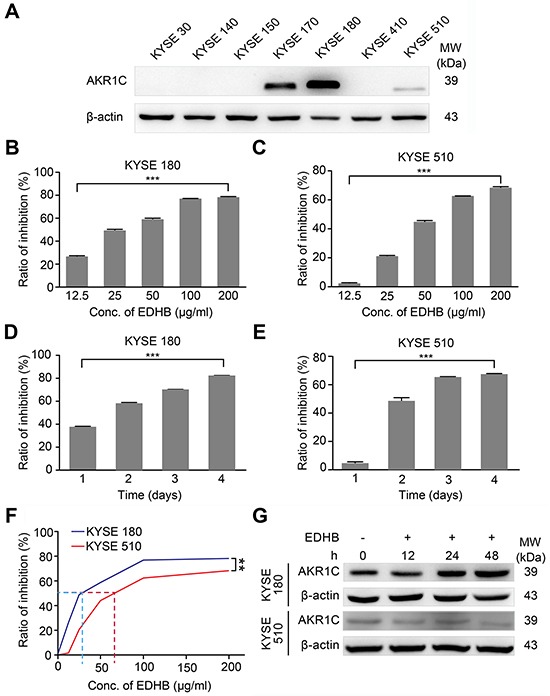
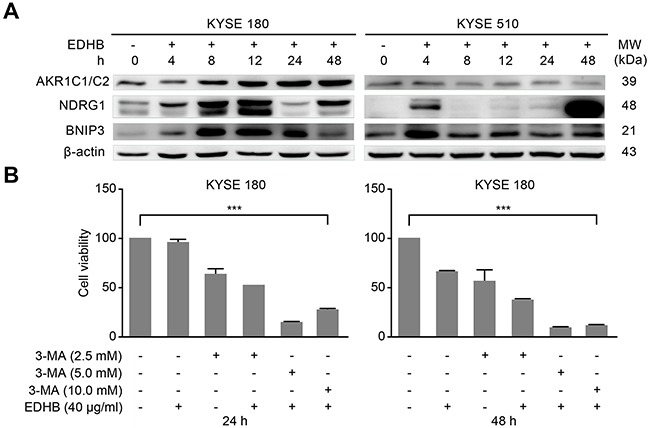
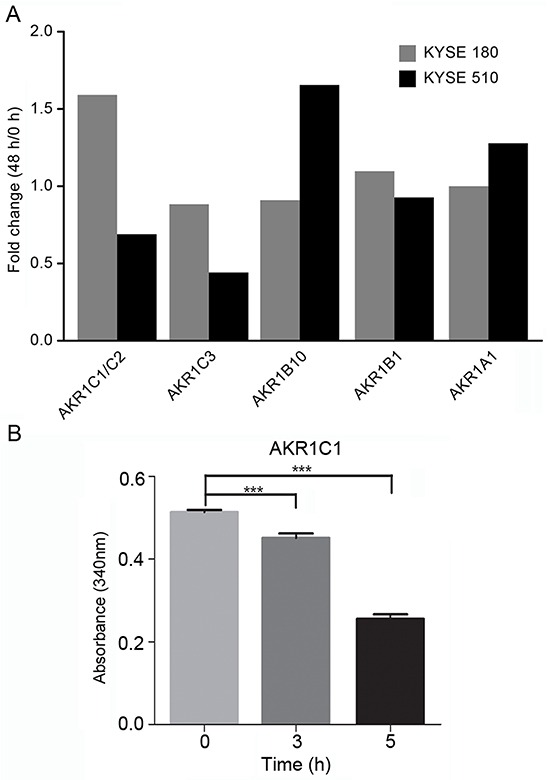
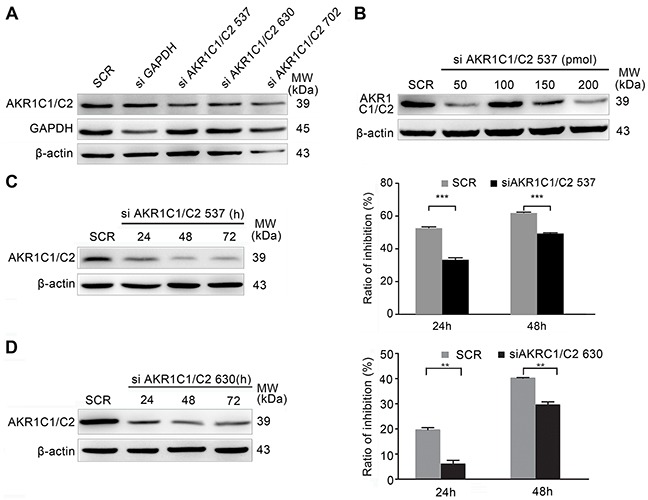
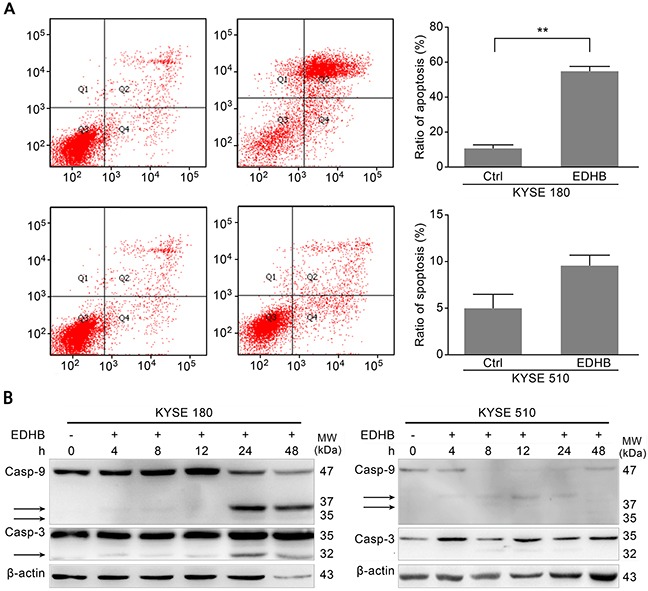
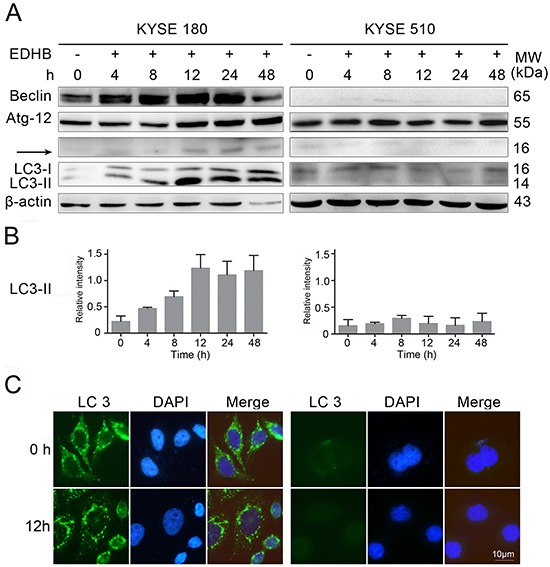
The aldo-keto reductase (AKR) superfamily of enzymes is critical for the detoxification of drugs and toxins in the human body; these enzymes are involved not only in the development of drug resistance in cancer cells but also in the metabolism of polycyclic aromatic hydrocarbons. Here, we demonstrated that AKR1C1/C2 increased the metabolism of ethyl-3,4-dihydroxybenzoate (EDHB) in esophageal squamous cell carcinoma (ESCC) cells. Previous studies have shown that EDHB can effectively induce esophageal cancer cell autophagy and apoptosis, and the AKR1C family represents one set of highly expressed genes after EDHB treatment. To explore the cytotoxic effects of EDHB, esophageal cancer cells with higher (KYSE180) or lower (KYSE510) AKR1C expression levels were evaluated in this study. The proliferation of KYSE180 cells was inhibited more effectively than that of KYSE510 cells by EDHB treatment. Furthermore, the effective subunits of the AKR superfamily, AKR1C1/C2, were quantitatively identified using multiple reaction monitoring (MRM) assays. The sensitivity of esophageal cancer cells to EDHB was significantly attenuated by the siRNA knockdown of AKR1C1/C2. Moreover, the expression of autophagy inducers (Beclin, LC3II and BNIP3) and NDRG1 was significantly elevated in KYSE180 cells, but not in KYSE510 cells, after EDHB treatment. When autophagy was inhibited by 3-methyladenine, KYSE180 cells exhibited an increased sensitivity to EDHB, which may be a metabolic substrate of AKR1C1/C2. These results indicated that ESCC patients with high AKR1C1/C2 expression may be more sensitive to EDHB, and AKR1C1/C2 may facilitate EDHB-induced autophagy and apoptosis, thus providing potential guidance for the chemoprevention of ESCC.
醛酮还原酶(AKR)超家族酶对人体药物和毒素的解毒至关重要;这些酶不仅参与癌细胞耐药性的产生,还参与多环芳烃的代谢。在此,我们证明AKR1C1/C2可增加食管鳞状细胞癌(ESCC)细胞中3,4 - 二羟基苯甲酸乙酯(EDHB)的代谢。先前的研究表明,EDHB可有效诱导食管癌细胞自噬和凋亡,且AKR1C家族是EDHB处理后一组高表达基因。为探究EDHB的细胞毒性作用,本研究评估了AKR1C表达水平较高(KYSE180)或较低(KYSE510)的食管癌细胞。EDHB处理对KYSE180细胞增殖的抑制作用比KYSE510细胞更有效。此外,使用多反应监测(MRM)分析法对AKR超家族的有效亚基AKR1C1/C2进行了定量鉴定。AKR1C1/C2的小干扰RNA敲低显著减弱了食管癌细胞对EDHB的敏感性。此外,EDHB处理后,自噬诱导剂(Beclin、LC3II和BNIP3)和NDRG1的表达在KYSE180细胞中显著升高,但在KYSE510细胞中未升高。当用3 - 甲基腺嘌呤抑制自噬时,KYSE180细胞对EDHB的敏感性增加,EDHB可能是AKR1C1/C2的代谢底物。这些结果表明,AKR1C1/C2高表达的ESCC患者可能对EDHB更敏感,且AKR1C1/C2可能促进EDHB诱导的自噬和凋亡,从而为ESCC的化学预防提供潜在指导。