Shen Lei, Liu Zhiqin, Yang Sheng, Yang Tong, Liang Jiaqi, Wen Jiayu, Liu Yanyan, Li Jiazhi, Shi Lanping, Tang Qian, Shi Wei, Hu Jiong, Liu Cailing, Zhang Yangwen, Lin Wei, Wang Rongzhang, Yu Huanxin, Mou Shaoliang, Hussain Ansar, Cheng Wei, Cai Hanyang, He Li, Guan Deyi, Wu Yang, He Shuilin
National Education Minister, Key Laboratory of Plant Genetic Improvement and Comprehensive Utilization Fujian Agriculture and Forestry University, Fuzhou, Fujian 350002, PR China College of Crop Science, Fujian Agriculture and Forestry University, Fuzhou, Fujian 350002, PR China.
National Education Minister, Key Laboratory of Plant Genetic Improvement and Comprehensive Utilization Fujian Agriculture and Forestry University, Fuzhou, Fujian 350002, PR China College of Life Science, Fujian Agriculture and Forestry University, Fuzhou, Fujian 350002, PR China.
J Exp Bot. 2016 Apr;67(8):2439-51. doi: 10.1093/jxb/erw069. Epub 2016 Mar 1.
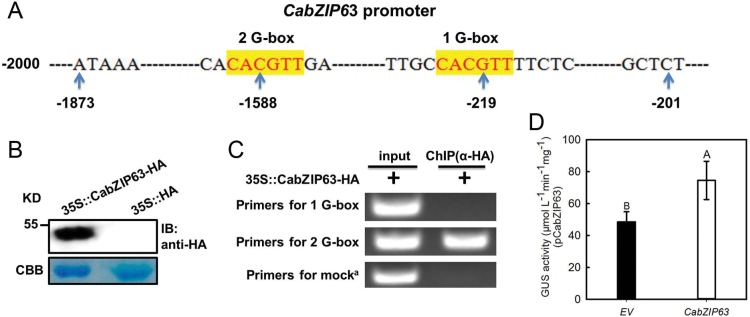
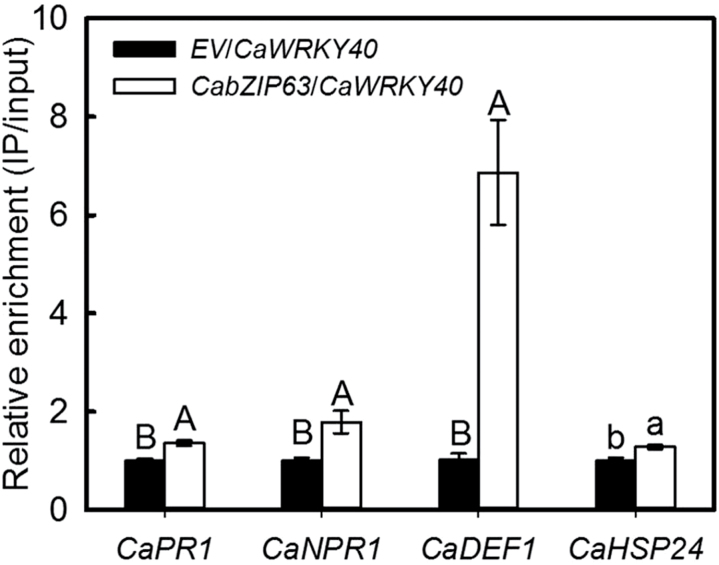
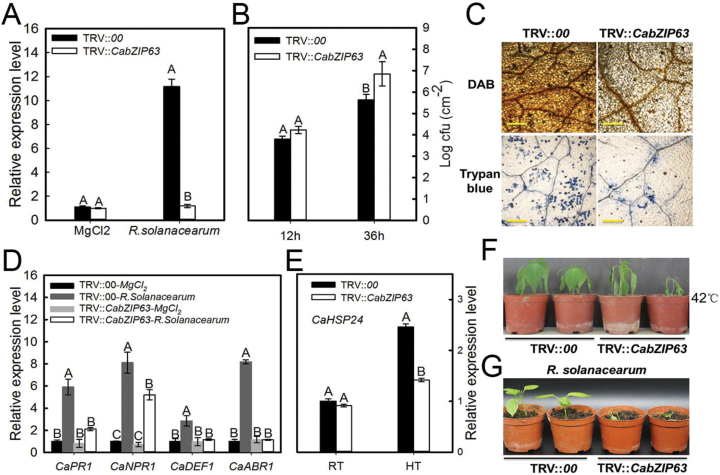
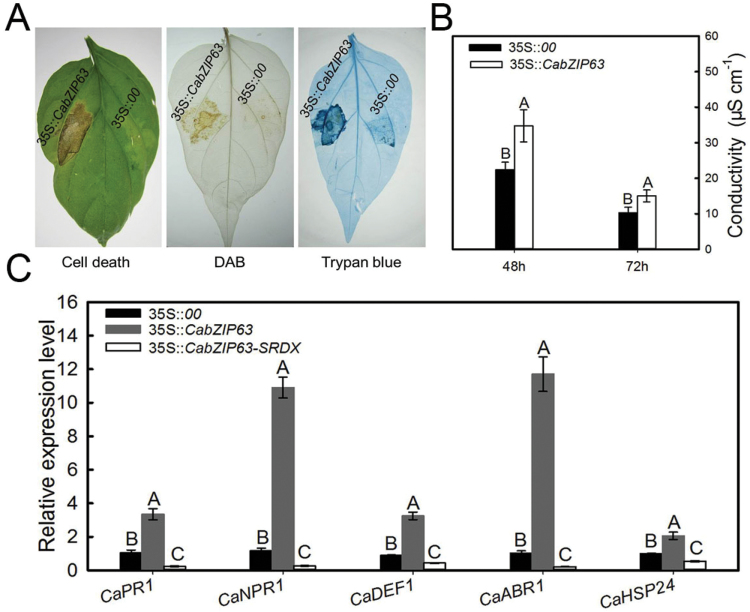
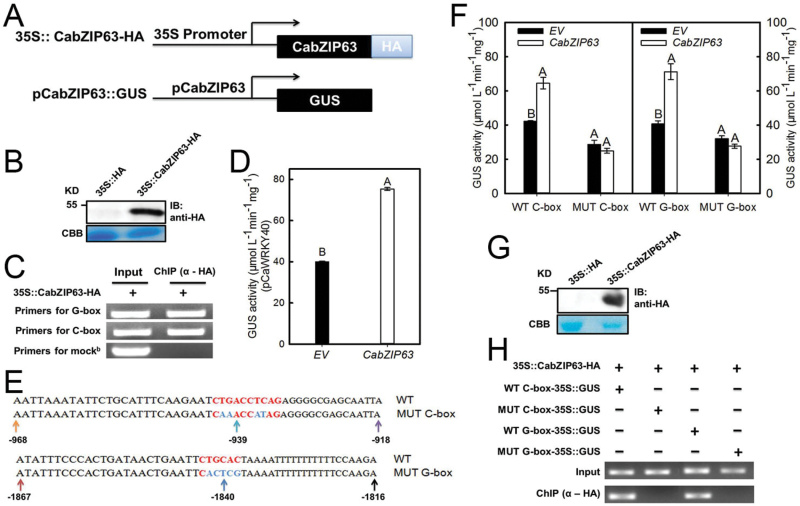
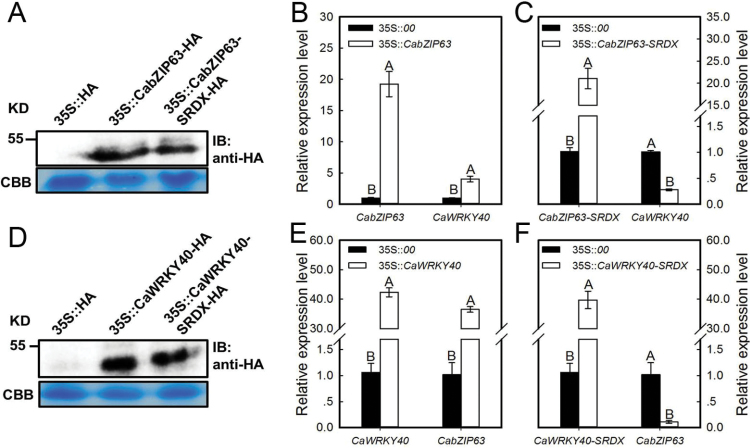
CaWRKY40 is known to act as a positive regulator in the response of pepper (Capsicum annuum) to Ralstonia solanacearum inoculation (RSI) or high temperature-high humidity (HTHH), but the underlying mechanism remains elusive. Herein, we report that CabZIP63, a pepper bZIP family member, participates in this process by regulating the expression of CaWRKY40. CabZIP63 was found to localize in the nuclei, be up-regulated by RSI or HTHH, bind to promoters of both CabZIP63(pCabZIP63) and CaWRKY40(pCaWRKY40), and activate pCabZIP63- and pCaWRKY40-driven β-glucuronidase expression in a C- or G-box-dependent manner. Silencing of CabZIP63 by virus-induced gene silencing (VIGS) in pepper plants significantly attenuated their resistance to RSI and tolerance to HTHH, accompanied by down-regulation of immunity- or thermotolerance-associated CaPR1, CaNPR1, CaDEF1, and CaHSP24. Hypersensitive response-mediated cell death and expression of the tested immunity- and thermotolerance-associated marker genes were induced by transient overexpression (TOE) of CabZIP63, but decreased by that of CabZIP63-SRDX. Additionally, binding of CabZIP63 to pCaWRKY40 was up-regulated by RSI or HTHH, and the transcript level of CaWRKY40 and binding of CaWRKY40 to the promoters of CaPR1, CaNPR1, CaDEF1 and CaHSP24 were up-regulated by TOE of CabZIP63. On the other hand, CabZIP63 was also up-regulated transcriptionally by TOE of CaWRKY40. The data suggest collectively that CabZIP63 directly or indirectly regulates the expression of CaWRKY40 at both the transcriptional and post-transcriptional level, forming a positive feedback loop with CaWRKY40 during pepper's response to RSI or HTHH. Altogether, our data will help to elucidate the underlying mechanism of crosstalk between pepper's response to RSI and HTHH.
已知CaWRKY40在辣椒(Capsicum annuum)对青枯雷尔氏菌接种(RSI)或高温高湿(HTHH)的响应中作为正向调节因子起作用,但其潜在机制仍不清楚。在此,我们报道辣椒bZIP家族成员CabZIP63通过调节CaWRKY40的表达参与这一过程。发现CabZIP63定位于细胞核,受RSI或HTHH上调,与CabZIP63(pCabZIP63)和CaWRKY40(pCaWRKY40)的启动子结合,并以C-或G-盒依赖的方式激活pCabZIP63和pCaWRKY40驱动的β-葡萄糖醛酸酶表达。通过病毒诱导基因沉默(VIGS)沉默辣椒植株中的CabZIP63显著减弱了它们对RSI的抗性和对HTHH的耐受性,同时伴随着免疫或耐热性相关的CaPR1、CaNPR1、CaDEF1和CaHSP24的下调。通过瞬时过表达(TOE)CabZIP63诱导了过敏反应介导的细胞死亡以及测试的免疫和耐热性相关标记基因的表达,但通过CabZIP63-SRDX的过表达则降低了这些表达。此外,RSI或HTHH上调了CabZIP63与pCaWRKY40的结合,并且通过CabZIP63的TOE上调了CaWRKY40的转录水平以及CaWRKY40与CaPR1、CaNPR1、CaDEF1和CaHSP24启动子的结合。另一方面,CaWRKY40的TOE也转录上调了CabZIP63。这些数据共同表明,CabZIP63在转录和转录后水平直接或间接调节CaWRKY40的表达,在辣椒对RSI或HTHH的响应过程中与CaWRKY40形成正反馈环。总之,我们的数据将有助于阐明辣椒对RSI和HTHH响应之间相互作用的潜在机制。