Selver Ozlem Barut, Durak Ismet, Gürdal Mehmet, Baysal Kemal, Ates Halil, Ozbek Zeynep, Wang Zheng, Wu Albert, Wolosin J Mario
Department of Ophtalmology, Dokuz Eylul University School of Medicine, Izmir, Turkey.
Department of Biochemistry, Dokuz Eylul University School of Medicine, Izmir, Turkey.
Mol Vis. 2016 Feb 11;22:138-49. eCollection 2016.
To determine the corneal regenerative capacity of sequentially generated primary, secondary, and tertiary limbal explant outgrowths in a limbal stem cell deficiency (LSCD) surgical model.
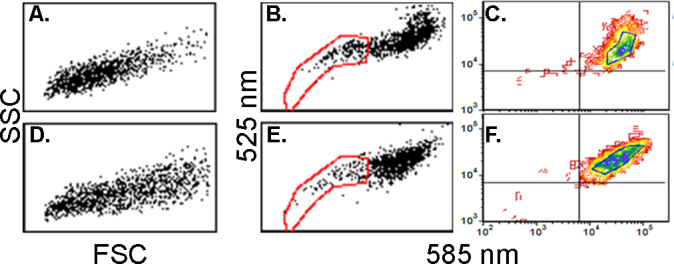
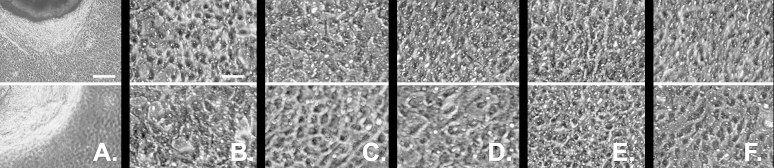
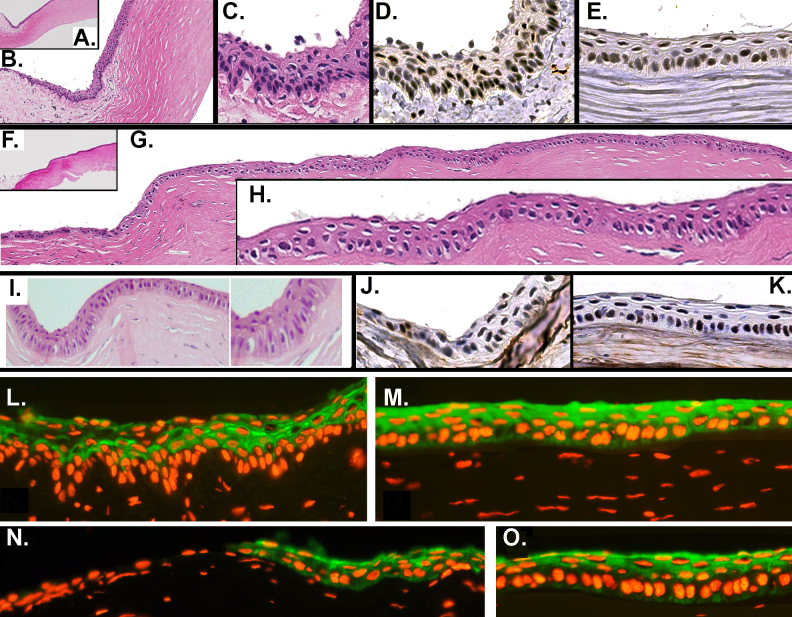
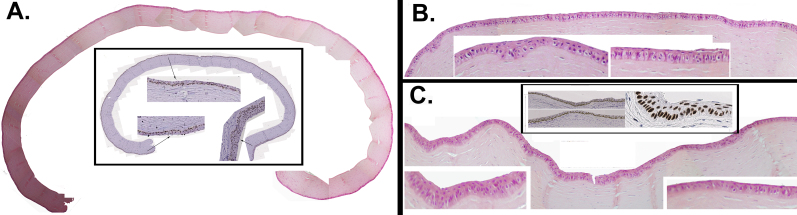
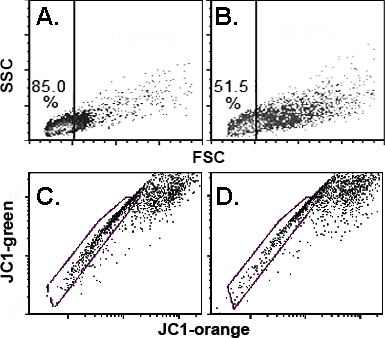
Two-millimeter-long limbal shallow biopsies were surgically excised from the upper quadrant of the right eye of rabbits and set on preserved amniotic membrane for explant culture. After the generation of primary outgrowth, the biopsies were sequentially transferred to new amniotic membrane to generate secondary and then tertiary outgrowths. Eighteen rabbits were subjected to a 360° limbal peritomy extending into the scleral zone and combined with superficial keratectomy of the corneal periphery and thorough mechanical debridement of the central cornea in their left eye. Right eye outgrowths, six of each generation, were engrafted on the ocular surface. Clinical outcomes (neovascularization, corneal clarity, and corneal fluorescein staining) were graded after 6 months. Post-mortem corneas were compared with histology, immunochemistry for p63 and Krt3, ABCG2-dependent dye exclusion, and capacity for outgrowths in explant culture.
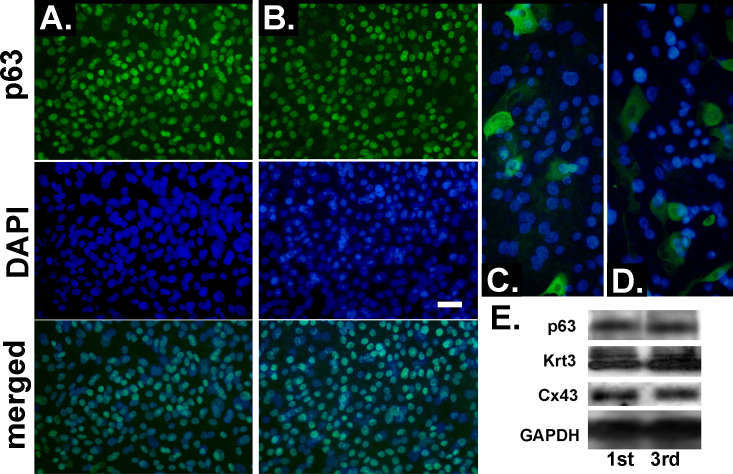
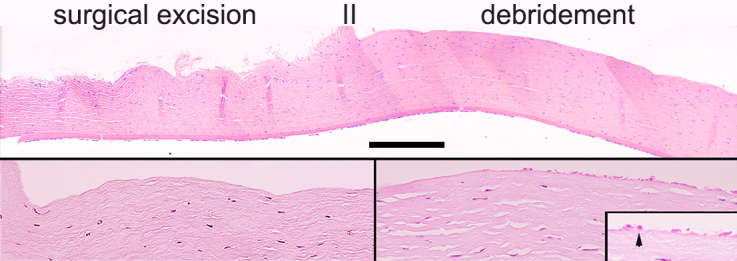
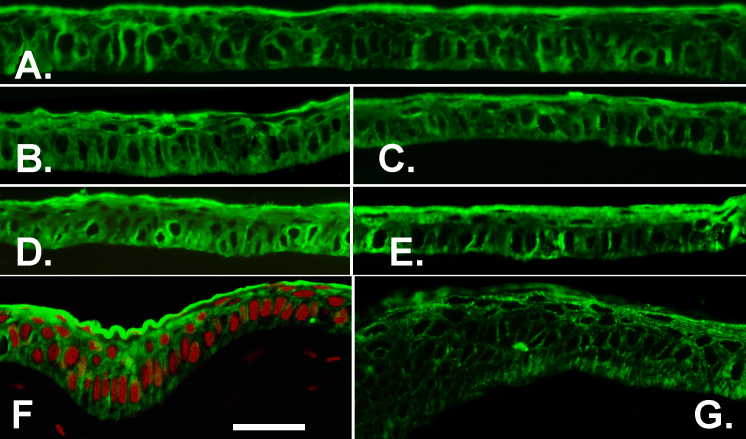
Immunohistology and western blot of the outgrowths for p63 and Krt3 indicated no differences in expression between the primary and tertiary outgrowths for these two markers of growth and differentiation. Clinically, all rabbits treated with amniotic membrane alone developed severe LSCD. Most rabbits grafted with cell outgrowths from all three outgrowth generations achieved stable (>6 months) recovery of the ocular surface. There were partial failures of grafts performed with two secondary and tertiary outgrowths. However, Kruskal-Wallis statistical analysis of the clinical scores yielded no significant difference between the three groups (p=0.524). Histology showed full anatomic recovery of grafts made with primary and tertiary outgrowths. Krt3 and p63 expression throughout the whole limbal corneal epithelium with primary or tertiary outgrowths was not distinguishable from each other. The percentage of dye-excluding cells present within this zone and the capacity of the explant epithelial outgrowth of the regenerated peripheral corneal zone were also on par with those of the donor corneas. The Krt3-negative cells that characterize the basal epithelial layer of the normal limbus could not be found in any regenerated cornea from the primary to tertiary outgrowths.
Our results demonstrate that in rabbits post-primary explant outgrowths retain the capacity for LSCD recovery found in primary explants.
在角膜缘干细胞缺乏(LSCD)手术模型中,确定依次生成的原代、二代和三代角膜缘外植体生长物的角膜再生能力。
从兔右眼上象限手术切除2毫米长的角膜缘浅层活检组织,置于保存的羊膜上进行外植体培养。原代生长物生成后,将活检组织依次转移到新的羊膜上,生成二代和三代生长物。18只兔子左眼进行360°角膜缘环行切除术并延伸至巩膜区,同时联合角膜周边浅层角膜切除术及中央角膜彻底机械清创术。将右眼各代的6个生长物移植到眼表。6个月后对临床结果(新生血管形成、角膜透明度和角膜荧光素染色)进行分级。对死后的角膜进行组织学、p63和角蛋白3(Krt3)免疫化学、ABCG2依赖性染料排除以及外植体培养中的生长能力比较。
对生长物进行p63和Krt3的免疫组织化学和蛋白质印迹分析表明,这两种生长和分化标志物在原代和三代生长物中的表达没有差异。临床上,所有仅接受羊膜治疗的兔子均发生严重的LSCD。大多数移植了三代生长物细胞的兔子实现了眼表稳定(>6个月)恢复。二代和三代生长物的移植有部分失败情况。然而,对临床评分进行Kruskal-Wallis统计分析显示,三组之间无显著差异(p=0.524)。组织学显示,原代和三代生长物移植后的解剖结构完全恢复。原代或三代生长物的整个角膜缘上皮中Krt3和p63的表达彼此无明显差异。该区域内染料排除细胞的百分比以及再生周边角膜区外植体上皮生长能力也与供体角膜相当。在从原代到三代生长物的任何再生角膜中均未发现正常角膜缘基底上皮层特有的Krt3阴性细胞。
我们的结果表明,在兔子中,原代外植体生长物之后的生长物保留了原代外植体中发现的LSCD恢复能力。